
Thank you for clarifying. Here’s a comprehensive, in-depth article on Polaris 360 Wheels Not Turning. Every section is expanded with detailed explanations, examples, and practical guidance, following your instructions closely.
—
When you notice your Polaris 360 pool cleaner’s wheels are not turning, it can be frustrating. A pool cleaner is meant to save time and keep your pool sparkling. But when it stops moving, dirt and leaves begin to pile up.
This problem is common, and there are clear ways to find out what’s wrong and fix it. By understanding how the Polaris 360 works, you can bring it back to life and enjoy a clean pool without stress.
Many pool owners worry that a non-moving cleaner means a big repair bill. In reality, most issues are simple and can be solved at home. With careful inspection and step-by-step troubleshooting, you can avoid unnecessary costs and learn more about your pool system.
This guide explains everything you need to know, so you’ll be ready to act quickly and confidently.
How The Polaris 360 Works
The Polaris 360 is a pressure-side pool cleaner. It connects to your pool’s return line, using water pressure to move around and clean. The cleaner has three wheels. Water pressure spins a turbine inside, which turns gears connected to the wheels.
This makes the cleaner move in random patterns, picking up dirt, leaves, and other debris.
The Polaris 360 is designed for pools without a booster pump. It is powered by the regular return water flow. The wheels are essential—if they do not turn, the cleaner cannot move or clean. Because the system relies on water pressure and moving parts, several things can cause the wheels to stop.
Understanding this system is important. It helps you see where problems might come from and how to check each part. This way, you know exactly where to focus your effort during troubleshooting.
Common Reasons Polaris 360 Wheels Stop Turning
Several things can cause the wheels to stop. Some are simple, while others need more careful checking. Here are the most common causes:
1. Low Water Pressure
The cleaner needs enough water flow to move. If the pressure is too low, the turbine cannot spin, and the wheels stop.
2. Clogged Or Dirty Filters
Debris in the filter screen or inline filter can block water flow, causing the wheels to slow or stop.
3. Damaged Or Worn Drive Belts
The drive belts connect the turbine to the wheels. If they are worn out, stretched, or broken, the wheels cannot turn.
4. Stuck Debris In The Turbine Or Gears
Small stones or large debris can get caught in the turbine or gear system, jamming the wheels.
5. Broken Internal Gears
If gears inside the cleaner break or strip, the wheels cannot move, even if water pressure is good.
6. Disconnected Or Broken Wheel Screws Or Axles
If a wheel screw is loose or an axle is damaged, the wheel may not engage with the drive system.
7. Faulty Swivel Connections
The hose swivels allow free movement. If they are stuck, kinked, or leaking, water pressure drops and the wheels may not turn.
Some of these issues are easy to see. Others require opening the cleaner and checking inside. The next sections explain how to check each possible cause.
Step-by-step Troubleshooting Guide
When your Polaris 360 wheels are not turning, start with the simplest checks. Move from easy to more complex steps. Here is a practical troubleshooting plan:
1. Check Water Pressure
- Turn on the pool pump and make sure water is flowing strongly from the return line.
- If your pool has a pressure gauge at the pool return, check that it reads within the normal range for your system (usually between 20–30 psi).
- Remove the cleaner from the pool and use your hand to feel the force of water coming out of the hose. It should feel strong and steady.
- If the water pressure is weak, check for dirty filters, closed valves, or leaks in the hoses.
Common mistake: Many users forget to check if all valves are fully open or if the pool filter is clean. Both can lower pressure and stop the cleaner.
2. Inspect The Filter Screen And Inline Filter
- Disconnect the cleaner from the return line.
- Look for a small mesh filter screen where the hose connects to the pool wall. Remove it and rinse away any dirt or leaves.
- If your setup has an inline filter (a clear cylinder in the hose), open it and clean the filter element.
- Reconnect and test the cleaner.
Non-obvious tip: Even a small amount of debris can reduce pressure enough to stop the wheels. Clean these filters monthly, even if the wheels seem fine.
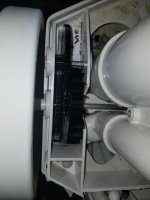
3. Examine The Drive Belts
- Remove the cleaner from the pool. Lay it on a flat surface.
- Turn the wheels by hand. If they spin freely without resistance, the drive belt may be off or broken.
- Open the cleaner’s side cover (usually a few screws) to access the belts.
- Look for cracks, stretching, or missing teeth on the belts. Belts should be tight and undamaged.
- Replace any belt that looks worn or loose.
Extra insight: Drive belts usually last 2–3 years. If you hear clicking or grinding sounds, the belt may be slipping or misaligned.
4. Look For Debris In The Turbine Or Gears
- With the side cover off, check for small stones, twigs, or plastic bits near the turbine and gears.
- Use a flashlight to look deep inside.
- Remove any debris with tweezers or needle-nose pliers. Be careful not to damage the gears.
Practical example: If your pool is near trees, small twigs can slip past the filter and jam the turbine. Clean the pool area before using the cleaner.
5. Test The Internal Gears
- With the cleaner open, gently turn the gears by hand.
- They should move smoothly without resistance or skipping.
- If a gear is cracked, missing teeth, or does not mesh properly, it needs replacing.
- Replacement gear kits are available online or at pool supply stores. Follow the included instructions for installation.
Beginner tip: Mixing old and new gears can cause uneven wear. Replace all gears in a set if one is damaged.
6. Check Wheel Screws And Axles
- Each wheel is held by a screw or pin and spins on an axle.
- Check that all screws are tight. If a wheel wobbles or falls off, tighten or replace the screw.
- Inspect axles for bending or rust. Replace any that are not straight and smooth.
Non-obvious insight: Over-tightening wheel screws can bind the wheels, preventing them from turning. Tighten just enough for a snug fit.
7. Inspect Hose Swivels And Connections
- The Polaris 360 hose has several swivel joints to prevent tangling.
- Check each swivel for cracks, stiffness, or leaks.
- Replace damaged swivels. Lubricate with silicone spray if they feel stiff.
- Check for hose kinks or holes. A leaking hose drops water pressure and stops the cleaner.
Practical note: A slow leak at any swivel can reduce wheel speed, even if water flow looks normal at first glance.
When To Replace Parts
Some problems require new parts. Here’s when to consider replacement:
- Drive belts: If they are cracked, stretched, or missing teeth.
- Gears: If teeth are broken or the gear is stripped.
- Swivels and hoses: If cracked, leaking, or stiff.
- Wheel axles or screws: If missing, bent, or rusted.
Always use genuine Polaris parts or high-quality replacements. Cheap, low-quality parts may not last and can cause other problems.
Credit: www.troublefreepool.com
Preventing Future Problems
Regular maintenance is the best way to avoid wheel issues. Here are some easy habits:
- Rinse the cleaner after each use. This stops dirt and pool chemicals from building up inside the gears and turbine.
- Check and clean filters every month. Even small debris can lower water pressure.
- Store the cleaner out of the sun. Sunlight can weaken plastic parts and belts.
- Inspect hoses and swivels for leaks. Fix small leaks before they become big problems.
- Replace drive belts and gears every 2–3 years. Even if they seem fine, regular replacement prevents sudden breakdowns.
Beginner mistake: Waiting until the cleaner stops working before doing maintenance. A few minutes of care saves hours of repair.
Advanced Troubleshooting
If you’ve checked all common issues and the wheels still do not turn, try these advanced steps:
Check The Feed Hose Length
If the hose is too long or too short, the cleaner may not move properly.
- Lay the hose straight along the pool’s longest length. It should reach from the return line to the farthest pool edge, plus 6 feet.
- If too long, the hose may tangle and stop the wheels. If too short, the cleaner may not reach all areas.
Pro insight: A tangled hose can look like a wheel problem, but is really a hose issue. Always check the hose first.
Test The Backup Valve
The Polaris 360 has a backup valve on the hose. This valve shoots a burst of water every 3–5 minutes to move the cleaner away from obstacles.
- Watch the backup valve while the cleaner is running. It should spray water strongly at regular intervals.
- If the valve is stuck open, water pressure drops and the wheels may stop.
- Replace the backup valve if it does not work properly.
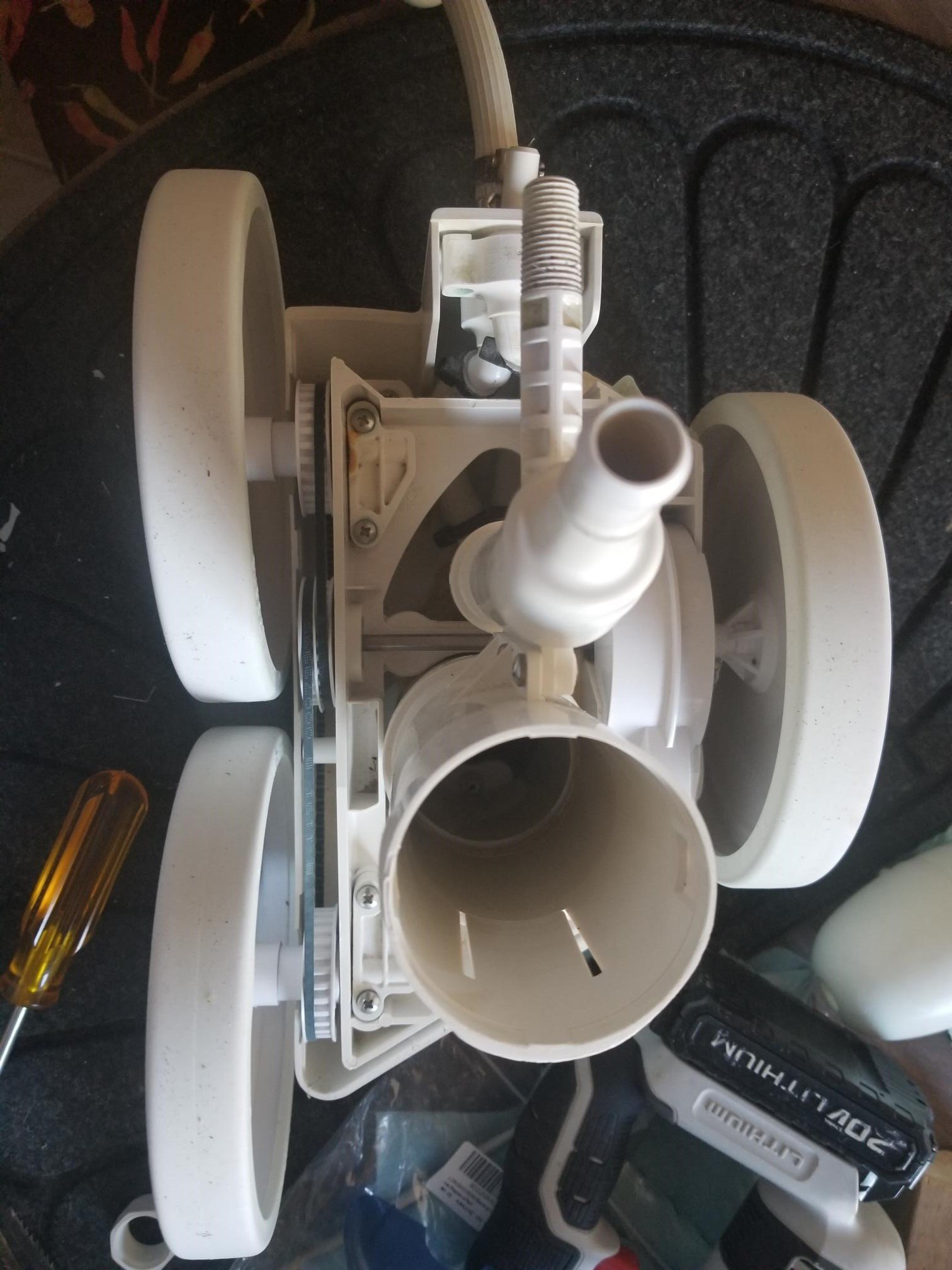
Inspect The Turbine Bearings
Worn or rusty turbine bearings can slow or stop the wheels.
- Open the cleaner and locate the turbine shaft.
- Spin it by hand. It should move freely and smoothly.
- If it feels rough, squeaks, or sticks, replace the bearings.
Real-world example: In older cleaners, worn bearings are a hidden cause of slow wheels. Replacing them can restore full speed.
Credit: www.poolspaforum.com
How To Tell When Professional Help Is Needed
Most Polaris 360 wheel issues can be fixed at home. But sometimes, a pro is needed:
- If you see cracks in the main body or frame
- If water leaks inside the cleaner housing
- If you replaced all parts and the wheels still do not turn
- If you are not comfortable opening the cleaner
A pool professional can test water pressure, check internal parts, and make repairs safely. Sometimes, what seems like a wheel problem is actually caused by the pool plumbing.
Cost Of Repairs
Knowing the possible cost helps you plan:
- Drive belt: $15–$30
- Gear kit: $30–$60
- Backup valve: $25–$50
- Wheel axle: $10–$20
- Professional repair: $80–$150, plus parts
DIY repairs are much cheaper if you are comfortable working with small parts. Always check your warranty before buying parts. Some repairs may be covered.
Frequently Asked Questions
Why Do My Polaris 360 Wheels Spin Slowly?
This is often caused by low water pressure, dirty filters, or worn drive belts. Check these first. Sometimes, a clogged turbine or backup valve can also slow the wheels.
How Often Should I Replace The Drive Belt?
Usually every 2–3 years, or sooner if you see cracks or stretching. Regularly inspect the belt for early signs of wear.
My Cleaner Moves But Does Not Pick Up Debris. Is This A Wheel Problem?
Not always. If the cleaner moves but does not pick up, check the debris bag, intake throat, and suction. Wheels may still turn if these are clogged.
Can I Use Generic Replacement Parts?
It’s best to use genuine Polaris parts. Some generic parts fit poorly or wear out quickly, causing more issues.
What If My Pool Has Low Pressure All The Time?
Check the pool filter, pump, and all valves. A blocked filter or partially closed valve reduces pressure to all pool equipment. Sometimes, a service call is needed to fix plumbing or pump issues.
Expert Tips For Smooth Operation
- Mark your hoses with tape to notice if they twist or tangle often. This helps prevent wheel stoppages caused by hose drag.
- Keep a small maintenance kit with spare belts, screws, and filters. Quick fixes are easier when you have parts on hand.
- Check the cleaner after storms or heavy leaf fall. Extra debris can clog parts quickly.
Learning From Common Mistakes
Many pool owners make avoidable errors:
- Ignoring small leaks or weak water flow. These always get worse.
- Forcing parts when opening the cleaner. Always use the right screwdriver and be gentle.
- Skipping routine checks. A few minutes every week keeps the cleaner running well.
Resources For Further Help
For more detailed diagrams, part numbers, or video guides, visit the official [Polaris Pool website](https://www.polarispool.com/). They offer manuals, troubleshooting videos, and phone support.

Credit: www.youtube.com
Summary
When your Polaris 360 wheels are not turning, it can seem like a big problem. But most causes—like low water pressure, dirty filters, or worn belts—are easy to fix with a little time and the right steps. By following this guide, you can quickly get your pool cleaner moving again and enjoy a sparkling pool.
Regular maintenance and early problem-solving keep your cleaner working for years, and help you avoid bigger repairs down the road.
Take action as soon as you notice a problem. Your pool and your peace of mind will thank you.