
When you install Confer pool steps in your swimming pool, you want them to feel safe and steady. However, many pool owners face a common problem—the steps float, shift, or even tip over, making them dangerous and annoying. This happens because the hollow areas inside the steps fill with air, and water pressure pushes them upward. If you want your steps to stay in place, you need to learn how to weigh them down correctly. Doing this not only protects your family and friends but also helps your pool equipment last longer by preventing movement and potential damage.
In this guide, you’ll discover everything you need to know about weighing down Confer pool steps. You will find practical methods, step-by-step instructions, common mistakes to avoid, and even some clever tips that most pool owners overlook. With a little planning and the right materials, you can solve this problem for good and enjoy a safer, more inviting pool.
Why Do Confer Pool Steps Float?
Before you fix the problem, it helps to know why it happens. Confer pool steps are made of lightweight plastic or resin. They are designed with hollow spaces inside to make them easy to move and install. But these hollow spaces trap air, and when you place the steps in water, the air tries to rise. This is called buoyancy—the force that makes things float.
The more air trapped inside, the stronger the upward force. Unless you add weight, even heavy-looking pool steps can float, drift, or shift. This is not just inconvenient; it can cause slips, falls, or injuries. Secure steps also protect your pool liner from scratches and tears caused by moving stairs.
Key Factors To Consider Before Weighing Down Steps
Choosing the right way to weigh down your steps depends on several factors. Missing any of these can lead to poor results or even damage.
Pool Type
Is your pool above ground or in-ground? Above-ground pools often have thinner liners that can tear if you use the wrong weights. In-ground pools usually have sturdier walls, but the steps may be larger and need more weight.
Step Model
Confer makes several step models, like the Confer Curve or Confer 6100X. Each may have different spaces for adding weights. Check your step’s manual to see recommended methods. Using the wrong approach can void your warranty.
Pool Use
If your pool is used by children, elderly people, or people with limited mobility, stability is even more important. You may need more weight than usual or extra anti-slip measures.
Safety And Maintenance
Some weigh-down methods use materials that can rust, leak, or break over time. Choose materials that are durable and safe for both swimmers and the pool. Also, think about how easy it will be to remove the steps later for cleaning or winterizing.
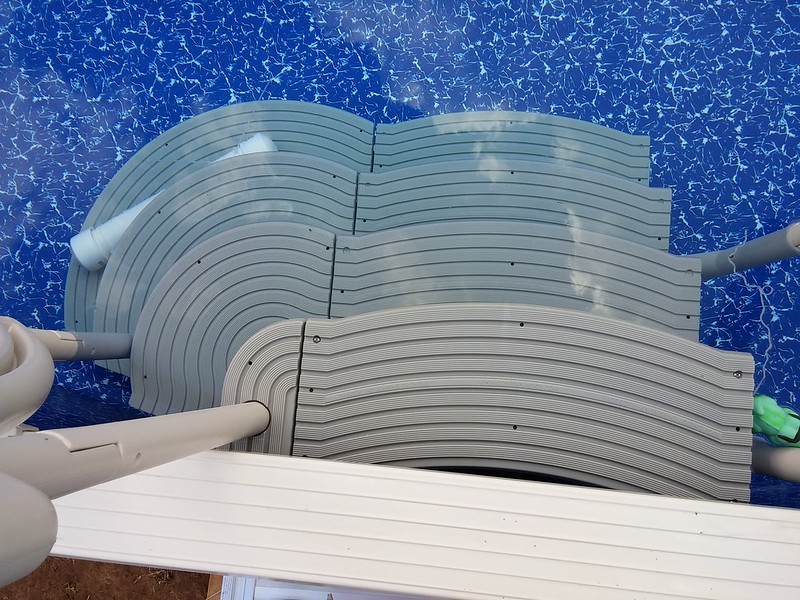
Credit: www.troublefreepool.com
Best Methods To Weigh Down Confer Pool Steps
There are several reliable ways to weigh down your pool steps. Each method has its advantages and drawbacks. Some are quick and cheap, while others need more planning but offer long-term security.
1. Sand-filled Jugs
Sand-filled jugs are one of the most popular solutions. They are simple, effective, and cheap.
How To Use:
- Get several empty plastic jugs (like gallon milk jugs or laundry detergent bottles).
- Rinse them thoroughly to remove any chemicals or residue.
- Fill each jug with play sand (avoid construction sand, which can be rougher).
- Seal the caps tightly. For extra safety, tape them shut with waterproof tape.
- Place the filled jugs inside the hollow spaces of the steps or at the base.
Advantages:
- Easy to find materials.
- Jugs are soft and less likely to damage the pool liner.
- Easy to remove for cleaning or step removal.
Disadvantages:
- Over time, the plastic can degrade in sunlight.
- If a jug leaks, sand may escape into the pool.
Non-obvious Insight:
Use opaque jugs (not clear ones). Sunlight can make clear jugs brittle and more likely to crack.
2. Plastic Sandbags
Plastic sandbags work well if your step model has enough space underneath or inside.
How To Use:
- Buy heavy-duty plastic sandbags (often sold for flood control).
- Fill bags with play sand (about 20–30 lbs each).
- Seal tightly with zip ties or double knots.
- Place bags securely under or inside the step.
Advantages:
- Flexible shape fits different step designs.
- Can add more bags for extra weight.
- Less likely to scratch liners than hard objects.
Disadvantages:
- Bags can break down after a season or two.
- Cheaper bags may leak.
Non-obvious Insight:
Double-bagging (placing one sandbag inside another) greatly reduces leaks and increases durability.
3. Pool Step Weights (pre-made)
Some companies sell pre-made step weights designed for pool use. These are usually plastic containers you fill with sand or pebbles.
How To Use:
- Purchase step weights made for your model.
- Fill with sand, pea gravel, or lead shot (if allowed).
- Seal them.
- Slide into the step compartments or position at the base.
Advantages:
- Designed for pool steps, so they fit well.
- Usually reusable for years.
- Easy to move.
Disadvantages:
- More expensive than DIY solutions.
- Sometimes hard to find for certain step models.
Non-obvious Insight:
Some step weights have handles, making it much easier to remove the steps at the end of the season.
4. Bricks In Nylon Bags
Bricks are dense and heavy, making them good for weighing down steps if used with care.
How To Use:
- Place bricks inside heavy-duty nylon mesh bags (never loose).
- Tie bags securely.
- Place under or inside the step, ensuring no rough edges touch the liner.
Advantages:
- Very heavy—few bricks needed.
- Mesh bags allow water flow, preventing mold.
Disadvantages:
- Risk of liner damage if not bagged.
- Bricks may rust if not sealed or if they have metal parts.
Non-obvious Insight:
Wrap the bricks in old towels before placing them in mesh bags. This adds extra protection for the pool liner.
5. Pvc Pipe Weights
You can make custom weights using PVC pipes filled with sand or gravel.
How To Use:
- Cut PVC pipe sections (12–18 inches long, 2–3 inches in diameter).
- Cap one end with a PVC end cap and glue.
- Fill with sand or gravel.
- Cap the other end and glue securely.
- Place pipes inside or under the steps.
Advantages:
- Very durable and long-lasting.
- Shape fits well in narrow spaces.
- Easy to clean.
Disadvantages:
- Needs tools and some DIY skill.
- Slightly more expensive than jugs or bags.
Non-obvious Insight:
Add a stainless steel eye bolt to one end before sealing. This lets you tie the weight to the step, making removal or repositioning much easier.
6. Water-filled Jugs (temporary Solution)
Some pool owners use water-filled jugs instead of sand.
How To Use:
- Fill plastic jugs with pool water.
- Seal tightly.
- Place inside or under the steps.
Advantages:
- Easy to fill and empty.
- Jugs won’t leak debris if they crack.
Disadvantages:
- Less heavy than sand.
- Float if not completely filled.
Non-obvious Insight:
Use water-filled jugs only as a short-term solution (such as when waiting for proper weights). They are not heavy enough for long-term use.
7. Lead Shot Weights
Some commercial pool owners use lead shot weights. These are very heavy for their size.
How To Use:
- Place lead shot into double-bagged vinyl or plastic bags.
- Seal tightly.
- Position under the step.
Advantages:
- Extremely heavy in small sizes.
- Good for tight spaces.
Disadvantages:
- Expensive.
- Lead can be toxic if bag leaks—only for commercial pools and not recommended for home use.
Non-obvious Insight:
Never use lead shot in pools with children or pets. Consider the health risks.
Step-by-step Guide: How To Weigh Down Confer Pool Steps Safely
While each method has its own process, the basic steps are similar. Here’s a general guide to help you do the job right.
1. Remove Steps From Pool (if Possible)
Whenever possible, start with the steps out of the water. This makes the process easier and safer.
2. Clean And Inspect
Check the steps for cracks, dirt, or algae. Clean them so nothing interferes with the weight placement. Inspect for signs of wear, especially if your steps are a few years old.
3. Check Step Compartments
Open any compartments, panels, or access points. See how much room you have for weights. Some Confer models have special “weight chambers. ”
4. Prepare Weights
Choose your method (sand jugs, sandbags, bricks in bags, PVC pipes, etc. ). Fill and seal them carefully. If using sand, make sure it is dry and free of debris.
5. Test Fit
Before adding all the weights, test with one or two to check for fit and balance. Make sure nothing sticks out or rubs against the liner.
6. Place Weights Evenly
Distribute the weights evenly across the base and inside the steps. Uneven placement can make the steps tilt or wobble.
7. Secure Weights
If possible, tie or secure weights using zip ties or rope (especially if using PVC or custom weights). This prevents shifting.
8. Place Steps In Pool
With help if needed, lower the steps gently into the pool. Go slowly to avoid damaging the liner or chipping the pool edge.
9. Check Stability
Once in place, press down and shake the steps gently. If they move or float, add more weight as needed. It’s better to add a little extra than not enough.
10. Finish And Inspect
Double-check all weights. Make sure nothing sharp or rough is exposed. Check that all caps and bags are sealed.
How Much Weight Do You Need?
The exact amount depends on your step model, pool size, and water depth. As a general rule:
- Most Confer pool steps need between 50–100 lbs of weight to stay firmly in place.
- Larger or multi-piece steps may need up to 150 lbs.
Here’s a quick comparison for common weight methods:
| Weight Method | Average Weight (per unit) | Units Needed (for 100 lbs) |
|---|---|---|
| Sand-filled 1-gallon jug | ~10 lbs | 10 |
| Standard brick in mesh bag | ~5 lbs | 20 |
| Pre-made pool step weight | ~25 lbs | 4 |
| PVC pipe (18” filled with sand) | ~12 lbs | 8 |
Always err on the side of using too much weight rather than too little. It is easier to remove extra weight than to deal with floating steps.
Where To Place The Weights For Best Results
Proper placement is just as important as the total weight. Bad placement can lead to unstable steps or liner damage.
Inside Hollow Chambers
Many Confer steps have hollow spaces designed for weights. Fill these first. The weight will be centered, and the steps will stay balanced.
Under The Base
If your steps rest flat on the pool floor, place weights at the front and back edges. This stops the steps from tipping when someone climbs on.
Side Compartments
Some models, like the Confer Curve, have side pockets. Use these for extra weight, especially if the steps still shift.
Behind The Steps
For some above-ground pools, you can place weights behind the steps (outside the pool liner). This avoids direct contact with the liner.
Example Placement Plan
For a typical 4-step Confer model:
- 4 sand-filled jugs inside the main chamber
- 2 sandbags under the front edge
- 2 PVC weights under the rear base
This combination keeps the steps stable from all directions.
Common Mistakes To Avoid
Even experienced pool owners make errors when weighing down their steps. Avoid these for a safer, trouble-free pool.
Using Metal Weights
Never use uncoated metal objects. They can rust, stain the pool, and weaken over time.
Ignoring Liner Protection
Bricks, rocks, or hard objects can tear or puncture the liner. Always bag or wrap them.
Too Little Weight
If you use less than 50 lbs, most steps will eventually float. Water temperature, swimmer movement, and water level changes can all cause floating.
Overfilling With Water Jugs
Water jugs are not heavy enough. Use them only in emergencies, and always switch to sand or gravel as soon as possible.
Poor Sealing
If sand leaks into the pool, it can clog filters and make cleaning harder. Seal all containers and bags tightly.
Forgetting To Check Each Season
Check weights at the start of each swimming season. Replace any cracked jugs, torn bags, or rusty components.
Placing All Weight On One Side
This causes steps to tilt or wobble. Distribute weight evenly.
Practical Tips For Long-term Success
- Store extra weights in a dry, shaded area during the off-season. Sunlight and freezing temperatures can weaken plastic and bags.
- Use play sand instead of construction sand. It is cleaner and less likely to harm the pool.
- Label each weight with a marker so you know when it was filled or last checked.
- If your steps still float after adding weight, check for trapped air. Submerge steps slowly and tilt them to release bubbles.
- Avoid using gravel or pebbles if children swim in your pool. Small stones can escape and cause injuries.

Credit: www.youtube.com
Comparing Weigh-down Methods
To help you choose, here’s a side-by-side comparison:
| Method | Cost | Durability | Ease of Use | Liner Safety |
|---|---|---|---|---|
| Sand-filled jugs | Low | Medium | Easy | High |
| Plastic sandbags | Low | Medium | Easy | High |
| Pre-made step weights | High | High | Very easy | High |
| Bricks in mesh bags | Low | High | Moderate | Medium |
| PVC pipe weights | Medium | High | Moderate | High |
Real-world Examples
Pool owners often share their experiences online. Here are a few real-life stories:
- Maria, New York: “I used eight sand-filled milk jugs and placed them in the base and sides of my Confer Curve steps. They haven’t moved an inch, even with my kids jumping on them all summer.”
- Mike, Texas: “Bricks in mesh bags worked for me, but I had to wrap them in old towels after my liner got scratched. It’s a simple fix that made a big difference.”
- Sandra, Florida: “I tried water jugs at first, but my steps floated after a few days. Switched to sandbags, and the problem disappeared.”
These stories show that the right method can make your pool safer and more enjoyable.
How To Remove And Store Weights
When pool season ends, you’ll need to remove the steps and weights to prevent damage from freezing or algae.
- Wear gloves and have a helper if possible.
- Remove weights carefully—wet sandbags or jugs are heavy.
- Rinse off any sand, dirt, or algae before storing.
- Let weights dry completely, then store in a cool, dry place.
- Inspect all weights before the next season and replace any damaged items.
When To Call A Professional
If you have a very large or commercial pool, or if you are unsure about your step model, it’s smart to ask for help. Pool professionals can recommend the safest, most effective way to secure your steps. They might even install custom anchors for you.
Also, if you see any damage to your pool liner or steps, don’t delay repairs. Small problems can quickly turn into big, expensive ones.
Safety Reminders
- Never let children play with or move the weights.
- Avoid using any weights that contain chemicals or may leak toxins.
- If you notice sand or debris in your pool, check all weights immediately.
Maintenance Checklist
- Check weights at the start of every season.
- Look for cracks, leaks, or broken seals.
- Rinse off any algae or buildup monthly.
- Remove and store weights at the end of the swimming season.

Credit: www.troublefreepool.com
Frequently Asked Questions
How Often Should I Check The Weights Under My Pool Steps?
It’s best to check the weights at least once a month during the swimming season. Look for any signs of wear, leaks, or shifting. Also, always check after heavy storms or pool parties, as steps can shift more with extra use.
Can I Use Rocks Or Large Stones To Weigh Down My Steps?
You should avoid using rocks directly, as they can be rough and damage the pool liner. If you must use stones, always place them in heavy-duty, sealed bags and wrap them in towels or foam for added protection.
Is It Safe To Use Salt Or Gravel Inside Pool Step Weights?
Play sand is the safest and most common filler. Salt can corrode some types of plastic or metal and may dissolve over time. Gravel is generally safe, but small stones can escape if bags tear, so double-bagging is advised.
Do Weighted Steps Affect My Pool’s Chemical Balance?
If you use only clean, sealed containers with sand or gravel, there is little to no effect on pool chemicals. Avoid using anything that can rust or break down, as this can cause stains or chemical changes.
Where Can I Find More Information About Pool Safety And Maintenance?
For detailed safety guidelines, visit the CDC’s Healthy Swimming website. They offer advice on pool equipment, water safety, and proper maintenance for all types of pools.
Securing your Confer pool steps is a smart investment in your pool’s safety and longevity. With the right method, you’ll enjoy peace of mind—and a safer swim season for everyone.