
When you walk out to your backyard pool and see the water is clear, it feels like a small victory. But sometimes, even though you can see the bottom, something is missing—the water just doesn’t look sparkling. It’s not as inviting as the ones you see in ads or hotel resorts. Instead, your pool looks a little dull or flat. Why does this happen, and how can you get that fresh, diamond-like sparkle every swimmer dreams about?
Understanding why pool water is clear but not sparkling is the first step to solving the problem. Many pool owners believe that if the water isn’t green or cloudy, it’s healthy. But a truly sparkling pool goes beyond basic clarity.
It reflects light, shimmers in the sun, and seems almost to glow. This article explains why your pool water might look clear but not sparkling, covers the science behind water sparkle, and guides you step by step to bring out that brilliant shine in your backyard oasis.
What Makes Pool Water Sparkle?
To understand why some pools sparkle and others don’t, you need to know what creates that effect. When sunlight hits clean water, it bounces off tiny particles and surfaces inside the pool. This reflection and refraction of light is what gives sparkling pool water its eye-catching look.
But for this to happen, several conditions must be just right:
- The water must be free from tiny particles that can scatter light in the wrong way.
- The pool surfaces (tiles, liner, steps) should be clean and bright.
- Chemical balance must be nearly perfect, so nothing dulls the water.
- There should be enough light, natural or artificial, to show off the sparkle.
Even if your pool looks clear, small problems with any of these factors can stop the water from sparkling.
The Difference Between Clear And Sparkling Pool Water
Clear pool water means you can see the bottom. Sparkling pool water means the water catches the light and almost “twinkles.” Here’s a simple way to compare:
| Feature | Clear Water | Sparkling Water |
|---|---|---|
| Visibility | See pool floor and walls | See pool floor, walls, and light reflections |
| Light Effect | No shimmer | Shimmer and shine in sunlight |
| Water Quality | Usually safe, but may lack “pop” | Visibly clean and inviting |
| Particles | Few large particles | Almost no fine particles |
| Overall Look | Flat, sometimes dull | Bright, “alive” look |
Many pool owners are happy with clear water and don’t realize how much more attractive sparkling water looks, especially in photos or when guests visit.
Common Reasons Why Pool Water Is Clear But Not Sparkling
Let’s explore the most common reasons your pool water looks clear but lacks that wow factor.
1. Micro-particles Suspended In Water
Even though your water looks clean, tiny particles (smaller than the eye can see) might be floating around. These particles scatter light, making the water look flat. They can come from dust, pollen, or even leftover pool chemicals.
2. Chemical Imbalance
When your pool chemicals are not in the ideal range, the water can lose its natural sparkle. The most important factors are:
- Chlorine: Too low, and organic matter stays in the water.
- PH: If pH is too high or low, the water can look dull.
- Calcium Hardness: Both high and low calcium levels can affect the shine of your water.
- Total Alkalinity: This helps keep pH stable.
3. Poor Water Circulation
If your pool water isn’t moving enough, some areas don’t get filtered properly. Stagnant zones let fine particles build up, which dulls the water. Good circulation is key for even water quality.
4. Filter Issues
A dirty or old pool filter can miss small debris. Different filters catch different sizes of particles. For example, sand filters are less effective on super fine particles compared to cartridge or DE filters.
5. High Levels Of Dissolved Solids
Over time, total dissolved solids (TDS) build up from sweat, sunscreen, and pool chemicals. High TDS makes water look flat, even if it’s clear.
6. Metals In Water
Trace amounts of metals like copper or iron can cause water to look dull. These can come from fill water, old pipes, or some algaecides.
7. Dirty Pool Surfaces
Even if the water is clear, dirty tiles or steps can make the pool look less bright. Algae, scale, or even sunscreen film can stop the water from reflecting light.
8. Low Sunlight Or Lighting
A pool needs good light to sparkle. If the pool is in the shade most of the day, or you use weak underwater lights, the sparkle effect is reduced.
9. Incorrect Pool Shock Method
Shocking your pool is supposed to clear out contaminants. But if you use the wrong type of shock, or don’t follow the instructions, leftover chloramines or organics can dull the water.
10. Lack Of Polishing
Sometimes, you need a final touch. Pool professionals use clarifiers or “water polishers” to grab the finest particles and help the filter catch them.
How To Diagnose The Problem
Before you fix anything, you need to know what’s wrong. Here’s how to figure out why your pool water is clear but not sparkling:
- Test the water with a good test kit—look at chlorine, pH, alkalinity, and calcium.
- Check the filter pressure gauge. If it’s higher than normal, your filter might be dirty.
- Look closely in sunlight. Do you see tiny particles floating?
- Feel the pool surfaces. Are they slippery or rough?
- Smell the water. A strong chlorine smell means too many chloramines, not free chlorine.
- Note the circulation. Are all the jets working? Are there “dead spots” in the pool?
- Check for metal stains. Look for yellow, green, or brown spots on surfaces.
If you’re not sure, take a water sample to a local pool store for a professional test. They can check for things like TDS and metals.

Credit: www.amazon.com
Step-by-step Solutions For Sparkling Pool Water
You know the common causes. Now, let’s fix them. Here’s a step-by-step guide to turn clear water into sparkling water.
1. Deep Clean The Pool
Start with physical cleaning:
- Brush the walls, floor, and steps with a stiff pool brush.
- Vacuum the pool, focusing on corners and behind ladders.
- Skim the surface for leaves, pollen, and bugs.
Even small bits of dirt or algae can stop your pool from sparkling.
2. Balance Your Pool Chemicals
Test and adjust these key levels:
| Chemical | Ideal Range | Effect on Sparkle |
|---|---|---|
| Free Chlorine | 1–3 ppm | Keeps water clean, removes organics |
| pH | 7.2–7.6 | Best for clarity and comfort |
| Total Alkalinity | 80–120 ppm | Prevents pH swings |
| Calcium Hardness | 200–400 ppm | Prevents scaling or etching |
| Cyanuric Acid | 30–50 ppm | Protects chlorine from sunlight |
Adjust slowly and retest after each chemical. Sudden changes can cause problems.
3. Improve Filtration
- Backwash sand or DE filters when the pressure is 8–10 psi above normal.
- Clean cartridge filters according to manufacturer’s instructions.
- Replace old filter media if needed. Sand lasts 5–7 years; cartridges last 2–3 years.
- Run your filter for at least 8–12 hours a day in warm weather.
For very fine particles, try using a filter aid (like DE powder in a sand filter) or a clarifier.
4. Use A Pool Clarifier Or Flocculant
- Clarifiers: These products cause tiny particles to stick together, making them big enough for your filter to catch. Pour the correct amount into the skimmer or around the pool edge.
- Flocculants: These cause fine particles to sink to the bottom. You’ll need to vacuum to waste, so they’re best for big problems.
Follow the instructions carefully—using too much can make things worse.
5. Shock The Pool Properly
- Use calcium hypochlorite or a non-chlorine shock, depending on your pool type.
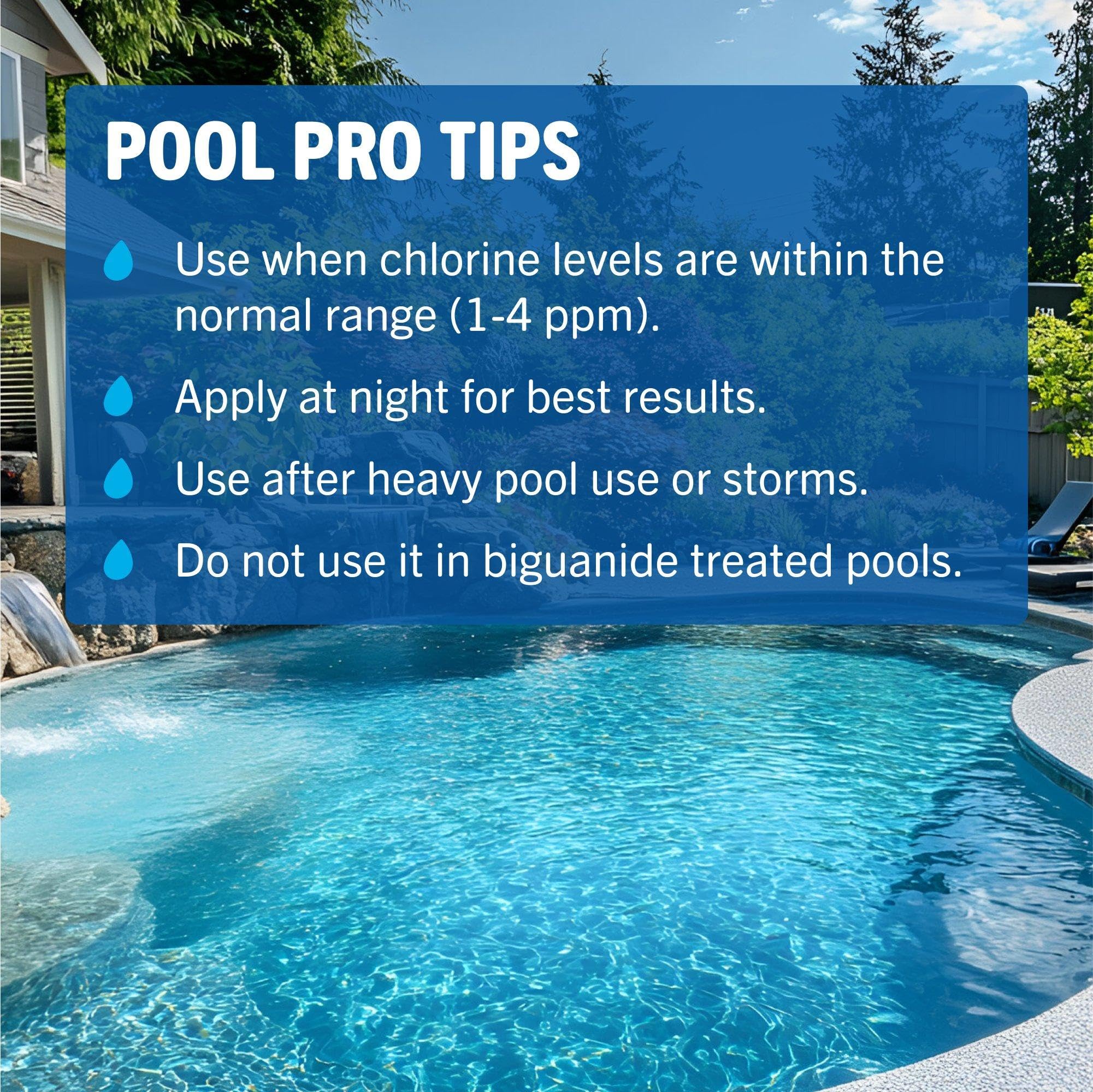
- Shock at dusk or night for best results.
- Brush and circulate the water after shocking.
- Don’t swim until the chlorine drops to safe levels.
Proper shocking removes organic contaminants and clears out chloramines, which can dull water.
6. Remove Metals
If tests show iron or copper, use a metal sequestrant. These products keep metals in solution so they don’t stain surfaces or affect water color. You may need to treat your source water if metals are a recurring problem.
7. Lower Total Dissolved Solids
If TDS is above 1,500 ppm, consider partially draining and refilling your pool with fresh water. High TDS can come from years of adding chemicals, so a reset can help.
8. Boost Circulation
- Run the pump longer, especially after cleaning or chemical treatments.
- Adjust return jets to point water in a circular motion.
- Check that all skimmers and drains are clear.
- Use a pool brush to stir up settled debris.
Better circulation means all water passes through the filter and chemicals mix evenly.
9. Upgrade Lighting
If your pool is always in the shade, consider adding underwater LED lights. These not only improve safety but also highlight water clarity and sparkle at night.
10. Clean Pool Surfaces Regularly
- Scrub waterline tiles to remove oils and scale.
- Use a tile cleaner designed for pools.
- Don’t forget steps, ladders, and light fixtures.
Clean surfaces let light reflect better, making your pool look more inviting.
11. Control Organic Load
Shower before swimming, keep pets out, and ask guests not to bring dirt or grass into the pool. Less organic matter means fewer particles and less work for your filter and chemicals.
12. Use Enzyme Products
Pool enzymes break down oils and lotions that can make water look dull. These are especially useful for busy pools or those with lots of swimmers.
13. Check For Air Leaks
Tiny air bubbles from pump or plumbing leaks can reduce sparkle. Check for bubbles in the pump basket or at the returns. Fix leaks to keep water clear and bright.
14. Consider Ozone Or Uv Systems
These advanced systems destroy contaminants that chlorine alone might miss. They can give a final polish to your water, making it even more sparkling.
15. Regular Maintenance Is Key
Stick to a weekly schedule:
- Test water at least once a week.
- Clean filters monthly.
- Brush and vacuum often.
- Shock as needed, especially after heavy use or storms.
Missing even one step can make water lose its sparkle.
Advanced Tips For That Extra Sparkle
Most guides stop at basic steps, but for a pool that truly stands out, try these advanced ideas.
Use Pool Polishers Before Parties
Add a small amount of clarifier or enzyme before big events. This gives your pool a temporary boost and makes it look perfect for guests.
Polish Chrome Fixtures
Shiny rails and ladders reflect light into the water. Wipe them with a clean cloth and a little metal polish (safe for pools).
Adjust Water Features
Fountains, waterfalls, and bubblers add movement, which increases the sparkling effect. Even a small fountain can make a big difference.
Choose The Right Pool Finish
Pools with light blue or white finishes look more sparkling than dark ones. If you ever resurface your pool, keep this in mind.
Keep Decks And Surroundings Clean
Dirt and leaves from the deck can blow into the pool and reduce sparkle. Sweep the area often, especially on windy days.
Real-world Examples
Let’s look at a few examples to show how these steps work in real life.
Case 1: The Suburban Family Pool
A family in Texas had clear water but never saw the “sparkle” they wanted. After checking their filter, they found it was four years old and packed with fine debris. They replaced the sand, added a clarifier, and started brushing weekly.
Within two weeks, the water began to shimmer in the afternoon sun.
Case 2: The Hotel Resort Pool
A hotel pool looked fine during the day but dull at night. The problem was weak underwater lighting. By replacing old bulbs with LED lights and cleaning the tiles, the pool gained a beautiful, inviting look after sunset.
Case 3: The “Old Well Water” Pool
A pool owner used well water with high iron. Even after regular cleaning, the water never sparkled. A metal sequestrant and partial water change fixed the problem, restoring the shine.
Pool Sparkle Myths Debunked
Some pool owners believe the following myths, which can hold them back:
- Myth: Only expensive chemicals make water sparkle.
Truth: Regular cleaning and proper chemical balance are more important.
- Myth: If water is clear, it’s as good as it gets.
Truth: You can almost always get more shine with a few small changes.
- Myth: Chlorine alone keeps water sparkling.
Truth: Filtration, brushing, and regular maintenance matter just as much.
Credit: www.amazon.com
Data: How Common Is The Problem?
According to the Association of Pool & Spa Professionals, over 70% of pool owners report their water is “clear” but only 32% say it “sparkles.” That means the majority could improve their pool’s appearance with just a few adjustments.
Common Mistakes Pool Owners Make
Many people miss out on sparkling water because they:
- Forget to brush pool surfaces.
- Use the wrong type of filter for fine particles.
- Ignore high TDS or metals in the water.
- Rely only on chlorine and ignore other factors.
- Run the pump for too few hours each day.
Avoiding these mistakes makes a huge difference in your pool’s look.

Credit: www.walmart.com
Maintenance Schedule For Sparkling Water
Here’s a sample schedule to keep your pool at its best:
| Task | How Often | Why It Matters |
|---|---|---|
| Test water chemistry | Weekly | Catch problems early |
| Brush walls and floor | Weekly | Remove particles and biofilm |
| Vacuum pool | Weekly | Remove settled debris |
| Clean filters | Monthly | Keep filtration strong |
| Shock pool | As needed | Remove organics |
| Add clarifier/enzyme | Monthly or before events | Boost sparkle |
When To Call A Professional
If you’ve tried everything and your pool still isn’t sparkling, it’s time to call in an expert. Pool professionals have tools and tests that go beyond home kits. They can spot hidden problems, like underground leaks, faulty equipment, or unusual chemical imbalances.
Long-term Benefits Of Sparkling Water
A sparkling pool isn’t just pretty. It’s a sign that your water is well balanced and healthy for swimmers. You’ll have fewer problems with algae, stains, or equipment wear. Plus, your pool becomes a place you’re proud to show off, not just a spot to cool down.
Final Thoughts
Clear water is good, but sparkling water is better. It’s a sign of a truly clean, healthy, and well-maintained pool. With the right mix of cleaning, chemical balance, filtration, and a few pro tips, you can enjoy that shimmering, inviting look every time you step outside. Start with small changes and you’ll quickly see a difference. Remember, every pool can sparkle—it just takes a little extra care.
For more detailed pool chemistry information, you can visit the CDC’s residential pool guidelines.
Frequently Asked Questions
Why Is My Pool Water Clear But Not Sparkling?
Even clear water can have microscopic particles, poor chemical balance, or dirty surfaces that stop it from sparkling. True sparkle comes from perfect clarity, balanced chemicals, and clean surfaces that reflect light.
Will Adding More Chlorine Make My Pool Sparkle?
Not always. Chlorine keeps water safe, but too much can make water cloudy or dull. Balance chlorine with the right pH, alkalinity, and regular cleaning for the best results.
How Often Should I Use Pool Clarifier?
Use a clarifier once a month or before a big event. Don’t overuse, or it can gum up the filter. Always follow the product’s directions.
Can The Type Of Pool Filter Affect Water Sparkle?
Yes. DE and cartridge filters catch finer particles than sand filters, so they often produce more sparkling water. Using a filter aid can also help sand filters improve clarity.
Is It Safe To Swim If My Pool Is Clear But Not Sparkling?
Usually, yes. Clear water means it’s mostly clean, but dull water can be a sign of minor chemical imbalances or debris. Test your water to be sure it’s safe before swimming.
With these steps and insights, you can turn any clear pool into a sparkling one—just in time for your next swim!