
A short circuit is one of the most dangerous electrical problems in homes and industries. People expect that when a short circuit happens, the breaker will trip immediately, cutting off power and preventing fires or equipment damage. But sometimes, a short circuit does not trip the breaker.
This situation can be confusing and risky. Understanding why this happens is important for safety and for preventing bigger electrical disasters.
This article will explain, in simple language, why a short circuit might not trip a breaker, what factors are involved, and what you should do if you face this situation. You will also learn about the types of breakers, how they work, and which warning signs to watch for. This guide covers the topic completely, using practical examples, data, and clear steps to keep your electrical system safe.
What Is A Short Circuit?
A short circuit happens when electricity takes an unexpected shortcut, skipping the normal path through wires and equipment. Usually, the current flows along a specific route (the circuit). But if a wire’s insulation fails or wires touch each other, the electricity jumps across a much shorter path, causing a sudden rush of current.
This extra current can generate a lot of heat in a very short time. If nothing stops it, the wire can melt, equipment can burn, and fires can start. Most electrical systems have circuit breakers to stop this from happening.
Common Causes Of Short Circuits
- Damaged insulation – Worn or cracked wire covering lets wires touch.
- Loose connections – Wires not properly attached in outlets or switches.
- Water exposure – Water conducts electricity, creating new paths.
- Faulty appliances – Old or broken devices can short internally.
- Rodent damage – Mice and rats can chew through wires.
Understanding these causes helps spot risks early.
How Circuit Breakers Work
A circuit breaker is a safety switch. When too much current flows, it “trips,” or turns off, breaking the circuit. This protects wires, devices, and people.
Types Of Circuit Breakers
There are different breakers for different needs:
- Thermal breakers – Use a bimetal strip that bends with heat (from high current) to trip the breaker.
- Magnetic breakers – Use an electromagnet that pulls a switch open when current is too high.
- Thermal-magnetic breakers – Combine both methods for faster, more accurate protection.
- Ground Fault Circuit Interrupters (GFCI) – Detect differences in current between hot and neutral wires, tripping if there’s a leak.
How Breakers Detect Short Circuits
In a short circuit, the current jumps very high, very fast. Magnetic or thermal-magnetic breakers are designed to sense this. Normally, a breaker trips in milliseconds if a true short occurs.
Why A Short Circuit Does Not Trip Breaker
It is not common, but sometimes a breaker does not trip during a short circuit. This is dangerous. Here are the main reasons why this happens:
1. Breaker Is Oversized For The Wiring
If the breaker’s rating is higher than the wire can handle, a short circuit might not push enough current to trip it. For example, if a 30-amp breaker is used on wiring rated for 15 amps, the wire can overheat before the breaker trips.
2. Breaker Is Old Or Faulty
Breakers can wear out or get stuck. Dust, rust, or mechanical failure can make the breaker slow or unable to trip. An old breaker may not sense high current properly.
3. High Resistance Short
Not all short circuits are “hard” shorts (a direct connection between live and neutral or ground). Sometimes, the short happens through water, corroded metal, or carbonized insulation. These paths have higher resistance, so the current is not high enough to trip the breaker, but still enough to cause dangerous heat.
4. Shared Neutral Wiring Problems
In some homes, outlets share a neutral wire. If there is a wiring mistake or loose neutral, a short might not cause enough current difference for the breaker to trip. This can be confusing and hard to find.
5. Breaker Is Not The Correct Type
Some circuits need special breakers, like GFCI or arc-fault breakers. A standard breaker might not detect certain kinds of faults, especially if the short is to ground or through water.
6. Subtle Electrical Faults
Sometimes, the wiring has a hidden fault, like a partial short. It draws more current than normal, but not enough to trip the breaker. Over time, this can damage insulation and start a fire.
7. Loose Or Poor Connections
If a wire is loose at a breaker or outlet, it can arc (make tiny sparks), causing heat and damage. But the current may not be high enough to trip the breaker.
8. Breaker Is “stuck On”
Very rarely, a breaker can fail in the “on” position. This is more likely with old, cheap, or counterfeit breakers.
9. Neutral-to-ground Shorts
If the neutral wire touches ground downstream of the panel, the breaker might not see extra current, so it doesn’t trip. This is a code violation and a serious safety risk.
10. Wrongly Sized Breakers Installed
Sometimes, people replace a tripping breaker with a larger one to “fix” nuisance tripping, not realizing this disables protection. Always use the correct size for the wire.
Signs Of A Short Circuit That Is Not Tripping The Breaker
You might not see sparks or smoke, but there are warning signs when a short circuit does not trip the breaker:
- Burn marks around outlets or switches
- Melting smells or burning plastic odors
- Warm or hot wires or breaker panel spots
- Buzzing or crackling sounds from outlets, switches, or the panel
- Lights dimming or flickering
- Devices not working right or shutting off randomly
Never ignore these signs. They mean something is wrong behind the walls.
Real-life Examples And Data
Electrical fires are often caused by breakers not tripping when they should. The National Fire Protection Association (NFPA) reports that faulty wiring and related equipment caused 13% of all home fires in the US from 2014–2018, resulting in hundreds of deaths and thousands of injuries each year.
A real example: In 2021, a family in Texas lost their home to a fire started by a short circuit in old wiring. The breaker did not trip because it was corroded inside. By the time smoke was seen, the fire was already out of control. This shows why working breakers are so critical.
What To Do If You Suspect A Short Circuit That Does Not Trip The Breaker
Act quickly if you think there is a short circuit, but the breaker did not trip:
- Turn off power to the suspected circuit at the panel.
- Unplug all devices from the problem area.
- Check outlets and switches for burn marks, heat, or smells.
- Call a licensed electrician to inspect the wiring and breaker.
- Do not reset the breaker and turn it back on until the cause is found.
Trying to fix electrical faults yourself can be deadly. Leave inspection and repair to professionals.
How To Test And Diagnose A Non-tripping Breaker
Testing should only be done by someone qualified. However, understanding the process can help you communicate with electricians and keep your home safe.
Visual Inspection
- Look for burn marks or melted spots in the panel.
- Check if the breaker feels loose or is hard to switch.
- Smell for burning or overheating.
Using A Multimeter
A multimeter can check for voltage, continuity, and resistance. Testing should be done with the power off.
- Measure voltage at the breaker’s output terminal (should be zero when off).
- Test for continuity through the breaker (should not be continuous when off).
- Check resistance across the breaker (should be very low when on, very high when off).
Load Testing
Electricians use a breaker tester to put a safe load on the breaker and see if it trips at the right point. If it does not trip when overloaded, it is faulty.
Checking For Hidden Shorts
Sometimes, a short is hidden under floors or inside walls. Electricians use special tools, like a circuit tracer or thermal camera, to find hot spots or unusual wiring paths.
Comparing Breaker Types For Short Circuit Protection
Different breakers have different reactions to short circuits. The table below compares common breaker types:
| Breaker Type | Trip Speed (Short Circuit) | Common Use | Detects Ground Faults? |
|---|---|---|---|
| Thermal | Medium | Old homes, basic circuits | No |
| Magnetic | Very Fast | Modern circuits | No |
| Thermal-Magnetic | Very Fast | Most home panels | No |
| GFCI | Fast | Bathrooms, kitchens | Yes |
| AFCI | Fast | Bedrooms, living rooms | No |
As you can see, magnetic and thermal-magnetic breakers trip fastest on true short circuits. GFCIs and AFCIs are designed for special faults.
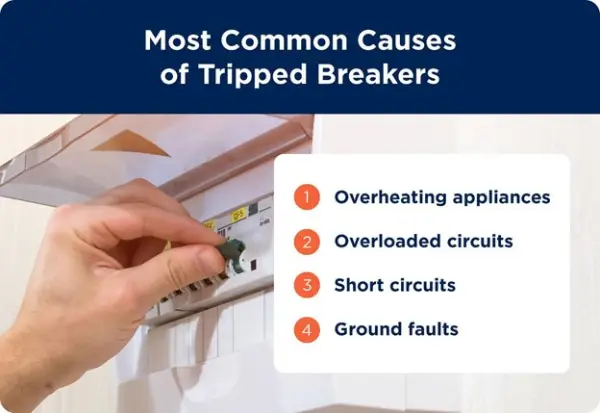
Credit: www.mrappliance.com
Key Differences Between Overload And Short Circuit
Many people confuse overloads with short circuits. Here’s a comparison:
| Feature | Overload | Short Circuit |
|---|---|---|
| Cause | Too many devices on one circuit | Direct connection between hot and neutral/ground |
| Current Increase | Slow, moderate | Very fast, very high |
| Breaker Reaction | Trips after seconds or minutes | Trips instantly (if working) |
| Damage Risk | Wire overheating | Fire, melting, shock |
A short circuit is much more serious than a simple overload.
Preventing Short Circuits And Breaker Failures
Prevention is the best defense against electrical fires and damage.
Have Properly Sized Breakers
Always use breakers that match the wire size:
- 15-amp breaker for 14-gauge wire
- 20-amp breaker for 12-gauge wire
- 30-amp breaker for 10-gauge wire
Never Install A Bigger Breaker “just In Case.”
Regularly Inspect And Test Breakers
- Flip breakers off and on once a year to keep them from sticking.
- Have an electrician check the panel every few years, especially in older homes.
- Replace any breaker that feels hot, smells burnt, or trips for no reason.
Upgrade Old Panels
Old panels (over 30 years) can have worn or unsafe breakers. Panels from brands like Zinsco or Federal Pacific are known for not tripping in dangerous cases. Replace these panels as soon as possible.
Fix Wiring Problems Quickly
If you see or smell signs of trouble, get repairs done fast. Delaying can lead to bigger problems.
Protect Against Water And Rodents
- Seal holes around wiring to keep out water and animals.
- Use outdoor-rated boxes and covers in damp areas.
Common Myths About Breakers And Short Circuits
A lot of wrong ideas exist about breakers and how they work. Here are some common myths:
- Myth: “If the breaker doesn’t trip, the wiring is safe.”
Fact: Wiring can be overheating or damaged, even if the breaker stays on.
- Myth: “You can use a bigger breaker to stop nuisance tripping.”
Fact: This can let dangerous amounts of current flow, risking fire.
- Myth: “All breakers trip the same way.”
Fact: Some trip instantly, others are slower. Old or cheap breakers may not trip at all.
- Myth: “A breaker will always protect against electric shock.”
Fact: Standard breakers protect mainly against overheating, not direct shock.
Cost Of Ignoring A Non-tripping Breaker
Ignoring this issue can be expensive and dangerous. Electrical fires cause billions of dollars of property damage each year. Insurance may not cover claims if your panel or wiring is not up to code. More importantly, life and health are at risk.
A new breaker costs $10–$50. Rewiring a home can cost $2,000–$15,000, but this is nothing compared to fire damage or injury.
When To Replace A Breaker
Replace a breaker if:
- It will not reset, or trips with no load.
- It feels hot to the touch.
- It smells burnt or has visible damage.
- It does not trip even during obvious faults.
- It is over 30 years old, especially from recalled brands.
Always hire a professional. Never replace a breaker with a higher amp rating than the wire.
How Electricians Fix Non-tripping Breakers
Electricians follow a careful process:
- Turn off main power for safety.
- Remove and inspect the suspect breaker.
- Test the breaker with a load or special tools.
- Check wiring for shorts, loose connections, or signs of arcing.
- Replace the breaker with the correct type and rating.
- Test the repaired circuit before restoring power.
They also check for code violations or other unsafe conditions.
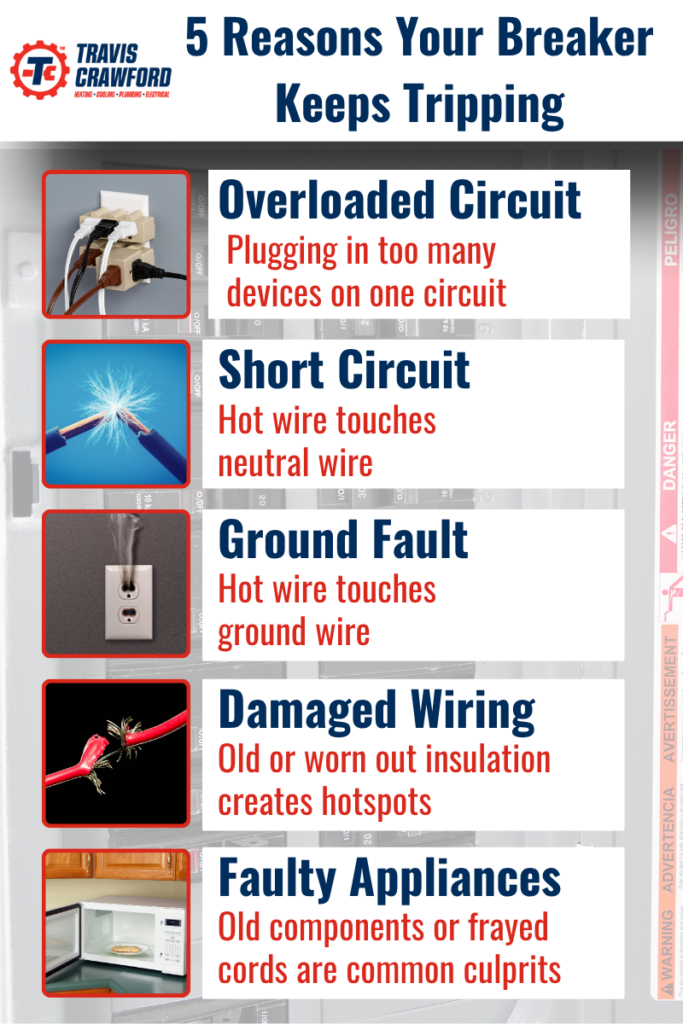
Credit: traviscrawfordhvac.com
How To Choose The Right Breaker For Your Circuit
Selecting the correct breaker is critical. Here are the main factors:
- Wire size: Match amp rating to the wire.
- Type of load: Some devices (motors, air conditioners) need special breakers.
- Location: GFCI for wet areas, AFCI for bedrooms.
- Panel compatibility: Not all breakers fit all panels.
If unsure, ask an electrician or check the panel label.
Hidden Dangers: Counterfeit Or Substandard Breakers
Counterfeit breakers are common online. They may look real but lack proper safety features. Always buy from reputable suppliers and check for certification marks like UL or CSA.
A real case: In 2018, inspectors found hundreds of fake breakers in a new apartment building in Florida. They did not trip under short circuit tests, putting hundreds at risk.

Credit: www.compliancesigns.com
Data: How Often Breakers Fail To Trip
Studies show that about 1–2% of breakers in homes fail to trip when they should. That may sound small, but in the US, that’s millions of breakers. Older homes and poorly maintained panels have higher failure rates.
A study by the Consumer Product Safety Commission found that Federal Pacific and Zinsco panels can fail up to 51% of the time in some fault conditions. This is a major reason for electrical codes and inspections.
Electrical Codes And Laws
Electrical codes require:
- Breakers must match wire size and type.
- All breakers must be listed (certified) for safety.
- GFCI or AFCI breakers in certain rooms.
- Panels and breakers replaced after floods, fires, or major upgrades.
Ignoring codes puts you at risk and can void insurance.
Non-obvious Insights Beginners Miss
- Partial shorts are more dangerous than you think. Small, hidden faults can heat wires for months or years before a fire starts—without ever tripping the breaker.
- Replacing a tripping breaker with a bigger one is never a real solution. It only hides the problem and makes fires more likely.
- Neutral-to-ground shorts can be silent. They may not trip any breaker but can still shock or damage devices.
- Breaker age matters. Even if it “works,” a 30-year-old breaker may not trip as fast as needed.
- Not all breakers fit all panels. Using the wrong type can prevent proper tripping.
How To Stay Safe
- Test GFCI and AFCI breakers monthly (they have test buttons).
- Keep your panel dry and free from dust and pests.
- Upgrade your panel if it is old, recalled, or too small for your needs.
- Never do electrical work without the right knowledge and permits.
- Have your wiring and panel checked every 5–10 years.
For more details on electrical safety and breaker types, visit the NFPA’s electrical safety page.
Frequently Asked Questions
What Should I Do If My Breaker Does Not Trip During A Short Circuit?
Immediately turn off the main power and call a licensed electrician. Do not touch outlets or devices in the affected area. This is a dangerous situation.
How Can I Tell If My Breaker Is Too Old Or Faulty?
Signs include breakers that are hot, smell burnt, trip for no reason, or fail to trip during faults. If your panel is over 30 years old, or uses recalled brands, replace it.
Is It Safe To Replace A Breaker Myself?
No. Working in the breaker panel is dangerous. Mistakes can cause shock, fire, or code violations. Always hire a qualified electrician.
Can I Use A Higher-amp Breaker To Stop Nuisance Tripping?
Never do this. Using a bigger breaker for the same wires can cause overheating and fire. Always match breaker size to wire gauge.
What Is The Difference Between A Gfci And A Regular Breaker?
A GFCI breaker protects against ground faults (leaks of current to ground), often found in wet areas. A regular breaker mainly protects against overloads and short circuits.
If you know the signs and act quickly, you can prevent disaster. Short circuits that do not trip the breaker are rare but very serious. Safety comes first—never ignore warning signs, and always trust a professional for repairs.