
When you look at the maze of pipes behind your bathroom wall, you may notice a special one called the vent pipe. This pipe is not for water, but for air. It makes sure that your toilet flushes smoothly, and that sewer gases do not sneak back into your home.
If you are wondering, “Can a toilet vent be downstream? ” you are not alone. Many homeowners, new plumbers, and DIY enthusiasts ask this question when planning or repairing a bathroom.
Understanding this topic is important for both safety and function. A small mistake in venting can cause slow flushing, bad smells, or even dangerous sewer gas leaks. In this article, you will get a clear answer on whether a toilet vent can be located downstream, why venting matters, the rules that apply, and what happens if you get it wrong.
You will also see practical examples, common mistakes, and expert tips for proper toilet venting.
What Is A Toilet Vent And Why Is It Needed?
A toilet vent is part of your home’s plumbing vent system, often called the “vent stack.” Its main job is to let air into the drain pipes. This might sound simple, but it has a big impact on your bathroom.
When you flush a toilet, a lot of water moves quickly through the drain pipe. As it moves, it pushes air ahead and pulls air behind. Without a vent, a vacuum forms in the pipe. This vacuum can cause several problems:
- The toilet may not flush well, leaving waste behind.
- Sewer gases may escape through the bowl, causing a strong odor.
- The water seal in the toilet trap may be sucked out, which is a health risk.
The vent pipe prevents these issues by letting fresh air enter the drainage system, balancing the air pressure. This makes sure that water and waste flow smoothly and safely out of your home.
Understanding “downstream” In Plumbing
Before we answer the main question, it’s important to understand what “downstream” means in plumbing.
Downstream refers to the direction water flows after it leaves a fixture (like a toilet). In a typical home:
- Upstream is closer to the fixture.
- Downstream is farther away, closer to where the pipe joins the main sewer line.
So, a “downstream vent” would be a vent pipe that connects to the drain after the toilet’s waste has already joined with waste from other fixtures or traveled a certain distance.
Plumbing Venting Basics
Every plumbing system must follow certain venting rules. These rules are there for safety and to prevent damage. Here are some basics:
- Wet venting: Some fixtures share vent pipes. For example, a toilet and a sink may use the same vent in a bathroom group.
- Dry venting: The vent pipe carries only air, never water.
- Trap seal: The curved part of the toilet holds water and blocks sewer gases.
Most modern plumbing codes require that every fixture, including toilets, has a vent located close by. The vent must be placed so that the air can reach the waste before it travels too far.
Can A Toilet Vent Be Downstream? The Short Answer
The short answer is: usually, no—a toilet vent cannot be placed downstream. In most cases, the vent must be upstream (closer to the fixture) or at least at the same point where the toilet drain enters the main line.
Why? If the vent is downstream, air cannot reach the waste quickly enough. This means:
- The toilet may not flush well.
- The trap seal may be lost.
- Sewer gases may escape.
There are some rare exceptions, but they depend on local plumbing codes, special designs, and professional approval.
Why Plumbing Codes Forbid Downstream Vents (in Most Cases)
Most countries use codes like the International Plumbing Code (IPC) or the Uniform Plumbing Code (UPC). These codes are strict for a reason.
Loss Of Trap Seal
If the vent is downstream, the fast-moving water from the toilet can create a vacuum in the pipe before the air can reach it. This can suck water out of the toilet’s trap, breaking the seal.
Cross-venting And Siphoning
When waste from other fixtures (like a bathtub) joins the main pipe before the vent, it can create pressure changes. This can pull air through the wrong spot, causing siphoning and gurgling noises.
Sewer Gas Risk
If gases cannot escape properly, they may travel back through the toilet. This is both unpleasant and unhealthy.
Code Requirement Example
For example, the UPC says:
- The vent connection must not be downstream of the fixture’s trap.
- All fixtures must have a vent within a certain distance.
This means that venting downstream is not allowed for toilets in almost all standard installations.
Comparing Upstream And Downstream Venting
Let’s look at a simple comparison to see why upstream venting is preferred.
| Venting Type | Toilet Performance | Trap Seal Protection | Sewer Gas Risk | Meets Code? |
|---|---|---|---|---|
| Upstream Venting | Flushes smoothly | Strong | Low | Yes |
| Downstream Venting | Poor, slow flush | Weak (risk of siphon) | High | No |
Are There Any Legal Exceptions?
While the rule against downstream venting is strong, there are a few rare exceptions:
- Engineered Systems: A licensed engineer may design a special system that allows for downstream venting, but this must be approved by the local inspector.
- Island Fixture Venting: In kitchen islands, special loop venting is allowed—but not for toilets.
- Specialty Vents: Devices like air admittance valves (AAVs) may be allowed in some places, but these are also rarely approved for toilets.
Most homes will never qualify for these exceptions.
Real-world Example: Bathroom Group With Shared Vent
Imagine a bathroom with a toilet and a sink. The sink’s drain and vent connect upstream of the toilet. This is called wet venting.
If you put the vent after the toilet (downstream), the toilet flush can pull water out of the sink’s trap, causing smells and noise. This setup would fail inspection and cause problems.
Common Mistakes With Toilet Venting
Many DIYers and even some plumbers make mistakes when it comes to venting. Here are the most frequent ones:
- Placing the vent too far from the toilet: Each code sets a maximum distance (often 6 feet for a 3-inch pipe). Beyond this, the vent won’t work.
- Trying to use a downstream vent: As explained, this is almost always wrong for toilets.
- Ignoring local codes: Some areas have stricter rules.
- Using improper pipe sizes: The vent pipe must meet a minimum size (often 2 inches for toilets).
- Not securing vent pipes: Loose pipes can leak air, causing noise and smells.
A non-obvious insight: Even if your toilet seems to work with a downstream vent at first, problems often appear later, especially as pipes age or with heavy use.
Typical Toilet Venting Layouts
There are several approved ways to vent a toilet. Here are the most common:
Individual Vent
A single vent pipe connects just upstream of the toilet drain. This is simple and effective.
Wet Vent
The vent is shared with other fixtures, like a sink or shower. The vent must still connect before or at the same point as the toilet drain.
Circuit Vent
Used in commercial buildings, several toilets may share a large vent, but the principle is the same—no vent connection downstream.
Typical Distances: How Close Must The Vent Be?
Codes set limits on how far the vent can be from the toilet. For a 3-inch pipe (standard for toilets), the vent must usually connect within 6 feet (1. 8 meters). For a 4-inch pipe, the distance increases, but still, the vent cannot be downstream.
Here is a comparison:
| Pipe Size | Max Distance to Vent | Downstream Allowed? |
|---|---|---|
| 3-inch | 6 feet | No |
| 4-inch | 10 feet | No |
What Happens If You Vent A Toilet Downstream?
If you ignore the code and vent a toilet downstream, here’s what you might notice:
- Slow or incomplete flushing: Waste stays in the bowl or drain.
- Gurgling sounds: Air gets pulled through other traps, causing noise.
- Sewer odors: The trap seal is lost, letting gases in.
- Failed inspection: Your project may not pass, delaying your work.
- Water damage: In worst cases, pressure changes can cause leaks.
A second non-obvious insight: Even if you do not smell sewer gas, the loss of the trap seal means small amounts of gases are entering your home, which can harm health over time.

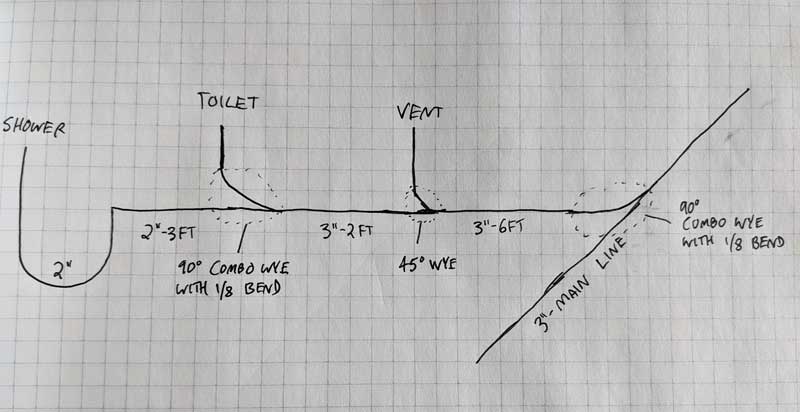
Credit: www.reddit.com
How Inspectors Check Toilet Venting
When you add or change bathroom plumbing, the inspector will look for:
- Proper vent placement (upstream or at the connection point)
- Correct pipe sizes
- No cross-venting or wet venting errors
- No downstream vents
They may ask for a water test (filling the pipes and watching for leaks or noises) or a smoke test (to check for air leaks).
Alternatives If You Cannot Vent Upstream
If your bathroom layout makes upstream venting hard, here are some options:
- Reroute the vent stack: It may mean opening walls or floors, but it is often the only legal way.
- Use a wet vent with another fixture: Only if allowed by code.
- Air admittance valve (AAV): These are rarely approved for toilets, but may be possible for other fixtures.
- Professional design: Hire a licensed plumber or engineer.
Never try to “cheat” the code with a downstream vent—it usually costs more in the end.
Case Study: A Failed Bathroom Remodel
A homeowner in Texas decided to add a second toilet in the basement. To save time, they connected the vent pipe downstream, after the new toilet had joined the main stack. At first, everything seemed fine. But a few weeks later:
- Both toilets started to gurgle.
- Flushing was slow.
- A strong sewer smell appeared in the basement.
The problem? The downstream vent could not balance the pressure. The inspector failed the remodel, and the homeowner had to redo the work, costing extra time and money.
Expert Tips For Proper Toilet Venting
- Plan your vent layout before you start: Avoid having to reroute pipes later.
- Check your local code: Each area may have slight differences.
- Use the right pipe size: Do not downsize vent pipes.
- Keep vent runs as short as possible: Long vent runs can collect condensation or clog.
- Test with water and smoke: Make sure no air is being pulled from other traps.
- Get a permit and inspection: It may seem like a hassle, but it saves trouble later.

Credit: diy.stackexchange.com
Comparing Toilet Venting To Other Fixtures
Toilets have special venting needs because they move a large amount of water at once. Here’s how they compare to other fixtures:
| Fixture | Vent Distance Allowed | Downstream Vent Allowed? |
|---|---|---|
| Toilet | 6 feet (3-inch pipe) | No |
| Sink | 5 feet (1.5-inch pipe) | No |
| Shower/Tub | 5 feet (2-inch pipe) | No |
Signs Of A Badly Vented Toilet
Even if you did not do the plumbing yourself, you can spot venting problems. Watch for:
- Water draining slowly from the toilet bowl
- Gurgling in the sink when flushing the toilet
- Water level in the toilet bowl rising or falling after use
- Sewer smell in the bathroom
If you notice these, call a plumber to check the venting.
Diy Or Call A Pro?
If you are experienced and know your local code, you may be able to add a vent yourself. However, because toilets are so important to home health and safety, most people should call a licensed plumber.
A pro will:
- Plan the vent layout for you
- Pull permits and handle inspections
- Fix mistakes before they cause damage
What About Old Homes?
Older houses sometimes have odd plumbing layouts. If your home was built before modern codes, you may find downstream or missing vents. This is a common cause of toilet odor or slow flushing in old homes.
You do not always need to replace all the pipes, but adding a proper vent may solve many problems. Check with your local building office for advice.
The Science Behind Toilet Venting
When you flush a toilet, gravity pulls water and waste down the pipe. This fast flow creates negative pressure behind it (a vacuum). The vent pipe lets air rush in to fill this space, keeping the pressure balanced.
If the vent is downstream, air cannot reach the vacuum in time, so the trap seal is lost.
A simple way to picture it: imagine turning a bottle of water upside down. The water “glugs” as air tries to enter. A vent pipe stops this glugging, letting water flow smoothly.
The Role Of Air Admittance Valves (aavs)
An AAV is a one-way valve that lets air into the pipe but not out. These are sometimes used for sinks or washing machines, but rarely (and almost never legally) for toilets. Toilets move too much water for most AAVs to handle.
If your inspector allows an AAV for a toilet, it must be a large, approved type and installed exactly as the code says.
Myth: “my Toilet Flushes Fine With A Downstream Vent—so It’s Okay!”
This is a risky belief. Some systems seem to work at first, but over time, problems appear:
- Pipes may clog more easily.
- Trap seals wear out, letting gas in.
- The system fails inspection when you sell your home.
It is always best to follow code, even if you do not notice problems right away.
How To Fix A Downstream-vented Toilet
If you discover your toilet has a downstream vent, the fix depends on your home’s layout:
- Add a new vent stack: This may mean opening walls or floors.
- Tie into an existing upstream vent: Sometimes you can join a nearby vent pipe.
- Rework the bathroom layout: In rare cases, moving the toilet or other fixtures is needed.
Get a plumber’s advice before starting.
Costs Of Re-venting A Toilet
Fixing vent problems can be costly, especially if walls or floors must be opened. Simple vent additions may cost a few hundred dollars, but complex jobs can be $2,000 or more. Delaying repairs often leads to higher costs from water damage or failed inspections.
Why Some People Try Downstream Vents
Homeowners sometimes try to vent downstream to save money or avoid opening walls. This shortcut almost always leads to more trouble later. Professional plumbers know that proper venting is cheaper in the long run.
Credit: terrylove.com
International Plumbing Code Reference
The International Plumbing Code is clear: “A vent shall not be located downstream of the fixture drain.” You can read more about these rules at the official International Code Council site.
Importance Of Inspection And Permits
Getting a permit and inspection is not just “red tape. ” It protects you from future problems and helps keep your home safe. If you sell your house, improper venting can hold up the sale or lower your price.
Frequently Asked Questions
Why Can’t A Toilet Vent Be Downstream?
A downstream vent cannot balance air pressure quickly enough. This can cause trap seal loss, sewer gas leaks, and poor flushing. Most plumbing codes forbid downstream vents for toilets.
Are There Any Fixtures That Allow Downstream Venting?
No standard fixtures allow downstream venting. Some engineered commercial systems may have exceptions, but homes must vent all fixtures upstream or at the trap.
What Is The Maximum Distance A Toilet Can Be From Its Vent?
With a 3-inch drain pipe, the maximum distance is usually 6 feet. For a 4-inch pipe, it’s about 10 feet. Always check your local code for exact rules.
Can I Use An Air Admittance Valve (aav) For A Toilet Vent?
Almost never. Toilets move too much water for most AAVs, and inspectors rarely approve them for toilets. They are more common for sinks or washing machines.
How Do I Know If My Toilet Is Vented Correctly?
You should not hear gurgling sounds, smell sewer gas, or see slow flushing. A plumber or inspector can check your vent layout and pipe sizes to be sure.
A proper toilet vent is not just a detail—it is the difference between a healthy, trouble-free bathroom and years of problems. If you are planning work or fixing old plumbing, always vent your toilet upstream or at the trap, never downstream.
This simple step protects your home, your health, and your wallet for the long run.