
Many pool owners hear the terms “backwash” and “rinse” but may not fully understand the difference. If you want crystal-clear pool water, it’s important to know how these two functions work and why they matter. While both are part of the pool filter cleaning process, they play very different roles. Confusing them can lead to cloudy water, filter damage, or wasted chemicals. This guide will explain the difference between backwash and rinse in detail, show you how each process works, and share expert tips to keep your pool healthy and safe.
What Is Backwashing?
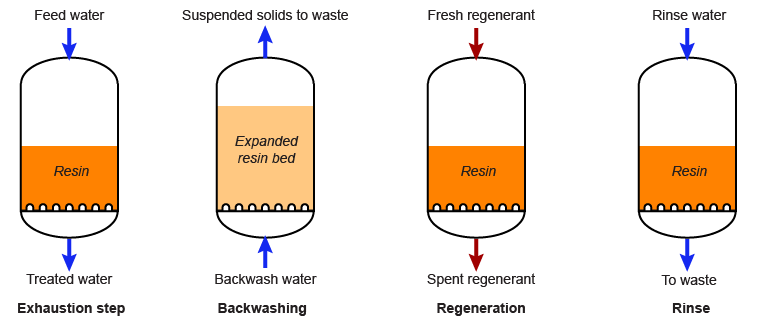
Backwashing is a cleaning process for sand or DE (diatomaceous earth) pool filters. Over time, dirt, debris, and oils collect inside the filter, slowing water flow and reducing cleaning power. Backwashing reverses the water flow through the filter, flushing out trapped particles and restoring efficiency.
It’s an essential maintenance task for many types of pool filters.
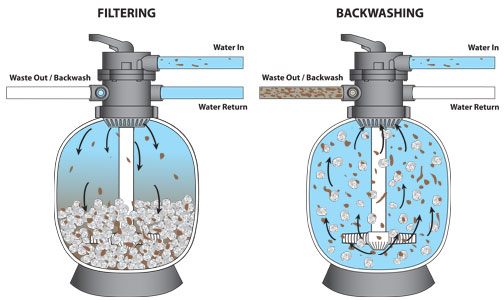
During backwashing, water moves backward through the filter tank and out a waste line or drain. This action lifts and removes contaminants from the filter media (sand or DE). The dirty water is sent outside the pool system, usually into a drain or sewer.
Once backwashing is complete, the filter can work like new again.
How Backwashing Works
When you set your pool valve to “backwash,” the system forces water in the opposite direction through the filter. Instead of flowing from top to bottom, water enters from the bottom and exits out the top, carrying debris away. The process usually takes 2–3 minutes, depending on how dirty the filter is.
Here’s a typical backwash sequence:
- Turn off the pool pump to prevent damage.
- Set the multiport valve to ‘Backwash.’
- Restart the pump and let it run until the sight glass (if your system has one) is clear.
- Turn off the pump again.
- Set the valve to ‘Rinse’ (more on this soon).
During backwashing, you may notice dirty, brownish water flowing out. This is normal. You should keep backwashing until the water runs clear.
What Is Rinsing?
Rinsing is the step immediately after backwashing. It’s often overlooked, but it’s critical for pool health. Rinsing flushes out any remaining dirt and debris from the filter pipes and helps reset the filter bed (sand or DE) to its normal position.
When you rinse, clean water enters the filter in the normal direction, but instead of returning to the pool, it exits to the waste line. This step prevents any leftover debris from flowing back into your pool when you switch back to “filter” mode.
How Rinsing Works
Rinsing only takes about 30 seconds to 1 minute. Here’s what happens during this process:
- Set the multiport valve to ‘Rinse.’
- Turn on the pump and let water run to waste.
- Watch the sight glass or observe the outflow; stop when the water is clear.
- Turn off the pump.
- Return the valve to ‘Filter’ mode.
Skipping the rinse step can send dirty water back into your pool, undoing your hard work.
The Core Differences: Backwash Vs Rinse
While both backwash and rinse use water to clean the filter, they have different goals and mechanics. Understanding these differences is key for proper pool care.
| Feature | Backwash | Rinse |
|---|---|---|
| Direction of water flow | Reverse (bottom to top) | Normal (top to bottom) |
| Purpose | Clean filter media | Flush pipes & reset filter bed |
| Water destination | Waste line/drain | Waste line/drain |
| Duration | 2–3 minutes | 30 seconds – 1 minute |
| When to use | When pressure rises or flow drops | Immediately after backwash |
Why Are Both Steps Necessary?
Some pool owners try to skip the rinse step, thinking backwashing is enough. This can lead to immediate problems. Here’s why you need both:
- Backwash removes heavy debris from the filter media.
- Rinse flushes out loose particles that backwash dislodged but did not remove, and prevents them from going back into the pool.
After backwashing, the filter bed can be disturbed, with debris left in the pipes. Rinsing ensures only clean water goes back to your pool. If you skip rinsing, you might see a cloud of dirt when you restart filtering.
Credit: dardel.info
When To Backwash And Rinse Your Pool Filter
Knowing when to perform these steps is just as important as knowing how. Here are the main signs and guidelines:
- Pressure gauge increase: If your pool filter’s pressure is 8–10 psi higher than normal, it’s time to backwash.
- Reduced water flow: If jets are weaker, the filter may be clogged.
- Water clarity drops: Cloudy or dirty pool water can mean the filter is overloaded.
- Routine maintenance: Many pool owners backwash every 1–2 weeks during heavy use.
Always rinse immediately after each backwash, even if the water looks clear.
How To Backwash And Rinse: Step-by-step
Here is a simple guide for sand and DE filters with a multiport valve:
- Turn off the pump before changing valve positions.
- Set valve to “Backwash.”
- Turn on the pump for 2–3 minutes, or until water in the sight glass is clear.
- Turn off the pump.
- Set valve to “Rinse.”
- Turn on the pump for 30–60 seconds.
- Turn off the pump.
- Set valve to “Filter.”
- Restart the pump.
For cartridge filters, the process is different: cartridges are removed and hosed off, so there’s no backwash or rinse setting.
Important Tips
- Never move the multiport valve with the pump running. This can damage internal parts.
- Don’t over-backwash. Too much can waste water and remove filter media.
- Check local laws. Some places have rules about draining pool water.
Credit: wiki.opensourceecology.org
Real-world Example
Imagine a busy summer weekend. The kids swim all day, and you notice the pool water looks a little cloudy on Monday. You check the filter pressure, and it’s 10 psi above normal. You decide to backwash. After 2 minutes, the sight glass is clear.
You switch to rinse, run for 45 seconds, then back to filter. The next day, the water is sparkling again.
If you had skipped the rinse step, you might see a puff of dirt coming from the pool returns. This is why rinse is critical.
The Science Behind Backwash And Rinse
Pool filters use a bed of sand or DE powder to trap tiny particles. As water moves through, debris is caught between grains. Over time, this builds up and blocks flow. Backwashing reverses the water direction, lifting and suspending debris, so it can be washed out.
Rinsing restores the filter bed. When you backwash, the sand or DE is disturbed and uneven. Rinsing settles it back into place and removes any leftover debris from the pipes.
Backwash And Rinse For Different Filter Types
Not all pool filters are the same. Here’s how backwash and rinse apply to each:
Sand Filters
The most common residential pool filter. Sand filters use #20 silica sand to trap debris.
- Backwash: Essential every 1–2 weeks during heavy use.
- Rinse: Always after backwashing.
- Sand lasts 5–7 years before replacement.
De (diatomaceous Earth) Filters
These filters use grids coated with DE powder.
- Backwash: When pressure rises or flow drops.
- Rinse: After every backwash.
- After backwashing, you must add fresh DE powder.
Cartridge Filters
Cartridge filters do not have backwash or rinse functions. Instead, you remove the cartridge and clean with a hose. This is a key difference—don’t try to backwash a cartridge filter.
Comparison Table: Filter Types And Backwash/rinse
| Filter Type | Has Backwash? | Has Rinse? | Cleaning Frequency |
|---|---|---|---|
| Sand | Yes | Yes | 1–2 weeks |
| DE | Yes | Yes | 2–4 weeks |
| Cartridge | No | No | Every 4–6 weeks |
Common Mistakes And How To Avoid Them
Even experienced pool owners sometimes make errors. Here are common mistakes with backwash and rinse:
- Skipping the rinse step: This sends dirty water back into the pool.
- Moving the valve with the pump on: Can break the internal spider gasket.
- Backwashing too often: Wastes water and reduces filter efficiency.
- Not backwashing at all: Filter clogs, water turns cloudy, and algae can grow.
- Forgetting to add DE powder after backwashing a DE filter: This can damage the grids.
How Much Water Is Used?
Backwashing and rinsing use a lot of water. A typical sand filter backwash can use 200–300 gallons per cycle, and rinse uses about 50–100 gallons. In areas with water restrictions, this is important to consider.
Some pool owners use the waste water for irrigation (if allowed by local law and chemicals are not a concern). Always check your local rules before doing this.
Advanced Tips: Getting The Most From Your Filter
- Install a backwash sight glass if your filter doesn’t have one. This makes it easy to see when water runs clear.
- Keep a maintenance log. Write down when you backwash, rinse, and change filter media. This helps spot patterns and prevent problems.
- Test your water after backwashing. You may need to adjust pH or chlorine, as some water is lost and replaced.
- Do not backwash after adding pool flocculants. These chemicals can gum up your filter; vacuum to waste instead.
Environmental Impact
Backwashing and rinsing send chlorinated water, and sometimes chemicals, into the drain. This can harm local waterways if not handled properly. Some cities require you to filter or neutralize pool water before draining. Always follow local guidelines.
If you want to reduce water waste, only backwash when necessary, not by a fixed schedule.
Signs You’re Doing It Right
After a proper backwash and rinse cycle, you should notice:
- Stronger water flow from pool jets
- Lower filter pressure
- Clear, sparkling pool water
- No puffs of dirt from returns
If you don’t see these results, check your technique or filter for problems.
Backwash And Rinse: Impact On Pool Chemicals
Every time you backwash and rinse, you remove some pool water and the chemicals it contains. This can change your pool’s balance. Afterward, always:
- Test chlorine and pH
- Top up water if needed
- Adjust chemicals as necessary
Missing this step can lead to algae or cloudy water, even with a clean filter.
How Often Should You Backwash And Rinse?
There’s no universal schedule, but here are some guidelines:
- Sand filters: Every 1–2 weeks during heavy use, or when pressure rises.
- DE filters: Every 2–4 weeks, or when pressure rises.
- After heavy storms or lots of swimmers: Check your filter pressure and water clarity.
- Never on a fixed daily schedule: Only when needed.
Over-backwashing can wear out filter media and waste water.
Cost Considerations
Backwashing and rinsing are not free. You pay for water and may need to buy more chemicals to replace what’s lost. In drought-prone areas, this cost can be significant.
If your filter clogs often, it may be undersized, or you may need to improve your pool cleaning routine.
The Hidden Dangers Of Skipping Steps
If you skip backwashing, your filter can:
- Clog and break
- Cause water to turn green
- Burn out your pool pump (from overwork)
If you skip rinsing, you risk:
- Dirty water returning to the pool
- Wasted backwashing effort
- Reduced pool clarity
Both steps are necessary for a safe, enjoyable swimming experience.
Professional Pool Service Vs. Diy
Many pool owners handle backwash and rinse themselves. It’s a simple job with practice. However, if you’re unsure, a professional can:
- Inspect your filter for damage
- Teach you the correct process
- Set up a maintenance schedule
This can be especially helpful for first-time pool owners.
Comparing Backwash, Rinse, And Other Filter Settings
Most multiport valves have several settings. Here’s a quick guide:
| Setting | Function | When to Use |
|---|---|---|
| Filter | Normal pool cleaning | Everyday use |
| Backwash | Reverse flow, clean filter | When pressure rises/flow drops |
| Rinse | Flush pipes, reset bed | After backwashing |
| Waste | Bypass filter, drain pool | Vacuuming up heavy debris |
| Recirculate | Bypass filter, circulate water | When filter is broken |
| Closed | Shuts off all flow | Never with pump on |
Knowing these settings prevents costly mistakes.
Non-obvious Insights
- Backwashing too often can harm water clarity. The filter needs some dirt to trap smaller particles more efficiently. If you backwash as soon as the pressure rises a little, you lose this benefit.
- Not all pool filters have a rinse setting. Some older or budget models have only backwash and filter. If your filter lacks a rinse, run the system on “filter” with the main drain open for a minute to mimic rinsing—just watch closely for dirt returning to the pool.
What Beginners Often Miss
- Backwash and rinse are not interchangeable. Each has a unique role; skipping one damages pool quality.
- You can measure water clarity and pressure to know when to backwash. Don’t just go by schedule; use data from your system.
For more technical details about pool filtration, you can check Wikipedia’s guide on swimming pool sanitation.

Credit: www.poolassist.com.au
Frequently Asked Questions
Why Does My Pool Get Cloudy After Backwashing?
Cloudy water after backwashing usually means you skipped or shortened the rinse step. Debris loosened during backwash can return to the pool if not rinsed away.
How Do I Know When To Stop Backwashing?
Watch the sight glass or the discharge water. When it changes from dirty to clear, backwashing is complete. Don’t go by time alone.
Can I Use Backwash Water For My Garden?
It depends. Pool water contains chlorine and sometimes algaecides, which can harm plants. Check your local regulations before using backwash water for irrigation.
What Happens If I Backwash Too Often?
Excessive backwashing wastes water, lowers chemical levels, and can wear out your filter media. Only backwash when needed (usually when pressure rises 8–10 psi over normal).
Is Backwash Or Rinse More Important?
Both are essential. Backwash does the heavy cleaning, while rinse prevents dirty water from returning to your pool. Skipping either step reduces filter performance and pool clarity.
Proper understanding and routine use of both backwash and rinse will keep your pool sparkling, safe, and enjoyable all season long. With the right habits, you’ll spend more time swimming—and less time troubleshooting water problems.