
When you build or renovate a shower, small details make a big difference. One of those details is whether you need a shower pan liner on a concrete floor. Many homeowners and even some contractors are unsure about this step. Some believe concrete is waterproof and will protect your home on its own. Others insist that skipping the liner is a recipe for leaks, mold, and expensive repairs.
This article will answer the question: do you really need a shower pan liner on a concrete floor? We’ll look at how shower pans work, why liners exist, what happens if you skip one, and the best practices for a long-lasting, worry-free shower. Along the way, you’ll see real-world examples, learn about local building codes, and get practical advice for every situation.
Understanding Shower Pan Liners
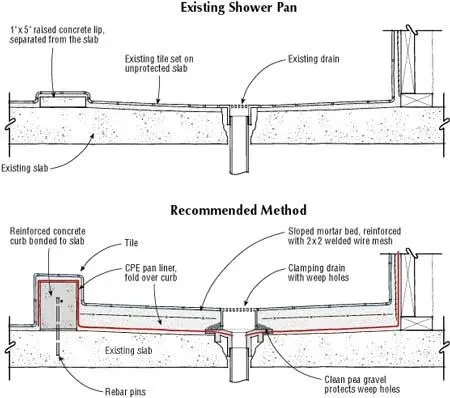
A shower pan liner is a waterproof barrier that sits under the tile or mortar in your shower floor. Its main job is to catch water that slips through the tile and grout, then guide it safely to the drain.
Think of the liner as a hidden safety net. Most people don’t see it, but it quietly keeps water from seeping into the floor, walls, and the rooms below. Liners are usually made from PVC (polyvinyl chloride), CPE (chlorinated polyethylene), or rubber. They come in large sheets that you shape and fit into the shower base before adding mortar and tile.
How A Shower Pan System Works
A typical shower pan has several layers:
- Subfloor – The base, often concrete or wood.
- Sloped Mortar Bed (Pre-Slope) – Directs water toward the drain.
- Liner – Sits on top of the pre-slope and under the final mortar bed.
- Final Mortar Bed – Provides a solid surface for tile.
- Tile and Grout – The visible finish.
Water can and does pass through tile and grout, no matter how well they’re installed. That’s why the liner is so important—it stops water at the lowest point and sends it to the drain before it causes damage.
Is Concrete Waterproof?
Many people trust concrete to stop water. But the truth is, concrete is not naturally waterproof. Even when it feels hard and solid, it has tiny pores and cracks that let water seep through over time.
Concrete’s Limits
- Porosity: Water can soak through concrete, especially if there are cracks or if the surface isn’t sealed well.
- Movement: Houses shift and settle, causing small cracks in concrete slabs.
- Long-Term Effects: Over the years, even small leaks can cause mold, rot, and structural damage.
Sealers help, but they don’t make concrete 100% waterproof forever. This is why relying on concrete alone under your shower is a risk.
Why Shower Pan Liners Are Essential—even On Concrete
Skipping the shower pan liner is tempting. Concrete looks strong and permanent, but it can’t guarantee water won’t reach your home’s structure. Here’s why liners are still vital, even with a concrete base:
1. Waterproof Barrier
The liner acts as a true waterproof layer. It protects against:
- Leaks that escape through tile and grout
- Cracks that develop in concrete over time
- Standing water that pools in low spots
2. Directs Water To The Drain
A liner is installed so that all water underneath the tile is funneled into the shower drain. Without the liner, water can spread sideways or downward into the slab and beyond.
3. Meets Building Codes
Most local building codes require a waterproof liner under the shower floor, no matter what the subfloor is made of. Inspections often check for a properly installed liner before allowing tile work to begin.
4. Prevents Mold And Mildew
Water under the tile can sit for days or weeks. A liner keeps moisture from soaking into concrete, wood, or insulation, where mold and mildew can grow unseen.
5. Protects Your Investment
Showers are expensive to build and repair. A liner is a small upfront cost that prevents huge repair bills later.
What Happens If You Skip The Liner?
It’s common to hear stories of “I built my shower on concrete 10 years ago and never had a problem. ” But for every story like that, there are many about showers that failed and caused thousands of dollars in damage.
Real-world Problems
- Leaks into Lower Floors: Water finds its way through cracks and joints, damaging ceilings and walls below.
- Mold Growth: Hidden moisture creates a perfect environment for mold, which can trigger allergies and illness.
- Tile Failure: Water weakens mortar, causing tile to crack or pop loose.
- Rot and Rust: In homes with wood framing, water that escapes the shower can rot the structure or rust metal supports.
Even if you don’t see a problem now, hidden leaks can take years to appear. By then, the repair is much bigger and more expensive.
Building Codes And Professional Standards
Most local building codes in the United States, Canada, the UK, and Australia require a shower pan liner under any tile shower. The International Residential Code (IRC) and the Uniform Plumbing Code (UPC) are two examples used in many places.
Typical Code Requirements
- A waterproof liner must extend up the walls at least 3 inches above the finished curb.
- The liner must be sloped (pre-slope) to the drain to prevent standing water.
- The liner should be tested for leaks before the mortar bed is installed.
Skipping the liner often means failing inspection. If you ever sell your home, an unlined shower could be flagged by a home inspector, lowering your home’s value.
Comparing Shower Pan Construction Methods
There are several ways to build a shower base, but all quality methods use a waterproof liner. Let’s compare the main options.
| Method | Waterproofing Layer | Common Subfloor | Best For |
|---|---|---|---|
| Traditional Mortar Bed | Flexible Liner (PVC/CPE) | Concrete or Wood | Custom Sizes/Shapes |
| Pre-Fabricated Shower Pan | Built-in Waterproof Shell | Concrete or Wood | Standard Sizes |
| Surface-Applied Membrane | Liquid or Sheet Membrane on Top | Concrete or Wood | Modern, Fast Installs |
Insights
- Even “one-piece” pans made from fiberglass or acrylic have a waterproof layer built in.
- Surface-applied membranes (like RedGard or Schluter) can replace traditional liners, but must be installed perfectly to work.
Credit: www.oatey.com
How To Install A Shower Pan Liner On Concrete
If you’re building or renovating a shower on a concrete slab, the right steps make all the difference. Here’s a practical overview.
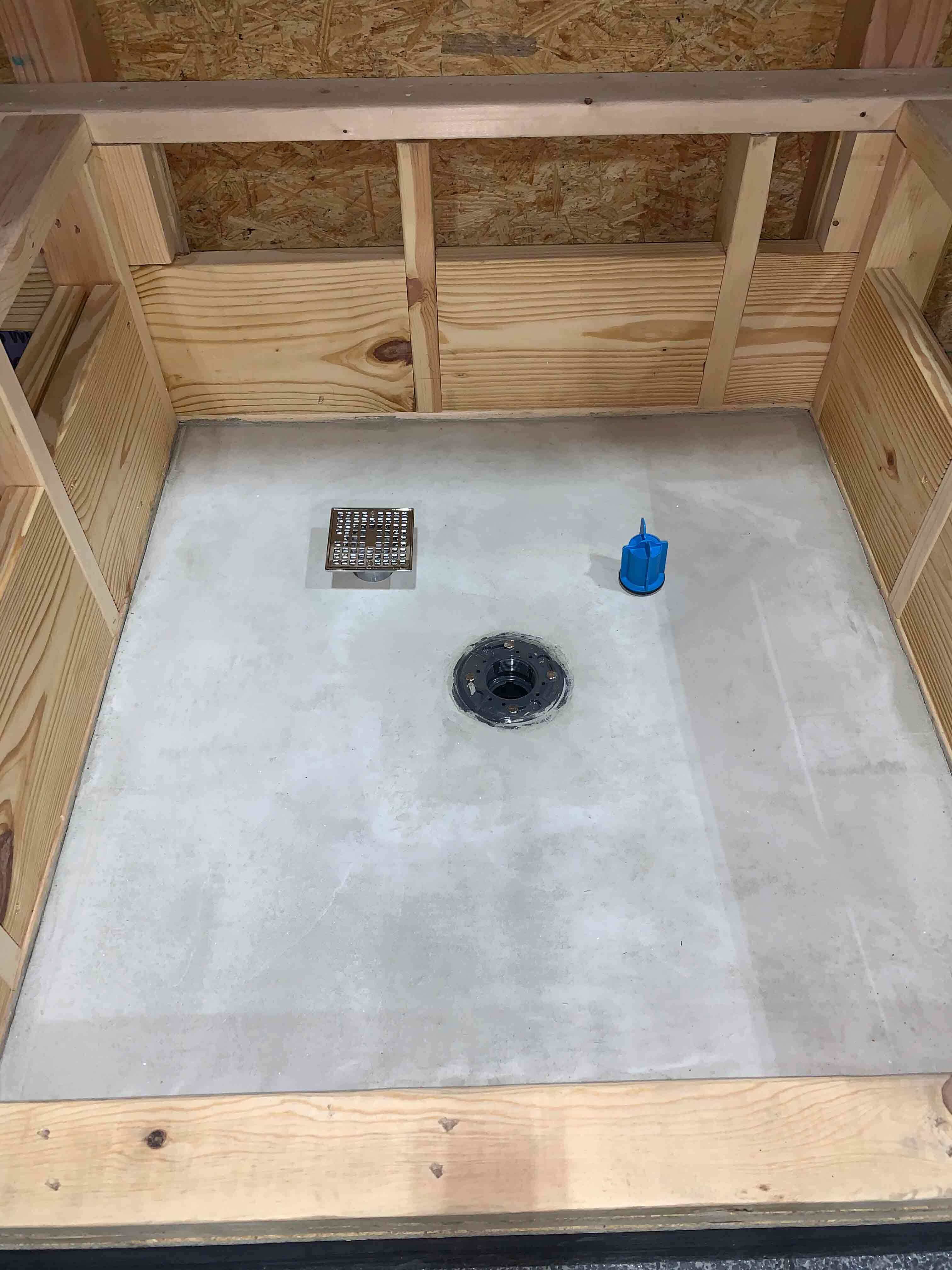
Step 1: Clean And Inspect The Concrete
Remove all dust, dirt, and debris. Look for cracks or holes and patch them with concrete patch or hydraulic cement. The surface should be smooth, clean, and dry.
Step 2: Create A Pre-slope
Use a mortar mix to form a gentle slope (about 1/4 inch per foot) from the shower walls toward the drain. This helps any water under the tile flow toward the drain, not sit on the liner.
Step 3: Fit The Liner
Roll out the liner material and cut it to size, leaving extra to rise up the shower walls at least 3 inches above the curb. Fold, but do not cut, the liner at corners. Secure the liner to the walls, not the floor, with special liner nails or staples above the curb height.
Step 4: Seal The Drain
Use a clamping-style drain designed for liners. The liner fits over the bottom half of the drain, and the top half clamps it in place. Seal all seams with the manufacturer’s recommended adhesive.
Step 5: Test For Leaks
Plug the drain and fill the shower base with water to just below the top of the curb. Let it sit for 24 hours to make sure there are no leaks.
Step 6: Add The Final Mortar Bed
Once you’re sure the liner is watertight, add a second layer of mortar on top. This forms the solid base for your tile.
Step 7: Tile And Grout
When the mortar is fully cured, install tile and grout as usual.
Special Cases: Curbless Showers And Linear Drains
Modern bathrooms often use curbless showers or linear drains for a sleek look and easy access. These designs still need careful waterproofing.
Curbless Showers
Without a curb, water has an easier path to escape the shower area. Liners must extend further and rise higher on the walls. Some curbless showers use full-coverage surface membranes for extra protection.
Linear Drains
Linear drains collect water along one edge, not a central point. The liner must be installed so all water slopes toward the drain and the membrane connects fully to the drain flange.

Credit: www.diychatroom.com
Common Mistakes To Avoid
Even experienced DIYers and contractors can make errors with shower liners. Here are mistakes that lead to leaks:
- No Pre-Slope: Without a slope under the liner, water pools, causing mold and odors.
- Cutting or Puncturing the Liner: Holes for pipes or fasteners below curb height let water escape.
- Improper Drain Installation: Liner must seal tightly to the drain flange with no gaps.
- Short Wall Upturns: Liner should rise at least 3 inches above the curb, or water can spill into the walls.
- No Flood Test: Skipping the water test means you won’t catch leaks until after tile is installed.
| Mistake | Consequence |
|---|---|
| No Pre-Slope | Water pools, mold and odor develop |
| Punctured Liner | Leaks and structural damage |
| Poor Drain Seal | Water escapes into subfloor |
| Short Liner Upturn | Water seeps into walls |
| No Water Test | Leaks found too late |
Alternative Waterproofing Methods
Not every shower uses the classic liner method. Some modern systems use surface-applied waterproofing products. Are these better?
Surface-applied Membranes
Products like RedGard and Schluter Kerdi are painted or applied as sheets directly over the mortar bed and up the walls. These can replace a liner if installed with care.
Advantages:
- Faster installation
- Can be used with complex shapes
- Easy to inspect
Disadvantages:
- Requires perfect coverage—one missed spot equals a leak
- Cost can be higher
Surface membranes are code-approved in many areas, but it’s important to follow manufacturer directions to the letter.
Cost And Value Of A Shower Pan Liner
A shower liner is not the most expensive part of your project, but it provides huge value.
- Material cost: $40–$120 for a typical shower
- Labor cost: $200–$400 for professional installation (varies by location)
- Potential repair cost if skipped: $2,000–$10,000 or more for water damage, mold cleanup, and tile replacement
A small upfront investment protects your home’s structure and your peace of mind.
Expert And Manufacturer Recommendations
Leading tile and shower system manufacturers, including Schluter, Laticrete, and the Tile Council of North America, all recommend a full waterproofing layer—either a liner or a surface membrane—under any tile shower, including those built on concrete.
Industry experts and inspectors agree: never rely on concrete alone. Use a liner or membrane to meet code and get a shower that lasts.
For further details, see the Tile Council of North America’s handbook at TCNA Handbook.
Credit: www.jlconline.com
Non-obvious Insights Beginners Miss
- Tile and grout are not waterproof. Many people believe that tile itself will stop water. In reality, every shower leaks through tiny cracks and pinholes. The liner is your real defense.
- Waterproofing failures are usually invisible until it’s too late. You may not see a leak for months or years. By then, mold and rot can be widespread—and expensive to repair.
- Local codes may require a specific type of liner or membrane. Always check with your local building department before starting. Using the wrong product can cause you to fail inspection.
- Some “waterproof” concretes still need a liner. Even special concrete mixes with additives or sealers are not a replacement for a true liner, especially in residential showers.
When A Liner Might Not Be Required
There are only a few cases where a liner is not used:
- Pre-fabricated pans with built-in waterproofing: These units are made to be watertight as one piece.
- Showers with surface-applied membrane systems: If installed perfectly, these can replace the traditional liner.
However, these alternatives must be code-approved and installed exactly as designed. For most custom showers on concrete, a liner is still the best practice.
Final Thoughts
Should you install a shower pan liner on a concrete floor? The answer is almost always yes. Concrete is strong but not waterproof. Water finds its way through even the smallest cracks and pores. A shower pan liner is your reliable, code-approved defense against leaks, mold, and costly repairs. It keeps your investment safe and ensures your shower stays beautiful for years.
If you want peace of mind and a shower that stands the test of time, don’t skip the liner—install it carefully, test for leaks, and enjoy your shower without worry.
Frequently Asked Questions
Do I Need A Shower Pan Liner If My Floor Is Concrete?
Yes. Concrete is not fully waterproof. A shower pan liner catches any water that leaks through the tile and sends it safely to the drain, protecting your home from hidden water damage.
What Type Of Liner Is Best For A Concrete Shower Floor?
PVC and CPE liners are the most common and code-approved for use on concrete. Surface-applied membranes like RedGard or Schluter Kerdi are also popular if installed correctly.
Can I Use Waterproof Concrete Instead Of A Liner?
No. Even “waterproof” concrete mixes can develop cracks and are not a replacement for a true liner or approved membrane. Always use a liner for code compliance and safety.
How High Should The Liner Go Up The Shower Walls?
The liner should rise at least 3 inches above the finished curb height and be securely attached to the walls. This prevents water from escaping into the wall structure.
What Happens If I Skip The Liner?
Without a liner, water can leak into the concrete, causing mold, tile failure, and even structural damage over time. Repairs can cost thousands of dollars and may require a full shower rebuild.