
Strawberries are a favorite fruit for many people, but they spoil quickly. If you have ever bought a basket of fresh strawberries, you know that within a few days, they often develop mold or turn mushy. Many people are searching for the best way to store strawberries and keep them fresh for longer. One method that has gained popularity is storing strawberries in a mason jar. You might be surprised by how effective this simple trick can be.
This article will take you through every step of storing strawberries in a mason jar. You’ll learn why this method works, how to prepare your strawberries, what types of mason jars to use, and the best practices for maximizing freshness.
Along the way, you’ll find tips, common mistakes, scientific explanations, and even a few myth-busting facts. By the end, you will know exactly how to keep your strawberries fresh for up to two weeks—sometimes even longer.
Why Strawberries Spoil So Fast
To understand why strawberries go bad quickly, it’s important to know a bit about their structure. Strawberries have a thin, delicate skin and a high water content. This makes them vulnerable to mold, bacteria, and bruising.
Here are the main reasons strawberries spoil:
- Moisture: Excess water on the surface allows mold and bacteria to grow.
- Oxygen: Air exposure speeds up the breakdown of fruit cells.
- Bruising: Strawberries are soft and can get squashed, leading to faster spoilage.
- Temperature Fluctuations: Moving strawberries in and out of the fridge causes condensation, which encourages mold.
Most store packaging doesn’t protect strawberries well. Plastic containers often trap moisture, and the holes in them let in air, which is why strawberries can go bad within two or three days.
How The Mason Jar Method Works
The mason jar method keeps strawberries fresher by creating a sealed environment. When you store strawberries in a clean, dry mason jar and keep it closed, you reduce the amount of air that can reach the fruit. Less air means less oxygen, which slows down spoilage.
A mason jar also protects strawberries from bumps and bruises. The glass walls are sturdy, and the screw-top lid keeps out pests and fridge odors.
Several home tests and food blogs have found that strawberries can last up to two weeks in a mason jar, compared to just a few days in their original container. In a 2021 kitchen experiment by a popular food science site, strawberries stored in a mason jar stayed fresh for 12-14 days, while those in plastic lasted only 3-5 days.
Step-by-step Guide: Storing Strawberries In A Mason Jar
If you want to get the best results, follow these steps carefully. Small mistakes can make a big difference in how long your berries last.
1. Choose The Right Strawberries
Start with fresh, firm strawberries. Check for mold or mushy spots before you begin. Overripe or damaged strawberries can spoil the whole batch, even in a mason jar.
2. Gather Your Supplies
You will need:
- 1 or more mason jars with tight-fitting lids (pint or quart size)
- Paper towels or a clean kitchen towel
- A colander
- A small bowl of white vinegar (optional, for cleaning)
3. Wash The Strawberries
Some people say not to wash berries until you eat them. But for the mason jar method, gentle washing helps remove dirt and bacteria that can cause early spoilage.
Here’s how to wash them:
- Fill a large bowl with cold water.
- Add the strawberries and gently swish them around.
- For extra cleaning, add 1 part white vinegar to 3 parts water. Let the berries sit for 2-3 minutes.
- Rinse with clean water to remove any vinegar taste.
Do not soak strawberries for more than 5 minutes, or they will get waterlogged.
4. Dry Thoroughly
This step is critical. Excess moisture inside the jar can lead to mold.
- Place the strawberries on a clean towel or paper towels.
- Gently pat them dry. Make sure every strawberry is as dry as possible.
If you’re in a hurry, you can let them air dry for 10-15 minutes after patting.
5. Remove Bad Berries
Carefully inspect each strawberry. Remove any that are soft, bruised, or have spots. One bad berry can ruin the rest.
6. Prepare The Mason Jar
Make sure your mason jar is completely clean and dry. Wash it with hot soapy water, rinse, and let it air dry. Wipe the inside with a clean paper towel if needed.
7. Layer The Strawberries
Place a piece of paper towel at the bottom of the jar. This will help absorb any extra moisture.
- Gently place the strawberries in the jar. Do not press them or pack them too tightly.
- You can add another piece of paper towel on top before closing the lid.
8. Seal And Store
Screw the lid on tight. Place the jar in the refrigerator, ideally on a middle shelf (not the coldest part, which can damage the berries).
Do not open the jar unless you’re taking strawberries out. Every time you open the jar, you let in fresh air and moisture.
Choosing The Best Mason Jar For Strawberries
Not all mason jars are the same. The type of jar you choose can affect how well your strawberries keep.
Here’s a quick comparison of popular mason jar types:
| Jar Type | Size | Best For | Pros | Cons |
|---|---|---|---|---|
| Regular Mouth Pint | 16 oz | Small batches | Easy to store, fits small fridges | Harder to fit large berries |
| Wide Mouth Pint | 16 oz | All berry sizes | Easy to fill and clean | Takes more space |
| Quart Size | 32 oz | Large batches | Stores many berries | Can be heavy and bulky |
Wide mouth jars are usually the best for strawberries because you can fit your hand inside, and the berries don’t get squeezed.
Do You Need To Use Vinegar?
Many people recommend a quick vinegar wash to kill surface mold spores and bacteria. This can help strawberries last even longer.
Here’s how to do it:
- Mix 1 cup white vinegar with 3 cups water.
- Soak the berries for 2-3 minutes.
- Rinse with clean water and dry well.
Some people notice a slight vinegar smell, but it disappears after rinsing. If you are sensitive to smells, you can skip this step. The most important part is drying the berries thoroughly.
How Long Do Strawberries Last In A Mason Jar?
One big advantage of this method is how much longer your berries stay fresh. In most home tests, strawberries last 7 to 14 days in a sealed mason jar.
Here’s a timeline comparison to help you see the difference:
| Storage Method | Average Freshness | Notes |
|---|---|---|
| Original plastic container | 2-4 days | High risk of mold |
| Open bowl in fridge | 3-5 days | Dries out quickly |
| Mason jar (sealed, dry) | 7-14 days | Best for freshness |
A non-obvious insight: If you notice condensation forming inside the jar, open it briefly, wipe out the moisture, and reseal. Too much moisture can cause mold, even with this method.
Common Mistakes When Storing Strawberries In A Mason Jar
People often make small errors that lead to disappointing results. Here are some mistakes to avoid:
- Not drying berries enough: Even a little water can cause mold.
- Using a dirty jar: Old food residue or soap can affect freshness.
- Packing berries too tightly: Squeezed strawberries spoil faster.
- Opening the jar too often: Each opening lets in air and moisture.
- Storing in the coldest fridge spot: This can freeze berries, causing mushiness.
- Leaving stems on: Some people remove stems, but leaving them on can help berries last longer by keeping moisture in.
- Ignoring spoiled berries: One bad strawberry can quickly ruin the rest.
Extra Tips For Maximum Freshness
- Buy local or in-season strawberries: These are usually fresher than imported ones.
- Don’t wash until you’re ready to store: Washing too early can cause bruising.
- Label your jar with the storage date so you remember how long they’ve been in the fridge.
- Don’t store with other fruits: Fruits like apples and bananas release ethylene gas, which speeds up ripening.
- Use the right fridge temperature: Keep your fridge between 34°F and 38°F (1°C to 3°C).
Non-obvious tip: Sometimes, smaller strawberries last longer than large ones because they have thicker skin and less surface area for mold to grow.
Can You Store Cut Or Sliced Strawberries In A Mason Jar?
You might want to store sliced strawberries for smoothies or desserts. While you can use a mason jar for cut berries, they won’t last as long as whole ones.
- Store cut strawberries in a clean jar with a dry paper towel at the bottom.
- Use within 2-3 days.
- Keep the jar sealed and refrigerated.
Cut strawberries lose juice and spoil faster due to their exposed surfaces.
Mason Jar Storage Vs. Other Methods
How does the mason jar method compare with other popular techniques? Here’s a summary:
| Method | Pros | Cons | Best Use |
|---|---|---|---|
| Mason jar | Keeps berries fresh longest, protects from bumps | Requires drying, only works for fridge | Everyday storage |
| Paper towel in box | Absorbs moisture, easy | Doesn’t stop air exposure | Short-term |
| Freezing | Lasts months, good for smoothies | Changes texture, not for fresh eating | Long-term |
| Vacuum sealing | Removes air, longest shelf life | Needs special equipment | Bulk storage |
If you want the best balance of freshness and convenience, the mason jar method is a strong choice for most homes.

Credit: thecrosslegacy.com
Is It Safe To Store Strawberries In A Mason Jar?
Yes, as long as you follow proper food safety steps. Use clean jars, dry the strawberries, and refrigerate immediately. Do not store at room temperature.
If you ever see mold, slime, or a bad smell, discard the berries right away. It’s not worth the risk to eat spoiled fruit.
Can You Use This Method For Other Berries?
This method works well for raspberries, blueberries, and blackberries too. Blueberries last especially long in mason jars. Raspberries are more delicate but still do better than in plastic containers.
You can store mixed berries together, but remember that softer berries spoil faster and can affect the others.
:max_bytes(150000):strip_icc()/BerriesFinalComparison-88e04b49a45b4b14b7f6f2ec7e1109cb.jpg)
Credit: www.allrecipes.com
Myth-busting: Does A Mason Jar Make Strawberries Last Forever?
Some online posts claim that strawberries in mason jars last for weeks or even months. This is not true. While the method greatly extends freshness, strawberries are still a fragile fruit. After 10-14 days, they will start to lose flavor and texture.
The mason jar slows down spoilage but does not stop it completely. For long-term storage, consider freezing your strawberries.
Environmental Benefits Of Mason Jar Storage
Using glass jars instead of plastic helps reduce single-use plastic waste. Mason jars are reusable, easy to clean, and last for years. They are also free of chemicals like BPA, which can be found in some plastics.
If you want to store strawberries sustainably, this method is one of the best choices.
Troubleshooting: What To Do If Your Strawberries Spoil Early
Sometimes, even with the right method, strawberries can go bad too soon. Here’s what to check:
- Was the jar or berries wet? Moisture is the enemy.
- Did you include any overripe or damaged berries? These spoil quickly.
- Was the fridge cold enough? If the temperature is above 40°F (4°C), berries won’t last.
- Did you open the jar often? Air and moisture speed up spoilage.
If you have a batch that spoils early, wash the jar in hot, soapy water and let it dry completely before trying again.
Are There Downsides To The Mason Jar Method?
For most people, the mason jar method is positive. But there are a few limitations:
- Takes up fridge space: Jars are bulkier than plastic containers.
- Requires careful drying: This step can be time-consuming.
- Not for room temperature: Always store in the fridge.
Despite these small issues, most people find the benefits outweigh the downsides.
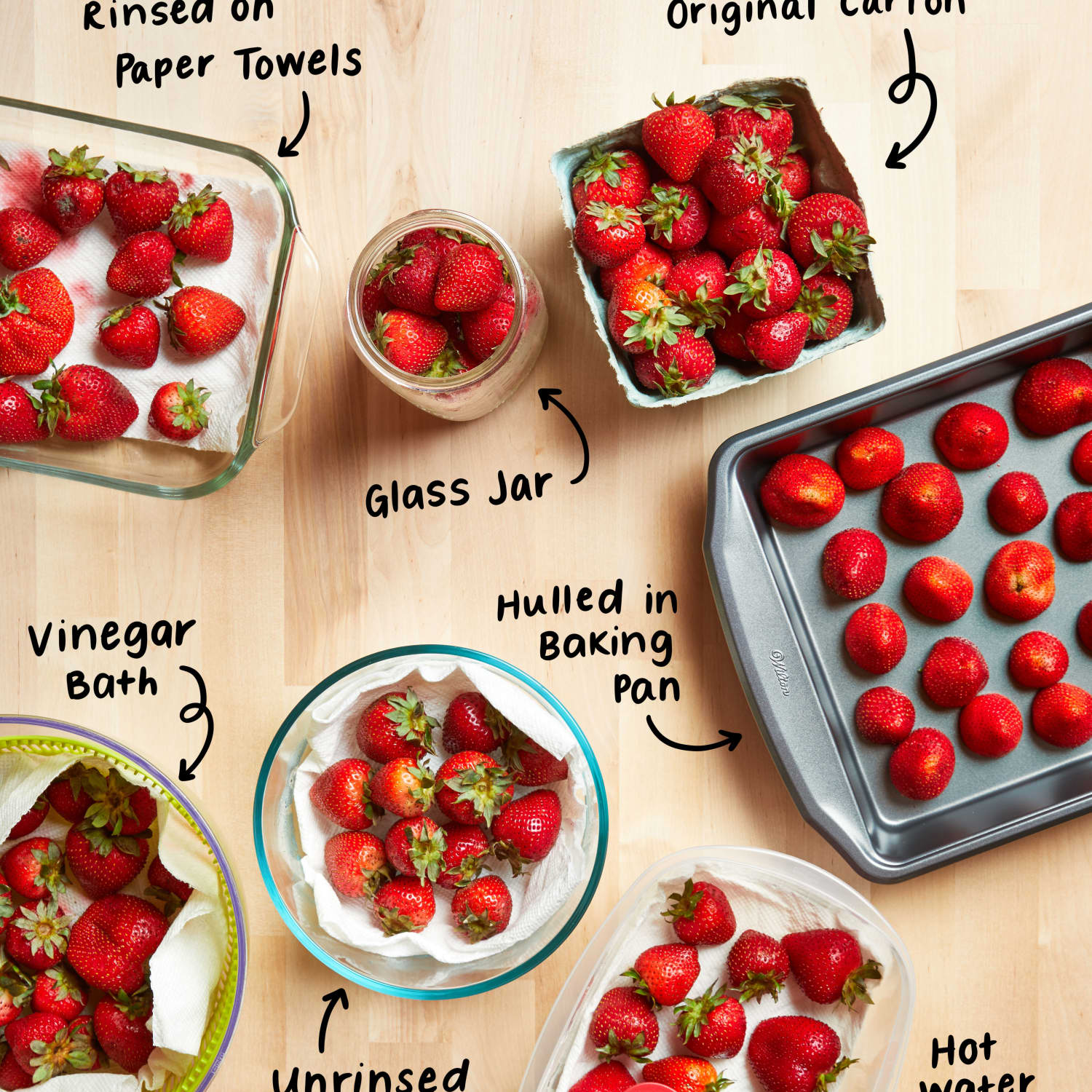
Credit: www.thekitchn.com
Creative Ways To Use Stored Strawberries
If you have a big batch of fresh strawberries in a mason jar, there are many ways to use them before they spoil:
- Add to yogurt or oatmeal for breakfast.
- Mix into a fruit salad with other berries.
- Blend into smoothies.
- Slice over pancakes or waffles.
- Use as a topping for ice cream or cake.
If you see your strawberries getting soft, use them to make quick jam, compote, or freeze them for later.
Scientific Studies And Food Safety
Food safety experts recommend storing berries in clean, airtight containers in the fridge. According to research published by the U.S. Department of Agriculture (USDA), proper washing and refrigeration are key for berry safety and shelf life. For more on storage safety, see USDA Safe Storage Times.
Frequently Asked Questions
How Do I Know If My Strawberries Have Gone Bad In The Mason Jar?
Check for signs like mold, a sour smell, mushy texture, or leaking juice. If you see any of these, it’s safest to throw the strawberries away.
Can I Use Plastic Jars Instead Of Glass Mason Jars?
Glass jars are better because they do not hold odors, are reusable, and are less likely to react with acids in fruit. Plastic can sometimes stain or keep smells, but if you must use plastic, choose food-grade and airtight containers.
Should I Remove The Strawberry Stems Before Storing In The Mason Jar?
It’s best to leave the stems on. The stem helps prevent moisture loss and keeps the berry’s core sealed. Only remove stems right before eating or using the strawberries.
Is It Necessary To Use A Paper Towel In The Mason Jar?
A paper towel at the bottom absorbs extra moisture, which helps keep strawberries dry and fresh. You can skip it, but you may see more condensation or moisture build-up, which can cause mold.
Can I Freeze Strawberries In A Mason Jar?
You can freeze strawberries in a mason jar, but only use jars marked as freezer-safe. Leave extra space at the top for berries to expand. Freezing changes the texture, so frozen strawberries are best for smoothies or baking.
Storing strawberries in a mason jar is a simple but powerful way to keep them fresh and delicious for days—sometimes even weeks. With a little care and attention to detail, you can enjoy sweet, juicy strawberries for much longer. Give this method a try, and you might never go back to flimsy plastic containers again.