
There’s something special about the gentle warmth and solid presence of an Aga stove. For many, it’s not just a cooker—it’s the heart of the kitchen, a reliable friend through cold winters and busy holidays. But how does an Aga stove work?
Why do people say it cooks differently from modern ovens? Whether you’ve seen one in a farmhouse or are thinking of buying one, understanding the unique mechanics behind an Aga brings a new appreciation to this classic appliance.
Let’s explore what makes the Aga stove so distinct, how its design differs from standard cookers, and why its method of heating changes the way you cook. Along the way, you’ll learn about its inner workings, types of fuel, care tips, and even the cultural history that made Aga famous.
By the end, you’ll know how this stove operates—and why it’s treasured by cooks around the world.
The Origins And Invention Of The Aga Stove
To understand how an Aga stove works, it helps to know where it came from. The Aga was invented in 1922 by Gustaf Dalén, a Swedish Nobel Prize-winning physicist. Dalén designed the stove for his wife, who had lost her sight in a cooking accident. He wanted a cooker that was safe, easy to use, and didn’t require constant attention.
The first Aga was built to stay hot all day, using cast iron to store heat. It was different from traditional stoves, which needed to be lit and relit or carefully watched over. Dalén’s innovation was to create a heat-storage cooker that could handle multiple tasks at once—baking, roasting, simmering, and boiling—without complicated controls.
This stove quickly became popular in the UK, especially among rural families and large households. Its reliability and gentle heat made it perfect for big kitchens and busy cooks. Today, the Aga remains a symbol of cozy country homes, but you’ll also find it in city apartments and modern renovations.
Core Principles: How The Aga Stove Works
The Aga stove is different from typical ovens and cookers. Most modern stoves use direct heat from gas burners or electric coils. In contrast, the Aga uses radiant heat stored in heavy cast iron components. Here’s what sets the Aga system apart:
Heat Storage And Retention
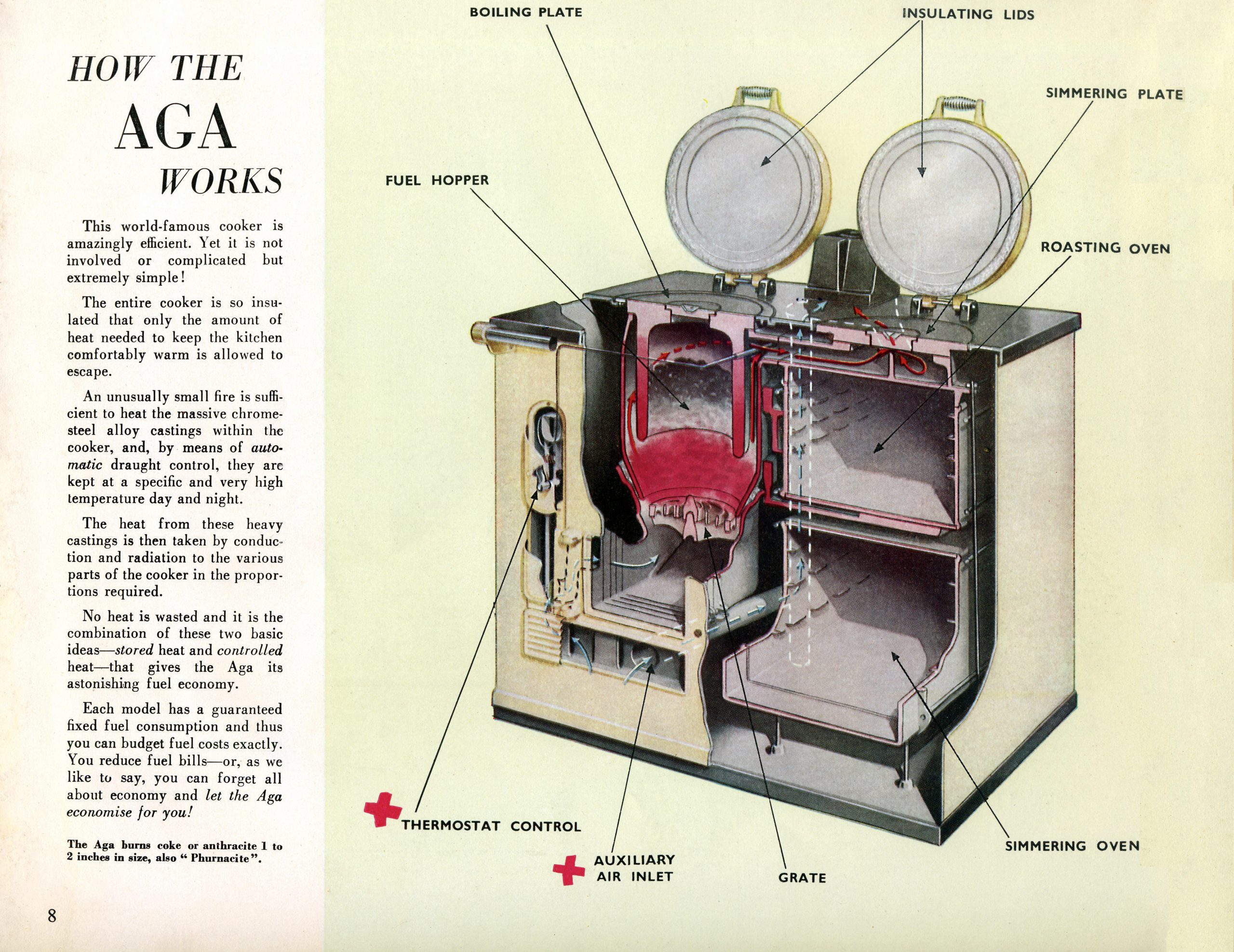
The heart of the Aga is its cast iron core. This heavy metal absorbs heat from a single, always-on burner located in the base of the stove. The cast iron stores this energy and then releases it slowly and evenly throughout the oven and hotplates. The effect is gentle, all-over heat—food doesn’t dry out or burn as easily, and flavors develop more fully.
Always On, Always Ready
A traditional Aga is designed to stay on 24 hours a day. Instead of switching on for each meal, it provides a constant source of heat. This means your oven is ready for baking, roasting, or boiling at any time. It also gently warms the kitchen, making it a favorite in colder climates.
Multiple Cooking Zones
An Aga stove has separate ovens and hotplates for different types of cooking. Each zone is set to a specific temperature:
- Roasting oven (very hot)
- Baking oven (moderate)
- Simmering oven (low)
- Warming oven (gentle heat)
This design lets you cook several dishes at once, each at its ideal temperature.
Indirect And Radiant Cooking
Unlike regular ovens that use direct flames or exposed elements, the Aga cooks with indirect radiant heat. The entire cast iron structure acts as a heat reservoir, so food is cooked gently from all sides. This reduces the risk of burning and helps keep food moist.
Simplicity Of Controls
Most Agas have very simple controls—sometimes just one heat setting. You don’t set a temperature for each oven; instead, you use the right oven or hotplate for the cooking method you want.
Anatomy Of An Aga Stove
To see how an Aga stove works, look inside its structure. Each part is designed for a specific job. Here’s a closer look at the main components:
The Burner Or Heat Source
At the base of every Aga, there’s a single heat source. Depending on the model, this can be:
- Oil burner
- Gas burner
- Electric element
- Solid fuel (rare today)
This burner is always on, heating up the core of the stove.
The Cast Iron Body
The thick, heavy cast iron shell surrounds the burner. Cast iron is excellent at holding and radiating heat. This is the secret to the Aga’s even temperature and gentle cooking style.
The Ovens
Most traditional Agas have three or four ovens, each with a specific temperature range:
- Roasting oven: Around 220°C (428°F)
- Baking oven: Around 180°C (356°F)
- Simmering oven: Around 120°C (248°F)
- Warming oven: About 60-70°C (140-158°F)
Each oven is separated by thick cast iron walls, ensuring steady, reliable heat.
The Hotplates
On top of the Aga are two (sometimes more) hotplates:
- Boiling plate: Very hot, for boiling or frying
- Simmering plate: Lower heat, for gentle simmering or melting
These plates are covered with thick lids that help keep heat in when not in use.
The Flue And Ventilation
The Aga needs to vent combustion gases, so it has a flue pipe (sometimes called a chimney). Modern electric models may use a small vent or don’t require an external flue.
Control Mechanisms
Classic Agas are simple—usually just an on/off switch or a single dial to control the overall temperature. More modern models may have programmable timers or remote controls for better energy management.
How Heat Moves Through The Aga
Understanding how heat is distributed inside the Aga is key to understanding its unique performance.
Heat Transfer In Cast Iron
Cast iron is much heavier and denser than steel or aluminum. When it heats up, it holds that energy for a long time. The Aga’s cast iron core absorbs heat from the burner and then slowly releases it, keeping the ovens and hotplates at stable temperatures.
Radiant Heat Vs. Convection
Most modern ovens use convection—hot air blown around by a fan. The Aga, by contrast, uses radiant heat from all its internal surfaces. This heat radiates gently, so food cooks evenly, doesn’t dry out, and flavors can develop more deeply.
Zoned Temperature Control
Each oven and hotplate is designed to be a different temperature. The closer to the burner, the hotter the zone. By placing food in the correct oven or on the right hotplate, you control the cooking method without needing to adjust dials or settings.
Types Of Aga Stoves
There are several different Aga models, each with its own fuel type and features. Here’s a comparison of the main types:
| Type | Fuel Source | Key Features | Typical Use |
|---|---|---|---|
| Traditional Oil/Gas Aga | Oil, Gas | Always on, needs flue, classic look | Large homes, rural settings |
| Electric Aga | Electricity | Programmable, can be switched off | Modern homes, energy-conscious users |
| Dual Control Aga | Gas or Electric | Independently controlled ovens/hotplates | Flexible cooking, variable schedules |
| AGA Total Control | Electricity | Touchscreen control, full programmability | Busy families, urban apartments |
Traditional Aga
Runs on oil or gas, always on, needs flue/chimney, simple controls.
Electric Aga
Uses electric elements, can be programmed, some models can be turned off when not needed, more flexible for modern homes.
Dual Control Aga
Lets you control ovens and hotplates separately, reducing energy use and giving more cooking options.
Total Control Aga
Most modern type; uses digital controls, ovens and hotplates can be switched on/off or set on timers, very energy efficient.
Comparing Aga Cooking To Conventional Ovens
Many people ask how the Aga compares to a standard oven. There are some important differences:
| Feature | Aga Stove | Conventional Oven |
|---|---|---|
| Heat Source | Radiant (cast iron) | Direct (gas/electric elements) |
| Temperature Control | Set by oven/hotplate position | Adjustable thermostat |
| Cooking Method | Indirect, gentle | Direct, fast |
| Energy Use | Always on (traditional), programmable (modern) | Used as needed |
| Kitchen Heat Output | Heats kitchen | Minimal extra heat |
Key Cooking Differences
- Moisture retention: Radiant heat keeps food moist, perfect for roasts and slow-cooked dishes.
- Flavor: Even, gentle heat brings out deeper flavors.
- No preheating: Aga ovens are always ready—no waiting for them to heat up.
- Multi-tasking: You can bake, roast, and simmer at the same time in different ovens.
- No burning: Food is less likely to catch or burn because of indirect heat.
Using The Different Aga Ovens
Each oven is designed for a specific purpose. Here’s how they’re used:
Roasting Oven
The hottest oven (around 220°C/428°F). Used for:
- Roasting meats and vegetables
- Baking bread and pizzas
- Quick, high-temperature dishes
Tips: Food cooks quickly, so check often. For crispier results, remove the oven’s cold shelf.
Baking Oven
Moderate heat (around 180°C/356°F). Perfect for:
- Cakes, biscuits, and scones
- Casseroles and pies
- Fish dishes
Tips: This oven is the most versatile. Use for most everyday baking.
Simmering Oven
Low heat (about 120°C/248°F). Best for:
- Slow-cooked stews and braises
- Rice pudding and custards
- Drying meringues
Tips: Great for overnight cooking. Meat becomes tender without drying out.
Warming Oven
Gentle heat (60-70°C/140-158°F). Used for:
- Keeping food warm before serving
- Warming plates and serving dishes
- Low-temperature drying
Tips: Not for cooking, just for keeping things warm and ready.
The Hotplates: Boiling And Simmering
On top of the Aga, you’ll find two round hotplates under heavy lids.
Boiling Plate
The hottest surface. Used for:
- Boiling water quickly
- Frying eggs or bacon
- Stir-frying vegetables
Tips: Always use with a lid down when not in use to keep heat in.
Simmering Plate
Lower temperature. Used for:
- Simmering soups or sauces
- Melting chocolate or butter
- Scrambled eggs
Tips: Perfect for delicate tasks that burn easily on a regular hob.

Credit: abgoheatingspares.home.blog
Cooking Techniques Unique To The Aga
The Aga’s design changes the way you cook. Here are some techniques that make the most of its features:
Shelf Placement
Because heat comes from all sides, you can move dishes closer or farther from the heat source to control browning and cooking speed. For example, move a casserole higher for a crispy top, lower for gentle cooking.
Lid Management
Keep hotplate lids closed when not using them. This keeps heat inside and saves energy.
Multi-oven Cooking
Start a dish in the roasting oven for browning, then move it to the simmering oven to finish gently. This is especially good for roasts, stews, and baked goods.
Residual Heat Use
The Aga’s warmth is useful for more than cooking. Dry herbs, keep towels warm, or proof bread dough using the gentle heat from the warming oven or the stove’s surface.
Batch Cooking
Because the Aga is always hot, it’s ideal for batch cooking. Prepare several meals at once to save time and energy.
Fuel Types And Efficiency
Aga stoves can use different fuels, each with its own pros and cons.
Oil-fired Agas
Very common in rural areas, reliable, but oil prices can be high and require storage tanks.
Gas-fired Agas
Cleaner than oil, easy to control, but needs a gas supply.
Electric Agas
The most flexible—no flue needed, programmable, and can be switched off in summer. Energy costs depend on local rates.
Solid Fuel Agas
Rare today, but some still use coal or wood, especially in off-grid homes.
Efficiency Considerations
Traditional Agas use more energy because they’re always on. Modern models with timers or independent oven controls are much more efficient. If energy use is a concern, consider newer electric or dual-control models.

Credit: www.saltirecookers.com
Common Misunderstandings And Non-obvious Insights
Many first-time users are surprised by how different an Aga is. Here are two insights that beginners often miss:
- Cooking times are often shorter than expected. Because radiant heat penetrates food more deeply, roasting and baking can be faster than in a standard oven. It’s easy to overcook dishes if you follow conventional oven timings exactly.
- No need to preheat pans. The hotplates and ovens are always at temperature, so you can start cooking right away—there’s no need to wait for pans to heat up.
Another non-obvious point: The Aga’s warmth can heat the whole kitchen or even nearby rooms. This means in winter, it’s a comfort, but in summer it can make the kitchen too warm. Many owners turn off their Aga in hot months or switch to a modern programmable model to avoid overheating.
How To Care For And Maintain An Aga Stove
Regular maintenance keeps your Aga running smoothly for decades.
Cleaning The Enamel Surface
Use a soft, damp cloth and avoid harsh abrasives. Spills should be wiped up quickly to prevent staining the enamel.
Cleaning Hotplates And Ovens
Hotplates will build up some carbon over time; this is normal. Use a wire brush to remove any build-up when cool. Ovens rarely need cleaning because the high, dry heat burns away most spills.
Servicing The Burner
Oil and gas burners should be serviced by a professional once or twice a year. Electric models may need less frequent attention but should be checked for safety.
Flue And Vent Cleaning
Have the flue or vent inspected and cleaned regularly to prevent blockages and ensure safe operation.
Energy Management
If you have a programmable Aga, use timers to reduce energy use when the stove isn’t needed. Keep lids closed to retain heat.
The Aga’s Role In Home Life And Culture
The Aga is more than just a cooker. In many homes, it’s the gathering spot for family and friends. Its gentle warmth dries clothes, heats towels, and even keeps pets happy.
Culturally, the Aga is an icon of British and Northern European country life. It’s featured in books, films, and TV shows as a symbol of comfort and tradition. Many famous chefs and cooks swear by their Agas for the unique flavor and texture it brings to food.
Some people call their Aga the “heart of the home. ” It’s not unusual to find people sitting on the floor in front of it just to enjoy its warmth.
Environmental And Modern Considerations
As energy costs rise and environmental awareness grows, Aga has adapted its designs. Modern electric models are much more efficient and can be switched off when not in use. Some new Agas can even run on renewable electricity.
If you’re considering an Aga, think about:
- Your energy source (gas, oil, electric)
- Whether you want a programmable or always-on model
- The size of your kitchen (Agas are heavy and need space)
- Local energy costs and regulations
Buying And Installing An Aga: What To Know
If you’re thinking of buying an Aga, there are some practical points to consider.
Size And Weight
Agas are heavy (up to 500 kg or more) and require a strong floor. Check if your kitchen can support the weight.
Ventilation
Traditional Agas need a flue or chimney to vent gases. Electric models may only need a small vent.
Installation
Professional installation is recommended. Moving and assembling an Aga is not a DIY job.
Running Costs
Traditional models can be expensive to run if left on all the time. Modern programmable Agas are more efficient. Ask your installer for expected energy use based on your model and usage.
Resale Value
Agas hold their value well and can even increase the appeal of a home for some buyers.
Real-world Examples And Owner Experiences
Many Aga owners say the biggest benefit is the change in their cooking style. Meals become more relaxed, and the kitchen becomes the center of home life. Here are some common experiences:
- Batch cooking for large families is easier because you can use multiple ovens at once.
- Baking bread and cakes produces better crust and texture thanks to radiant heat.
- Slow-cooked stews and roasts are more tender and flavorful.
- Warming towels and drying clothes on the Aga is a daily comfort in colder months.
- Hosting gatherings is simpler, as the stove can keep multiple dishes warm without burning.
A few owners mention an adjustment period—learning to use the different ovens and hotplates, and adapting recipes for the Aga’s style. But most say the learning curve is worth it.
Common Mistakes And How To Avoid Them
New Aga users often make these mistakes:
- Using the wrong oven for the dish. Remember, each oven has its own temperature. Always match your recipe to the right oven.
- Leaving lids open. This wastes energy and cools the hotplates.
- Trying to set the temperature. Agas don’t have adjustable thermostats for each oven; change the oven, not the setting.
- Not adjusting cooking times. Because Agas cook faster, always check food earlier than the recipe suggests.
- Forgetting the Aga stays hot. Always use oven gloves—cast iron retains heat for hours, even after the stove is off.
Troubleshooting Common Aga Problems
Even the best stoves need attention sometimes. Here’s how to handle frequent issues:
If The Aga Is Not Hot Enough
- Check the fuel supply (oil/gas/electric)
- Make sure the burner or element is clean and functioning
- Inspect the flue for blockages
If The Aga Is Too Hot
- Reduce the burner setting if your model allows
- Contact a service professional for a tune-up
If The Oven Doors Are Not Sealing
- Check for worn gaskets or hinges
- Replace if necessary to maintain heat efficiency
If You Smell Gas Or Oil
- Turn off the Aga immediately
- Open windows and call a professional
Credit: www.countrylife.co.uk
Frequently Asked Questions
What Makes The Aga Stove Different From Regular Ovens?
The Aga stove uses radiant heat from heavy cast iron components instead of direct flames or electric coils. This means food cooks more gently and evenly, often with better moisture and flavor retention.
Can You Turn An Aga Stove Off In The Summer?
Yes, modern electric and dual-control Agas can be turned off or set to a lower temperature in hot months. Traditional models are usually left on all year but can be switched off if needed.
Are Aga Stoves Energy Efficient?
Traditional Agas use more energy because they’re always on. Newer electric or programmable models are much more efficient and can be adjusted to fit your cooking schedule.
How Long Does An Aga Stove Last?
With proper care, an Aga can last for decades—many are still working after 50 years or more. Regular servicing and cleaning are key to a long life.
Where Can I Learn More About Aga Stoves?
You can find more information and official advice at the AGA official website, which offers guides, recipes, and model comparisons.
There’s no other stove quite like the Aga. Its unique method of cooking, timeless design, and ability to bring people together make it more than just a kitchen appliance. Understanding how an Aga stove works is the first step to making the most of its warmth, flavor, and comfort in your own home.