
How Far Can Pool Equipment Be From Pool
Building or renovating a swimming pool is a big investment. One of the most common questions pool owners and builders ask is: how far can pool equipment be from the pool? This is not a simple question. The distance between your pool and its equipment—like pumps, filters, heaters, and chlorinators—affects cost, efficiency, safety, and even the look of your backyard. Many people think they can put their pool equipment anywhere, but there are important rules and best practices you should know.
If you are planning a new pool, or moving your equipment, this guide will give you clear, practical advice. You’ll learn about ideal distances, how far is too far, what factors change the answer, and what mistakes to avoid. This is not just for professionals—every pool owner can use this knowledge to make smarter choices and avoid expensive problems later.
Why Pool Equipment Location Matters
The distance between your pool and the pool equipment pad is more than just a design choice. It affects how your pool works and how much you enjoy it.
- Water Circulation: The farther the equipment, the harder the pump must work to move water. This can raise energy bills and wear out your pump faster.
- Noise and Aesthetics: Equipment is noisy and not attractive. Placing it farther away can make your pool area quieter and more beautiful.
- Safety and Access: Equipment must be easy to reach for service, but not too close where it’s a safety risk.
- Local Codes: Cities and towns often have rules about where equipment can go.
Many people do not realize that a bad location can lead to leaks, electrical problems, or even code violations. Fixing these mistakes can be expensive.
Standard Distance: What Most Builders Recommend
Most pool professionals recommend placing pool equipment between 3 to 15 feet from the pool’s edge. This range is not a hard rule, but it works for most homes and typical pools. Here’s why:
- Shorter is better for efficiency. Less pipe means less friction, less energy use, and less risk of leaks.
- 3 feet is usually the minimum, so there is space for service and airflow.
- 15 feet is often the practical maximum for most backyards. Beyond this, costs and problems can grow quickly.
Let’s look at a simple example. Imagine you have a backyard pool, and space allows you to put the equipment pad 8 feet from the pool. This is in the ideal range—easy to service, not too noisy, and good for the pump.
But what if your only place for equipment is 25 feet away? Or 50 feet? Next, let’s see what happens as you increase the distance.

Credit: www.youtube.com
Maximum Distance: How Far Is Too Far?
There is no single legal maximum for how far your pool equipment can be from your pool. However, most experts agree that equipment should not be more than 50 feet away unless you plan carefully. Here are the main reasons:
- Longer pipes mean more resistance: Pumps must work much harder to pull and push water through long pipes.
- More pipe means higher cost: Longer runs need more pipe, trenching, and labor.
- Electrical code limits: There may be limits on how long electrical runs can be, for safety.
- Water chemistry can be affected: The longer water sits in pipes, the more chlorine can be lost, especially with salt systems.
Some public pools or very large private pools have equipment 100 feet away or more, but these are special cases with very powerful pumps, bigger pipes, and special designs.
Real-world Example
A homeowner wanted to place their pool equipment 60 feet from the pool, behind a garage. The installer used a larger, more powerful pump and 2. 5-inch pipes instead of standard 1. 5-inch. This cost much more but kept the system working efficiently.
Factors That Affect Maximum Distance
Not all pools are the same. Here’s what changes the answer:
1. Pipe Size And Type
- Larger pipes create less resistance. If you use 2” or 2.5” PVC pipe instead of 1.5”, you can run longer distances with less pump strain.
- Flexible pipe is easier to install but can have more friction than rigid PVC.
2. Pump Size And Strength
- A stronger pump can handle longer runs. But too big a pump can damage filters or blow out pipes.
- Variable speed pumps can be adjusted to find the sweet spot between quiet operation and enough power.
3. Pool Features
- Waterfalls, fountains, or spa jets need more flow, so longer runs can be a problem unless you upsize your system.
4. Local Codes And Hoa Rules
- Many cities have rules about equipment setbacks from property lines, houses, or fences.
- Some areas require special sound barriers if equipment is close to neighbors.
5. Electrical And Gas Runs
- Heaters need gas or electric lines, which often have their own rules about maximum lengths.
- Long electrical runs may need thicker wire to prevent voltage drop, which can be expensive.
6. Access For Service
- Equipment must be easy to reach for regular cleaning and repairs. If you hide it too far, service calls take longer and can cost more.
Typical Distances For Pool Equipment
Here’s a quick look at what is common for most backyard pools:
| Equipment Type | Typical Distance from Pool | Notes |
|---|---|---|
| Pump & Filter | 5–15 feet | Shorter is better for efficiency |
| Heater | 8–20 feet | Needs airflow, avoid tight spaces |
| Salt System | Next to filter | Install after filter, before return |
| Chlorinator | Near filter/heater | Follow manufacturer’s order |
| Automation Panel | 5–15 feet | Needs power and easy access |
What Happens If Equipment Is Too Far?
Many homeowners do not realize that placing equipment far away brings real problems:
- Lower flow rates: The pump may not move enough water, leading to cloudy or dirty pool water.
- Air leaks: Long pipes are more likely to develop tiny leaks, which can make the pump lose prime.
- Higher energy bills: The pump runs longer and harder to overcome pipe friction.
- Service headaches: Harder for techs to reach, troubleshoot, or repair.
- Delayed chemical delivery: Chlorine or heat takes longer to reach the pool.
In rare cases, a poor setup can even void the manufacturer’s warranty.
Plumbing And Hydraulic Considerations
When moving water, the longer the pipe, the more resistance (friction) is created. This is called head loss. The pump must overcome this resistance to move water from the pool, through the filter, and back.
- Every 10 feet of 1.5” pipe adds about 1 psi of resistance.
- Sharp bends, valves, and fittings add even more.
If you want to put equipment 40 feet away, you may need to use bigger pipes (2” or more) and a more powerful pump. But more power is not always better—oversized pumps can cause noise, leaks, and high energy bills.
Electrical And Gas Considerations
Most pool equipment needs electricity, and heaters often need gas. Long runs can create new challenges:
- Voltage drop: Long electrical wires lose voltage, which can damage motors or reduce efficiency.
- Gas pressure drop: Long gas lines may need upsizing to provide enough fuel for heaters.
If you move your equipment far away, you must often use thicker wires or larger gas pipes, which costs more.

Credit: www.youtube.com
Local Codes And Setback Rules
Always check your local building code and homeowner association (HOA) rules before choosing a location.
- Some cities require equipment to be at least 5 feet from the pool for safety.
- Many places require at least 3 feet from property lines or fences.
- Noise rules can require equipment to be farther from neighbors, or behind sound barriers.
If you skip this step, you may be forced to move your equipment later at your own expense.
Hiding Pool Equipment: Distance Vs. Aesthetics
Many pool owners want their equipment out of sight, behind a wall, or in a shed. This is fine, but remember:
- If you push equipment too far just to hide it, you may create plumbing or service problems.
- Use landscaping, fencing, or soundproof boxes to make equipment less visible or noisy, instead of placing it far away.
Comparing Short Vs. Long Equipment Runs
See how different distances affect cost, efficiency, and service:
| Distance from Pool | Piping Size | Pump Needed | Energy Cost | Service Ease |
|---|---|---|---|---|
| 5–10 feet | 1.5”–2” | Standard | Low | Easy |
| 20–30 feet | 2”–2.5” | Mid-size | Medium | Moderate |
| 40–50 feet | 2.5”+ | Large/Variable Speed | High | Difficult |
Special Cases: When You Must Place Equipment Far Away
Sometimes you have no choice—maybe your house or yard layout forces you to place the equipment 40, 60, or even 100 feet away.
Here’s how to make it work:
- Use larger pipes: At least 2” or 2.5” PVC for both suction and return lines.
- Choose the right pump: Consult a pool professional. You may need a variable speed or high-head pump.
- Minimize bends and fittings: Every extra elbow adds resistance.
- Check local codes: Make sure you meet all electrical and gas line requirements.
- Plan for service: Make a clear path to the equipment pad for maintenance.
Upgrading Existing Pools: Moving Equipment Farther
If you want to move your existing equipment farther from the pool, take these steps:
- Measure the distance from the pool to the new location.
- Check pipe size: Upgrade to larger pipe if you go beyond 20 feet.
- Test pump size: You may need a bigger or variable-speed pump.
- Budget for new wiring and gas lines.
- Inspect for leaks after installation.
Most important: do not just add extra pipe to your old system without checking with a pool pro.
Common Mistakes When Placing Pool Equipment
Many beginners make these errors:
- Choosing the spot only for looks, not for plumbing or service.
- Using small pipe on long runs, which kills pump efficiency.
- Putting equipment in a hard-to-reach spot—service techs hate this.
- Ignoring local codes, leading to fines or forced moves.
- Not upgrading wiring or gas lines for long runs, risking equipment damage.
Practical Tips For Choosing Equipment Location
- Keep it as close as practical: Under 15 feet is ideal for most homes.
- Use large-diameter pipes for any run longer than 20 feet.
- Avoid sharp bends: Gentle curves reduce friction.
- Plan for service: Leave at least 3 feet of space around each piece of equipment.
- Check codes before you dig: Save yourself from costly mistakes.
- Think about noise: Place equipment away from windows, patios, or neighbors.
How To Calculate Maximum Distance For Your Pool
If you want to know the maximum distance for your pool, you need to do some simple calculations:
- Flow rate: How much water your pool needs to move per minute (gallons per minute, GPM).
- Pipe size: Larger pipes can carry more water with less resistance.
- Pump power: Measured in horsepower (HP) or flow rate.
You can use online calculators, or ask your pool builder to run the numbers.
For example: A 1.5 HP pump with 2” PVC pipe can usually handle up to 50 feet of straight pipe with moderate fittings, and still keep flow above 50 GPM. But if you add many bends, valves, or water features, maximum distance drops.
Example: Designing For A 30-foot Equipment Run
Let’s say you must put your equipment 30 feet from the pool.
- Use 2” PVC pipe for both suction and return.
- Select a variable-speed pump rated for 30–50 GPM at 40 feet of head.
- Limit elbows and bends.
- Plan a clear path for service, and check that local code allows this placement.
- If adding a heater, check gas line sizing with your plumber.
Advanced Options: Remote Equipment Rooms
Some large or high-end pools use remote equipment rooms, sometimes 100 feet or more away. These setups require:
- Very large pipes (sometimes 3” or more).
- High-head, high-flow pumps.
- Careful electrical and gas line planning.
- Extra cost for digging and materials.
This is only recommended for special situations—most homeowners will not need this.
Non-obvious Insights Most Beginners Miss
- Pipe size is more important than pump size for long runs. Upsizing pipe is almost always cheaper and more effective than buying a huge pump.
- Heaters and salt cells can be affected by long pipe runs. Chlorine levels can drop by the time water returns to the pool, and heat can be lost in long, buried pipes—especially in cold climates.
When To Call A Professional
If your equipment must be more than 20 feet from the pool, or you have special features (spa, waterfalls, automation), consult a pool professional or licensed plumber. They can calculate the right pipe size, pump size, and check that you meet all codes.
The Cost Of Moving Equipment Far Away
Moving your pool equipment farther from the pool increases costs:
- More pipe and fittings
- Deeper or longer trenches
- Bigger pumps
- Thicker wires and larger gas lines
- More labor
For example, moving equipment from 10 feet to 40 feet away can add $2,000 or more to a new pool build.
Summary Table: How Distance Affects Your Pool Build
Here’s a quick reference for how distance affects different parts of your project:
| Distance | Plumbing Cost | Pump Size | Energy Use | Service Access |
|---|---|---|---|---|
| 5–15 feet | Low | Standard | Low | Easy |
| 16–30 feet | Medium | Mid-size | Medium | Moderate |
| 31–50 feet | High | Large/VS | High | Difficult |
Key Takeaways
- Keep pool equipment as close as practical—usually 3 to 15 feet is ideal.
- Going beyond 20 feet? Upgrade pipe size, pump, and wiring.
- Check local codes before you dig or install.
- Think about service: Equipment must be accessible.
- Long runs add cost and can create problems with flow, noise, and maintenance.
If you want more technical details, see this guide from the CDC Healthy Swimming Program.
Frequently Asked Questions
How Close Can Pool Equipment Be To The Pool?
Most builders recommend at least 3 feet from the pool’s edge. This gives space for airflow and safe service. Local codes may require more, so always check before installing.
What Is The Maximum Distance Pool Equipment Can Be From The Pool?
For most homes, 50 feet is the practical maximum for standard pumps and pipe sizes. Beyond this, you need larger pipes and stronger pumps, which increases cost and complexity.
Does Longer Pipe Run Affect Pool Water Quality?
Yes. Longer pipes increase resistance, which can lower flow rates. This can lead to poor filtration, cloudy water, and delayed delivery of chemicals or heat.
Can I Hide Pool Equipment In A Shed Far From The Pool?
You can, but you must size pipes and pumps correctly, ensure airflow for heaters, and keep equipment accessible for service. Never put equipment in a small, unventilated space.
Do I Need A Professional To Design A Long Equipment Run?
If your equipment will be more than 20 feet from the pool, or you have complex features, it’s best to consult a pool professional. They can help avoid costly mistakes and ensure your system works efficiently.
Making the right choices about pool equipment location will save you money, hassle, and stress for years to come. Plan carefully, ask questions, and always check your local codes before you start.
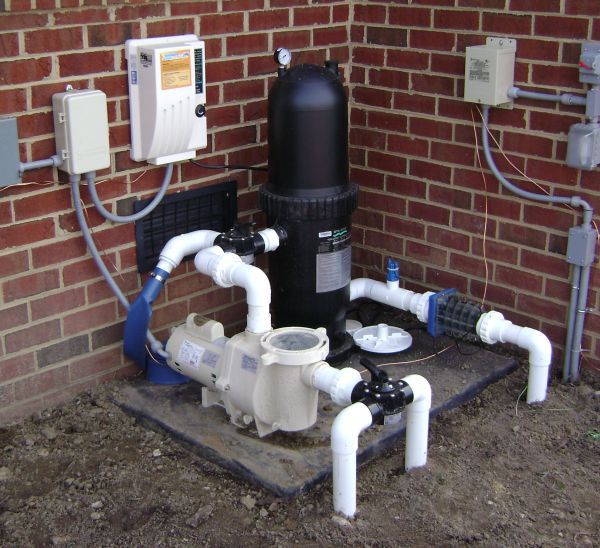
Credit: www.riverpoolsandspas.com