
If you have ever worked with plumbing, you know that vent pipes are important. They help keep your drains working and your home safe. But one question often comes up: how long can a vent pipe be before it stops working well? This might look simple, but there are many things to consider. The answer depends on building codes, pipe sizes, types of fixtures, and the layout of your plumbing.
This guide will give you a clear, detailed explanation. You’ll discover not just the basic rules, but also the reasons behind them. You’ll learn what happens if the vent pipe is too long, how to plan your system, and what mistakes to avoid.
Whether you are a homeowner, a plumber starting out, or a student, you will understand how vent pipes work and why their length matters.
The Role Of A Vent Pipe In Plumbing
To understand vent pipe length, you need to know what a vent pipe does. In plumbing, a vent pipe does more than just let air in and out. It keeps water moving smoothly and stops sewer gases from entering your home.
When you flush a toilet or drain a sink, water flows through the pipes. As it moves, it pushes air ahead of it and pulls air behind. If there is not enough air, the water moves slowly, or even stops.
Worse, it can pull water out of the traps under sinks, letting bad smells into your house.
A vent pipe connects the plumbing system to the open air, usually through the roof. It keeps air pressure even in the pipes. This helps water flow well and keeps traps full. In short, vent pipes are essential for safe, working plumbing.
Why Vent Pipe Length Matters
You may wonder why the length of a vent pipe is so important. In simple terms, the longer the pipe, the harder it is for air to move. If a vent pipe is too long, air flow slows down. This creates problems such as:
- Water draining slowly from fixtures
- Gurgling sounds from drains
- Sewer gas smells in bathrooms or kitchens
- Traps losing water (trap siphonage)
Building codes set limits on vent pipe length to stop these problems. They also decide the pipe size needed for different lengths. If you ignore these rules, you risk leaks, odors, or even plumbing system failure.
Credit: www.pmmag.com
Plumbing Codes And Standards
Before you install or change a vent pipe, you must follow local plumbing codes. These rules are made to keep your home safe and your plumbing working well. In the United States, the two main codes are:
- International Plumbing Code (IPC)
- Uniform Plumbing Code (UPC)
Most places use one of these codes, with some local changes. The codes tell you the maximum vent pipe length based on pipe size, fixture type, and slope.
Example: Upc Vs Ipc Vent Lengths
The codes are not always the same. For example, the IPC is often less strict than the UPC. Here is a quick comparison for a 1½-inch vent pipe on a bathroom sink:
| Code | Max Horizontal Length (1½” pipe) | Max Vertical Height (1½” pipe) |
|---|---|---|
| UPC | 6 feet | Not limited (vertical) |
| IPC | 42 feet | Not limited (vertical) |
As you can see, the IPC allows much longer vent pipes for the same fixture and pipe size. Always check which code your city or state uses.
Maximum Vent Pipe Lengths By Pipe Size
The main factor that controls vent pipe length is the diameter of the pipe. Bigger pipes can be longer because air moves more easily through them. Here are some common rules (based on the 2021 IPC):
| Pipe Size (inches) | Maximum Horizontal Length (feet) |
|---|---|
| 1¼ | 32 |
| 1½ | 42 |
| 2 | 72 |
| 3 | 212 |
These numbers are for individual vents serving a single fixture. If your vent serves more fixtures or has other connections, the rules change.

Credit: diy.stackexchange.com
How To Measure Vent Pipe Length
To follow the code, you must measure the vent pipe correctly. The maximum length is the distance from the fixture drain to where the vent pipe connects to the main vent or goes through the roof. For horizontal vents, measure along the pipe’s centerline.
Vertical vent pipes (straight up) usually do not have a length limit. The problems come with long horizontal runs, where air can slow down or water can block the pipe.
Factors That Affect Maximum Vent Pipe Length
Several things can change the maximum vent pipe length you are allowed to use:
1. Pipe Slope
Horizontal vent pipes must slope upward at least 1/4 inch per foot toward the vent stack or roof. This keeps water from sitting in the pipe and blocking airflow.
2. Pipe Size
Larger pipes allow longer runs. If you need a longer vent, sometimes you can use a bigger pipe.
3. Number Of Fixtures
More fixtures on a vent require a bigger pipe or shorter length.
4. Type Of Fixture
Some fixtures (like toilets or bathtubs) have special venting rules.
5. Local Modifications
Cities may change the code for local needs. Always check local rules.
6. Vent Connections
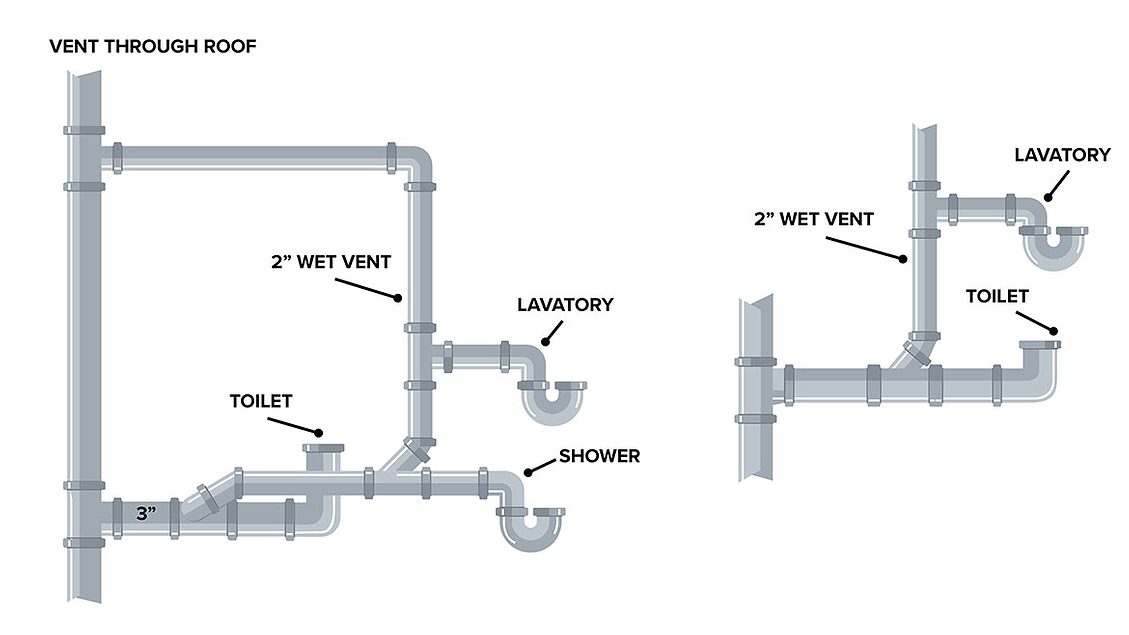
If a vent combines with others (a “wet vent” or “common vent”), the allowed length might change.
Wet Vents, Common Vents, And Circuit Vents
Not all vents are the same. Here’s how different vent types affect the maximum length:
Wet Vents
A wet vent is a pipe that carries waste and also serves as a vent. Wet vents have shorter allowed lengths, and the pipe must be bigger than a dry vent.
Common Vents
A common vent serves two fixtures at once (like two sinks). The length is measured from the farthest fixture to the vent stack.
Circuit Vents
A circuit vent can serve up to eight fixtures in a row (like sinks in a public restroom). The code gives special rules for circuit vents, often allowing longer runs if the pipe is large enough.
Problems With Oversized Or Undersized Vent Pipes
A common mistake is to make the vent pipe too small or too large. Both can cause problems.
- Undersized: If the pipe is too small, air cannot move fast enough, and water can block the vent. This leads to slow drains and bad smells.
- Oversized: If the pipe is much bigger than needed, moist air moves slowly. In cold weather, water vapor can condense and freeze inside the pipe, blocking it.
The best practice is to follow code tables for each fixture and not guess the pipe size.
Effects Of Exceeding Maximum Vent Pipe Length
If your vent pipe is longer than the code allows, you may have:
- Siphoned traps (water sucked out, letting in sewer gases)
- Clogged or slow drains
- Gurgling noises when water drains
- Failed plumbing inspections
- Mold or odor problems due to sewer gas leaks
Often, these problems are hard to fix after walls are closed. It’s much easier to do it right the first time.
How To Increase Allowed Vent Pipe Length
If you need a longer vent run than the code allows, there are solutions:
1. Increase Pipe Size
Upsizing the pipe can let you run it farther. For example, switching from 1½-inch to 2-inch pipe increases allowed length from 42 to 72 feet (IPC).
2. Add A Relief Vent
Sometimes, you can add a second vent pipe (relief vent) along the run to help airflow.
3. Use An Air Admittance Valve (aav)
In some places, AAVs are allowed. These mechanical valves let air in but keep sewer gases out. They are not legal everywhere.
4. Move The Vent Stack Closer
If possible, reroute the vent stack so the vent pipe does not need to be so long.
Step-by-step Example: Planning A Bathroom Sink Vent
Let’s walk through a real-world example:
- You have a bathroom sink 30 feet from the main vent stack.
- The local code is IPC.
- The trap arm (drain from sink to vent) is 1½ inches.
- Check the code: IPC allows 42 feet for a 1½-inch pipe.
- Measure the run: Your pipe is 30 feet. You are within the limit.
- Check the slope: The pipe must slope at least 1/4 inch per foot (7.5 inches over 30 feet).
- Inspect for other fixtures: If only one sink, you are fine. More fixtures may need a bigger pipe.
If you needed to run 50 feet, you would need to increase the pipe to 2 inches.
The Importance Of Proper Slope
One detail that beginners often miss is pipe slope. Even if your vent is the right length and size, the slope matters. If the pipe sags or is flat, water can collect in low spots. This blocks airflow and makes the vent useless.
Always secure vent pipes so they keep the right slope.
Common Mistakes When Installing Vent Pipes
Here are mistakes even experienced DIYers make:
1. Ignoring Local Codes
Never assume the national code applies—always check local rules.
2. Measuring “as The Crow Flies”
Measure along the path the pipe actually runs, not in a straight line.
3. Using Undersized Pipes For Long Runs
Long runs need larger pipes.
4. Not Enough Slope
Pipes must slope toward the vent stack to prevent water pooling.
5. Connecting Vents Below The Flood Rim
Vents should always connect above the fixture’s flood level.
6. Assuming All Fixtures Have The Same Rules
Toilets, showers, and sinks can have different venting needs.
When To Use Air Admittance Valves (aavs)
Sometimes, it’s impossible to run a traditional vent pipe. In these cases, air admittance valves (AAVs) can help. They are allowed in many areas, but not everywhere. AAVs are mechanical devices that let air in when water flows, but shut when not needed.
Benefits:
- Useful for kitchen islands or additions
- Cheaper than running a long vent to the roof
Drawbacks:
- Can fail over time (mechanical part)
- Not always legal
- Must be accessible for inspection
Check your local code before using AAVs.
Real-world Vent Pipe Layouts
Let’s look at some common layouts and how vent length rules apply.
Single Fixture Bathroom
A basic bathroom with one sink and one toilet usually has short vent runs. Often, a 1½-inch or 2-inch vent is enough.
Long Kitchen Drain
Kitchens are often far from the main stack. If the vent pipe is too long, you may need to upsize the pipe or use an AAV.
Basement Bathroom
In a basement, vent pipes must go up to the main stack or roof. Long horizontal runs can be a challenge. Plan carefully to stay within allowed lengths.
Advanced Planning For Large Homes
For large homes or commercial buildings, vent pipe planning is even more important. Long distances and many fixtures mean that correct pipe sizing and routing are critical.
1. Draw A Plumbing Diagram
Before starting, draw the whole system with all vent and drain pipes.
2. Label All Pipe Sizes And Fixture Units
Make sure each vent is sized for the number of fixtures.
3. Plan For Future Changes
If you might add bathrooms, upsize pipes now.
4. Consult With A Licensed Plumber
If you are unsure, it’s worth asking a pro.

Credit: forum.nachi.org
Special Considerations For Cold Climates
If you live where it gets cold, vent pipes need extra care:
- Use insulation on vent pipes in attics to stop freezing.
- Avoid oversizing pipes, as slow-moving air can freeze and block the vent.
- Keep the roof vent opening at least 3 inches in diameter to reduce frost closure.
Inspection And Testing
After installing vent pipes, they should be inspected and sometimes tested:
- Inspect for correct size, slope, and connections.
- Look for low spots where water can collect.
- Some inspectors use smoke tests to check for leaks.
Passing inspection is required before the walls are closed up.
Summary Table: Vent Pipe Size Vs. Maximum Length
To help you remember, here is a quick reference for IPC vent pipe rules:
| Pipe Size (inches) | Max Length (feet) | Usual Fixtures |
|---|---|---|
| 1¼ | 32 | Lavatory, bar sink |
| 1½ | 42 | Lavatory, kitchen sink |
| 2 | 72 | Shower, floor drain |
| 3 | 212 | Main stack, multiple fixtures |
Always check your local code for changes.
Non-obvious Insights For Better Vent Pipe Design
Two things many beginners overlook:
- The effect of elbows and turns: Every turn in the pipe slows down airflow. If your vent run has many bends, consider using a larger pipe even if you are under the length limit.
- Combining vent and drain functions: In some cases, a wet vent can save space and materials, but it requires careful planning to meet the code.
Resources For Further Reading
If you need more detail or want to see the official tables, you can find them in the International Plumbing Code book or online resources. One useful source is the International Code Council website.
Frequently Asked Questions
How Do I Know Which Plumbing Code To Follow?
Check with your local building department. They will tell you if you follow the IPC, UPC, or a local code. Never assume the national code is used in your area.
Can I Make My Vent Pipe Longer If I Use A Bigger Pipe?
Yes, in most cases. Codes allow longer runs if you increase the pipe size, but there is always a limit. Check the tables in your code book.
What Happens If My Vent Pipe Is Too Long Or Too Small?
If the vent pipe is too long or too small, you may have slow drains, sewer gas smells, or failed inspections. It’s important to follow code to prevent these issues.
Are Air Admittance Valves (aavs) As Good As Regular Vent Pipes?
AAVs are helpful in some cases and allowed by many codes, but not all. They can fail over time and are not a complete replacement for a traditional vent pipe in all situations.
Do Vent Pipes Need To Go Through The Roof?
Most vent pipes must connect to open air, usually through the roof. Some codes allow side wall vents or AAVs, but the roof is the most common and safest method.
When you understand how vent pipes work, and the rules for their length, you can plan a safe, reliable plumbing system. Taking time to follow these guidelines will save you problems and money in the future.