
Many pool owners know how important it is to keep the water balanced, but some details can be confusing. If you use Alkalinity Up to adjust your pool’s alkalinity, you might wonder: how many cups of Alkalinity Up equals a pound? This question seems simple, but the answer involves understanding pool chemicals, measuring systems, and why accurate dosing matters. By the end of this article, you’ll know exactly how to convert cups to pounds for Alkalinity Up, why it matters, and how to avoid common mistakes that can harm your pool or wallet.
This guide is for pool owners, caretakers, and anyone curious about pool chemistry. You’ll find practical advice, real-world examples, and clear answers. We’ll also look at different brands, discuss measuring tools, and offer tips to make sure your pool stays safe and sparkling.
What Is Alkalinity Up And Why Use It?
Alkalinity Up is a pool chemical that raises the total alkalinity of your pool water. Most of the time, the active ingredient is sodium bicarbonate (baking soda), although some products may use other compounds. When you see your pool’s total alkalinity is too low, adding Alkalinity Up helps stabilize the water, preventing sudden pH changes. This is important because unstable pH can lead to problems like cloudy water, scaling, or corrosion of pool parts.
Key Benefits Of Alkalinity Up
- Keeps pH levels stable
- Prevents damage to pool equipment and surfaces
- Makes chlorine work better
- Improves swimmer comfort
Many beginners don’t realize that if your alkalinity is too low, adding acid to adjust pH can actually cause bigger swings. Alkalinity Up acts like a buffer, reducing this risk.
Understanding Pounds And Cups In Pool Chemistry
If you read instructions on a bag of Alkalinity Up, you’ll often see dosing amounts listed in pounds. But at home, most people use cups, not scales. This makes conversion important, especially if you want to avoid over-treating or under-treating your pool.
Why Converting Matters
- Pool chemical instructions often use pounds
- Home measuring tools use cups
- Accurate dosing keeps pool water safe
Using the wrong amount can waste money and harm your pool. For example, adding too much can make your water cloudy, and too little won’t fix the problem.
The Difference Between Weight And Volume
A pound measures weight, while a cup measures volume. Since Alkalinity Up is a powder, its weight per cup depends on how tightly it’s packed, the size of the grains, and even humidity. Not all powders are equal—different brands can have slightly different densities.
How Many Cups Of Alkalinity Up Equals A Pound?
The main question: how many cups do you need to use to add one pound of Alkalinity Up? Most pool professionals and chemical manufacturers agree on the typical conversion:
One pound of Alkalinity Up is approximately 1.5 cups.
This number is based on the average density of sodium bicarbonate used in pool chemicals. However, the actual amount can range from 1. 25 to 1. 5 cups per pound, depending on how tightly you pack the powder and the specific brand.
Common Conversions
- 1 pound = 1.5 cups (most common)
- 1 cup = about 10.5 ounces
- 2 cups = about 1.33 pounds
Why The Measurement Can Vary
Sometimes, people get different answers because:
- Some scoop loosely, others pack the powder down
- Different brands have slightly different grain sizes
- Humidity can make powder heavier or lighter
To be more precise, always check the label on your specific Alkalinity Up product.
Comparing Different Brands And Their Densities
Not all Alkalinity Up products are created equal. Some brands are more finely ground, while others are coarser. This affects how much fits in a cup. Let’s compare three popular brands:
| Brand | Active Ingredient | Approx. Cups per Pound | Notes |
|---|---|---|---|
| Clorox Pool & Spa Alkalinity Up | Sodium Bicarbonate | 1.5 | Fine powder, easy to dissolve |
| HTH Alkalinity Increaser | Sodium Bicarbonate | 1.4 | Slightly denser granules |
| In The Swim Alkalinity Increaser | Sodium Bicarbonate | 1.5 | Standard density |
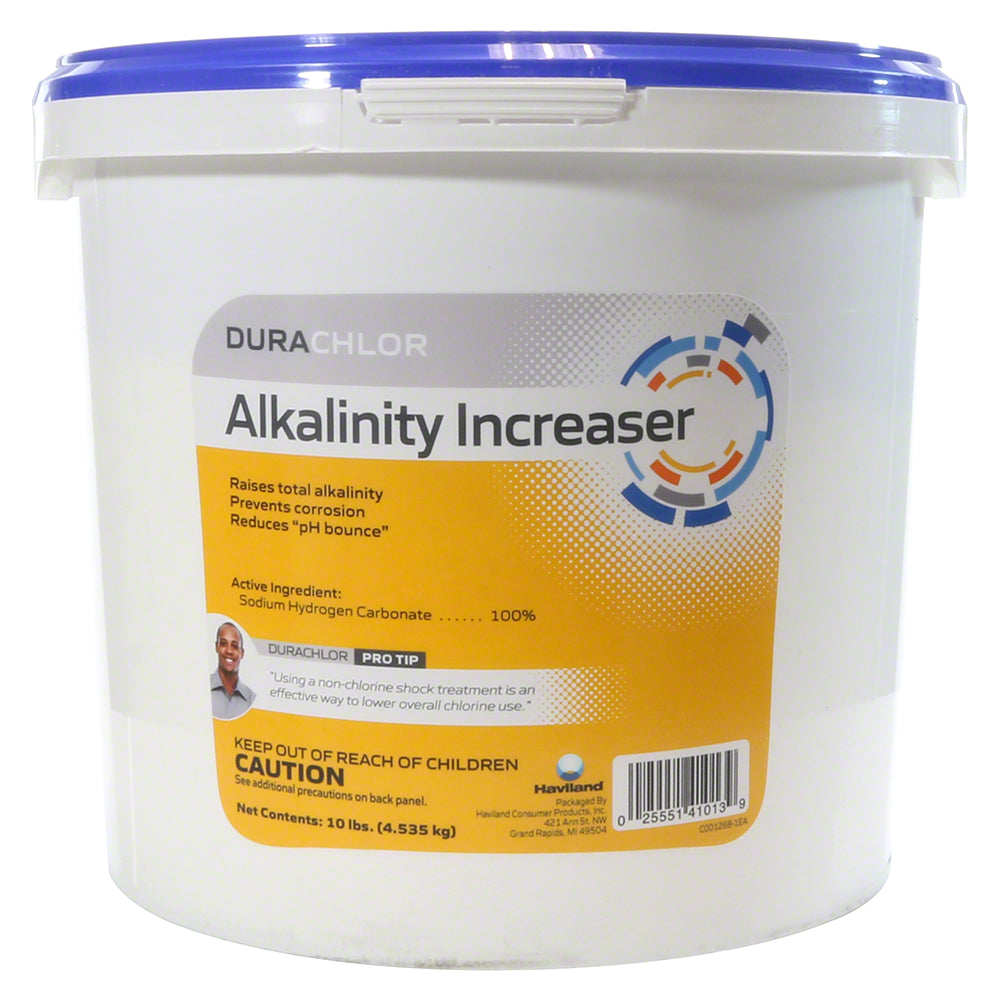
If you switch brands, check the label for “weight per cup” or do a quick test with a kitchen scale if accuracy is critical.
Credit: www.poolweb.com
How To Measure Alkalinity Up At Home
Most people use standard measuring cups from the kitchen. Here’s how to get a more accurate measurement:
- Use a dry, clean measuring cup.
- Pour the powder into the cup without shaking or packing it down.
- Level off the top with a straight edge (like a knife).
- If you want to be precise, weigh the cup on a kitchen scale.
If your instructions say to add “1 pound,” use 1.5 cups as a good starting point. For smaller pools or small adjustments, you can divide the amount. For example, 0.5 pound = 0.75 cups.
Practical Example: Adjusting A 20,000 Gallon Pool
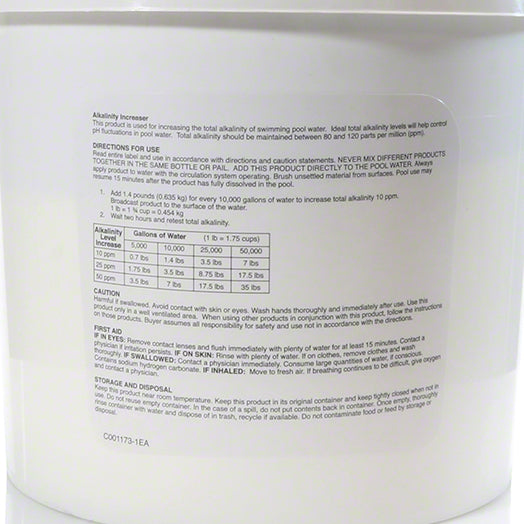
Let’s say you test your 20,000-gallon pool and find total alkalinity is 60 ppm (parts per million), but you want it at 100 ppm. According to most guides, it takes about 1.5 pounds of Alkalinity Up to raise alkalinity by 10 ppm in 10,000 gallons. Here’s the math:
- Needed increase: 40 ppm (100 minus 60)
- For 10,000 gallons: 1.5 pounds raises 10 ppm
- For 20,000 gallons: 3 pounds raises 10 ppm
So, to raise by 40 ppm:
- 3 pounds × 4 (for 40 ppm) = 12 pounds
In cups:
- 12 pounds × 1.5 cups per pound = 18 cups
Therefore, you’d need to add about 18 cups of Alkalinity Up to raise 20,000 gallons by 40 ppm.
Step-by-step Guide To Adding Alkalinity Up
- Test your water for total alkalinity and pH.
- Calculate how much Alkalinity Up you need, using the conversion (1 pound ≈ 1.5 cups).
- Divide the total amount into two or three doses, adding each at least 6 hours apart.
- With the pump running, slowly sprinkle the powder around the deep end of the pool.
- Let the water circulate for several hours before retesting.
- Adjust again if needed, but avoid adding more than recommended at one time.
Tip: Adding too much at once can cloud the water or raise pH too high.
Table: Alkalinity Up Dosing Reference
Here’s a quick reference for common pool sizes and how many cups of Alkalinity Up you’ll need to raise alkalinity by 10 ppm:
| Pool Size (Gallons) | Pounds Needed | Cups Needed |
|---|---|---|
| 5,000 | 0.75 | 1.1 |
| 10,000 | 1.5 | 2.25 |
| 15,000 | 2.25 | 3.4 |
| 20,000 | 3 | 4.5 |
| 25,000 | 3.75 | 5.6 |
This table assumes you want to raise alkalinity by 10 ppm using sodium bicarbonate.
Why Accurate Dosing Is So Important
Many people underestimate how sensitive pool chemistry can be. Adding too much or too little Alkalinity Up can cause problems:
- Too much: Raises pH, causes scaling, makes water cloudy
- Too little: Doesn’t fix low alkalinity, allows wild pH swings
- Inconsistent dosing: Makes it hard to keep water balanced
Even small pools can react strongly to overdosing. If you’re not sure about your measurements, start with less and retest before adding more.
Two Insights Most Beginners Miss
- Alkalinity and pH affect each other: Raising alkalinity usually raises pH too, but not always in a straight line. Sometimes, fixing alkalinity will also fix pH issues. If you adjust both at once, you may chase your tail, constantly adding chemicals. Test both after each dose.
- Wait between doses: Many beginners dump all chemicals in at once, thinking more is better. In reality, water needs time to absorb and balance. Waiting at least 6 hours—or better, overnight—can prevent cloudy water and wasted chemicals.
Tools For Measuring Alkalinity Up
While measuring cups are common, there are other tools you might use:
- Kitchen scales: Give the most accurate measurement
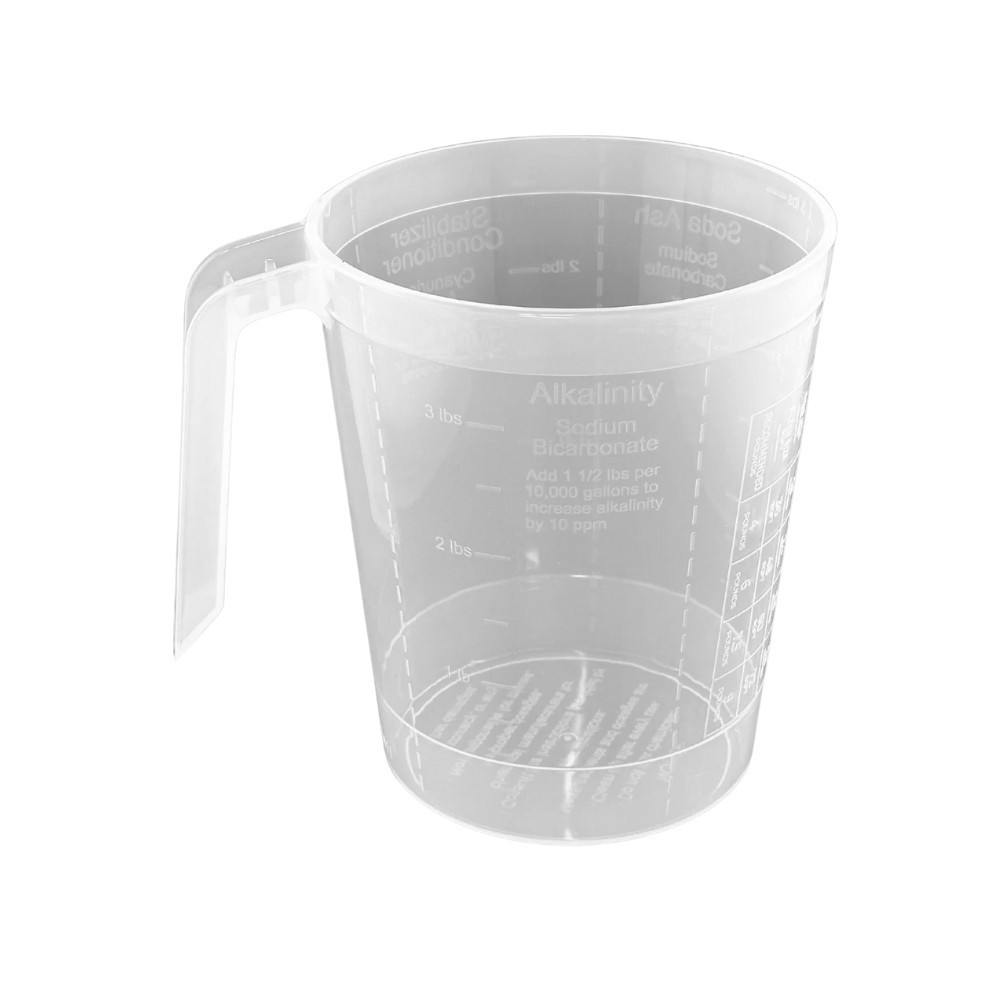
- Pool chemical scoops: Sometimes included with the product; check the label for “1 scoop = X ounces”
- Liquid measuring containers: Not as accurate for powders, but better than guessing
If you treat large pools or manage several, consider investing in a kitchen scale for best results.
Mistakes To Avoid When Using Alkalinity Up
- Guessing the amount: Don’t just pour and hope. Always measure.
- Using wet measuring cups: Moisture causes the powder to clump and stick, making you add less than you think.
- Not circulating the water: Always run the pump while adding, or you’ll get uneven results.
- Adding all at once: Large doses can overwhelm the water and cloud it.
- Ignoring labels: Some brands are denser or lighter—check the instructions on your product.
How Alkalinity Up Compares To Other Pool Chemicals
You may see other products that sound similar, like pH Up or Soda Ash. These are not the same as Alkalinity Up. Here’s a comparison:
| Chemical | Main Use | Main Ingredient | Effect on pH | Effect on Alkalinity |
|---|---|---|---|---|
| Alkalinity Up | Raises alkalinity | Sodium bicarbonate | Slightly raises | Raises |
| pH Up | Raises pH | Soda ash (sodium carbonate) | Strongly raises | Raises a little |
| Baking Soda | Raises alkalinity | Sodium bicarbonate | Slightly raises | Raises |
| pH Down | Lowers pH | Sodium bisulfate or muriatic acid | Lowers | Lowers a little |
If you only need to raise pH and not alkalinity, don’t use Alkalinity Up—choose the correct chemical.
Real-world Tips For Managing Pool Alkalinity
- Test regularly: At least once a week in summer, or after heavy rain or parties.
- Adjust slowly: Never try to fix a big problem all at once.
- Keep records: Write down what you add and how the water reacts.
- Balance in this order: First alkalinity, then pH, then chlorine.
- Store chemicals dry: Moisture makes powders clump and reduces effectiveness.
Safety Tips When Handling Alkalinity Up
- Wear gloves and safety glasses to avoid contact with skin and eyes.
- Never mix chemicals—add each one separately to the water.
- Keep children and pets away from open containers.
- Store in a cool, dry place, sealed tightly.
- If you spill, sweep up dry powder and rinse the area with plenty of water.
Environmental Considerations
Proper chemical use isn’t just for safety—it’s better for the environment. Adding the right amount of Alkalinity Up helps you avoid draining and refilling your pool, which wastes water. It also prevents excess chemicals from being released into storm drains.
If you use too much and must drain some water, check local rules for safe disposal.
When To Use Baking Soda Instead
Many pool owners wonder if they can use regular baking soda instead of branded Alkalinity Up. The answer is yes: both are sodium bicarbonate. The main difference is price and packaging size. Baking soda from the grocery store works just as well, but you’ll need more boxes for large pools.
- 1 pound of baking soda = 1.5 cups = 1 pound of Alkalinity Up
If you want to save money, buy baking soda in bulk.
Adjusting Alkalinity In Hot Tubs And Spas
Hot tubs and spas have smaller water volumes, so dosing must be even more precise. Use smaller measuring spoons and always dissolve Alkalinity Up in a bucket of water before adding to the spa. Test after each adjustment.
For a 400-gallon spa:
- To raise alkalinity by 10 ppm: Use about 1 tablespoon of Alkalinity Up.
Credit: www.poolweb.com
The Science Behind Alkalinity Up
When you add sodium bicarbonate to your pool, it dissolves and increases the ability of the water to resist changes in pH. This “buffering” effect is vital for chlorine to work well and for swimmer comfort. If you’re interested in the chemical details, sodium bicarbonate (NaHCO₃) reacts with acids in the water to neutralize them, keeping your pH steady.
How To Know If You Added Enough
After adding Alkalinity Up, wait at least 6 hours (or overnight) and then retest. If your alkalinity is in the ideal range (usually 80–120 ppm), you’re done. If not, add more—slowly. Always adjust in small steps.
If your pH is still unstable after correcting alkalinity, you may need to balance pH directly. But in most cases, fixing alkalinity first helps a lot.
Credit: www.ebay.com
Troubleshooting: If Things Go Wrong
If you add too much Alkalinity Up and the water turns cloudy, don’t panic. This usually clears in a day or two as the powder dissolves and the filter runs. If not, backwash or clean the filter, and check that your pH isn’t too high.
If levels are far above target, partially drain and refill the pool.
If your alkalinity remains low after adding the correct amount, double-check your test kit and ensure the powder was evenly distributed.
How To Store And Handle Alkalinity Up Safely
Always store chemicals in a dry, cool place, away from sunlight and moisture. Reseal the bag or container tightly after each use. Don’t store next to acids or other pool chemicals—mixing can be dangerous.
If you have leftover Alkalinity Up, it will last for years if kept dry.
When To Call A Professional
Most pool owners can manage alkalinity with basic tools and the right information. But if you have ongoing problems, cloudy water that won’t clear, or aren’t sure about measurements, call a pool pro. They have advanced testing kits and can troubleshoot bigger issues.
Helpful Resources
For more on pool chemistry, the Pool & Hot Tub Alliance offers excellent guides and calculators. For a deep dive into sodium bicarbonate and its use in pools, see this Wikipedia article.
Frequently Asked Questions
How Many Cups Of Alkalinity Up Are In A Pound?
One pound of Alkalinity Up is usually 1.5 cups. This is the most common conversion for standard sodium bicarbonate-based products. For best accuracy, check your product label or use a kitchen scale.
Can I Use Regular Baking Soda Instead Of Alkalinity Up?
Yes. Baking soda is sodium bicarbonate, just like Alkalinity Up. The conversion is the same: 1.5 cups per pound. Large bags of baking soda can save money for big pools.
What Happens If I Add Too Much Alkalinity Up?
Adding too much can raise your pH too high, make water cloudy, and cause scaling on pool surfaces. If this happens, stop adding chemicals, run your filter, and retest after a day. If levels remain high, partially drain and refill the pool.
How Fast Should I Add Alkalinity Up To My Pool?
Add Alkalinity Up in small amounts, spaced at least 6 hours apart. This helps the water absorb the powder and prevents cloudiness. Always run your pump during and after adding.
Is The Cup-to-pound Conversion The Same For All Brands?
Most brands use similar sodium bicarbonate, so the conversion is usually 1. 5 cups per pound. However, some may be slightly denser or lighter. Always check your product’s instructions for the most accurate measurement.
Keeping your pool’s alkalinity balanced is key to safe, comfortable swimming and clear water. With the right measurements and a little patience, you can confidently manage your pool’s chemistry and enjoy a perfect swim all season long.