
Blowing out pool lines before winter is a must for any pool owner who lives in a cold climate. Failing to do this can lead to cracked pipes, expensive repairs, and a big headache when spring comes. While many people think you need a special air compressor, the truth is that a simple shop vac can work just as well, saving you money and hassle. But how do you use a shop vac to blow out pool lines the right way? This guide explains everything you need to know, even if you’ve never tried it before.
You’ll learn the basic science behind blowing out lines, why it matters, and step-by-step instructions for a safe, complete job. You’ll also see real-world tips, common mistakes, and answers to questions most beginners forget to ask. By the end, you’ll have the confidence to winterize your pool lines with tools you probably already own.
Why You Need To Blow Out Pool Lines
When water freezes, it expands. If there’s water trapped in your pool’s pipes during winter, ice can cause them to burst. Pool plumbing repairs are not cheap—sometimes costing thousands of dollars. Blowing out the lines removes water from the pipes, preventing this damage.
But it’s not just about avoiding repairs. Properly winterizing your pool lines also means:
- Cleaner start-up in spring
- Less algae and bacteria growth
- Longer lifespan for your pool system
Some pool owners try to drain pipes by gravity alone, but this always leaves water behind. Using air—like a shop vac—pushes out nearly all water, which is the only reliable way to protect your investment.
How A Shop Vac Works For Pool Lines
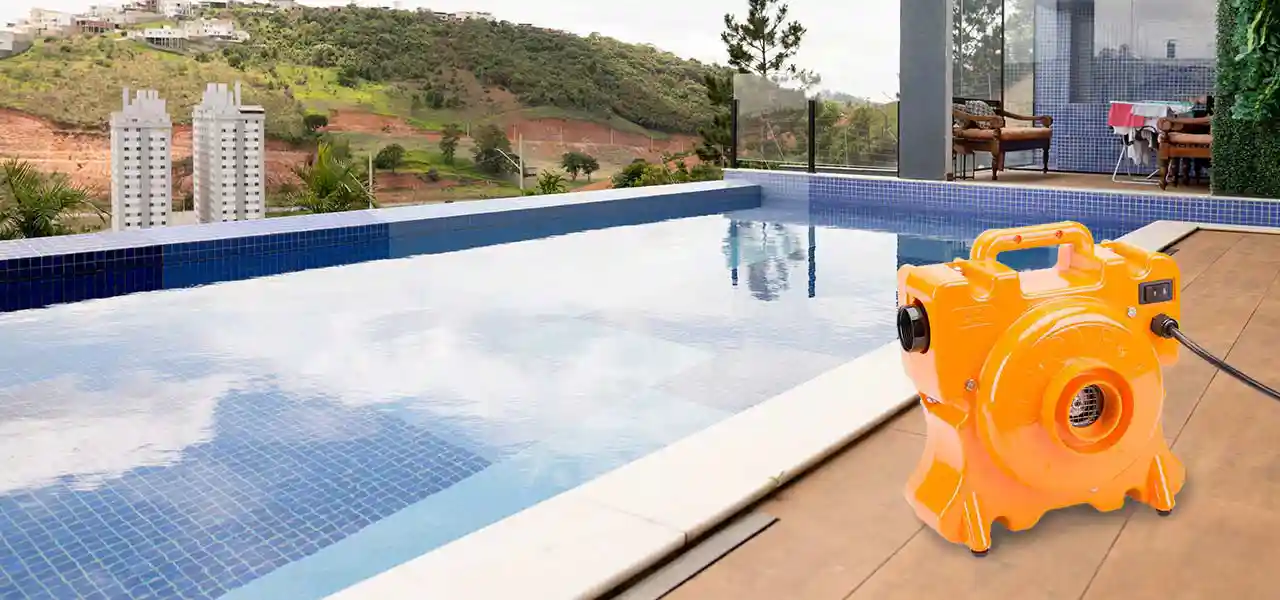
A shop vac is a powerful wet/dry vacuum. Most people use it to suck up debris or water. But if you connect the hose to the exhaust port, it blows air out instead. This strong, steady airflow is perfect for pushing water out of pool pipes.
Key insight: Many shop vacs can generate 50–100 cubic feet per minute (CFM) of airflow, which is more than enough for pool plumbing. You don’t need high pressure—volume is what matters.
What You Need Before You Start
Gather all tools and supplies before beginning. This makes the process smoother and prevents mid-job problems.
Basic Tools and Materials:
- Shop vac (with blower function, at least 5 HP recommended)
- Hose adapters (to connect shop vac hose to pool pipes/skimmer)
- Winterizing plugs (a.k.a. “pool gizmos” or rubber expansion plugs)
- Screwdriver or wrench (for removing fittings)
- Teflon tape (to help plugs seal tightly)
- Safety goggles and gloves
- Pool antifreeze (optional, for extra protection)
- Bucket (for draining leftover water)
- Owner’s manual (for your pool and shop vac—very helpful)
Pro tip: Not all shop vac hoses fit pool pipes perfectly. You may need a “universal pool hose adapter” or even a short section of duct tape to make a snug fit.
Step-by-step: How To Blow Out Pool Lines With A Shop Vac
Let’s break down the process in detail. Each step matters, so don’t rush. This approach works for both inground and above-ground pools.
1. Turn Off And Drain Pool Equipment
- Shut off the pool pump at the circuit breaker.
- Turn off and unplug any heaters, chlorinators, or salt cells.
- Remove drain plugs from the pump, filter, and heater to let water escape.
- Open air relief valves to speed up draining.
Insight: Water can hide in equipment. Always tip pumps and heaters forward to help every drop escape.
2. Lower Water Level
- Drop the pool’s water level below the skimmer and return jets.
- Use a submersible pump or your pool’s drain setting.
- Make sure water is at least 1–2 inches below the lowest fitting you’ll blow out.
Why? Lowering water prevents new water from flowing into the pipes as you blow them out.
3. Remove Pool Accessories
- Take out ladders, handrails, and any fittings that block access to the pipes.
- Remove return jet eyeballs and skimmer baskets.
- Store these in a safe, dry place.
4. Connect Shop Vac To Pool Line
- Attach the shop vac hose to the exhaust port (not the vacuum port).
- Find the line you want to blow out first (skimmer, main drain, or return).
- Use an adapter to make a tight seal between the hose and the pool line.
- If blowing from the skimmer, press the hose into the skimmer hole.
Important: Seal all other holes with winterizing plugs so air only goes down the line you’re working on.
5. Blow Out The Skimmer Line
- Turn the shop vac ON at full power.
- Watch for water and bubbles coming out of the skimmer or pool return.
- Let the vac run until you see only air (and no more water) coming out.
- Quickly plug the line with a winterizing plug while air is still blowing.
Extra tip: Wrap Teflon tape around the plug’s threads for a tighter seal.
6. Blow Out The Return Lines
- Move the shop vac hose to the return side (where water flows back into the pool).
- Open only one return line at a time; plug the others.
- Turn on the shop vac. When you see bubbles and then only air, the line is clear.
- Plug the return line immediately while air is still moving.
Expert tip: For pools with multiple returns, repeat this for each one, moving quickly to keep air pressure up.
7. Blow Out The Main Drain
Main drains are tricky because they’re often at the pool’s lowest point.
- Set the main drain valve to “open” at the equipment pad.
- Blow air into the main drain line (usually from the pump or skimmer).
- Watch for bubbles in the pool’s main drain area.
- Let the shop vac run for 2–3 minutes to push as much water as possible out.
- Close the valve tightly to “air-lock” the line.
Non-obvious insight: Even though you can’t plug the main drain at the pool, closing the valve while blowing air keeps water out all winter.
8. Add Pool Antifreeze (optional But Recommended)
- Pour pool-grade antifreeze into lines (especially skimmer and returns) for extra freeze protection.
- Use only non-toxic, pool-safe antifreeze—never use car antifreeze.
9. Final Check And Seal
- Make sure all lines are tightly plugged.
- Double-check the equipment pad—drain plugs should be out, and valves set for winter.
- Store your shop vac and adapters for next year.
Quick checklist: Did you plug every line? Remove all water from equipment? Lower the water level enough?
Comparison: Shop Vac Vs. Air Compressor For Pool Lines
Many pool pros use air compressors, but a shop vac is a smart alternative. Here’s how they compare:
| Feature | Shop Vac | Air Compressor |
|---|---|---|
| Pressure | Low (2-4 PSI) | High (up to 125 PSI) |
| Air Volume (CFM) | High (50-100+) | Lower (5-15) |
| Ease of Use | Simple | Requires regulator/settings |
| Risk of Damage | Very low | Can burst pipes if misused |
| Cost | Most owners already have one | Extra purchase for most people |
Takeaway: For most pool owners, a shop vac is safer and easier. You avoid the risk of over-pressurizing lines, and you probably have one in the garage already.
Common Mistakes To Avoid
Even experienced pool owners make mistakes. Here are the most common—and how to avoid them.
Not Lowering Water Enough
If the water level is too high, water can flow back into pipes after you blow them out. Always lower water below the lowest fitting.
Forgetting To Plug Lines Quickly
Wait too long, and water flows back. Plug lines while air is still blowing for a perfect seal.
Missing Hidden Equipment
Chlorinators, heaters, and other add-ons can trap water. Always drain and blow out every piece of equipment, not just the pipes.
Using The Wrong Plugs
Some people use old or cracked plugs. This lets water leak in later. Invest in new, tight-fitting winterizing plugs every few years.
Not Checking For Airflow
If you don’t see bubbles or water coming out, something’s blocked. Stop and check for clogs or closed valves.
Pro Tips For A Perfect Blow-out
- Have a helper: One person on the shop vac, another at the pool. This makes plugging lines much faster.
- Use clear tubing: For tricky spots, clear tubing shows you when water is gone.
- Label plugs: Mark each plug with the line it fits. This saves confusion next year.
- Store small parts: Put plugs, adapters, and fittings in a bag or box, so you don’t lose them over winter.
How Long Does It Take?
Most DIYers can blow out all pool lines in 45–90 minutes. First-timers may take longer, but with practice, you’ll get faster. Complex pools (with many returns or features) take more time, but the process is the same.
What If I Miss A Line?
Even one missed line can cause a freeze crack. If you’re not sure you got them all:
- Go through your pool’s plumbing diagram.
- Double-check every plug, valve, and fitting.
- If you see water in a clear plug after a few days, repeat the blow-out.
Key insight: It’s better to redo a line than face repairs in spring.
Pool Types: Inground Vs. Above Ground
The basic steps are the same for both, but there are a few differences.
| Step | Inground Pool | Above Ground Pool |
|---|---|---|
| Lower Water | Below skimmer & returns | Usually just below skimmer |
| Main Drain | Usually present | Rare; skip if none |
| Number of Lines | 2-6+ | 1-2 |
| Equipment | More complex | Simple (pump, filter) |
| Time Needed | Longer | Faster (30–45 min) |
Conclusion: Shop vacs work well for both types, but above ground pools are usually simpler and faster.
When To Blow Out Pool Lines
The best time is after the last pool use of the season and before freezing nights. In most of North America, this means late September to early November.
- Watch the weather: If temps drop below 32°F (0°C), pipes can freeze.
- Don’t wait too long: It’s easier to winterize before the water is icy cold.
How Often Should You Blow Out Lines?
You only need to blow out lines once per winter—but always check plugs and covers after big storms or thaws, in case something shifts.
Pool Antifreeze: Do You Really Need It?
Pool antifreeze is an extra layer of protection. It’s not required if you do a perfect blow-out, but most pros still recommend it—especially for skimmers and low spots where water can collect.
Important: Only use non-toxic, pool-safe antifreeze. Never use car radiator antifreeze, which is poisonous.
Is A Shop Vac Powerful Enough?
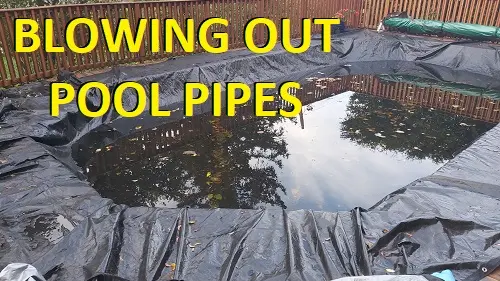
A common worry is that shop vacs aren’t strong enough. In reality, the volume of air is more important than pressure. Even a basic 5 HP shop vac moves enough air to clear most pool lines. For very long or large-diameter plumbing, you may need to run the vac a little longer, but the results are the same.
Credit: www.swimmingpoolsteve.com
Real-world Example: Blowing Out A 16×32 Inground Pool
Here’s a quick example for a typical inground pool:
- 3 returns
- 1 skimmer
- 1 main drain
- Heater and chlorinator
Step-by-step:
- Lower water below returns.
- Remove accessories, baskets, and jet fittings.
- Drain pump, filter, heater, chlorinator.
- Blow out skimmer line from the skimmer—plug while blowing air.
- Blow out each return line—plug quickly.
- Blow out main drain via the pump, watching for bubbles.
- Pour antifreeze into each line.
- Double-check every plug and valve.
Time needed: About 1 hour, with two people.
Shop Vac Selection Tips
If you’re buying a shop vac for this purpose, look for:
- 5 HP or higher motor
- Blower port (not all models have one)
- 1.5–2 inch hose diameter (wider hoses blow more air)
- Long power cord for outdoor use
Extra tip: Read the manual to learn how to switch from vacuum to blower mode.
Maintenance After Blowing Out Lines
- Store all plugs, adapters, and small parts together.
- Keep the shop vac clean and dry for next year.
- Mark your calendar for next fall—don’t forget this step!
Safety Considerations
- Always wear safety goggles—water and debris can spray unexpectedly.
- Don’t let children or pets near equipment while working.
- Only use pool-safe antifreeze.
- Never force a plug or fitting—if it doesn’t fit, check for debris.
Credit: intheswim.com
Environmental Considerations
Some pool owners worry about using antifreeze. The non-toxic pool variety is safe and breaks down in the environment. Never use car antifreeze, which is harmful to animals and groundwater.
Diy Vs. Hiring A Pro
Blowing out pool lines with a shop vac is a great DIY project for most owners. But if you:
- Have a very complex pool
- Are not comfortable with the process
- See leaks or broken fittings
…it’s smart to call a pool professional. Spending $100–$300 on a pro is still cheaper than a big repair.
Useful Resources
For more details on pool winterization, see the Wikipedia guide to pool sanitation, which covers broader maintenance and safety steps.
Frequently Asked Questions
Can Any Shop Vac Blow Out Pool Lines?
Most shop vacs with a blower function (exhaust port) can do the job. A 5 HP or higher model is best. Tiny handheld vacs are not strong enough.
How Do I Know The Line Is Clear?
You’ll see bubbles and water coming out at first, then only air. That’s when you know the line is empty. For returns, plug them while air is still blowing.
Is Pool Antifreeze Really Needed?
It’s optional but smart, especially for skimmers and low spots. It adds protection if a small amount of water stays behind. Always use non-toxic, pool-safe types.
Can I Use A Leaf Blower Instead Of A Shop Vac?
A leaf blower can work for some pools, but it’s harder to seal and direct air into the pipes. Shop vacs are better because you can connect the hose tightly.
What Happens If I Forget A Line?
If even one line has water, it can freeze and crack over winter. Always double-check all plugs and fittings. If you’re not sure, repeat the blow-out.
Blowing out pool lines with a shop vac is simple, safe, and cost-effective if you follow these steps. Take your time, double-check your work, and your pool will be safe from freeze damage all winter. With practice, you’ll save money and protect your pool for years to come.

Credit: www.youtube.com