
Keeping your Bosch dishwasher clean is not just about making it look nice. A well-maintained dishwasher gives you cleaner dishes, lasts longer, and smells fresher. Many people think dishwashers clean themselves because they use hot water and detergent with every cycle.
But over time, food scraps, grease, soap scum, and hard water deposits can build up inside. This can make your dishwasher less effective, leave spots on your glasses, and even cause bad smells. Luckily, cleaning a Bosch dishwasher is simple if you follow the right steps.
Whether you use your dishwasher daily or just a few times a week, regular cleaning will help you avoid problems and keep your machine in top shape.
Why Cleaning Your Bosch Dishwasher Matters
Dishwashers work hard to handle dirty dishes day after day. But as they clean, food particles, mineral deposits, and soap residue collect in hidden areas. Bosch dishwashers are known for their reliability and quiet operation, but even the best machines need maintenance.
Here are a few reasons to keep your Bosch dishwasher clean:
- Cleaner dishes: A dirty dishwasher can’t clean effectively. Food residue and grease can redeposit on your plates and glasses.
- Longer lifespan: Built-up gunk can damage components like spray arms and filters, leading to breakdowns.
- Better smell: Old food and stagnant water cause bad odors, which can transfer to your dishes.
- Efficient operation: A clean dishwasher uses water and energy more efficiently, saving you money.
Many Bosch owners miss regular cleanings because they think their dishwasher “self-cleans. ” In reality, even the newest models need a little help. Taking time to clean your dishwasher every month can prevent problems and expensive repairs.
Tools And Supplies You’ll Need
Before you start, gather a few basic items. Most supplies are already in your kitchen:
- Soft cloth or sponge: For wiping surfaces.
- Old toothbrush: Helps scrub small parts and corners.
- Dish soap: Mild, regular dishwashing liquid.
- White vinegar: Cuts grease and removes mineral buildup.
- Baking soda: Neutralizes odors and acts as a gentle abrasive.
- Toothpick or small brush: For cleaning spray arm holes.
- Paper towels: For drying and cleaning up messes.
- Gloves: If you prefer not to touch old food or chemicals.
- Dishwasher-safe descaler or cleaner: Optional, for heavy mineral deposits.
Having these on hand makes the process smooth and prevents interruptions while you clean.
Credit: www.spencerstv.com
How Often Should You Clean Your Bosch Dishwasher?
Timing is important, but it doesn’t have to be complicated. Here’s a simple guide for Bosch dishwashers:
- Daily: Wipe away visible food debris from the bottom and door.
- Weekly: Clean the filter and door edges.
- Monthly: Deep clean the interior, spray arms, and check for buildup.
- Every 3-6 months: Run a cleaning cycle with a dishwasher cleaner or vinegar.
If you live in an area with hard water, or use your dishwasher heavily, increase the frequency—especially for descaling. Setting reminders can help make cleaning a habit.
Step-by-step Guide: How To Clean Bosch Dishwasher
Follow these steps to get your Bosch dishwasher looking and working like new. Each step is important, so don’t skip any.
1. Prepare And Power Off
For safety, turn off your dishwasher before cleaning. Open the door and remove any dishes or utensils. If your model is hardwired, switch off the circuit breaker.
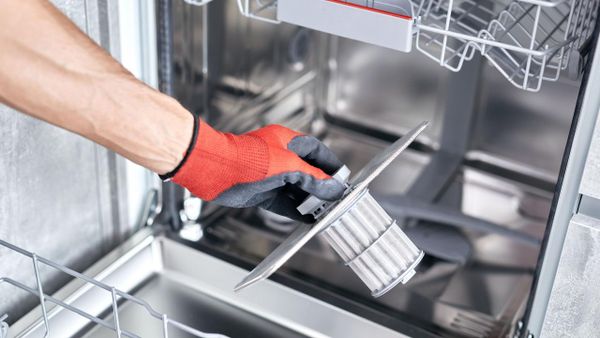
2. Remove And Clean The Filter
The filter is usually at the bottom of the dishwasher, under the lower rack. This part traps food particles and prevents clogs in the drain.
How to clean:
- Pull out the bottom rack.
- Locate the filter (usually a round or cylindrical mesh piece).
- Twist and lift it out gently.
- Rinse the filter under warm running water. Use a toothbrush to remove stuck bits.
- Wash with a little dish soap if needed.
- Let it dry, then replace it securely.
A clogged filter is the most common cause of dirty dishes and bad smells. Cleaning it weekly is one of the best habits you can build.
3. Clean The Spray Arms
The spray arms spin and spray water at your dishes. Food particles and minerals can block the holes, reducing cleaning power.
How to clean:
- Remove both upper and lower racks for easier access.
- Look for clips or screws that hold the spray arms. Most Bosch models let you pull them straight off.
- Rinse the spray arms under warm water.
- Use a toothpick or small brush to clear out any blocked holes.
- For stubborn buildup, soak the arms in vinegar for 15-30 minutes.
- Reattach the spray arms carefully.
Even a small blockage can affect the entire wash, so check these regularly.
4. Wipe The Door And Seals
The door gasket (rubber seal) and edges can collect grime and mold. This area is often missed during normal cleaning.
How to clean:
- Mix a little dish soap with warm water.
- Dip a soft cloth or sponge and wipe around the door edges, seals, and hinges.
- Pay special attention to the bottom of the door—water and food often get trapped here.
- Rinse the cloth and wipe again to remove soap.
- Dry with a paper towel.
If you notice black or pink spots, you might have mold. Clean thoroughly and leave the door slightly open after each cycle to let air circulate.
5. Clean The Dishwasher Interior
Over time, the interior walls and racks can build up with soap scum and hard water stains.
How to clean:
- Remove all racks and utensil holders.
- Wipe down the inside with a damp cloth and a little dish soap.
- For stubborn spots, make a paste with baking soda and water. Rub gently.
- Don’t forget corners and hidden areas.
- Rinse with a clean, damp cloth.
If you see white chalky stains, that’s mineral buildup. Vinegar can help dissolve these.
6. Run A Vinegar Wash Cycle
Vinegar is a natural cleaner that removes grease and mineral deposits.
How to do it:
- Place a cup of white vinegar in a dishwasher-safe bowl on the top rack.
- Run the hottest, longest cycle (no detergent, no dishes inside).
- When done, open the door to let it dry.
Vinegar is safe for Bosch dishwashers in moderation, but don’t overuse it—too much acid can harm rubber parts over time.
7. Deodorize With Baking Soda
If your dishwasher still smells after cleaning, baking soda can help.
How to use:
- Sprinkle 1 cup of baking soda across the bottom of the empty dishwasher.
- Run a short, hot wash cycle.
- This will neutralize odors and brighten the interior.
Repeat every month or whenever you notice smells.
8. Tackle Hard Water And Limescale
Hard water leaves white spots and film. If you live in a hard water area, you may need to descale your dishwasher.
Options:
- Use a Bosch-approved dishwasher descaler (check your manual for recommendations).
- Or, run an empty hot wash with 1 cup of vinegar every 1-2 months.
If you use vinegar, don’t mix it with baking soda during the same cycle—they cancel each other out.
9. Clean The Exterior
The outside of your Bosch dishwasher collects fingerprints, smudges, and dust.
How to clean:
- For stainless steel, use a cleaner designed for stainless appliances or mix a little dish soap with water.
- Wipe with a soft cloth, moving in the direction of the grain.
- Dry with a microfiber towel to avoid streaks.
- For control panels, use a damp cloth—never spray cleaners directly onto buttons or screens.
A clean exterior looks good and prevents grime from getting inside.
10. Check And Clean The Drain
A blocked drain can cause water to pool at the bottom of your dishwasher.
How to check:
- Remove the bottom rack.
- Look for standing water or visible debris near the drain.
- Use a cloth or paper towel to soak up water.
- Remove any debris with your fingers or a spoon.
- If the drain is badly clogged, you may need to remove the cover and clean deeper. Always follow your Bosch manual for your model.
It’s rare, but sometimes small items (like glass shards or bones) can block the drain. If you drop something, don’t run the dishwasher until you find and remove it.
11. Inspect And Clean The Float Switch
The float switch prevents overfilling. If it gets stuck, your dishwasher may leak or not fill properly.
How to check:
- Locate the small dome or cap at the bottom of the tub (usually near the front).
- Gently lift it up and down. It should move freely.
- Wipe around the area to remove any grime or food.
- If it feels stuck, clean underneath gently.
Some Bosch models make this part hard to reach, but a quick check during each deep clean can prevent flooding.
12. Clean The Racks And Utensil Holders
Dishwasher racks and utensil baskets can get sticky or stained over time.
How to clean:
- Remove racks and baskets.
- Wash them in the sink with dish soap and a sponge.
- For stubborn stains, use a mix of vinegar and water.
- Rinse and dry before putting them back.
Check for any damage—broken rack tines can scratch dishes or rust, so replace if needed.
13. Inspect The Inlet Filter
The inlet filter (where water enters your dishwasher) can sometimes clog with grit or limescale, especially in areas with hard water.
How to check:
- Turn off the water supply to your dishwasher.
- Disconnect the hose (usually under your sink).
- Find the small filter screen inside the hose connection.
- Rinse under running water to remove debris.
- Reconnect and check for leaks.
Cleaning the inlet filter once or twice a year is usually enough.
14. Use A Dishwasher Cleaner Regularly
Special dishwasher cleaning products are made to dissolve grease, limescale, and odors. Bosch recommends using these every 1-3 months.
How to use:
- Read the instructions on the cleaner package.
- Usually, you place the cleaner in the bottom or top rack of an empty dishwasher and run a hot cycle.
These cleaners reach places you can’t scrub by hand and keep your dishwasher running efficiently.
15. Avoid Common Cleaning Mistakes
Many Bosch owners accidentally damage their dishwashers by using the wrong products or techniques. Here are key mistakes to avoid:
- Never use bleach: It can damage stainless steel and rubber parts.
- Don’t use abrasive pads: These scratch surfaces.
- Don’t pour vinegar directly on rubber seals: Too much acid can cause them to crack.
- Don’t skip filter cleaning: This leads to clogs and smells.
- Never run a cleaning cycle with dishes inside: Food particles and grease will just redeposit.
If you’re ever unsure, check your Bosch owner’s manual or contact Bosch customer service.

Credit: www.bibliotecaoscura.com
Common Signs Your Bosch Dishwasher Needs Cleaning
It’s easy to forget about cleaning until you notice something’s wrong. Watch for these signs:
- Dishes come out dirty or spotted
- Unpleasant odors inside the machine
- Water pooling at the bottom after a cycle
- Loud noises or changes in spray pattern
- White or chalky residue on dishes or inside walls
If you spot any of these, a deep clean is overdue.
Expert Tips For Bosch Dishwasher Care
Beyond basic cleaning, these tips can make your dishwasher last longer and work better:
- Rinse dishes lightly: Remove large food scraps but don’t pre-wash completely. Bosch dishwashers work better with a little grease to activate detergent.
- Use the right detergent: Choose a detergent made for dishwashers, and avoid using too much—extra soap leads to buildup.
- Check salt and rinse aid: If your model has a water softener, keep the salt reservoir filled. Rinse aid helps prevent spotting, especially in hard water areas.
- Leave the door ajar: After each cycle, prop the door open to let moisture escape. This prevents mold and mildew.
- Run hot water before starting: Let your sink faucet run until water is hot, so your dishwasher starts with hot water from the first spray.
Many beginners skip these small steps but they make a big difference over time.
Bosch Dishwasher Cleaning Frequency Comparison
If you’re unsure how often to clean each part, here’s a quick reference:
| Part/Area | Recommended Frequency | Notes |
|---|---|---|
| Filter | Weekly | More often for heavy use |
| Spray Arms | Monthly | Check for blockages |
| Interior | Monthly | Deep clean for best results |
| Door Seals | Monthly | Prevent mold buildup |
| Drain | Every 3-6 months | As needed for clogs |
| Inlet Filter | Twice a year | More often in hard water areas |
Following this schedule helps you avoid problems before they start.
Bosch Vs. Other Brands: Dishwasher Cleaning Differences
Bosch dishwashers have some unique features that affect how you clean them compared to other brands.
| Feature | Bosch | Other Brands |
|---|---|---|
| Filter Type | Removable, easy-clean mesh | Many have similar filters, but some are harder to access |
| Spray Arm Design | Precision holes, removable arms | Some have fixed arms |
| Self-Cleaning Features | Some models have self-cleaning cycles | Varies; not always as effective |
| Water Softener | Common in European Bosch models | Less common in US brands |
| Noise Level | Very quiet, so leaks or blockages may go unnoticed | Some brands are louder, making issues more obvious |
Knowing these differences helps you focus on the areas that matter most for your Bosch.

Credit: www.reddit.com
The Role Of Water Hardness In Dishwasher Cleaning
Many Bosch owners are surprised to learn how much water hardness affects cleaning. Hard water means water with a high mineral content, especially calcium and magnesium. This causes chalky deposits, film, and spots on both dishes and the dishwasher itself.
What you can do:
- Test your water hardness: Bosch includes a test strip with many new dishwashers.
- Use dishwasher salt: If your Bosch has a salt reservoir, fill it regularly.
- Add rinse aid: This helps prevent spots and speeds up drying.
- Descale more often: Run a cleaning or vinegar cycle monthly if you have hard water.
Ignoring water hardness is a common beginner mistake. Over time, mineral buildup can damage heating elements and pumps, leading to expensive repairs.
Troubleshooting: When Cleaning Isn’t Enough
Sometimes, even after a deep clean, your Bosch dishwasher may have issues. Here’s what to check next:
- Dishes still dirty: Make sure spray arms and filter are clean and detergent is fresh. Try a different detergent or less soap.
- Persistent smells: Check for hidden food in the filter, drain, or under the float switch.
- Water won’t drain: Inspect the drain hose for kinks or clogs.
- Error codes: Many Bosch models display codes if something is wrong. Look up the code in your manual or on the Bosch website.
- Leaking water: Check door seals, float switch, and make sure the machine is level.
If you can’t solve the problem, don’t force repairs. Contact a Bosch technician or visit the official Bosch support page for help.
Environmental Benefits Of A Clean Dishwasher
A clean Bosch dishwasher isn’t just better for your dishes—it’s better for the planet. Here’s why:
- Less water and energy waste: A clean machine doesn’t need extra cycles to get dishes clean.
- Longer lifespan: Fewer repairs and replacements mean less waste in landfills.
- Better detergent use: You can use less soap and skip harsh chemicals.
If you care about sustainability, regular cleaning is a simple way to make your kitchen greener.
Frequently Asked Questions
How Often Should I Clean The Filter In My Bosch Dishwasher?
You should clean the filter at least once a week, or more often if you use your dishwasher daily or notice food buildup. A clean filter prevents odors and keeps your machine running efficiently.
Can I Use Bleach To Clean My Bosch Dishwasher?
No, avoid using bleach in Bosch dishwashers. Bleach can damage stainless steel and rubber parts, leading to leaks and corrosion. Use vinegar or a Bosch-approved cleaner instead.
Why Does My Bosch Dishwasher Smell Bad Even After Cleaning?
Bad smells can come from hidden food particles in the filter, drain, or seals. Make sure you clean all these areas. Also, leave the door open after cycles to let moisture escape, preventing mold and mildew.
What Should I Do If There’s White Residue On My Dishes?
White residue is usually hard water deposits. Try using more rinse aid, run a vinegar cleaning cycle, and check that your dishwasher salt reservoir (if present) is full. Descale your dishwasher more often if you have hard water.
Can I Clean Bosch Dishwasher Spray Arms In The Dishwasher?
No, remove the spray arms and clean them by hand. Rinse under warm water and use a toothpick to clear blocked holes. This ensures the arms spray water effectively and your dishes come out clean.
Cleaning your Bosch dishwasher is easier than most people think. With regular care, your machine will work better, last longer, and keep your kitchen running smoothly. By following these steps and tips, you’ll get the most from your Bosch—and enjoy sparkling clean dishes every day.