
Keeping your swimming pool clean is not just about clear water. One of the most common—and stubborn—problems pool owners face is the scum line that forms on the pool liner. This unsightly ring can ruin the look of your pool and even damage the liner over time. Many people think cleaning a scum line is simple, but the wrong method can make things worse. If you want to keep your pool looking new, understanding how to clean and prevent the scum line is essential.
In this guide, you’ll learn everything about removing scum lines from pool liners. We’ll discuss why they form, how to clean them using different methods, which products work best, and what to do if you have a tough or old stain.
We’ll also cover how to prevent the scum line from coming back. Whether you’re a new pool owner or have been maintaining a pool for years, this article will give you the knowledge and confidence to tackle this problem.
What Is A Scum Line On A Pool Liner?
A scum line is a visible ring or band that forms where the water meets the liner. It can be sticky, oily, or chalky. Most pool owners notice it as a brown, gray, yellow, or even green line. This is not just dirt—it’s a mix of oils, lotions, skin cells, metals, and minerals.
Why Does The Scum Line Form?
Several factors can cause the scum line:
- Body oils and lotions: When swimmers enter the pool, oils, sunscreen, and lotions float on the water and stick to the liner.
- Organic matter: Leaves, pollen, and insects break down in the water, creating a residue that collects along the waterline.
- Hard water: Calcium and minerals in hard water build up, leaving a chalky or white ring.
- Low circulation: Poor water movement allows debris to settle at the waterline, making the scum line worse.
- Imbalanced water chemistry: High pH or alkalinity can lead to scale and scum.
Many pool owners are surprised to learn that even with regular cleaning, a scum line can still form if the root causes aren’t fixed.
How Scum Lines Affect Your Pool
A scum line does more than look bad. Over time, it can:
- Damage the liner: Oils and chemicals can break down the liner material, causing fading, brittleness, or cracking.
- Harbor bacteria: The sticky residue can trap bacteria and algae, making the pool less safe.
- Make cleaning harder: Old scum lines become tough stains that need more effort to remove.
- Affect water quality: The substances in the scum line can change the balance of your pool water.
Tools And Materials Needed
Before you start, gather all the tools and cleaners you’ll need. Using the right tools can make the job much easier and prevent damage to your liner.
Here’s a comparison of common cleaning tools and their uses:
| Tool | Best For | Pros | Cons |
|---|---|---|---|
| Soft sponge | General scum lines | Gentle, safe for liner | May need extra scrubbing |
| Magic eraser | Stubborn stains | Effective, easy to use | May wear out quickly |
| Pool brush | Large areas | Covers more surface | Can scratch if too stiff |
| Scum remover pad | Oily scum | Designed for pools | More expensive |
Other materials you’ll need:
- Bucket for mixing cleaning solutions
- Gloves to protect your hands
- Microfiber cloths for drying and buffing
- Pool-safe cleaning products (non-abrasive, non-foaming)
- Water test kit to check chemical balance
Choosing The Right Cleaner
Not all cleaning products are safe for pool liners. Some can cause fading or make the liner brittle. Here’s a look at your options:
1. Pool-safe Commercial Cleaners
Look for cleaners labeled as vinyl-safe or pool liner cleaner. These are designed to remove oils and scale without harming the liner.
- Pros: Effective, easy to use, safe for liners
- Cons: More expensive
2. Household Cleaners (with Caution)
Some household cleaners like dish soap or diluted vinegar can be used, but always test a small area first.
- Never use: Bleach, ammonia, or harsh chemicals—they can ruin the liner.
- Never use: Abrasive powders or pads.
3. Diy Natural Cleaners
Mixing baking soda with water makes a gentle scrub. White vinegar can cut oils and mild scale.
4. Enzyme-based Cleaners
These break down oils and organic matter naturally. They’re good for regular maintenance and safe for all pool types.
Step-by-step: How To Clean The Scum Line
Ready to clean? Here’s a step-by-step guide to get rid of the scum line safely and completely.
Step 1: Lower The Water Level
If the scum line is thick or stubborn, lower the pool’s water level by 2–3 inches. This exposes the scum line and keeps your cleaning solution out of the pool.
- Tip: Only lower water if you can easily refill and rebalance the chemicals.
Step 2: Test And Balance Pool Water
Before scrubbing, check the pool’s pH, alkalinity, and sanitizer levels. Cleaning can stir up dirt and chemicals, so starting with balanced water prevents problems.
- PH: 7.2–7.6
- Alkalinity: 80–120 ppm
- Chlorine: 1–3 ppm
Step 3: Apply The Cleaner
Dampen your sponge or pad. Apply your chosen cleaner to the scum line.
- For commercial cleaner: Follow the label instructions.
- For baking soda paste: Mix 3 parts baking soda with 1 part water.
- For vinegar: Mix equal parts vinegar and water.
Let it sit for 2–5 minutes to break down the oils and dirt.
Step 4: Gently Scrub The Scum Line
Scrub in a circular motion. Use light pressure—pressing too hard can damage the liner.
- For tough spots, use a magic eraser or a pool-specific scrubbing pad.
- For large areas, a soft-bristled pool brush works well.
- Rinse your sponge often to avoid spreading dirt.
Step 5: Rinse And Wipe
Use a clean, damp cloth to wipe away the loosened scum and cleaner. Don’t let residue fall back into the pool.
- For a deep clean, rinse with a bucket of clean water.
- Dry with a microfiber cloth to check for missed spots.
Step 6: Refill Pool And Rebalance Chemicals
If you lowered the water, refill to the normal level. Test and rebalance chemicals. Run the filter for several hours to clear any residue.
Special Cases: Removing Old Or Stubborn Scum Lines
Sometimes the scum line is old, thick, or deeply stained. Here’s what to do:
Using Enzyme Cleaners
Enzyme-based products break down organic matter over several days. Apply as directed and brush daily. These are safe for vinyl and fiberglass.
Calcium Scale Remover
If the scum line feels hard or chalky, it may be calcium scale. Use a pool-safe scale remover. Apply, let sit, and scrub gently.
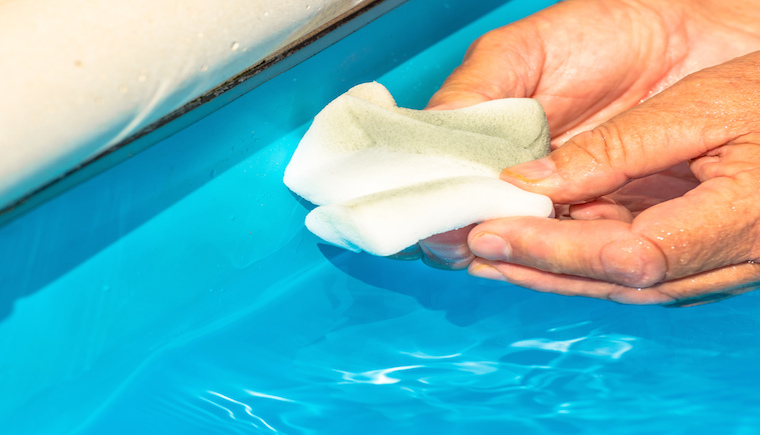
Magic Eraser Method
A plain magic eraser (no soap added) can remove stubborn marks. Wet and rub gently.
Warning: Overuse can dull the liner’s shine.
Avoid Harsh Methods
Never use steel wool, sandpaper, or sharp tools. These can scratch or tear the liner, leading to leaks.
Credit: lo-chlor.com
Preventing Scum Line Buildup
Prevention is always easier than cleaning. Here are proven ways to keep the scum line away:
1. Shower Before Swimming
Encourage everyone to rinse off oils, sweat, and lotions before entering the pool. Even a quick shower removes most body oils.
2. Use Pool Enzyme Products
Adding enzyme cleaners weekly helps break down oils and organic matter before they stick to the liner.
3. Keep Water Balanced
Test and balance pH, alkalinity, and sanitizer levels at least once a week.
- Low pH can damage the liner.
- High pH increases scale and scum buildup.
4. Improve Circulation
Run your pump and filter long enough each day to keep water moving. Dead spots allow scum to settle.
- Use return jets to move water along the liner.
5. Skim And Clean Regularly
Remove leaves, bugs, and debris daily. Brush the waterline every week, even if you don’t see scum yet.
6. Use A Pool Cover
Covering your pool when not in use keeps out dust, pollen, and debris that lead to scum lines.
7. Choose Pool-friendly Products
Use sunscreens and lotions labeled as “pool safe” or “non-oily.” Avoid heavy oils or creams before swimming.
8. Maintain Filter And Skimmer
A dirty filter or full skimmer can’t trap oils and debris, so clean them regularly.
Common Mistakes To Avoid
Some cleaning mistakes can make scum lines worse or even harm your pool. Don’t fall into these traps:
- Using harsh chemicals like bleach or household cleaners not labeled for pools.
- Scrubbing with abrasive pads that scratch or thin the liner.
- Ignoring water chemistry, which leads to faster scum buildup.
- Letting the scum line sit for weeks, making removal much harder.
- Cleaning only when scum is visible instead of regular maintenance.

Credit: abgal.com.au
Professional Cleaning Vs. Diy
Most pool owners can clean the scum line themselves. But sometimes, calling a professional is the best choice:
| Situation | DIY | Professional |
|---|---|---|
| Light scum, regular maintenance | ✔️ | ❌ |
| Old, thick, or large stains | Maybe | ✔️ |
| Damaged or cracked liner | ❌ | ✔️ |
| No time or experience | ❌ | ✔️ |
Tip: If you’re not sure what caused the scum line, or if the liner feels sticky or rough after cleaning, call a pool professional. They can check for damage or advise on the best cleaning method.
How Often Should You Clean The Scum Line?
- Weekly: Light brushing and checking for buildup.
- Monthly: Deep clean with safe cleaner, especially during heavy use.
- After parties or storms: More frequent cleaning may be needed.
Regular cleaning prevents tough stains and keeps your pool looking new.

Credit: abgal.com.au
Cost Of Cleaning And Prevention
Keeping your pool’s waterline clean is not expensive if you follow a routine. Here’s a cost comparison:
| Method | Cost (per season) | Notes |
|---|---|---|
| DIY (basic tools and cleaners) | $20–$50 | Sponges, pads, baking soda, vinegar |
| Commercial pool cleaners | $30–$100 | Specialized products, enzymes |
| Professional service | $100–$300 | One-time deep clean or repair |
Saving tip: Invest in a good-quality pool brush and enzyme cleaner. This reduces the need for expensive fixes later.
Non-obvious Insights Most Pool Owners Miss
- Scum lines can reveal water problems: A sudden, thick scum line may signal unbalanced water, a failing filter, or even nearby construction dust. If scum comes back quickly, check your equipment and water chemistry.
- The sun can bake scum into the liner: If your pool gets a lot of sun, scum lines “set” faster and become stains. Clean as soon as you see any buildup, especially after hot weather.
- Oil-absorbing sponges help prevention: Placing a special pool sponge in your skimmer can trap body oils before they reach the liner.
- Not all stains are scum lines: Some lines are actually algae or metal stains. If cleaning does not remove the mark, test for copper or iron in your water.
- Heavy rain can cause quick buildup: After storms, organic matter washes into the pool and quickly forms a new scum line. Clean and balance water as soon as possible after heavy rain.
When To Replace Your Pool Liner
If the scum line has caused permanent stains, cracks, or the liner is faded and rough, it may be time to replace it. Most vinyl liners last 7–12 years with good care. Trying to remove deep stains on an old liner can cause more damage. A new liner will make your pool look fresh and is easier to keep clean.
Final Tips For A Sparkling Pool Liner
- Clean little and often—don’t wait for a thick scum line.
- Use only products labeled for vinyl liners.
- Teach pool users to shower before swimming.
- Invest in prevention—enzyme cleaners and oil-absorbing sponges pay off.
- Never use sharp tools or harsh chemicals on the liner.
With the right approach, the scum line will not return. Your pool will look beautiful, and you’ll enjoy peace of mind all summer.
For more detailed pool maintenance guides, check resources like SwimmingPool.com.
Frequently Asked Questions
How Often Should I Clean The Pool Scum Line?
For most pools, weekly cleaning is best. Light brushing prevents buildup and keeps stains from forming. If your pool gets heavy use, or after events, clean more often.
What Is The Safest Cleaner For A Vinyl Pool Liner?
The safest option is a vinyl-safe commercial pool cleaner. For a DIY approach, use baking soda mixed with water or diluted white vinegar. Avoid bleach, ammonia, or abrasive cleaners.
Can I Use A Magic Eraser On My Pool Liner?
Yes, a plain magic eraser can help with stubborn stains, but use it gently. Don’t scrub too hard or use it on the whole liner, as it can dull the finish over time.
How Do I Prevent Scum Lines From Coming Back?
Shower before swimming, balance your pool water, use enzyme-based cleaners weekly, and keep your filter clean. Skim debris daily and brush the waterline every week.
Are All Scum Lines The Same?
No. Some are oily (from lotions), some are chalky (calcium), and others are green or brown (organic matter or metals). Knowing the type helps you choose the right cleaning method.
By following these steps and tips, you’ll enjoy a clean, healthy pool all season long. If you ever feel unsure, don’t hesitate to ask a professional for advice.