
Dehydrating mango at home is a fantastic way to enjoy this sweet and tropical fruit all year round. Not only does it preserve the rich flavor, but it also creates a healthy snack free from added sugar and preservatives. Many people believe you need a special dehydrator for this process, but your regular oven can do the job just as well.
If you’ve ever wondered how to dehydrate mango in an oven, this guide will walk you through every step, from choosing the right mangoes to storing your finished dried fruit. Along the way, you’ll find helpful tips, practical advice, and answers to common questions—so you can feel confident making perfect oven-dried mango.
Why Dehydrate Mango?
Mangoes are not just delicious; they are packed with nutrients like vitamin C, vitamin A, and fiber. However, fresh mangoes spoil quickly, especially in hot climates. Dehydrating mango solves this problem. Here are some reasons why dehydrated mango is a great choice:
- Long shelf life – Dried mango can last for months when stored properly.
- Convenient snack – It’s portable, mess-free, and perfect for travel or lunch boxes.
- No preservatives – When you dehydrate at home, you control what goes into your food.
- Intense flavor – Drying concentrates the natural sweetness, making it a flavorful treat.
Many people also use dried mango in baking, trail mixes, and even salads.
Choosing The Best Mangoes For Dehydrating
The quality of your dried mango starts with the fruit you use. Not every mango is ideal for dehydrating. Here’s what to look for:
- Ripe but firm: Choose mangoes that give slightly when pressed but are not mushy. Overripe mangoes can be too soft and difficult to slice evenly.
- Large size: Bigger mangoes yield more slices, making your effort more efficient.
- Smooth skin: Avoid mangoes with large dark spots or wrinkles.
Some popular varieties for dehydrating include Ataulfo, Kent, and Tommy Atkins. These types have fewer fibers and a sweet flavor.
Non-obvious tip: Mangoes that are underripe may become sour and chewy when dried. If you prefer a sweeter dried mango, allow your fruit to ripen fully before starting.
Equipment And Tools Needed
Dehydrating mango in the oven does not require special gadgets, but the right tools make the job easier and safer.
- Sharp knife or peeler: For peeling and slicing mango.
- Cutting board: A stable surface for slicing.
- Baking sheet: Use one or more, depending on the quantity.
- Parchment paper or silicone baking mat: Prevents sticking and makes cleanup easier.
- Oven with low temperature settings: Ideal is 140°F–170°F (60°C–75°C).
- Wire rack (optional): Improves airflow for more even drying.
- Airtight containers or zip bags: For storing the dried mango.
Practical insight: If your oven does not go below 170°F, prop the oven door open slightly with a wooden spoon. This helps keep the temperature low and allows moisture to escape.
Preparing Mango For Dehydration
This step is where many beginners make mistakes. Proper preparation ensures that your mango dries evenly and stays tasty.
Washing And Peeling
First, wash your mango thoroughly under running water to remove any dirt or pesticides. Next, peel the mango using a sharp knife or vegetable peeler. Some people find peeling easier after slicing, but for most, it’s simpler to do it before.
Slicing The Mango
Cutting the mango evenly is crucial. Thick slices take longer to dry, while thin slices can become brittle.
- Stand the mango upright. Slice off each side, avoiding the large pit in the center.
- Lay the slices flat. Cut into strips about 1/4 inch (6 mm) thick.
- Uniform slices: Try to keep all pieces the same thickness so they dry at the same rate.
Important detail: Thicker slices (over 1/2 inch) may stay chewy inside and not store well. Thin, even slices work best.
Optional Pretreatments
Some people soak mango slices in lemon juice or a vitamin C solution for 3–5 minutes before drying. This helps keep the color bright and can add a slight tangy flavor. However, this step is not required if you prefer a pure mango taste.
Arranging Mango On Trays
How you arrange the mango on your baking sheet affects the drying process. Overcrowding leads to uneven drying and sticky pieces.
- Line your baking sheet with parchment paper or a silicone mat.
- Space slices out: Lay the mango pieces in a single layer with space between each slice. They should not touch or overlap.
- Use a wire rack if you have one. Place the slices on the rack and set it on the baking sheet. This allows heat to circulate both above and below the fruit.
Advanced tip: If you want especially chewy dried mango, make the slices slightly thicker and check them often. For crispier results, use very thin slices.
Oven Settings And Temperature Control
Most home ovens are not designed specifically for dehydrating. They often have minimum temperatures higher than professional dehydrators. However, you can still get excellent results by controlling the temperature and airflow.
Setting The Temperature
Set your oven as low as possible. The ideal range for dehydrating mango is 140°F to 170°F (60°C to 75°C). Lower temperatures (closer to 140°F) preserve more nutrients and keep the flavor fresh.
If your oven does not have a setting this low:
- Set it to “Warm” or the lowest setting.
- Prop the oven door open 1–2 inches with a wooden spoon or oven-safe utensil.
- Use an oven thermometer to check the real temperature inside.
Air Circulation
Good airflow is essential for removing moisture from the mango. Leaving the door slightly open not only lowers the temperature but also allows steam to escape.
Pro insight: Some ovens have a convection setting. If yours does, use it. The fan helps dry the fruit more evenly and quickly.

Credit: thevintagecook.com
Dehydrating Mango: Step-by-step Process
Now you’re ready for the main part. Here’s how to dehydrate mango in an oven, step by step:
- Preheat your oven: Set to the lowest possible temperature (140°F–170°F).
- Arrange the slices: Lay mango pieces on prepared trays, spaced apart.
- Place trays in oven: Use the middle rack for best heat distribution.
- Leave the door open: If needed, prop open for airflow and lower temperature.
- Drying time: Bake for 3 to 6 hours, depending on thickness and oven temperature.
- Check regularly: Every hour, rotate trays and flip slices for even drying.
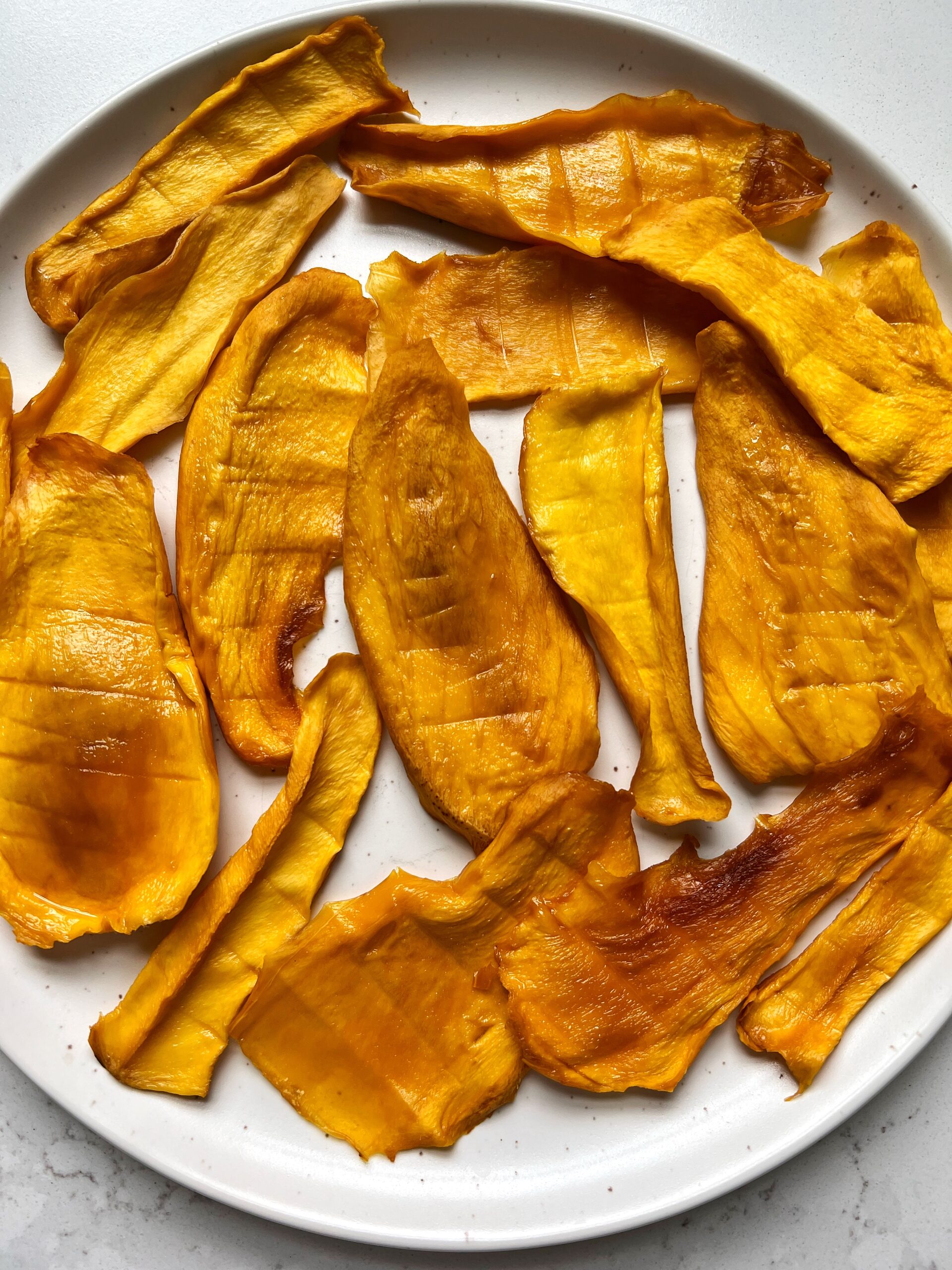
- Test for doneness: Mango should be dry to the touch, not sticky. It will feel leathery but still bend without breaking.
- Cool before storing: Let mango cool completely on the tray. This helps finish the drying process.
Drying Time Comparison
Here’s a quick look at how different slice thickness and oven temperatures affect drying time:
| Slice Thickness | Oven Temperature | Approximate Drying Time |
|---|---|---|
| 1/8 inch (3 mm) | 140°F (60°C) | 3-4 hours |
| 1/4 inch (6 mm) | 150°F (65°C) | 4-5 hours |
| 1/2 inch (12 mm) | 170°F (75°C) | 5-6 hours |
Non-obvious insight: Humid weather can increase drying time. If you live in a humid area, plan for longer drying or use thinner slices.
How To Tell When Mango Is Fully Dehydrated
Many people are unsure how to check if their mango is fully dried. The goal is to remove most moisture but not to make the fruit brittle.
- Leathery texture: The mango should feel flexible but not sticky or wet.
- No visible moisture: Press between your fingers—there should be no juice.
- Bend test: A properly dried slice will bend and may tear, but it should not snap.
Let the slices cool for 10–15 minutes before testing, as hot mango may feel softer than it really is.
Common mistake: Storing mango before it’s fully dry can lead to mold and spoilage. Always test a few pieces from different trays.
Credit: rachlmansfield.com
Conditioning Dried Mango
Conditioning is a little-known but important step, especially if you plan to store mango for more than a week.
- Place cooled, dried mango in a large glass jar or container.
- Seal the jar and let it sit at room temperature for 5–7 days.
- Shake the jar daily: This evens out moisture left in the slices.
- Check for condensation: If you see moisture, return the mango to the oven for further drying.
Conditioning helps prevent mold and ensures all pieces are evenly dried.
Storing Dehydrated Mango
Proper storage keeps your dried mango tasty and safe to eat for months. Here’s how to do it right:
- Airtight containers: Use glass jars, zip-top bags, or vacuum-sealed bags.
- Cool, dark place: Store away from light and heat, such as in a pantry or cupboard.
- Label and date: Write the drying date on the container.
Shelf Life Comparison
How long your mango lasts depends on how well you dry and store it.
| Storage Method | Shelf Life |
|---|---|
| Room temperature (airtight) | Up to 6 months |
| Refrigerator | Up to 1 year |
| Freezer (vacuum-sealed) | Up to 2 years |
Practical tip: If you see any signs of mold or off smells, do not eat the mango.
Using Dried Mango
Dehydrated mango is incredibly versatile. Here are some popular ways to enjoy it:
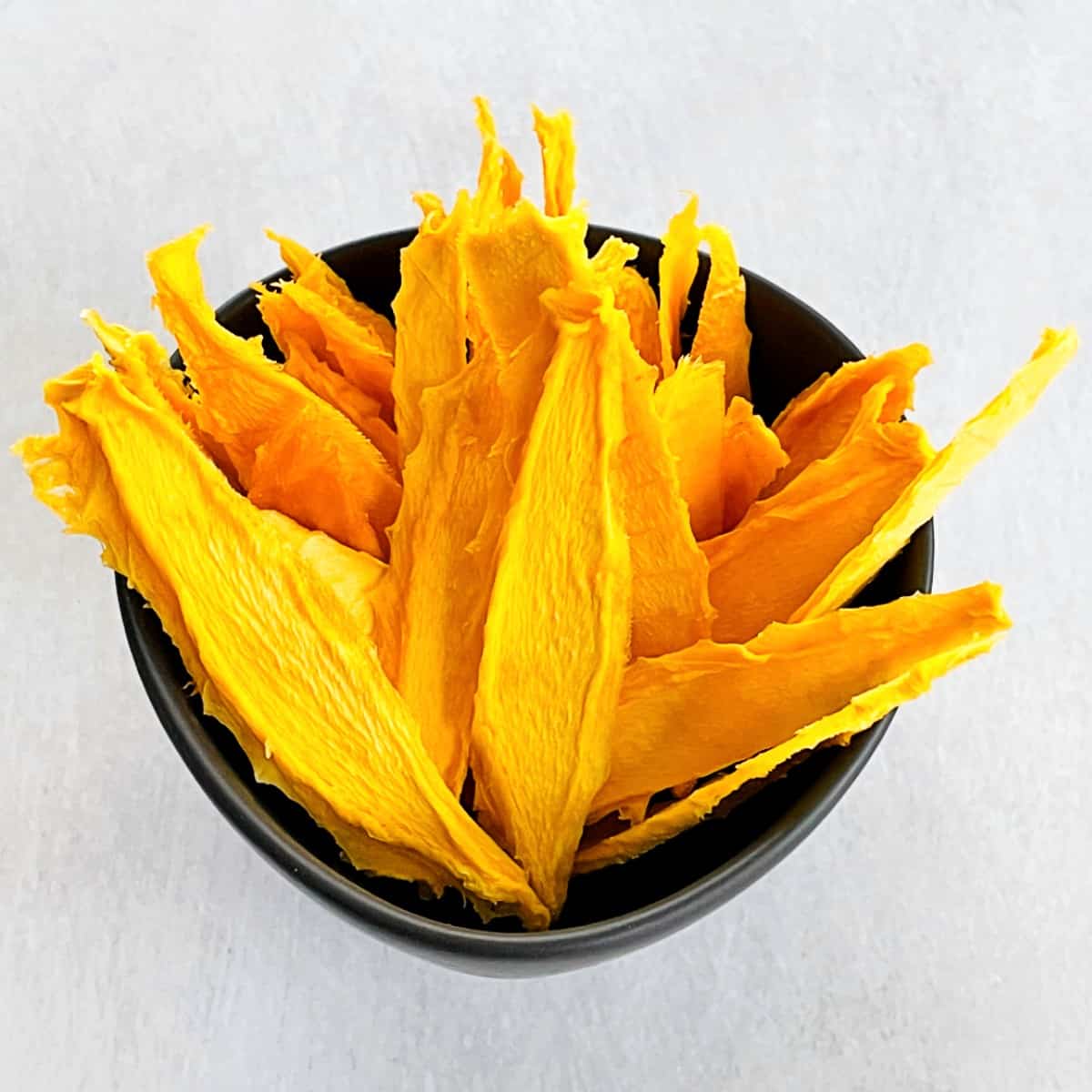
- Snack on its own: The most common and convenient use.
- Trail mix: Combine with nuts, seeds, and other dried fruits.
- Breakfast topping: Add to oatmeal, yogurt, or cereal.
- Baking: Chop and mix into cookies, muffins, or bread.
- Rehydrate for recipes: Soak in water for a few hours and use in sauces or chutneys.
- Smoothies: Blend rehydrated mango for a tropical twist.
Non-obvious tip: Rehydrated mango makes a great base for homemade salsas or fruit sauces.
Safety And Hygiene Tips
Drying fruit at home is generally safe, but there are some important things to remember:
- Wash hands and equipment before handling mango.
- Clean cutting boards and knives to avoid cross-contamination.
- Dry mango thoroughly: Moist fruit can grow bacteria or mold during storage.
- Check storage containers: Air and moisture are the enemies of dried fruit.
If in doubt, it’s better to dry the mango a little longer than to risk spoilage.
Credit: emilyfabulous.com
Common Problems And Solutions
Even with careful preparation, you might run into issues. Here are some typical problems and how to fix them:
Mango Is Too Chewy Or Sticky
- Slices too thick: Cut thinner next time.
- Not dried enough: Return to oven for 30–60 minutes.
Mango Is Too Hard Or Brittle
- Slices too thin: Use thicker slices.
- Oven too hot: Lower the temperature and keep the door slightly open.
Uneven Drying
- Slices different sizes: Cut as evenly as possible.
- Crowded tray: Leave space between slices.
- Did not rotate trays: Flip and move trays for uniform drying.
Mold During Storage
- Not fully dried: Always test for dryness.
- Not conditioned: Use the conditioning process to balance moisture.
How Oven-dehydrated Mango Compares To Store-bought
Many people wonder if homemade dried mango is as good as what you find in the store. Here’s a comparison:
| Aspect | Homemade (Oven) | Store-Bought |
|---|---|---|
| Flavor | Fresh, natural, no additives | Often sweeter, sometimes with added sugar |
| Texture | Chewy or leathery, depends on drying time | Usually soft and moist due to preservatives |
| Ingredients | Just mango (and optional lemon juice) | May contain sugar, sulfites, other additives |
| Cost | Lower, especially in mango season | Higher per pound |
| Shelf life | Up to 6 months (room temp) | Up to 1 year (with preservatives) |
Practical insight: Store-bought dried mango is often much sweeter due to added sugar. If you like pure mango flavor, homemade is the better choice.
Advanced Tips For Perfect Oven-dried Mango
If you’ve tried dehydrating mango once or twice, consider these expert tips for even better results:
- Rotate trays between racks every hour. This evens out hot spots in your oven.
- Experiment with spices: Lightly dust slices with chili powder, cinnamon, or ginger before drying for a unique snack.
- Try mango strips or cubes: Not just flat slices—cubed mango dries differently and can be used in baking or granola.
- Use a food-safe fan: If you have one, place it near the oven door to boost airflow and speed up drying.
- Batch size matters: Larger batches may increase drying time and need more tray rotation.
Nutritional Value Of Dried Mango
Dehydrated mango keeps much of the original fruit’s nutrients, with a few changes:
- High in carbohydrates: Concentrated sugars provide quick energy.
- Good source of vitamin C and A: Some loss due to heat, but still significant.
- Rich in fiber: Great for digestion.
Important note: Because water is removed, dried mango is calorie-dense. A handful is enough for a snack.
For more on mango nutrition, the Wikipedia Mango page has in-depth data.
Frequently Asked Questions
How Do I Prevent Dried Mango From Turning Brown?
Mango can brown slightly during drying. To minimize this, soak slices in lemon juice or a vitamin C solution before drying. Using a lower oven temperature also helps preserve color.
Can I Dehydrate Mango With The Skin On?
You can, but the skin can become tough and chewy. Most people prefer to peel mango before drying for a better texture and taste.
How Do I Store Dried Mango For The Longest Shelf Life?
Use airtight containers and keep them in a cool, dark place. For the longest shelf life, store in the refrigerator or freezer. Conditioning dried mango before storage also helps prevent spoilage.
Is Oven-dried Mango As Healthy As Fresh Mango?
Oven-dried mango is still nutritious but contains less vitamin C due to heat. It is higher in sugar and calories per gram because the water is removed. Enjoy in moderation as part of a balanced diet.
Why Does My Dried Mango Taste Sour Or Bland?
This usually happens if the mango is underripe or overripe before drying. Choose ripe, sweet mangoes for the best flavor, and avoid fruit that is too green or too soft.
Dehydrating mango in your oven is a simple, rewarding process that gives you control over quality, taste, and nutrition. Whether you’re looking for a healthy snack or a creative ingredient, oven-dried mango is a treat you can enjoy anytime. With these detailed steps, practical tips, and safety guidance, you’re ready to make your own perfect dried mango at home.