
Every cup of coffee from your Breville Barista Express tastes best when your machine is clean inside and out. Over time, minerals from water—especially if you use hard water—build up inside your espresso machine. This is called scale or limescale. If you ignore it, your Barista Express can lose pressure, make strange noises, or even break down. Descaling is the solution. But many people feel nervous, thinking it’s a tricky or risky job. The good news: with the right steps and some patience, anyone can descale a Breville Barista Express at home and keep it working like new.
This guide explains everything you need to know—why descaling matters, how often to do it, what tools you need, and every step, with tips for avoiding mistakes. If you care about your coffee quality and want your machine to last, learning how to descale Breville Barista Express is essential.
Why Descaling Your Breville Barista Express Matters
Scale is a white, chalky mineral deposit that forms when water is heated inside your espresso machine. The main culprits are calcium and magnesium. While small amounts may not seem serious, heavy scale buildup causes real problems:
- Reduced water flow: Scale can block pipes and narrow water paths, slowing brewing and steaming.
- Uneven temperature: Limescale acts as an insulator, making it harder for water to heat evenly.
- Strange tastes: Old coffee oils and minerals can combine and leave your espresso with a sour or bitter taste.
- Damage and repairs: If scale gets too thick, your Barista Express may need expensive repairs.
Descaling removes these minerals, ensuring your machine works efficiently and your espresso tastes fresh. Think of descaling as a health check for your Barista Express.
How Often Should You Descale?
How often you need to descale depends on your water and how much you use your machine. Here’s a simple guide:
- Soft water (low minerals): Every 3-6 months
- Hard water (high minerals): Every 1-2 months
- Heavy usage (3+ coffees daily): More often
If you’re unsure about your water, you can test it with a hardness test strip (often included with the machine) or check your local water provider’s website.
Other signs your machine needs descaling:
- Water flow is slower than usual
- Pump sounds louder or strained
- Coffee tastes off, even after cleaning the group head
Tools And Supplies Needed
Before you begin, gather everything you’ll need. Being prepared makes the process smoother and avoids mistakes.
- Descaling solution: You can buy Breville’s official descaler or use a universal brand. Avoid vinegar, as it can damage internal parts.
- Large container: At least 1 liter capacity, to collect water and solution from the group head and steam wand.
- Fresh water: For rinsing
- Access to a sink
- Clean, dry cloth
- Breville Barista Express user manual (optional, for reference)
- Timer or clock
Never use harsh chemicals or home mixtures not recommended by Breville.
Understanding The Descale Cycle
The Barista Express has a built-in descale mode. This mode pushes the descaling solution through both the coffee and steam circuits. It’s important to follow the machine’s prompts exactly, as skipping steps can leave solution inside or cause errors.
The process usually takes 20-30 minutes. Here’s a quick summary:
- Prepare the machine and solution
- Start descale mode
- Run solution through group head and steam wand
- Rinse with clean water
- Wipe and finish
You’ll find the detailed steps below.
Step-by-step: How To Descale Breville Barista Express
Ready to start? Follow these steps carefully for best results.
1. Prepare Your Machine
- Turn off and unplug your Barista Express.
- Remove the portafilter and any coffee grounds.
- Take out the water tank, empty it, and remove the water filter (if fitted). Set the filter aside—you’ll reinstall it later.
- Place your large container under the group head and steam wand to catch liquids.
2. Mix The Descaling Solution
- Read the instructions on your descaler. Most call for mixing one packet or capful with 1 liter of water.
- Pour the mixed solution into the empty water tank. Place the tank back into the machine.
3. Enter Descale Mode
- With the machine off, press and hold the 2 CUP and POWER buttons together.
- While holding them, press the POWER button to turn the machine on. Keep holding all buttons until the machine beeps and the DESCALE light flashes. Release the buttons.
- The machine is now in descale mode.
4. Descale The Coffee Circuit
- Press the 1 CUP button. The solution will flow from the group head into your container.
- Let it run until the machine beeps or the water tank is half empty (about 500ml).
- Press the 1 CUP button again to stop.
5. Descale The Steam Circuit
- Turn the STEAM dial to the steam position.
- The solution will flow from the steam wand. Let it run until the machine beeps or the water tank is nearly empty.
- Turn the STEAM dial back to the “off” position.
6. Rinse The Water Tank And Machine
- Turn off the machine.
- Remove the water tank, rinse it thoroughly, and fill with fresh, clean water. Do not reinstall the water filter yet.
- Replace the tank.
7. Flush The Circuits With Fresh Water
- Turn on the machine and re-enter descale mode (see step 3).
- Repeat the coffee circuit flush: Press the 1 CUP button and let clean water flow through.
- Repeat the steam circuit flush: Turn the STEAM dial to steam and let water run.
- Do both steps until the tank is empty.
8. Finish And Reassemble
- Turn off the machine and unplug it.
- Wipe down all surfaces with a clean, dry cloth.
- Empty and rinse your container.
- Reinstall the water filter if you use one.
- Fill the tank with fresh drinking water.
- Run a blank shot (no coffee) to make sure everything is clear.
Your Breville Barista Express is now descaled and ready to brew.
Common Mistakes To Avoid
Many people make simple mistakes when descaling. Here’s what to watch out for:
- Using vinegar: It’s tempting, but vinegar can damage seals and void your warranty.
- Skipping rinsing: If you forget to rinse with clean water, you’ll taste chemicals in your next coffee.
- Forgetting the water filter: Always remove the filter before descaling and reinstall after rinsing.
- Not catching all water: Use a container big enough to catch all water from both the group head and steam wand.
- Rushing: Don’t try to speed up the process. Follow each step and let the machine finish its cycle.
How Descaling Improves Your Coffee
You might wonder if descaling really makes a difference. Here’s what happens when you keep up with descaling:
- Better taste: Clean pipes mean pure water, which means better extraction and flavor.
- Faster brewing: No more slow drips or blockages.
- Longer machine life: Scale is one of the main reasons machines fail early.
- Consistent pressure and temperature: This is essential for making real espresso.
Many users notice a dramatic difference after a good descale—coffee tastes brighter and the crema improves.
What If You Don’t Descale?
If you ignore descaling, problems build up slowly:
- First few weeks: You might not notice anything.
- After a few months: Coffee becomes weaker, and the machine is noisier.
- Long term: The pump can fail, or internal parts corrode. Repair costs are high, and you may need a new machine.
In very hard water areas, skipping descaling can kill your Barista Express in less than a year. Treat descaling as essential maintenance, not just a suggestion.

Credit: www.bibliotecaoscura.com
Comparing Descaling Solutions
Not all descaling products are the same. Here’s a quick comparison of popular options:
| Product | Active Ingredient | Safe for Breville? | Odor | Average Price (USD) |
|---|---|---|---|---|
| Breville Eco Liquid | Lactic Acid | Yes | Very low | $15 (4 doses) |
| Urnex Dezcal | Sulfamic Acid | Yes | Low | $12 (4 doses) |
| Citric Acid DIY | Citric Acid | Yes (if diluted) | Medium | $5 (10+ doses) |
| White Vinegar | Acetic Acid | No | Strong | $2 (many doses) |
Tip: Always check the manual or Breville’s website before using a third-party product.
Water Quality And Its Impact On Scaling
The type of water you use matters a lot. Hard water contains more minerals, so scale builds up faster. Here’s how different water types compare:
| Water Type | Mineral Content | Scaling Rate | Recommended Descale Frequency |
|---|---|---|---|
| Distilled Water | Very low | Minimal | Every 6-12 months |
| Filtered Water | Low to medium | Slower | Every 3-6 months |
| Tap Water (soft) | Medium | Normal | Every 3 months |
| Tap Water (hard) | High | Fast | Every 1-2 months |
If you want to slow down scaling, consider using filtered water. But avoid distilled water for daily brewing—espresso needs some minerals for good taste.
Signs Your Machine Needs Immediate Descaling
Sometimes, you shouldn’t wait for your schedule or the machine’s light. Act fast if you notice:
- Steam wand sputters or gives less steam than normal
- Water tank empties slower during brewing
- Pump sounds louder or vibrates more
- Coffee tastes metallic or sour
Ignoring these warning signs can lead to more serious problems.
Cleaning Vs. Descaling: What’s The Difference?
Many owners confuse cleaning and descaling, but they’re not the same.
- Cleaning: Removes coffee oils, grounds, and milk residue from visible parts (group head, portafilter, steam wand).
- Descaling: Removes invisible mineral deposits from inside the machine’s water paths.
You need both to keep your Barista Express in top condition.
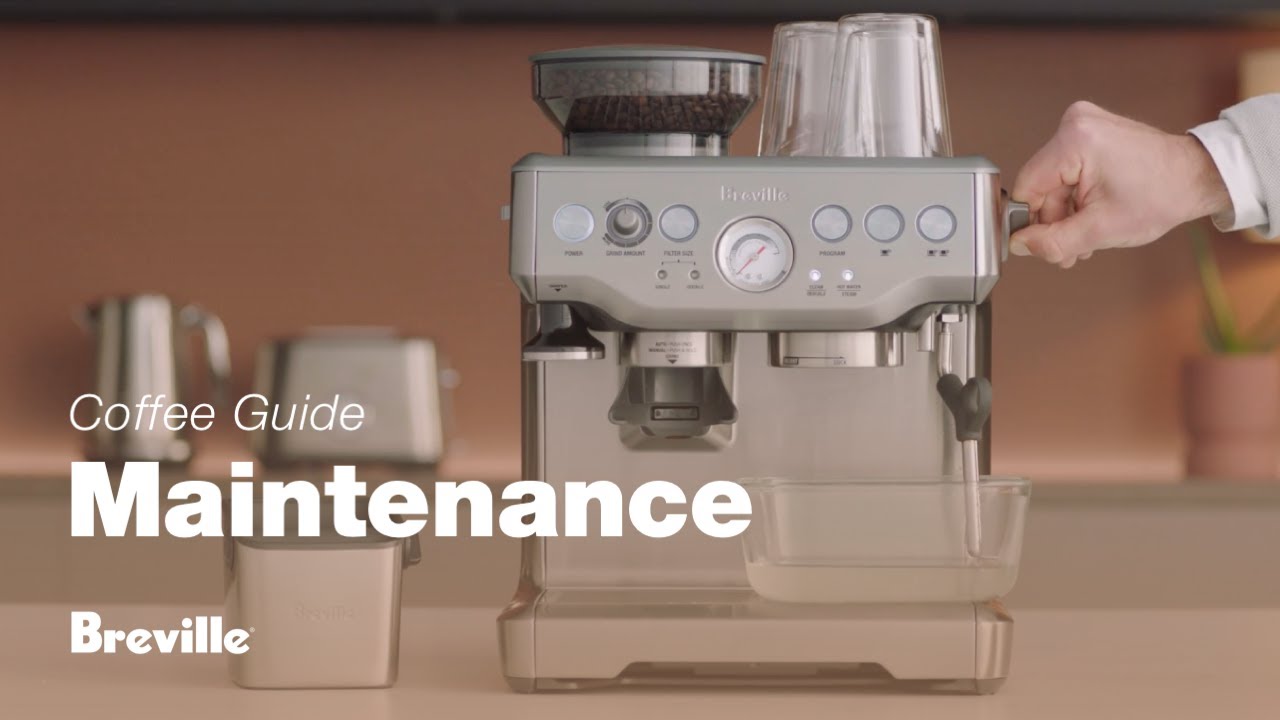
Credit: www.youtube.com
What About The “clean Me” Light?
The “Clean Me” light on your Breville Barista Express is not a descale reminder. It tells you to run a cleaning cycle for coffee oils, using a cleaning tablet and the grey rubber disk. This is different from descaling and should be done when the light comes on, usually every 2-4 weeks.
Don’t confuse the two—descaling keeps the water system clear, while cleaning removes coffee buildup.
Extra Tips For Easy Descaling
Here are some less obvious tips that make descaling easier and more effective:
- Set reminders on your phone or calendar to descale regularly. Waiting until you notice problems can be too late.
- If you forget the steps, keep the user manual or a printed copy of this guide near your machine.
- If you live in a hard water area, consider buying a water filter for your tank. It won’t remove all minerals but slows scale formation.
- After descaling, run a blank shot and taste the water. If it tastes odd, flush again with fresh water.
- Keep your descaling supplies in the same place as your coffee tools so you don’t forget.
Troubleshooting Descale Problems
If your Barista Express acts up during descaling, here’s what to do:
- Descale light stays on: Make sure you completed both the descale and rinse cycles. If the light is still on, unplug the machine for 5 minutes.
- Pump won’t prime: If you hear the pump but no water flows, there may be an air lock. Fill the tank, turn the machine on, and run the hot water function for 20 seconds.
- Strange smells after descaling: This usually means you didn’t rinse enough. Run several tanks of plain water through the group head and steam wand.
- Error codes: Check the manual or Breville’s website for explanations. Most descale errors are fixed by repeating the rinse cycle.
If problems continue, contact Breville support for help.
Cost Of Not Descaling
Skipping descaling can be expensive. Repairs for a blocked or damaged machine can cost $100 to $300. In some cases, the machine can’t be fixed. By investing in regular descaling (about $3–$5 per session), you protect your $700+ espresso machine.

Credit: www.bibliotecaoscura.com
Environmental Impact Of Descalers
Most modern descaling products, including Breville’s, use lactic acid or citric acid. These are biodegradable and safe to flush down the sink in normal amounts. Always follow disposal instructions. Never use harsh chemicals that can harm pipes or the environment.
Real-life Example
A home barista in New York noticed her Barista Express was making weak coffee. She was using tap water and hadn’t descaled in over 8 months. After running two full descale and rinse cycles, the machine returned to normal pressure, and the coffee tasted as good as new.
She now descales every 2 months and has had no problems since.
How Descaling Compares To Other Maintenance
Here’s a quick look at where descaling fits in with overall espresso machine care:
| Task | Purpose | Frequency | Time Required |
|---|---|---|---|
| Descaling | Remove minerals | 1-6 months | 30 minutes |
| Cleaning cycle | Remove coffee oils | 2-4 weeks | 10 minutes |
| Steam wand cleaning | Remove milk residue | After each use | 1 minute |
| Water filter change | Reduce scale | Every 2 months | 2 minutes |
Descaling is less frequent than cleaning but just as important.
Where To Find More Help
If you’re unsure about any step or something goes wrong, check the official Breville support page or your user manual. For more detailed water quality info, sites like Wikipedia explain the science behind limescale and water hardness.
Frequently Asked Questions
How Do I Know If My Breville Barista Express Needs Descaling?
Look for signs like slower water flow, odd noises, or coffee that tastes different. If you live in a hard water area, descale every 1-2 months even if you don’t see symptoms.
Can I Use Vinegar To Descale My Barista Express?
No. Vinegar can damage seals and leave a strong taste. Always use a descaler recommended by Breville or a safe universal brand.
What Happens If I Don’t Remove The Water Filter Before Descaling?
Descaling solution can damage the filter and make it less effective. Always remove the filter before descaling, and reinstall after rinsing.
How Many Rinse Cycles Are Needed After Descaling?
One full tank of fresh water through both the group head and steam wand is usually enough. If you taste or smell chemicals, run a second rinse cycle.
Does Descaling Fix All Machine Problems?
Descaling removes mineral buildup but can’t fix mechanical failures, worn seals, or pump problems. If your machine still acts up after descaling, it may need repairs.
Keeping your Breville Barista Express in top shape isn’t hard with regular descaling. By following these steps, you’ll enjoy better espresso, prevent costly repairs, and make your machine last for years.