
Draining grease from a pan sounds simple. But if you have ever tried it, you know it can be messy, dangerous, and confusing. Hot grease splatters, runs down the side of your pan, and can even block your sink. And if you cook often, you might worry about the right way to handle leftover oil.
Grease from bacon, ground meat, sausages, or fried chicken can quickly add up. Doing it wrong can damage your kitchen or even cause a fire. But with the right methods, draining grease becomes easy, safe, and clean.
Grease disposal is not just about keeping your food healthy. It also protects your plumbing, keeps your kitchen clean, and helps the environment. In this guide, you will learn everything you need to know about how to drain grease from a pan.
You will get step-by-step advice, real examples, and tips that save time and effort. Whether you are cooking for one or a family, this article gives you the skills to handle grease like a pro.
Why Drain Grease From A Pan?
Many dishes leave behind grease after cooking. Bacon, ground beef, and sausages are classic examples. Draining grease is important for several reasons:
- Health: Excess grease in food adds unhealthy fats and calories. Removing it makes meals lighter and sometimes tastier.
- Safety: Grease can splatter and cause burns. Letting it build up in a pan increases the risk of kitchen fires.
- Cleanliness: Grease sticks to pans, counters, and even floors, making everything sticky and hard to clean.
- Plumbing: Pouring grease down the drain can clog pipes and cause expensive repairs.
These facts are not just for professionals. Home cooks need to drain grease every week, sometimes every day. If you cook ground beef for tacos or fry bacon for breakfast, knowing how to remove and dispose of grease is a must.
Common Types Of Cooking Grease
Different foods produce different kinds of cooking grease. Here are some you might meet:
- Animal fat: Comes from bacon, beef, chicken, or pork. Usually solidifies when cooled.
- Vegetable oil: Used for deep frying, sautéing, or pan-frying. Stays liquid longer.
- Butter or margarine: Leaves behind a small amount of liquid fat.
- Combined grease: When you cook with oil and animal fat together.
Some grease is more dangerous than others. For example, bacon grease can solidify and block pipes quickly. Vegetable oil is less likely to harden but still causes problems. Understanding which grease you have helps you choose the right draining method.
Tools And Equipment For Draining Grease
Before you start, gather a few simple tools. These make the job cleaner and safer:
- Heat-resistant spoon or spatula: Used to scoop or push grease aside.
- Slotted spoon: Lets you lift food, leaving grease behind.
- Fine-mesh strainer: Useful for draining ground meat or small pieces.
- Grease jar or container: For collecting and storing grease.
- Paper towels: Absorb small amounts of grease.
- Heat-proof bowl: Holds hot grease safely.
- Tongs: Help handle larger pieces of food.
- Oven mitts: Protect your hands from hot pans or bowls.
- Funnel: Makes transferring grease easier.
You do not need expensive gadgets. Most kitchens already have these items.
Step-by-step Methods To Drain Grease From A Pan
Draining grease is not a one-size-fits-all task. The best method depends on what you are cooking and how much grease you have. Let’s look at the main ways to drain grease, with practical steps for each.
1. Spoon Or Ladle Method
This is the most direct method for small amounts of grease. It works best when cooking bacon, sausage, or small batches of ground meat.
- Finish cooking your food. Turn off the heat but keep the pan warm.
- Use a large spoon or ladle to scoop the liquid grease from the pan.
- Pour the grease into a heat-proof container (like a glass jar or metal can).
- If some grease remains, use a paper towel to blot the excess.
Practical tip: Tilt the pan slightly to gather the grease in one corner. Hold the food back with a spatula if needed.
Common mistake: Pouring grease into a plastic container. Hot grease can melt plastic, causing burns and mess.
2. Slotted Spoon Technique
If you are browning ground beef or small pieces of meat, a slotted spoon is your best friend.
- Remove the pan from heat.
- Use a slotted spoon to lift the cooked food out of the grease.
- Place the food on a plate lined with paper towels. The towels soak up extra grease.
- When the pan is cooler, pour the remaining grease into a container.
Non-obvious insight: This method lets you save the grease separately if you want to reuse it for flavor.
3. Strainer Over Bowl
This technique is good for draining large amounts of grease quickly. It’s popular for taco fillings, ground meats, or fried foods.
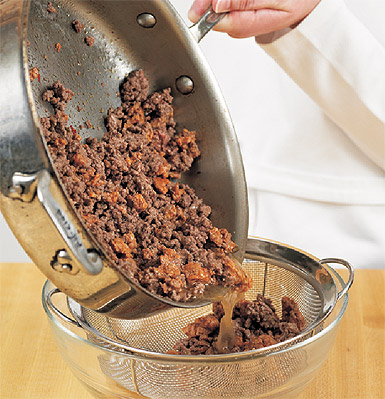
- Place a fine-mesh strainer over a heat-resistant bowl.
- Pour the contents of the pan into the strainer.
- The grease will drain into the bowl, and the food stays in the strainer.
- Let the grease cool before transferring it to your storage container.
Extra tip: For less mess, use a bowl with a spout for easier pouring later.
4. Tilt-and-pour Method
This method is simple but can be risky if you’re not careful.
- Remove the pan from heat.
- Tilt the pan slowly so the grease gathers at one edge.
- With a steady hand (and oven mitts), pour the grease into a metal can or glass jar.
- Hold back the food with a spatula or lid.
Non-obvious insight: If you cook with cast iron, this method also helps season your pan. Leave a thin layer of grease for next time.
Common mistake: Pouring too fast. Hot grease can splash and burn.
5. Absorbing With Paper Towels
For small amounts of leftover grease, this is the easiest method.
- After removing the food, let the pan cool a bit.
- Use several folded paper towels to soak up the grease.
- Dispose of the towels in the trash.
Practical tip: Use tongs to hold the towels, so you don’t burn your fingers.
6. Turkey Baster Or Fat Separator
If you want to save the grease for gravy or later use, a turkey baster or fat separator is ideal.
- Allow the grease to settle in the pan after cooking.
- Insert the baster into the grease layer and squeeze to draw up the fat.
- Transfer the grease into a storage container.
A fat separator jug works the same way but is designed for pouring off clear fat from pan drippings.
7. Grease Disposal Bags
Some brands sell special grease disposal bags that stand up to heat.
- Pour or ladle the grease into the bag.
- Seal and throw it away when full.
These bags are handy for people who cook with a lot of oil, like deep-frying.
8. Using Ice Cubes (for Broth Or Soups)
If you want to remove fat from soups or stews, ice cubes can help.
- Wrap a few ice cubes in a paper towel or plastic bag.
- Glide the ice pack across the surface of the hot liquid. Fat will solidify and stick to the towel or bag.
- Remove and throw away the greasy towel or bag.
This trick is perfect when you cannot pour out the liquid.
Comparing Common Grease Removal Methods
To help you pick the right method, here’s a side-by-side look at their strengths and weaknesses.
| Method | Best For | Pros | Cons |
|---|---|---|---|
| Spoon or Ladle | Small pans, bacon, sausage | Quick, simple, little mess | Not good for large pans or small bits |
| Slotted Spoon | Ground meat, veggies | Easy to separate food from fat | Some grease remains on food |
| Strainer Over Bowl | Large batches, taco filling | Efficient, less mess | Need extra bowl/strainer, hot grease risk |
| Absorbing Towels | Small amounts, pan residue | Fast, no pouring needed | Not eco-friendly, burns possible |
| Fat Separator | Gravy, soups | Can keep the fat for reuse | Extra tool to clean |
How To Store And Reuse Cooking Grease
Not all grease is waste. In fact, bacon grease and some oils add rich flavor to dishes. If you want to save grease:
- Strain the hot grease through a fine-mesh sieve or cheesecloth to remove bits.
- Pour into a clean, dry glass jar or metal tin.
- Let it cool, then cover and store in the refrigerator or freezer.
Non-obvious tip: Label your jar with the date and type of grease. Old grease can go rancid or develop off flavors.
Examples of reuse: Bacon grease is perfect for frying eggs, sautéing vegetables, or making biscuits. Beef fat can add richness to stews.
Safety note: Never reuse grease that smells bad, has foam, or shows mold.
How To Safely Dispose Of Grease
Grease should never go down the drain. It cools and sticks to pipes, causing blockages. Many cities spend millions fixing “fatbergs” in sewers. Here’s how to dispose of grease the right way:
- Let grease cool and harden if possible.
- Scrape solid grease into the trash.
- For liquid grease, pour it into a sealed container (like a used can, jar, or grease bag).
- Throw the container in the garbage.
Some recycling centers accept used cooking oil. Check your local rules. Never pour grease outside, as it attracts animals and can pollute water.
What To Avoid When Draining Grease
Mistakes with grease can be costly and dangerous. Here are the most common errors:
- Pouring grease down the sink: Causes expensive clogs.
- Using glass containers for hot grease: Some glass can crack when filled with hot oil.
- Leaving grease near the stove: A fire hazard.
- Touching hot grease: Burns happen quickly; always use tools.
- Mixing different types of grease: Old oil can spoil new oil, causing bad smells.
Grease Draining For Special Diets
If you are cooking for a low-fat or heart-healthy diet, removing grease is essential. Even small reductions make a difference:
- Use slotted spoons and paper towels to lower fat in ground meats.
- For stews, chill them after cooking. The fat will harden on top and can be lifted off.
- Choose leaner cuts of meat to start with, reducing the grease you have to drain.
Non-obvious tip: Some cultures use saved fat (like chicken schmaltz) as a flavor base. If you do not need it, always drain and discard.
Dealing With Grease Splatter
Draining grease can be messy. Grease splatters not only burn, but also make cleanup hard. Here’s how to manage it:
- Use a splatter screen over your pan when frying.
- Let grease cool slightly before handling.
- Wipe the outside of the pan before pouring to avoid drips.
- Wear an apron and keep kids and pets away.
Extra insight: Grease splatter is a top cause of kitchen burns. Moving slowly and using the right tools saves your skin and your kitchen.

Credit: www.youtube.com
Cleaning Up After Draining Grease
Once the grease is gone, your work is not finished. Here’s how to finish the job:
- Wipe excess grease from the pan with a paper towel.
- Wash the pan with hot, soapy water.
- For sticky pans, use baking soda and a scrubber.
- Clean any drips or spills on counters and stoves right away.
Non-obvious tip: If grease cools on your pan, heat it gently before cleaning. Warm grease wipes away faster.
Grease And Kitchen Safety
Hot grease is one of the top causes of kitchen fires. According to the National Fire Protection Association, cooking is the number one cause of home fires, and grease is often to blame.
- Never leave a pan of hot grease unattended.
- If grease catches fire, cover the pan with a metal lid or baking sheet to smother flames. Never use water.
- Keep a fire extinguisher in your kitchen.
- Store cooled grease away from heat sources.
Credit: pellet-stove-parts-4less.com
Eco-friendly Grease Disposal Options
If you want to be kind to the planet, there are green ways to handle grease:
- Composting: Small amounts of animal fat can go in some compost bins, but check your local rules.
- Recycling: Some cities collect used oil for biofuel.
- Solidifying agents: Products that turn grease into a solid, making it easier to toss.
For more details on safe disposal, visit the EPA’s recycling basics.
Grease Draining In Restaurants Vs Home Kitchens
The way you drain grease at home is different from a restaurant kitchen. Here’s how they compare:
| Factor | Home Kitchen | Restaurant Kitchen |
|---|---|---|
| Volume of Grease | Small (cups per week) | Large (gallons per day) |
| Disposal Method | Trash or recycling | Grease traps, recycling services |
| Equipment | Spoons, jars, towels | Professional strainers, drains, traps |
| Legal Requirements | Few | Strict health codes |
At home, you can get by with simple tools. Restaurants must follow strict rules and use special equipment to prevent pollution.
Credit: www.cuisineathome.com
Troubleshooting Common Problems
Sometimes, things go wrong when draining grease. Here’s how to fix common issues:
- Grease is too hot: Let it cool for a few minutes before handling.
- Grease hardens before you pour: Warm the pan slightly to melt it.
- Food falls into the grease: Use a slotted spoon to rescue it, then strain the grease.
- Grease leaks from the container: Always check for cracks before pouring.
- You spill grease: Sprinkle baking soda or cornstarch on the spill to soak it up, then wipe clean.
Teaching Kids And Beginners Safe Grease Handling
If you cook with kids or new cooks, teach them these basics:
- Always ask an adult to help with hot grease.
- Never touch grease, even if it looks cool.
- Point out that grease can hide in food (like inside bacon).
- Show how to use towels, tongs, and strainers.
- Explain why grease never goes down the drain.
Non-obvious insight: Kids learn by example. If they see you handle grease safely, they will copy you.
Quick Reference: Grease Draining Methods By Food Type
Here’s a handy guide to the best method for different foods.
| Food | Best Method | Notes |
|---|---|---|
| Bacon | Spoon & jar, then paper towel | Save grease for later use |
| Ground beef | Strainer over bowl | Essential for tacos, sauces |
| Fried chicken | Wire rack & paper towels | Let drip before serving |
| Sausage | Slotted spoon & paper towel | Blot after draining |
| Soups/stews | Ice cube trick, fat separator | Chill to remove fat cap |
What To Do With Leftover Grease
If you have leftover grease, you have a few options:
- Reuse it for flavor in other dishes.
- Dispose of it safely in the trash.
- Recycle if your city allows.
- Make bird feeders: Mix cooled grease with birdseed (for animal fat only).
Never pour grease outside or into compost unless local rules say it is okay.
Frequently Asked Questions
What Is The Safest Way To Drain Hot Grease From A Pan?
The safest way is to let the grease cool for a few minutes, then use a spoon or ladle to transfer it into a heat-proof container. Always use oven mitts and keep your face away from the pan to avoid splatters.
Can I Pour Grease Down The Sink If I Use Hot Water?
No, you should never pour grease down the sink, even with hot water. Grease cools as it travels through pipes and causes blockages. Over time, this leads to expensive plumbing repairs.
How Do I Know If Grease Is Safe To Reuse?
Grease is safe to reuse if it smells fresh, is clear, and has no burnt bits. Strain it well and store it in a sealed container in the fridge. If it smells bad or looks foamy, throw it away.
What Kind Of Container Should I Use For Draining Grease?
Use a metal can, glass jar, or special grease disposal bag. Avoid plastic (it can melt) and thin glass (it can crack with hot grease).
Does Draining Grease Make Food Healthier?
Yes, draining grease removes excess fat and calories from food. This is especially important for ground meats and fried foods. It can make your meals lighter and better for your heart.
Draining grease from a pan is a simple kitchen skill that makes your food healthier, your kitchen cleaner, and your pipes safer. With the right tools and a little care, anyone can master this process. Next time you cook, use these methods and enjoy the benefits of grease-free cooking.