
When your dishwasher finishes a cycle, you expect clean and dry dishes. But what if you open the door and find everything still wet? This is a common problem for many homes. A dishwasher that doesn’t dry can be frustrating, especially if you need those dishes quickly. The good news is, most drying issues have simple causes and solutions. You don’t always need a repair professional. With the right steps, you can often fix the problem yourself.
In this guide, you’ll learn all the main reasons why dishwashers don’t dry properly, how to check each part, and what to do next. We’ll also cover some features you might not know about, and share mistakes people often make when loading or using dishwashers.
If you want your dishes dry every time, this article will give you the confidence to solve the issue.
How Dishwashers Dry Dishes
Understanding how a dishwasher dries will help you find the problem faster. Most dishwashers use one or more of these drying methods:
- Heated drying: An electric heating element warms the air inside.
- Condensation drying: Hot water makes dishes steamy, then cooler air condenses water away.
- Fan-assisted drying: A fan circulates warm air for faster results.
Some newer models use energy-efficient systems, while older ones rely on heat. Knowing your model type helps you check the right parts.
Common Reasons A Dishwasher Is Not Drying
Let’s look at the main causes. Each one has its own signs and fixes.
1. Heated Dry Option Is Turned Off
Many dishwashers let you choose between heated dry and air dry. If you turn off heated dry, the dishwasher won’t use its element to dry dishes. This saves energy but leaves dishes wetter.
What to do: Check your dishwasher’s settings. Make sure the heated dry or extra dry option is selected before starting a cycle.
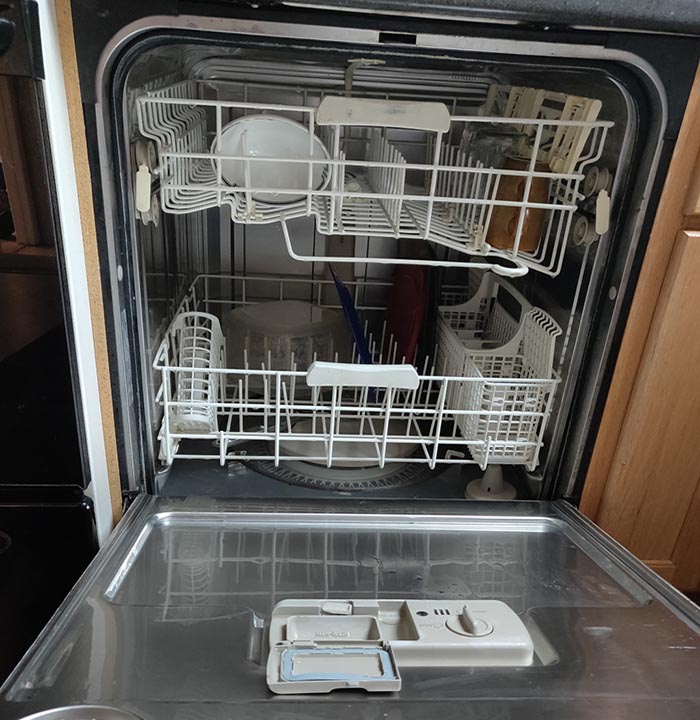
2. Rinse Aid Is Empty Or Missing
Rinse aid is a liquid that helps water slide off dishes. Without it, water clings and forms spots. Most drying problems are worse if rinse aid is empty.
How to check: Open the rinse aid dispenser (usually on the door). If it’s low, refill it. Use the amount recommended by your dishwasher’s manual.
Non-obvious insight: Even if you use “all-in-one” detergent tablets, adding separate rinse aid often improves drying.
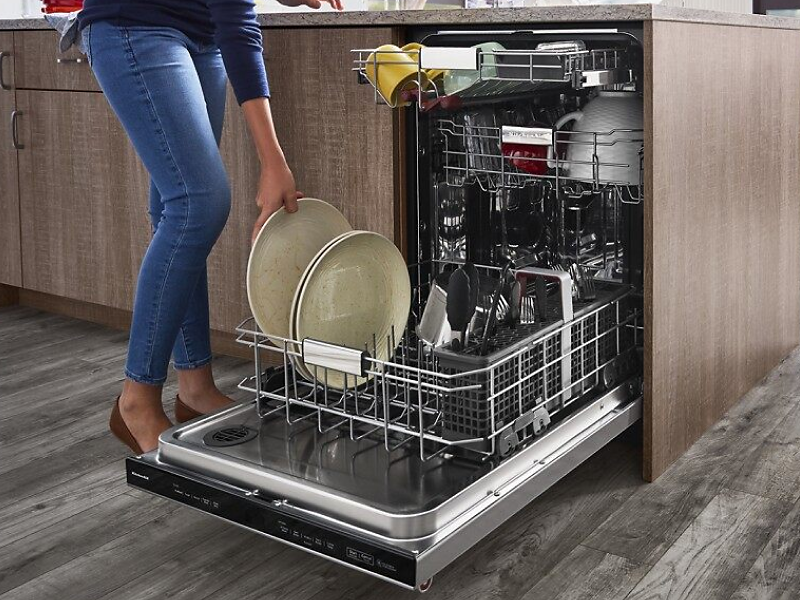
3. Wrong Loading Of Dishes
How you load your dishwasher matters. If dishes are too close or block vents, water can’t escape.
- Place plates in slots, not stacked.
- Bowls and cups should angle down to drain.
- Avoid big items covering the heating element or vent.
- Don’t overload trays—air needs to move between items.
Pro tip: Leave space between plastics so they don’t trap water.
4. Plastic Items Stay Wet
Plastics dry slower than glass or metal. They don’t hold heat well, so water remains after the cycle.
- Remove plastics first and dry with a towel if needed.
- Place them on the top rack, away from the heating element (to avoid melting).
Why this happens: Dishwashers rely on residual heat. Plastics cool down too quickly for water to evaporate.
5. Heating Element Problems
Many dishwashers have a metal heating element at the bottom. If this fails, dishes won’t dry.
How to check:
- Unplug the dishwasher.
- Find the metal coil (usually under the lower rack).
- Look for breaks or burns.
- Use a multimeter (if you have one) to test continuity.
If the element is bad, you’ll need a replacement. Most elements cost $20–$60.
Important: Only work with electrical parts if you’re comfortable. Otherwise, call a technician.
6. Vent Or Fan Issues
Some models use a vent or fan to release steam. If it’s blocked or broken, moist air stays inside.
How to check:
- Find the vent (often on the top edge of the door).
- See if it opens during drying (for manual vents).
- Listen for a fan running.
If the vent is blocked by food or debris, clean it gently. If the fan doesn’t run, it may need repair.
Non-obvious insight: Some vents are motorized and can stick over time—try opening and closing gently by hand (when off).
7. Clogged Filter
A dirty filter prevents water from draining and can keep dishes wet.
How to clean:
- Remove the bottom rack.
- Twist out the filter (usually at the base).
- Rinse under warm water and scrub with a soft brush.
Clean the filter every month for best drying and washing results.
8. Hard Water Issues
Hard water has minerals that leave spots and slow drying. If you see white marks, it’s likely hard water.
Solutions:
- Use more rinse aid.
- Try dishwasher salt (for machines with a built-in softener).
- Install a home water softener if the problem is severe.
Fact: Over 80% of US homes have hard water, so this is a common issue.
9. Detergent Choice And Amount
Using the wrong detergent or too much/too little can affect drying.
- Use detergent recommended for your model.
- Don’t overload the dispenser.
- Tablets often include rinse aid but may still need extra.
Check for buildup in the detergent cup, which can block proper release.
10. Short Or Eco Cycles
Energy-saving cycles often use less heat and shorter drying times. If you always use these, dishes may stay damp.
Try this: Run a normal or heavy cycle and compare drying results.
11. Door Not Opening After Cycle
A simple but often-missed tip: open the dishwasher door as soon as the cycle ends.
- Letting dishes sit inside lets steam condense back onto them.
- Crack the door open for 10–20 minutes to help air out moisture.
Many high-end dishwashers now open the door automatically at the end for this reason.
12. Dishwasher Is Not Level
If your dishwasher leans forward or sideways, water pools in the wrong places and won’t drain or dry.
How to check:
- Use a bubble level on the door and side.
- Adjust the front legs as needed.
A level machine dries better and prevents leaks.
13. Faulty Thermostat
A thermostat controls drying temperature. If it’s broken, the heater won’t turn on at the right time.
You’ll notice dishes are always cold, even after the dry cycle. A technician can test and replace this part.
14. Broken Timer Or Control Board
If the control board or timer fails, the dry cycle might not start or finish. This is less common but possible with older machines.
Signs:
- Cycle ends too soon.
- No drying, even with all settings correct.
Replacing a control board can be complex and expensive.
15. Excessive Humidity In Kitchen
High humidity in your kitchen can slow drying. Moist air outside the machine stops water from evaporating inside.
Quick fix: Use an exhaust fan or open a window during and after running your dishwasher.
16. Using Cold Water Supply
Dishwashers need hot water for both cleaning and drying. If your machine is connected to a cold line, dishes stay wet.
- Make sure the hot water tap is on.
- Run hot water in the sink before starting the dishwasher.
Data point: Most dishwashers work best with water at 120°F (49°C).
17. Old Gaskets Or Door Seals
Worn or dirty door gaskets let steam escape in the wrong place, which can cause moisture to stay inside.
Inspect the rubber seal around the door. Clean with a damp cloth. Replace if cracked or loose.
18. Poor Dish Placement For Drainage
Some items, like cups and mugs, collect water on their bottoms if loaded upside down. Tilt them so water rolls off.
Tip: Avoid putting bowls or cups face up—they fill with water and never dry.
19. Newer Energy-efficient Models
If you recently bought a new dishwasher, you might notice dishes are wetter than before. Many new models use less energy and water. This often means less heat for drying.
Check your manual for tips specific to your model—some recommend adding extra dry time or using rinse aid.
20. Faulty Float Switch
The float switch tells the dishwasher when there’s enough water inside. If it’s stuck, the cycle can end early, skipping drying.
- Find the float (small plastic dome on the base).
- Move it up and down; it should click freely.
If it’s jammed, clean underneath. If broken, replace it.
—
Now, let’s dig deeper into these solutions and how to apply them to your situation.
Credit: www.kitchenaid.com
Diagnosing The Drying Problem Step By Step
To fix your dishwasher, start with the easiest checks and move to more complex ones. Here’s a practical order:
- Check settings: Make sure heated dry is on.
- Add rinse aid: Refill and adjust the amount.
- Load properly: Avoid crowding and blockages.
- Open the door: Let air in after cycles.
- Clean the filter: Remove and wash monthly.
- Inspect the vent: Make sure it opens and isn’t blocked.
- Check water temperature: Run hot water before starting.
- Test with a normal cycle: Avoid short or eco modes for now.
- Inspect plastic items: Remove and towel-dry if needed.
- Check element and parts: If nothing else works, test or replace.
This process helps you avoid costly repairs unless truly needed.
How Different Drying Systems Work
Not all dishwashers use the same drying technology. Here’s a quick comparison of the main types:
| Drying Method | How It Works | Pros | Cons |
|---|---|---|---|
| Heated Dry | Uses a heating element to warm air | Dries most dishes well | Uses more energy, can melt plastics |
| Condensation Dry | Hot rinse water, then cool air condenses moisture | Energy efficient, safe for plastics | Plastics stay wet, slower drying |
| Fan-Assisted | Circulates warm air with a fan | Faster and more even drying | More moving parts, can break down |
Knowing your type helps you troubleshoot.

Credit: www.youtube.com
Signs Your Dishwasher Needs Professional Help
Sometimes, the problem is too complex for DIY fixes. Call a technician if:
- The heating element or thermostat is broken.
- The control board or timer is faulty.
- You see error codes or flashing lights.
- There’s a burning smell or visible damage.
Professional repair costs can range from $100 to $350 depending on the part.
Common User Mistakes That Affect Drying
Many drying issues come from how people use their machines. Here are mistakes to avoid:
- Stacking items so water can’t drain.
- Forgetting to use rinse aid.
- Not cleaning the filter regularly.
- Using only eco cycles with no extra drying.
- Leaving dishes inside for hours after the cycle ends.
Changing these habits often solves the problem without repairs.
Maintenance Tips For Better Drying
A little routine care keeps your dishwasher working well.
- Clean the filter every 2–4 weeks.
- Wipe the door seal and vent every month.
- Run a hot vinegar cycle (1 cup vinegar in a bowl, top rack) every 2–3 months to remove hard water deposits.
- Check and refill rinse aid regularly.
- Inspect racks and spray arms for blockages.
This prevents buildup that slows drying.
How Rinse Aid Makes A Difference
Many people skip rinse aid, thinking it’s not necessary. But it’s key for fast, spotless drying. Here’s why:
- Rinse aid lowers water’s surface tension, helping it slide off dishes.
- It prevents water spots, streaks, and cloudy glass.
- Some machines can’t dry well without it.
If you’re worried about chemicals, eco-friendly and fragrance-free rinse aids are available.
Plastic Items And Drying: Why They’re A Special Case
You may notice your plastic containers are always wet, even if glass is dry. This is normal, but here’s why:
- Plastics don’t hold heat as well as glass or metal.
- They cool quickly, so water doesn’t evaporate.
- Water beads up on flat surfaces and ridges.
Try placing plastic items at an angle and on the top rack. Remove them first for towel drying.
Comparing Popular Dishwasher Brands For Drying
Different brands use different drying methods. Here’s a quick look at some major brands and their typical systems:
| Brand | Drying Method | Known For |
|---|---|---|
| Bosch | Condensation, some with fan | Quiet, energy-saving, plastic items stay wet |
| GE | Heated dry, condensation | Good overall drying, heated dry option |
| Whirlpool | Heated dry, fan | Strong drying, especially with rinse aid |
| Samsung | Fan, AutoRelease Door | Door opens at end for extra drying |
| LG | Heated dry, hybrid | Good with plastics, hybrid systems |
If you’re shopping for a new machine, check which drying method it uses.
Credit: denverappliancerepairservice.com
Real-world Example: Fixing A Wet Dishwasher
Let’s look at how one family solved their drying issue:
Sarah’s dishwasher always left her plastic containers wet. First, she checked the heated dry setting—it was on. Then, she cleaned the filter and added more rinse aid. It helped, but plastic items were still wet.
She read her manual and found her model used condensation drying. She started opening the door after the cycle, and propped up plastic lids so water rolled off. Results improved right away.
Lesson: Sometimes, small changes make a big difference—especially with plastics.
When To Replace Your Dishwasher
Sometimes, repairs cost more than a new machine. Consider replacing your dishwasher if:
- It’s over 10 years old.
- Multiple repairs are needed.
- Energy use is high.
- Drying and cleaning are both poor, even after fixes.
Modern dishwashers use up to 50% less water and energy than models from 15 years ago, and offer better drying options.
Extra Tips For Always-dry Dishes
- Use the sanitize or high-temp wash if available—these end with hotter water for better drying.
- Shake off large puddles before loading plastics.
- Leave space around each item.
- Clean spray arms to ensure water reaches everywhere.
- Update your detergent or try a different brand.
- For stubborn hard water, install a filter or softener.
Comparing Energy Use: Heated Dry Vs. Air Dry
If you’re worried about energy bills, here’s a quick comparison:
| Mode | Average Energy Use (per load) | Drying Effectiveness |
|---|---|---|
| Heated Dry | 0.5–1 kWh | Excellent, especially for glass and metal |
| Air Dry | 0.1–0.2 kWh | Fair, slower, plastics stay wet |
| Condensation | 0.2–0.4 kWh | Good, but plastics need extra help |
If you want to save money, use air dry for glass and metal, and towel-dry plastics.
Where To Find More Help
If you want to learn more about dishwasher maintenance or repairs, the manufacturer’s website and the user manual are the best resources. For common issues and step-by-step guides, check Consumer Reports.
Frequently Asked Questions
Why Are My Plastic Dishes Always Wet After The Dishwasher Finishes?
Plastic doesn’t hold heat well, so water doesn’t evaporate easily. Place plastics on the top rack at an angle, use rinse aid, and open the door after the cycle for best results.
Do I Really Need To Use Rinse Aid?
Yes. Rinse aid helps water slide off, prevents spots, and improves drying for all types of dishes. It’s especially helpful if you have hard water or use energy-saving cycles.
Should I Always Use The Heated Dry Setting?
Heated dry gives the best results, but it uses more energy. For most loads, especially plastic or full loads, it’s recommended. For glass and metal, air dry may be enough if you open the door after.
My Dishwasher Is New But Doesn’t Dry Well. Is This Normal?
Yes, many new models use less heat for energy efficiency. Use rinse aid, open the door after cycles, and check the manual for special drying instructions.
When Should I Call A Repair Technician For Drying Problems?
If you’ve checked all settings, cleaned filters, and replaced rinse aid but dishes are still wet, and if you suspect a broken heating element, thermostat, or control board, call a professional.
A dishwasher that won’t dry is a common problem, but most fixes are simple. By following these tips and understanding how your machine works, you’ll enjoy spotless, dry dishes every time. If you ever feel unsure, professional help is always available.