
If you own a swimming pool or maintain one, you know the importance of every detail. One of the most overlooked parts is the pool hose. This simple tool is essential for cleaning, filtering, and maintaining your pool’s water quality. But what happens when you need to replace your hose or connect new equipment? Suddenly, you’re faced with a question that seems simple but can cause a lot of confusion: How do you measure pool hose diameter?
Many pool owners struggle with this. They buy hoses that don’t fit, or adapters that leak, wasting time and money. But measuring pool hose diameter is not as hard as it seems. With the right knowledge, a few basic tools, and some careful steps, you can measure your pool hose diameter accurately and avoid all the common mistakes.
Let’s dive deep into everything you need to know—how to measure, what tools to use, and how to make sure you always get the right fit for your pool setup.
Why Pool Hose Diameter Matters
The diameter of your pool hose does more than just determine what it can connect to. It affects your pool’s cleaning efficiency, water flow rate, and even the lifespan of your pool pump. Using the wrong diameter can lead to leaks, weak suction, and potential damage to your equipment.
Most pool hoses come in standard sizes, but there are exceptions. A small difference in diameter can mean the difference between a tight seal and a loose connection. For example, a 1. 5-inch hose will not fit a 1. 25-inch port, and vice versa.
A properly measured hose ensures:
- Strong water flow: Maximum suction and effective cleaning.
- No leaks: Tight connections keep your pump and filter working efficiently.
- Longer equipment life: Avoids stress and wear on pumps and valves.
Understanding your pool hose diameter is a small detail, but it can have a big impact on your pool maintenance routine.
Types Of Pool Hoses And Where Diameter Measurement Matters
Not all pool hoses are the same. The type of hose you have can influence how and where you measure its diameter.
Common Types Of Pool Hoses
- Vacuum Hoses: Connects pool vacuum heads to skimmers or dedicated suction ports.
- Backwash Hoses: Used to expel dirty water when cleaning the pool filter.
- Return Hoses: Carry filtered water back into the pool.
- Automatic Cleaner Hoses: Come in sections and connect to pool cleaners.
- Flexible Corrugated Hoses: Often used in above-ground pools for both suction and return lines.
Each type may have a slightly different construction. For example, vacuum hoses are often more rigid, while backwash hoses are flat and flexible when not in use.
Where Diameter Is Critical
- Fittings and Adapters: If the hose doesn’t match the fitting, you’ll get leaks or won’t be able to connect at all.
- Suction and Flow Rate: A too-narrow hose can starve your pump; a too-wide hose may not fit your equipment.
- Replacement and Upgrades: When buying new equipment, knowing your hose diameter ensures compatibility.
Understanding Pool Hose Diameter: Inner Vs. Outer Diameter
One of the biggest sources of confusion is the difference between inner diameter (ID) and outer diameter (OD).
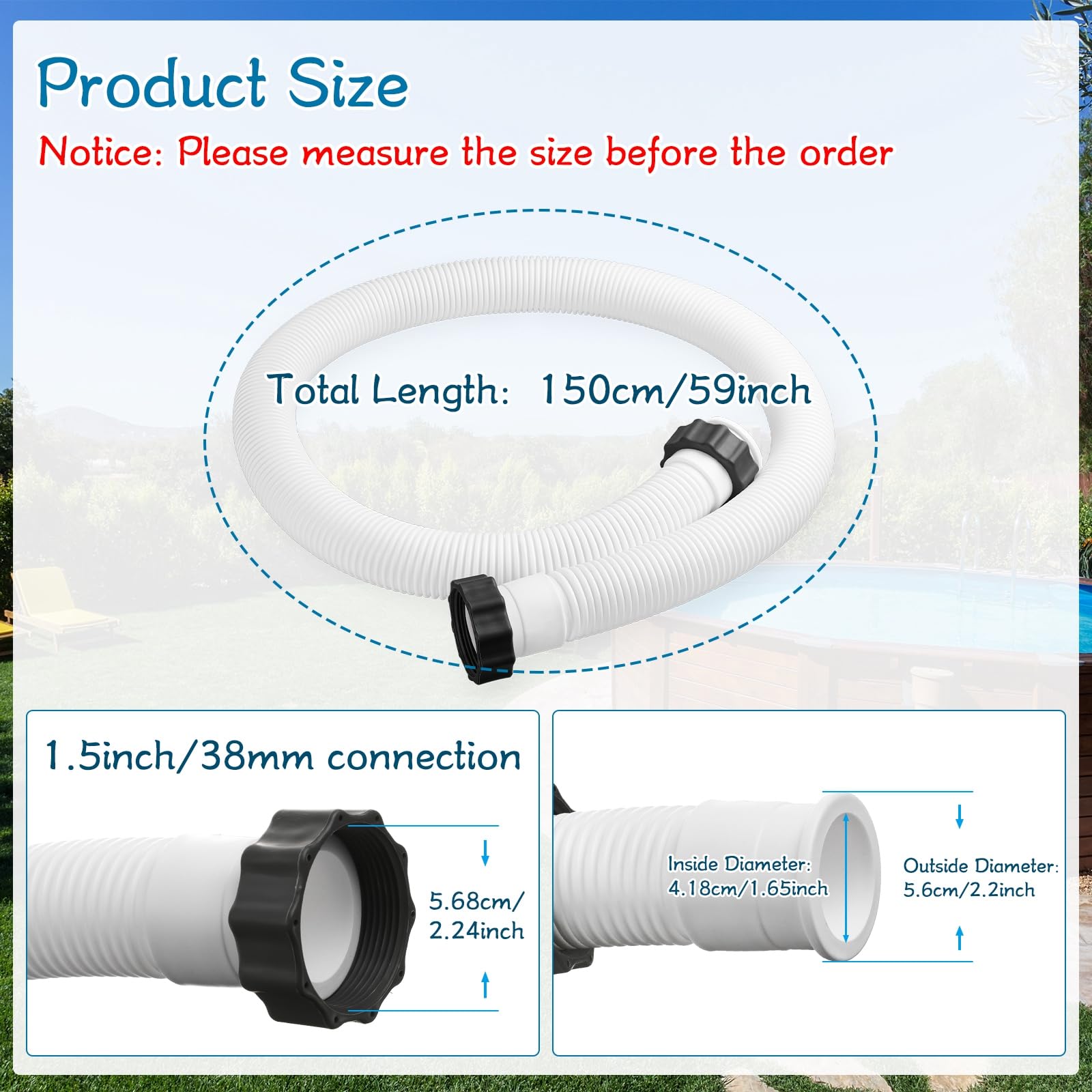
- Inner Diameter (ID) is the measurement across the inside of the hose. This is the most important measurement for most pool hoses because fittings and connectors are designed to fit inside the hose.
- Outer Diameter (OD) is the measurement across the outside of the hose. This might be needed for clamps or special equipment that fits around the hose.
Most pool hoses are sold and labeled by their inner diameter. For example, a “1.5-inch pool hose” usually refers to its inner diameter.
Beginner Insight: Always check whether the measurement refers to ID or OD. Some manufacturers and sellers use these terms incorrectly, leading to mismatched parts.
Tools Needed To Measure Pool Hose Diameter
You don’t need expensive tools to measure your pool hose. In fact, you might already have everything you need at home.
- Tape Measure: Flexible and easy to use, ideal for larger hoses.
- Ruler: Good for smaller hoses or when you want a quick check.
- Caliper: For precise measurements, especially when you need accuracy within a millimeter or fraction of an inch.
- String (Optional): Useful for measuring the circumference if you can’t access the hose end directly.
Pro Tip: Clean the hose end before measuring to avoid dirt or buildup affecting your measurement.
Step-by-step: How To Measure Pool Hose Diameter
Now, let’s get practical. Follow these steps to measure your pool hose diameter accurately.
1. Remove The Hose From Equipment
Detach the hose from any fittings or equipment. This gives you full access to the end of the hose and ensures your measurement is accurate.
2. Choose The Hose End
Select an end that is in good condition. If the hose end is stretched, cracked, or squashed, it may not give a true measurement.
3. Measure The Inner Diameter (id)
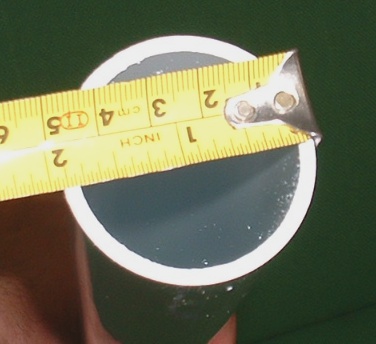
- Place the tape measure or ruler across the opening of the hose.
- Make sure you measure directly across the center, not at an angle.
- Read the measurement from the inside edge to the opposite inside edge.
Example: If your measurement is exactly 1.5 inches, you have a standard 1.5-inch hose.
4. Measure The Outer Diameter (od) (if Needed)
Some accessories, like clamps, require the OD.
- Place the tape measure or caliper across the outside edge of the hose.
- Measure from one outside edge to the other, across the center.
5. For Flexible Or Corrugated Hoses
Flexible hoses can be tricky because they may change shape. If the hose is out of round, gently press it into a circular shape before measuring.
6. Measuring With String (alternative Method)
If you can’t measure directly across the hose, use a string to measure the circumference.
- Wrap the string once around the hose, mark where it meets.
- Lay the string flat and measure its length with a ruler.
- Divide the length by 3.14 (π) to get the diameter.
Example: If the string measures 4.71 inches, 4.71 ÷ 3.14 = 1.5 inches diameter.
Common Pool Hose Sizes And Their Uses
Knowing standard sizes helps you choose accessories and replacement hoses without guesswork.
| Hose Size (ID) | Common Use | Fits Most |
|---|---|---|
| 1.25 inches | Above-ground pool filters, small vacuums | Small skimmer ports |
| 1.5 inches | In-ground pool vacuums, most pumps, backwash | Standard pool equipment |
| 2 inches | High-flow systems, large pools | Heavy-duty connections |
Beginner Insight: A 1.5-inch hose will not fit a 1.25-inch port without an adapter. Always match hose and port sizes.
Credit: poolstore.co.uk
How To Identify Hose Size Without Measuring
Sometimes, the hose size is stamped or printed on the hose itself. Look for numbers like “1. 25”, “1. 5”, or “2. 0” along the length of the hose.
Other clues:
- Check your pool equipment manual. Most manufacturers list the required hose size.
- Inspect connectors and fittings for size markings.
- Ask at your pool supply store—they often recognize standard hoses by sight.
Non-obvious tip: If your hose uses snap-on connectors, these are often designed for a specific diameter. Don’t force a connector; it’s better to double-check than damage your equipment.
Measuring Fittings And Adapters For Compatibility
It’s not just the hose that matters—the fittings are just as important. Here’s how to measure them:
- Hose Barb (the part that goes into the hose): Measure the outside diameter of the barb. It should closely match the hose’s inner diameter.
- Threaded Fittings: Measure across the threads. Pool threads are usually measured by nominal size, not actual diameter.
- Clamp Size: When using clamps, measure the hose’s outer diameter to ensure a proper fit.
If you’re connecting hoses of different sizes, you’ll need a hose adapter. These are sized by both ends, such as “1.25-inch to 1.5-inch adapter.”
Credit: www.amazon.ca
How To Choose The Right Replacement Hose
When shopping for a new hose, keep these points in mind:
- Match the Diameter: Never guess. Measure your old hose or fitting.
- Check Hose Type: Not all hoses are made for high pressure or vacuum use.
- Length Matters: Longer hoses can reduce suction power. Use the shortest hose that does the job.
- Material Quality: Cheap hoses often kink or split. Look for UV-resistant, reinforced hoses for durability.
- Ends and Fittings: Some hoses come with pre-attached cuffs or connectors; others are just plain ends.
Pitfalls To Avoid When Measuring Pool Hose Diameter
Many pool owners make simple mistakes that can lead to wasted money or frustration.
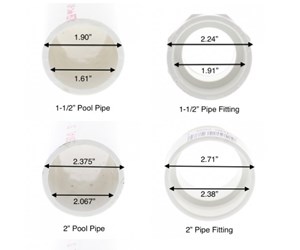
- Measuring the Wrong Part: Some people measure the outer diameter when they need the inner diameter, or vice versa.
- Not Checking Both Ends: Hoses sometimes have different-sized ends for specialty connections.
- Ignoring Hose Shape: A squashed or deformed hose end gives a false reading.
- Relying on Visual Guessing: Pool hoses can look similar in size but actually differ by fractions of an inch.
- Forgetting About Fittings: If you have a cuff or connector on the end, remove it before measuring.
Pro Insight: Always double-check your measurements before buying. Take the hose with you to the store if possible.
Credit: www.inyopools.com
Advanced Tools For Precision Measurement
For most pool owners, a simple tape measure is enough. However, if you want high precision, especially for custom installations or repairs, consider these tools:
- Digital Caliper: Gives accurate readings to a fraction of a millimeter or inch.
- Hose Gauge: Special tool from some pool supply stores for measuring flexible hoses.
- Micrometer: For thin, flat hoses (less common in pool setups).
Using precision tools can be especially helpful when you’re working with specialty equipment or need to ensure a leak-proof seal.
How Hose Diameter Affects Pool System Performance
The diameter of your pool hose is more than just a measurement—it can affect your entire pool system.
Water Flow And Pump Efficiency
A hose that’s too narrow:
- Increases resistance.
- Reduces water flow.
- Makes your pump work harder, possibly shortening its life.
A hose that’s too wide:
- May not seal tightly, causing leaks.
- Can reduce suction if the pump isn’t powerful enough.
Cleaning Power
Vacuum hoses with the right diameter:
- Provide strong suction for cleaning debris.
- Ensure your vacuum head stays in contact with the pool floor.
Filter Backwashing
A properly sized backwash hose:
- Removes dirty water quickly.
- Prevents blowouts or leaks during high-pressure cleaning.
Non-obvious tip: If you notice reduced vacuum power or weak water return, check your hose diameter. A mismatch can cause these issues.
Comparing Pool Hose Diameters: Pros And Cons
It’s helpful to see how different hose sizes stack up for common pool tasks.
| Diameter | Pros | Cons |
|---|---|---|
| 1.25 inches | Fits most above-ground pools, easy to handle | Lower flow rate, can clog more easily |
| 1.5 inches | Standard size, good balance of flow and fit | May be too large for small equipment |
| 2 inches | High flow, less clogging, ideal for large pools | Heavier, may not fit standard equipment |
Choose the size that matches your pool’s needs—not just what’s available.
Real-world Examples: Measuring Different Hose Types
Let’s put theory into practice with some examples.
Example 1: Replacing A Vacuum Hose
You have an old vacuum hose. The connector is missing, and you’re unsure what size to buy.
- Remove any cuff or fitting from the hose end.
- Use a tape measure to check the inner diameter—result: 1.5 inches.
- You can now buy a standard 1.5-inch vacuum hose and be sure it will fit your pool equipment.
Example 2: Fitting An Automatic Cleaner Hose
Your automatic cleaner needs a replacement hose, but the sections are unique.
- Measure the inner diameter of the hose section.
- Check the manual for recommended size (usually listed in millimeters or inches).
- If the hose uses snap-on cuffs, match the outer diameter to the cleaner’s connector.
Example 3: Connecting To A Non-standard Port
You have an old pool system with a non-standard fitting.
- Measure both the inner and outer diameters.
- Bring these measurements to the pool store; they may have a special adapter.
- If needed, use a caliper for precise measurement.
Non-obvious tip: Pool stores often carry “universal” adapters, but these work best when you know your exact measurements.
Maintaining Your Pool Hose For Accurate Measurements
Regular maintenance keeps your hose in good shape and ensures your measurements stay reliable.
- Inspect for Cracks: Damaged hoses can stretch or shrink, changing their diameter.
- Clean the Ends: Dirt and buildup can make measuring harder.
- Store Properly: Don’t kink or crush hoses during storage; this can deform the ends.
- Check Fittings: Over-tightening clamps can pinch the hose, altering its diameter.
Pro Insight: Replace hoses that have become hard, brittle, or won’t hold their shape. Accurate measurement is only possible on hoses in good condition.
Upgrading Pool Hoses: When And Why
Sometimes, it’s better to upgrade your hose rather than just replace it.
- Switching to a larger diameter can improve water flow for bigger pools.
- Choosing higher-quality material can reduce kinks and leaks.
- Adding quick-connect fittings can make maintenance easier.
Just remember: Always measure your equipment and connections before upgrading to a different size.
Trusted Resources For Pool Hose Sizing
For more information on pool hose standards and maintenance, the Pool & Hot Tub Alliance offers valuable guides on pool equipment and safety. You can find their resources at Pool & Hot Tub Alliance.
Frequently Asked Questions
How Do I Know If My Pool Hose Is 1.25 Or 1.5 Inches?
Measure the inner diameter of the hose across the open end. If it’s 1.25 inches, it’s a smaller, above-ground style hose. If it’s 1.5 inches, it’s the standard size for most in-ground pools and equipment. Double-check by looking for markings on the hose or your pool manual.
Can I Use A 2-inch Hose On A System Designed For 1.5 Inches?
Not directly. A 2-inch hose will not fit a 1. 5-inch fitting without an adapter, and may not seal properly. Also, your pump may not be sized for the larger diameter, affecting performance. It’s best to match the original hose size for safety and efficiency.
Why Does My Pool Hose Keep Leaking At The Connection?
Common reasons include using the wrong hose diameter, worn-out or damaged hose ends, loose clamps, or mismatched fittings. Always measure both the hose and fitting, and replace worn parts as needed. Tighten clamps just enough to seal, not so much that they crush the hose.
Do I Need A Special Tool To Measure Pool Hose Diameter?
No, most people can use a tape measure, ruler, or even a piece of string to measure the diameter. For maximum accuracy, a caliper is helpful, but not required for most home pool owners. Make sure to measure the inner diameter unless the equipment requires the outer diameter.
How Often Should I Check My Pool Hose Size?
Check your pool hose diameter whenever you replace a hose, upgrade equipment, or notice leaks or weak suction. It’s also smart to check at the start of each pool season, especially if your hose has been stored all winter.
Getting pool hose diameter right is a small task with a big payoff. Accurate measurement keeps your pool running efficiently, prevents leaks, and saves money on repairs. Next time you need a new hose or fitting, you’ll know exactly what to do—and why it matters.