
Modifying a wall oven cabinet can change your entire kitchen. Maybe you want to install a new oven, fit a different size, or simply update the look. Many homeowners face this task when upgrading appliances. It might seem complicated at first, but with the right steps, tools, and knowledge, it’s achievable—even for people with basic DIY skills.
Wall oven cabinets are not like standard cabinets. They have to support heavy appliances and fit exact dimensions. Making the wrong cut or missing a support could mean problems later. But with careful planning and clear instructions, you can get a perfect fit and a safe, beautiful result.
This guide will walk you through every part of the process, from planning to finishing touches. You’ll learn how to measure, adjust, reinforce, and more. Along the way, you’ll discover common pitfalls and smart ways to avoid them. If you want to give your kitchen a modern, practical update, modifying your wall oven cabinet is a great place to start.
Understanding Wall Oven Cabinet Basics
Before you start, it’s important to know what makes a wall oven cabinet different. Regular kitchen cabinets only hold dishes and food. A wall oven cabinet must support a heavy oven and handle heat. It’s usually built from stronger materials, with extra framing inside.
Standard wall oven cabinets come in a few common sizes. Most ovens are 24, 27, or 30 inches wide. The height depends on whether you have a single or double oven. Depth is usually 24 inches, so the oven sits flush with the rest of the cabinets.
Every cabinet has a cutout—the space where the oven fits. The cutout must match the oven’s measurements closely, but not exactly. Usually, you want about 1/8 inch gap around the oven for easy installation and air flow. If you’re swapping ovens, always check the new oven’s installation manual for exact cutout sizes.
Another key part is the support frame inside the cabinet. This wood frame holds the oven’s weight and keeps it secure. Some older cabinets may not have enough support for heavier, modern ovens. Reinforcing this is a must for safety.
Finally, think about wiring and ventilation. Wall ovens need their own electrical circuit. The cabinet must have an opening for wires (and sometimes gas, for gas ovens). Good airflow prevents overheating, so don’t block any vents.
Planning Your Modification
Good planning is the secret to a smooth project. Start with three main steps: measure, check, and decide.
Measure Your Space
Get a steel tape measure and write down three key numbers:
- Cabinet width (outside edge to outside edge)
- Cutout width, height, and depth (the inside space for the oven)
- Wall opening (if the cabinet sits between two walls)
Check these numbers against your new oven’s installation guide. Every model has slightly different cutout requirements. Don’t guess—exact numbers matter.
Inspect The Cabinet Structure
Open the cabinet doors and look inside. Is the frame made from solid plywood or thin particle board? Are there sturdy supports at the bottom and sides? If the cabinet feels weak or wobbly, you’ll need to reinforce it.
Check for:
- Cracks or water damage
- Missing screws or nails
- Signs of past repairs
If you find damage, fix it now. Don’t install a heavy oven in a weak cabinet.
Decide On The Modification Scope
Are you making a small adjustment or a big change? Here are common scenarios:
- Widening or narrowing the cutout for a new oven
- Raising or lowering the oven height to match countertops or user comfort
- Reinforcing the cabinet base for extra weight
- Changing the cabinet face for a modern look
List what you want to change. This helps you gather the right tools and materials.
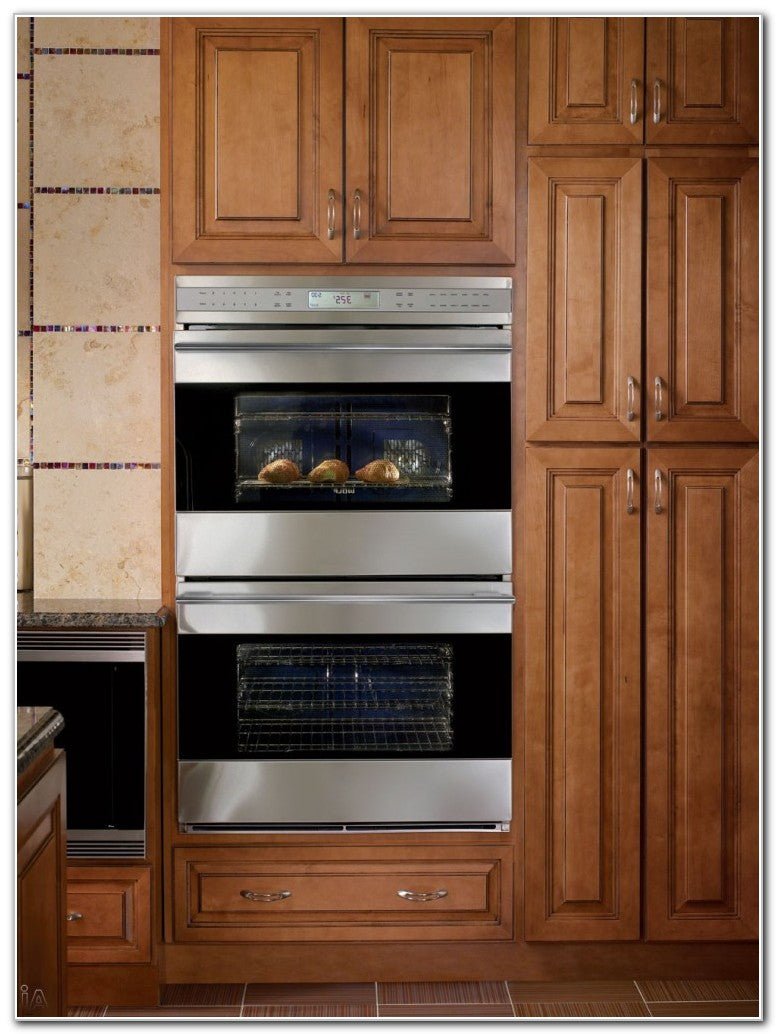
Credit: rtawoodcabinets.com
Gathering Tools And Materials
You don’t need a full workshop, but some basic tools are essential. Here’s what most people use:
- Circular saw or jigsaw
- Drill and drill bits
- Screwdriver set
- Wood screws (2″ and 3″ sizes)
- Measuring tape
- Level
- Square
- Pry bar
- Clamps
- Stud finder
- Hammer or mallet
- Wood glue
- Paint or finish (optional)
- Wood filler or caulk
For safety:
- Work gloves
- Safety goggles
- Dust mask
Materials depend on your changes. You may need:
- Plywood (3/4″ thick for supports)
- 1×2 or 2×2 lumber for framing
- Cabinet trim or molding
- Shims
- Replacement cabinet doors or panels (if changing the look)
Don’t forget to check the oven’s installation kit. Some include mounting screws, brackets, or trim pieces.
Removing The Existing Oven
Never start modifications with the oven still in place. Even a small oven can weigh over 100 pounds.
- Turn off the power at the breaker box. Double check with a voltage tester.
- Open the oven door and remove all racks.
- Unscrew the mounting screws along the oven’s frame.
- With a helper, gently slide the oven out. Support its weight at all times.
- Disconnect the electrical wiring (and gas line, if present).
- Set the oven aside on a moving blanket or cardboard.
Now inspect the cabinet. You may find hidden damage, grease, or missing supports. Clean the area before starting work.
Modifying The Cabinet Cutout
This is where most of the work happens. The steps depend on your oven and cabinet.
Widening Or Narrowing The Cutout
If your new oven is wider, you’ll need to cut the cabinet sides.
- Mark the new width on both sides with a pencil and square.
- Use a circular saw for straight cuts, or a jigsaw for tight spots.
- Go slow and steady. Splintered edges look bad and weaken the cabinet.
For a smaller oven, you need to fill the gap.
- Cut strips of plywood or solid wood to fit each side.
- Glue and screw them to the inside of the cutout.
- Sand the edges smooth.
If there’s a big gap, add extra supports behind the filler strips.
Adjusting Cutout Height
Measure the new oven’s height and compare it to your cutout.
- For a taller oven: Cut away the top or bottom of the opening. Check for hidden electrical lines before cutting.
- For a shorter oven: Add a filler strip (like above) at the top or bottom. Make sure it’s strong enough to support the oven’s weight.
Tip: Hide rough edges with cabinet trim or a matching strip of wood.
Adjusting Cutout Depth
Most wall ovens need at least 23-24 inches of depth. Some older cabinets are too shallow.
- If possible, remove the back panel and rebuild it further back.
- If the wall behind is empty (not a plumbing wall), you can notch out the drywall for a little extra space.
- Never remove or cut a load-bearing wall.
If you can’t get enough depth, choose a smaller oven or move the cabinet forward.
Adjusting The Cabinet Face
To match new appliances, you may want to update the cabinet’s front.
- Remove old trim or molding.
- Install new trim flush with the new oven’s frame.
- Use paint or stain to match the rest of the kitchen.
A fresh face update makes the whole kitchen look modern—even if you keep the same cabinet box.
Reinforcing The Cabinet For Safety
A wall oven is heavy. Modern double ovens can weigh 200 pounds or more. Weak cabinets can crack or even collapse.
Strengthening The Base
- Add a 3/4″ plywood panel to the cabinet floor.
- Screw it into the side walls and back for solid support.
- If the floor sags, add 2×2 braces underneath (front to back).
Adding Side And Back Supports
- Cut 1×2 or 2×2 lumber to fit the cabinet sides and back.
- Screw these pieces along the top, bottom, and sides of the cutout.
- These act like a frame, spreading the oven’s weight.
Checking For Level
Place a level on the base and sides. The oven must sit perfectly flat. Use shims under the plywood if the floor is uneven.
Anchoring To Wall Studs
Use a stud finder to locate wall studs behind the cabinet. Drive long screws (at least 2″) through the cabinet back and into the studs. This prevents tipping and adds strength.
Electrical And Ventilation Considerations
Wall ovens use a lot of power—usually 220 volts. Never try to move or rewire the power unless you are trained. Hire a licensed electrician if you need to move the outlet or circuit.
- Make sure the power cord is long enough to reach the outlet without stretching.
- If you need to move the outlet, do it before you reinstall the oven.
- The cabinet must have a hole for the cord—usually at the back or bottom.
Ventilation is also critical. Check the oven manual for vent locations. Do not block these with wood or trim. Good airflow keeps the oven cool and safe.
If you have a gas oven, hire a professional to move the gas line. Never try to move or connect gas lines yourself.
Installing The New Oven
With the cabinet ready, it’s time to install the oven.
- Double-check all measurements.
- Clean out dust and debris.
- Have a helper lift the oven. Ovens are heavy and awkward.
- Guide the oven into the cutout. Go slowly to avoid scratching the cabinet.
- Connect the power cord (and gas line if needed).
- Push the oven fully into place. Check that it sits flat and flush.
- Fasten the mounting screws through the oven frame into the cabinet.
- Replace the oven racks and turn the power back on.
- Test the oven for proper operation.
If there are small gaps around the oven, use trim pieces or manufacturer-supplied strips to cover them.
Updating The Cabinet Appearance
A modified cabinet may need a facelift to look new again.
Painting Or Staining
- Sand all wood surfaces smooth.
- Apply primer, then paint or stain to match your kitchen.
- Use a finish coat for durability.
Adding New Doors Or Trim
- Measure and order new cabinet doors if your old ones don’t fit.
- Install new molding or trim for a polished look.
- Use wood filler to hide nail holes.
Matching Other Cabinets
If your wall oven cabinet stands out, consider painting or refinishing nearby cabinets for a uniform look.
Common Mistakes And How To Avoid Them
Many DIYers run into trouble with wall oven cabinets. Here are some common mistakes:
- Wrong measurements. Measure three times before cutting. Cut too much, and you can’t go back.
- Weak supports. Always reinforce with plywood and sturdy framing.
- Skipping shims. Uneven cabinets lead to crooked ovens. Use shims for perfect level.
- Ignoring ventilation. Blocked vents cause overheating. Check the manual.
- DIY electrical work. Call a pro for all wiring or gas changes.
- Not checking for wall studs. Anchoring to drywall alone is unsafe.
- Forgetting the door swing. Make sure the oven door can open fully without hitting other cabinets or walls.
Real-world Example
Let’s look at a typical case. Sarah, a homeowner, bought a new 30-inch double oven to replace her old 27-inch model. Her cabinet was too narrow, and the base was thin particle board.
Sarah’s steps:
- Measured her cabinet and oven cutout three times.
- Cut the sides of her cabinet to widen the opening.
- Added 3/4″ plywood to the base.
- Installed 2×2 supports under the floor and around the sides.
- Painted the cabinet face to match new kitchen colors.
- Hired an electrician to move the power outlet.
- Installed the new oven with help from a friend.
Result: Her oven fit perfectly, with no sagging or gaps. The cabinet was stronger than before, and the new paint gave her kitchen a fresh look.
Data Table: Standard Wall Oven Sizes And Cutout Requirements
Understanding the right dimensions is essential. Here’s a quick reference for common wall oven sizes.
| Oven Size | Typical Cutout Width | Typical Cutout Height | Typical Cutout Depth |
|---|---|---|---|
| 24-inch Single | 22-1/2″ to 23″ | 27-1/2″ to 28″ | 23-1/2″ to 24″ |
| 27-inch Single | 25″ to 25-1/2″ | 27-1/2″ to 28″ | 23-1/2″ to 24″ |
| 30-inch Single | 28-1/2″ to 29″ | 27-1/2″ to 28″ | 23-1/2″ to 24″ |
| 30-inch Double | 28-1/2″ to 29″ | 50-1/4″ to 51″ | 23-1/2″ to 24″ |
Always use your oven’s manual for exact numbers.

Credit: rtawoodcabinets.com
Comparison Table: Stock Cabinet Vs. Modified Cabinet
Modifying a cabinet has trade-offs. Here’s how a standard stock cabinet compares to a modified one.
| Feature | Stock Cabinet | Modified Cabinet |
|---|---|---|
| Fit for New Ovens | Often limited | Custom fit possible |
| Support Strength | Standard | Can be reinforced |
| Appearance | Matches original kitchen | Can be updated or modernized |
| Labor Required | None (unless replacing) | Moderate to high |
| Cost | Lower | Varies, often higher |
Table: Tools Needed And Their Uses
Choosing the right tools makes the job easier and safer.
| Tool | Main Use |
|---|---|
| Circular saw | Cutting cabinet sides and panels |
| Jigsaw | Cutting curves or tight spots |
| Drill | Making pilot holes, driving screws |
| Measuring tape | Accurate measurements |
| Level | Ensuring everything is flat and even |
| Stud finder | Locating wall studs for anchoring |
| Clamps | Holding pieces in place during work |
Non-obvious Tips For Success
Some details make a big difference, but many people overlook them:
- Label all wires and connections as you disconnect the old oven. Use masking tape and a marker. This saves frustration during reinstallation.
- Check for hidden outlets or plumbing behind the cabinet before cutting. Use a small inspection mirror or camera if needed. Cutting into a pipe or wire is a costly mistake.
- Dry fit everything before final assembly. Place all fillers, supports, and trim in position to check for gaps or issues. Adjust as needed before screwing or gluing.
- Order oven early, but wait for delivery before making cuts. Sometimes the actual oven differs slightly from the spec sheet.
- Keep the oven manual handy during installation. It often includes details about venting, minimum clearances, and mounting points that are easy to miss.
Final Checks And Testing
After installing your oven, don’t rush to use it. Double-check everything:
- All screws are tight and in studs or strong wood
- Oven sits level and flush with the cabinet face
- No wires are pinched or exposed
- Vents are clear and open
- Doors open and close smoothly
- No strange smells or sounds on the first test run
If anything feels wrong, stop and fix it before using the oven.

Credit: lifeofthelorenzens.blogspot.com
When To Call A Professional
DIY can save money, but safety comes first. Call a pro if:
- You need to move or add electrical wiring or outlets
- There’s a gas line involved
- The cabinet structure is badly damaged
- You’re unsure about any step
A professional installer can finish the job quickly and safely.
Maintenance Tips After Modification
Once your oven is in place, keep it and the cabinet in good shape:
- Check support screws and brackets every six months
- Watch for signs of sagging or shifting
- Clean vents and trim regularly to prevent dust build-up
- Avoid slamming oven doors, which can stress the cabinet frame
- Refinish or touch-up paint as needed to keep the cabinet looking fresh
Frequently Asked Questions
How Do I Know If My Cabinet Is Strong Enough For A New Wall Oven?
Look for solid plywood or hardwood construction, sturdy base panels, and no cracks or water damage. If you’re adding a double oven or a heavier unit, reinforce the base with 3/4″ plywood and 2×2 lumber. If unsure, consult a cabinet maker or installer.
Can I Modify My Cabinet If My Oven Is Much Larger Than The Old One?
Yes, but you may need to cut into nearby cabinets or walls. Always check for hidden wires or pipes before cutting. You might also need to rebuild the cabinet face and add extra support. For big changes, professional help is a good idea.
Do I Need A Permit To Modify My Wall Oven Cabinet?
Usually, you don’t need a permit for cabinet work alone. However, if you move electrical wiring or gas lines, local codes may require a permit and inspection. Always check with your city’s building department.
What If My New Oven Is Smaller Than The Old Cutout?
You can fill gaps with strips of plywood or solid wood, then cover with trim or molding. Make sure the filler pieces are securely attached and strong enough to support the oven. Paint or stain to match.
Where Can I Find Trusted Wall Oven Installation Guides?
Many oven brands offer guides on their websites. For a detailed overview, see Family Handyman for trusted advice and pictures.
Upgrading your wall oven cabinet is a big project, but it’s worth the effort. With careful planning, the right tools, and attention to detail, you can get a modern, safe, and beautiful kitchen upgrade that lasts for years. Whether you do it all yourself or call in an expert for the tricky parts, you’ll enjoy the results every time you cook.