
Organising corner kitchen cupboards is one of the most challenging tasks in home storage. These awkward spaces often become black holes, swallowing pots, pans, and food containers until they’re forgotten. But with the right strategies, you can turn your corner cupboards from cluttered chaos to efficient storage powerhouses.
Whether you have an L-shaped kitchen or a U-shaped layout, understanding how to organise these tricky areas can make cooking and cleaning far easier. This article will guide you step by step through the best methods, products, and tips for making the most of your corner kitchen cupboards, even if you’re working with a small space or limited budget.
Why Corner Kitchen Cupboards Are Difficult To Organise
Corner cupboards are usually deep and hard to reach. The doors often open in a way that blocks easy access, and the back of the cupboard becomes a “dead zone. ” Items placed there can be lost for months. The shape of the cupboard itself, usually a triangle or L-shape, makes it hard to fit standard shelves or baskets.
These problems are common in both old and modern kitchens.
People often try to solve these issues by stuffing infrequently used items into the corner and forgetting about them. But this leads to wasted space and frustration. The first step to a well-organised kitchen is understanding the unique problems posed by corner cupboards.
Types Of Corner Kitchen Cupboards
Before you start organising, it helps to know what type of corner cupboard you have. Each type has its own challenges and solutions.
L-shaped Corner Cupboards
These cupboards have two doors that meet at a right angle. The main challenge is the deep, narrow area at the back.
Blind Corner Cupboards
Only one door gives access, and part of the space is hidden behind the cabinet next to it. This makes it hard to see or reach items in the far corner.
Diagonal Corner Cupboards
These have a single door facing into the kitchen at a 45-degree angle. The space is wider but can still be deep and hard to organise.
Lazy Susan Corner Cupboards
These come with built-in rotating shelves. They are easier to use but can still become messy if not organised well.
Understanding which type you have will help you choose the right organising solutions.
Step-by-step Guide To Organising Corner Kitchen Cupboards
Organising a corner cupboard may feel like a big task, but breaking it down into steps makes the process easier and more effective.
1. Empty The Cupboard Completely
Start by removing everything from the cupboard. Place all items on a table or countertop. This lets you see what you have and decide what to keep or throw away. It’s common to find duplicates or expired food hiding in the back.
2. Clean The Space Thoroughly
With the cupboard empty, wipe down all surfaces with a damp cloth. Remove crumbs, grease, and dust. If you haven’t cleaned this area in a while, you might be surprised at how dirty it gets.
3. Sort And Declutter
Go through everything you removed. Throw away expired food, broken items, or things you never use. Donate items in good condition that you no longer need. Sorting now saves space later.
4. Group Similar Items
Arrange your items into groups: baking supplies, pots and pans, food storage, small appliances, etc. Grouping helps you see what you need to access most often.
5. Measure The Cupboard
Measure the height, width, and depth of your cupboard. Write down these numbers. They are crucial for choosing the right organisers and storage solutions.
6. Choose The Right Organisers
Now comes the key step: picking the best organisers for your space and needs. Options include pull-out shelves, rotating trays, baskets, and more. The next sections will explore these in detail.
7. Place Organisers And Arrange Items
Install your chosen organisers. Put the most-used items in the easiest-to-reach spots. Store rarely used items in the back or on higher shelves.
8. Label Where Needed
Labels help everyone in the family know where things go. Use clear, simple labels for baskets or bins.
9. Review And Adjust
After a week or two, check if your system works. Adjust as needed. Sometimes, you need to move things around to find the perfect setup.
Best Organisers For Corner Kitchen Cupboards
Choosing the right organisers makes a big difference. Here are some of the most effective tools for corner cupboards.
Pull-out Shelves
Pull-out shelves, also called roll-out trays, slide out smoothly. They let you see and reach everything, even items in the back. These work especially well for blind corner cupboards.
Lazy Susans
A Lazy Susan is a round, spinning tray. It is great for storing spices, jars, or baking supplies. One twist brings everything to the front. Many people overlook that two-tier Lazy Susans double your storage in the same space.
Corner Drawers
Some kitchens have special corner drawers that pull out at an angle. They maximise space but can be expensive to install. They work best for utensils, towels, or small gadgets.
Pull-out Baskets
Wire or plastic baskets pull out like drawers. These are simple to add to most cupboards. Use them for snacks, canned food, or cleaning products.
Tiered Shelf Risers
A tiered shelf riser adds extra levels to a shelf. This lets you store more items without stacking them directly on top of each other.
Swing-out Organisers
These organisers swing out when you open the cupboard door. They bring hard-to-reach items to you. They are perfect for pots and pans.
Deep Bins Or Baskets
Large bins keep items together and make it easy to pull out groups of things at once. They are especially useful for food storage containers or baking supplies.
Custom Inserts
Some companies make inserts that fit your exact cupboard shape. These cost more but use every inch of space.
Here is a quick comparison of popular organiser types:
| Organiser Type | Best For | Pros | Cons |
|---|---|---|---|
| Pull-Out Shelves | Pots, Pans, Heavy Items | Easy access, maximises space | May require installation |
| Lazy Susan | Spices, Jars, Bottles | Quick access, easy to install | Items can fall off if overloaded |
| Corner Drawers | Utensils, Towels | Efficient, stylish | Expensive, not DIY-friendly |
| Pull-Out Baskets | Snacks, Canned Food | Simple, affordable | Not for heavy items |
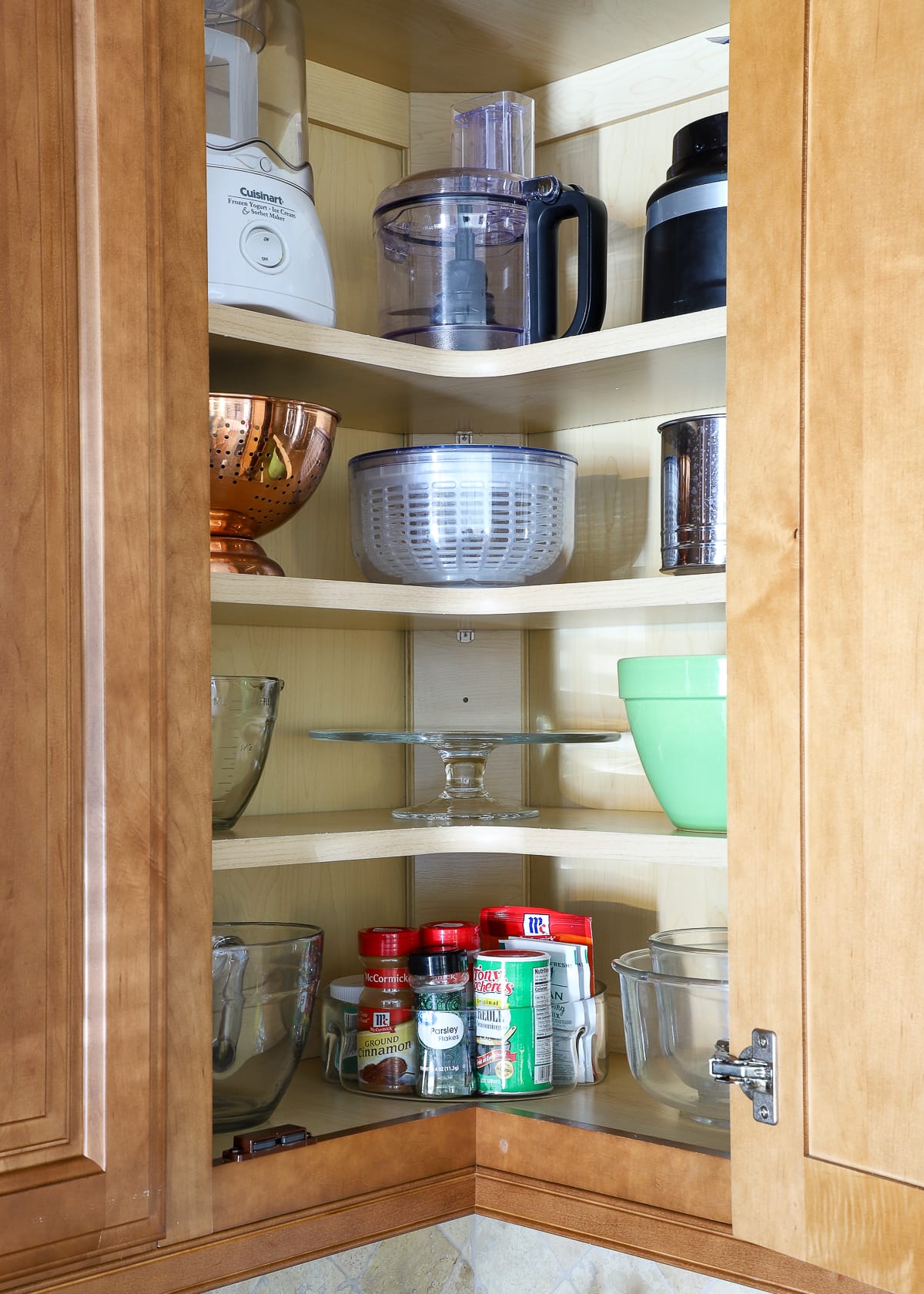
Credit: thehomesihavemade.com
Strategies For Different Types Of Corner Cupboards
The best organising method depends on your cupboard’s design. Let’s look at smart strategies for each type.
L-shaped Corner Cupboards
These cupboards have deep, hard-to-reach corners.
- Store rarely used items in the far back
- Use a Lazy Susan for spices or baking supplies
- Place deep bins in the back for infrequent items
- Use a pull-out shelf for heavy pots and pans
Blind Corner Cupboards
These are the most difficult to access.
- Install a pull-out organiser that slides and rotates
- Use the “back” area for items you don’t need often
- Try swing-out trays for easier access
Diagonal Corner Cupboards
These have a wider door but can be deep.
- Use a two-tier Lazy Susan to maximise space
- Place tiered risers for canned food or jars
- Put baskets for snacks or baking supplies
Lazy Susan Cupboards
These are easier to use but can get messy.
- Sort items by category on each level
- Avoid overloading; it makes spinning harder
- Store light items like spices or baking ingredients
What To Store (and Not Store) In Corner Kitchen Cupboards
Not everything belongs in a corner cupboard. Some items work well, while others don’t.
Best Items To Store
- Large pots and pans
- Mixing bowls
- Small kitchen appliances (slow cooker, blender)
- Food storage containers
- Spices and baking supplies (on a Lazy Susan)
- Bulk food items (rice, flour, sugar)
Items To Avoid
- Everyday dishes (too hard to reach)
- Heavy appliances (unless you have a pull-out shelf)
- Cleaning chemicals (for safety reasons)
- Breakable or valuable items
How To Make Deep Spaces Work For You
Deep spaces are not a problem if you use the right tricks.
- Use long bins or trays to “pull out” the back area
- Store infrequently used items (holiday cookware, big serving dishes)
- Add lighting (LED strip lights) to see what’s in the back
One non-obvious tip: store “kits” together. For example, put all baking tools and supplies in one bin. When you want to bake, pull out the whole bin. This saves time and keeps things organised.
Vertical Space: The Secret Weapon
Many people forget to use the height of their cupboards. Adding vertical storage can double your space.
- Install tiered shelf risers
- Use stackable bins
- Add door-mounted racks for small items
Here’s a simple comparison of vertical storage tools:
| Vertical Tool | Where to Use | Benefit |
|---|---|---|
| Shelf Riser | Shelves, Lazy Susans | Creates extra levels for jars/cans |
| Stackable Bins | Deep corners | Organises small items by category |
| Door Rack | Inside cabinet door | Stores wraps, spices, or cleaning cloths |
Practical Tips For Small Kitchens
If your kitchen is small, every inch matters even more.
- Use multi-purpose organisers (e.g., a Lazy Susan with stackable bins)
- Store only what you use often
- Move rarely used items to another room or high shelf
- Use the cabinet door for extra storage (hooks for towels, small baskets for packets)
- Keep the front of the cupboard for everyday items
Common Mistakes To Avoid
Even with good organisers, some mistakes make corner cupboards messy.
- Overloading shelves: Too many items make it hard to find what you need.
- Mixing unrelated items: Keep categories together for faster access.
- Ignoring the back: Use bins or pull-out trays so nothing is forgotten.
- Not measuring: Always measure before buying organisers.
- Forgetting labels: Labels help everyone use the system.
How To Keep Your System Working
Organising is not a one-time job. You need to keep it up.
- Review your system every few months
- Tidy up after big cooking sessions
- Update labels when you change what’s stored
- Involve the whole family so everyone puts things back
A well-organised cupboard saves you time and stress.
Cost Of Organising Corner Cupboards
You don’t need to spend a lot to get organised. Here’s a breakdown of common options:
- DIY solutions: Use shoe boxes, baskets, or dollar store bins. Cost: low.
- Basic organisers: Lazy Susans, shelf risers. Cost: moderate.
- Custom pull-outs: Professional installation, high quality. Cost: high.
You can start small and add more organisers over time as your budget allows.
Real-life Example: Transforming A Messy Corner Cupboard
Sarah, a home cook, struggled with a blind corner cupboard. She often lost baking pans in the back and bought duplicates without realising. She measured her cupboard, bought a pull-out organiser, and divided items into baking, cooking, and storage bins.
After installing the organiser, she could reach everything easily. She added labels for each bin and saved 15 minutes every time she baked. This simple change made her kitchen more enjoyable and efficient.
Expert Insights: What Most People Miss
Many beginners believe one organiser will solve all problems. In reality, you often need a mix: a Lazy Susan for small items, a pull-out shelf for heavy pots, and vertical risers for cans. Also, most people overlook the value of “empty space.” Leaving some room makes it easier to move things and keeps your system flexible.
Another insight: Don’t be afraid to change your system. Your needs will change over time. The best-organised kitchens are those where people adjust as needed.
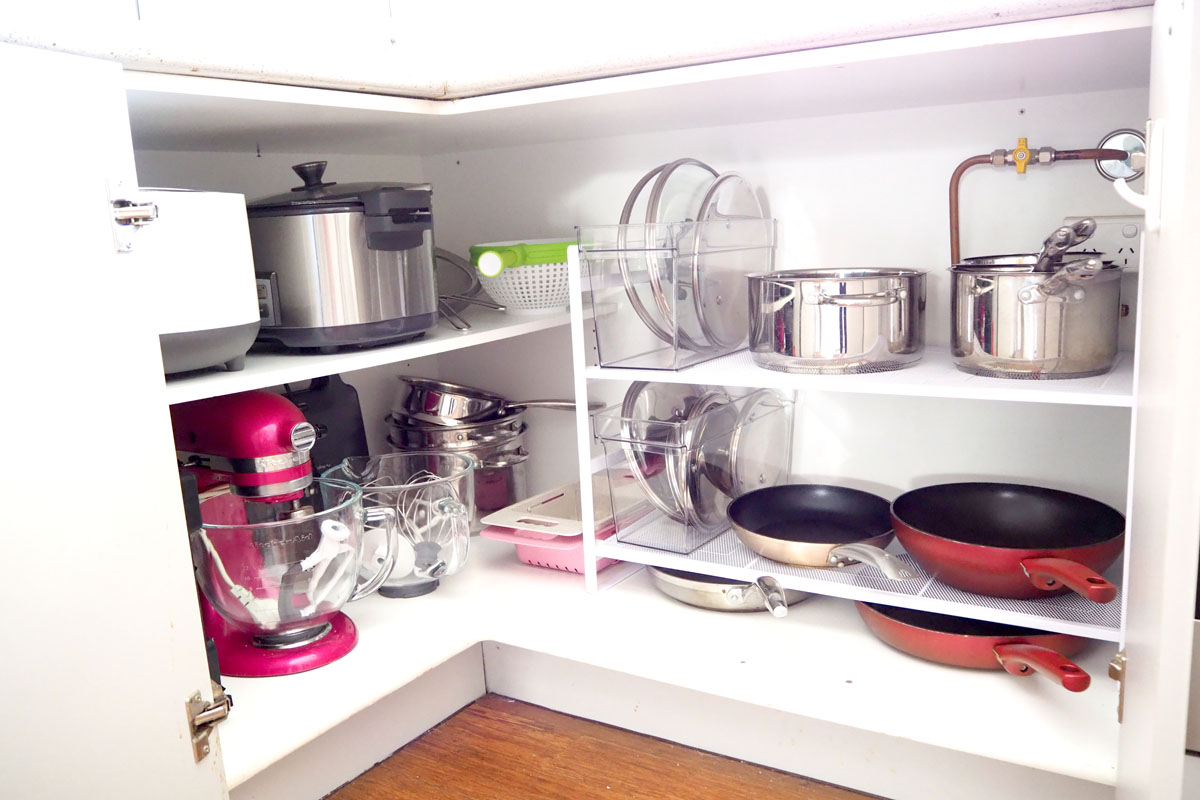
Credit: theorganisedhousewife.com.au
Sustainability: Organising Without Waste
Try to reuse containers, boxes, or bins you already own. Avoid buying plastic organisers if you don’t need them. Cardboard boxes, old baskets, or even shoe boxes can work well. This saves money and reduces waste. If you must buy new products, look for bamboo or recycled materials.
Safety Considerations
Corner cupboards are low to the ground, so avoid storing cleaning chemicals or anything dangerous there. Keep sharp tools in higher, safer spots. If you have children, use childproof locks or latches on cupboards.

Credit: www.iheartorganizing.com
Maintenance And Cleaning
Every few months, empty the cupboard and wipe it down. This prevents crumbs, pests, and smells. It also gives you a chance to check for expired food or unused items.
When To Consider A Kitchen Remodel
Sometimes, your kitchen layout makes organisation almost impossible. If your corner cupboard is too small, too deep, or too awkward, a remodel may be the best solution. This could include:
- Installing a corner drawer unit
- Upgrading to a high-quality pull-out system
- Adding lighting to dark areas
Remodels cost more but can transform your kitchen experience.
If you want more technical details on kitchen cupboard design, see the Wikipedia kitchen cabinet page.
Frequently Asked Questions
What Is The Best Way To Organise A Corner Kitchen Cupboard?
The best way combines several tools: use a Lazy Susan for small items, pull-out shelves for heavy cookware, and bins or baskets for grouping similar things. Always measure your cupboard first and keep most-used items at the front.
How Do I Keep Items From Getting Lost In A Deep Corner Cupboard?
Use long bins, pull-out trays, or rotating organisers to “bring forward” items stored in the back. Group items by category, and check the back of your cupboard every few months to avoid forgotten items.
Are Lazy Susans Worth It For Corner Cupboards?
Yes, especially for spices, jars, and baking supplies. They make it easy to see and reach everything. Choose a two-tier model to double your storage. But don’t overload them, or items may fall off.
What Should I Avoid Storing In Corner Kitchen Cupboards?
Avoid everyday dishes, heavy appliances (unless you have a strong pull-out), cleaning chemicals, and breakable items. These are hard to reach and can be unsafe or inconvenient in corner cupboards.
How Often Should I Reorganise My Corner Kitchen Cupboard?
Check your system every three to six months. Tidy up after big cooking days, and reorganise if your needs change. Regular maintenance keeps your kitchen efficient and stress-free.
Transforming a corner kitchen cupboard takes some effort, but the payoff is huge. With the right tools and strategies, even the most awkward space can become easy to use and keep tidy. Organise smartly, review your system often, and enjoy a kitchen that works for you every day.