
Keeping your kitchen organized can feel impossible, especially when small items like foil and plastic wrap always seem to be in the way. You open a drawer and rolls are tumbling around, boxes get crushed, and you can never find the edge when you need it. Many people just toss these rolls in a drawer, thinking it’s the only way. But a few smart changes can make a big difference. Organizing foil and plastic wrap isn’t just about making things look neat—it also helps you save time, avoid waste, and makes cooking more enjoyable.
In this guide, you’ll discover practical methods to organize foil and plastic wrap, understand the types of organizers available, and learn how to choose the right system for your kitchen. You’ll also see real examples, simple solutions for small spaces, and common mistakes to avoid.
Whether you have a large kitchen or a tiny apartment, you’ll find tips you can use today. Let’s start turning your messy drawer into a simple, efficient space.
Why Organizing Foil And Plastic Wrap Matters
Most people use foil and plastic wrap every week. But a messy storage system causes daily frustration. Here’s why a little organization makes a big difference:
- Saves time: You quickly find what you need without searching.
- Reduces waste: No more buying duplicates because you think you’re out.
- Prevents damage: Rolls stay smooth, not crushed or tangled.
- Safer kitchen: No sharp box edges poking out or falling boxes.
- More space: Organized items take less room, freeing up drawers or shelves.
Many kitchens waste valuable time each year searching for wraps and bags. According to a 2023 survey by the National Kitchen and Bath Association, 72% of homeowners say they struggle with kitchen clutter, and foil/plastic wrap is one of the most common problem items.
Getting organized is a small step that pays off every day.
Common Problems With Foil And Plastic Wrap Storage
Before you fix the problem, it helps to understand why foil and plastic wrap are so hard to keep tidy.
- Awkward box shapes: Most rolls come in long, thin boxes that slide around or get stuck.
- Boxes break easily: Cheap cardboard boxes often split, making it hard to cut pieces cleanly.
- Different sizes: Some boxes are short, others are extra-long (like heavy-duty foil), making them tough to fit in standard drawers.
- Unraveling: Rolls can come loose and unravel, wasting wrap and making a mess.
- Hard-to-find edges: When the wrap edge sticks to itself, you lose time searching for the start.
- Mixing with other items: When you toss wraps in with utensils or bags, everything gets jumbled.
- Limited space: Small kitchens offer few places to store odd-shaped boxes.
Recognizing these issues helps you pick the right organizing solution.
Types Of Organizers For Foil And Plastic Wrap
There are several options for organizing foil and plastic wrap. Each has pros and cons, and the best choice depends on your kitchen layout, how much you use, and your personal style.
| Organizer Type | Best For | Pros | Cons |
|---|---|---|---|
| Drawer Inserts | Wide drawers, hidden storage | Neat, out of sight, easy to access | Needs drawer space, may not fit all box sizes |
| Wall-Mounted Dispensers | Small kitchens, quick access | Frees drawer space, always visible | Requires wall/cabinet space, installation needed |
| Cabinet Door Racks | Using unused space | Hidden, uses vertical space, easy to install | May not fit thick doors, can limit cabinet closing |
| Pull-Out Shelves | Large cabinets, lots of wraps | High capacity, easy to see all items | More expensive, needs installation |
| Free-standing Bins | Flexible storage, renters | Moveable, no installation | Takes up counter space, not as neat |
Drawer Inserts
Drawer inserts are trays or boxes that fit inside your kitchen drawers. They keep rolls separated and prevent sliding. Some are adjustable for different box sizes. This method works best if you have a wide, shallow drawer.
Wall-mounted Dispensers
These are racks you attach to a wall or inside a cabinet door. You insert rolls into the dispenser, and pull out foil or wrap as needed. Some come with built-in cutters for a clean edge. They work well if you want wraps always within reach.
Cabinet Door Racks
Many people forget the back of cabinet doors. Special racks can hang here, holding multiple rolls. This is a great way to use space that’s often wasted.
Pull-out Shelves
For kitchens with deep cabinets, a pull-out shelf or drawer makes it easy to store many rolls at once. You can see everything at a glance. This option is more expensive and may need professional installation, but it’s the most efficient for large families.
Free-standing Bins
Simple bins or baskets can corral wraps together. Place them in a cabinet, pantry, or even on the countertop. This method is flexible, but can look messy if not managed.
Step-by-step: How To Organize Foil And Plastic Wrap
Now, let’s go through a clear process to get your wraps and foil under control.
1. Gather All Wraps And Foil
First, collect every roll of foil, plastic wrap, wax paper, parchment, and baggies from your kitchen. You may be surprised how many you have. Check every drawer, shelf, and pantry.
2. Sort And Declutter
Go through your pile. Throw away empty boxes, crushed rolls, or wrap that’s torn or unusable. Donate unopened extras if you have more than you need.
- Tip: If you haven’t used a type of wrap in over a year, consider letting it go.
3. Measure Your Storage Space
Not all rolls fit everywhere. Measure your drawers, cabinets, and shelves. Write down the width, depth, and height. This prevents buying organizers that don’t fit.
4. Choose The Right Organizer
Refer to the earlier table. Pick a system that fits your kitchen and habits. For example, use a drawer insert if you have a wide drawer, or a wall-mounted rack if you have empty wall space.
- Non-obvious insight: Consider how often you use each wrap. Store most-used items in the most accessible spot.
5. Arrange Rolls By Type And Size
Group similar wraps together: keep all foil rolls in one place, all plastic wraps together, etc. This makes it easier to grab what you need.
- Example: Place everyday plastic wrap at the front, and rarely-used parchment paper at the back.
6. Label Where Helpful
If you store wraps in opaque bins, add a simple label (e. g. , “Foil,” “Plastic Wrap,” “Sandwich Bags”). Clear labeling helps everyone in your household find things quickly.
7. Test And Adjust
Put your wraps in their new spot. Try using them for a few days. If something doesn’t feel right—maybe the roll is hard to reach—move it. Organization is personal; adjust as needed.
8. Maintain Regularly
Once a month, check your organizer. Remove empty boxes, tidy up rolls, and make sure everything is in its place. Organization is easier to keep than to start over.
Creative Solutions For Small Kitchens
Small kitchens require extra creativity. Here are some methods that work well in tight spaces.
Use Vertical Space
Hang a multi-roll dispenser on the inside of a pantry door or even on the wall above your countertop. This keeps wraps handy but off the work surface.
Stackable Bins
Choose narrow, stackable bins that fit inside small cabinets or on shelves. Store foil on the bottom, plastic wrap in the middle, and wax paper on top.
Slim Drawer Inserts
Look for organizers made for slim drawers (under 3 inches deep). Some companies make inserts just for foil and wrap.
Over-the-cabinet Organizers
These hooks hang over a cabinet door with no installation. They are ideal for renters or anyone who can’t drill holes. You can remove them easily when moving.
Magnetic Holders
Some wraps come in boxes with magnetic strips. Stick these to the side of your fridge or another metal surface. This keeps them visible but out of the way.
- Extra tip: If your fridge isn’t magnetic, adhesive magnetic strips are available at hardware stores.
Smart Upgrades: Built-in Dispensers
Modern homes sometimes include built-in wrap dispensers as part of custom cabinets. These are often hidden inside drawers, with special slots and cutters for foil, plastic wrap, and even parchment paper.
Benefits include:
- Always ready: Wraps are loaded and ready to cut with one hand.
- Cleaner look: No visible boxes or clutter.
- Safe cutters: Built-in blades make for smooth, safe cutting.
If you’re remodeling your kitchen, consider adding this feature.

Credit: www.amazon.com
Comparing Popular Foil And Plastic Wrap Organizers
To help you choose, here’s a real-world comparison of popular organizer types.
| Product Example | Capacity | Ease of Use | Price Range | Requires Installation? |
|---|---|---|---|---|
| Expandable Drawer Insert | 3-5 rolls | Very easy | $$ | No |
| Wall-Mounted 3-in-1 Dispenser | 3 rolls | Easy | $$$ | Yes |
| Over-the-Cabinet Door Rack | 2-4 rolls | Easy | $ | No |
| Free-standing Acrylic Bin | 6+ rolls | Moderate | $$ | No |
| Pull-Out Shelf Kit | 8+ rolls | Very easy | $$$$ | Yes |
- Tip: Don’t only focus on price. Think about how much space you have and how easy it is to grab a roll during busy cooking times.
How To Store Odd-sized And Specialty Wraps
Not all wraps are the same size. You might have extra-long foil, jumbo plastic wrap, or wide parchment paper. Here’s how to handle them:
- Adjustable organizers: Look for racks or bins with movable dividers to fit longer rolls.
- Store vertically: If a roll is too long for a drawer, stand it upright in a tall bin or basket inside a pantry or cabinet.
- Use deep cabinets: Place extra-large rolls in the back of deep cabinets or on a pantry floor.
- Label specialty wraps: If you rarely use a wrap (like freezer paper), label its storage spot so you don’t forget about it.

Credit: www.tasteofhome.com
Tips For Keeping Foil And Plastic Wrap Tidy
- Always remove empty boxes right away—don’t let them pile up.
- Cut off crushed or torn box edges before storing.
- Keep a small pair of scissors or a wrap cutter nearby for stubborn boxes.
- Teach everyone in your household where wraps belong, so the system stays organized.
- Buy only what you use most often; resist buying multi-packs if you don’t have space.
Mistakes To Avoid When Organizing Foil And Plastic Wrap
It’s easy to make common mistakes, especially if you’re new to organizing.
Storing Wraps Too Far From The Prep Area
Keep wraps near where you use them most—often close to the stove, countertop, or food prep area. This saves steps and time.
Ignoring Box Sizes
If you buy heavy-duty foil or extra-long plastic wrap, make sure your organizer fits the box. Many people buy organizers that are too small.
Overcrowding
Don’t cram too many rolls in one spot. Overcrowding leads to boxes getting crushed and wraps being hard to access.
Using Low-quality Organizers
Cheap plastic bins or racks often break or slide around. Invest in sturdy materials like bamboo, metal, or high-quality acrylic.
Not Maintaining The System
Organization is not a one-time job. Schedule a quick check-in once a month to keep things neat.
Real-life Examples Of Organized Foil And Plastic Wrap
Let’s see how real people organize their wraps for maximum efficiency.
Example 1: The Busy Parent
A family with three kids uses a wall-mounted 3-in-1 dispenser inside a pantry door. Foil, plastic wrap, and parchment paper are loaded in. Each roll has its own sliding cutter. The parents can grab what they need with one hand, and the kids can help pack lunches without making a mess.
Example 2: The Apartment Renter
Living in a small apartment, a renter uses over-the-cabinet racks and a slim bin. The racks hold foil and wrap behind a cabinet door, while a narrow basket on the shelf holds sandwich bags upright. No installation needed, and everything is hidden from view.
Example 3: The Minimalist Chef
A single professional chef keeps only one roll each of foil and plastic wrap in a bamboo drawer organizer. The rolls are labeled, and empty boxes are tossed immediately. Everything is within arm’s reach, and the drawer stays clutter-free.
Example 4: The Large Family
A household of six uses a custom pull-out shelf in a deep cabinet. All wraps are stored upright, with heavy-duty foil and bulk plastic wrap at the back. Each box is labeled with a permanent marker for easy identification.
- Non-obvious insight: The pull-out shelf is installed at waist height for easy access by adults and older children, preventing the need to bend or stretch.
Diy Organizers: Budget-friendly Options
You don’t need to buy expensive organizers. Here are some do-it-yourself ideas:
- Repurpose magazine holders: Stand them upright in a cabinet to hold multiple rolls.
- Use shoeboxes: Cut the sides down and reinforce with tape to make a custom bin.
- Tension rods: Place a small tension rod in a cabinet and slide wrap rolls onto it.
- Binder clips: Attach a binder clip to the edge of wrap boxes to keep rolls from unraveling.
- Pegboard with hooks: Hang wrap boxes on a pegboard in the pantry.
- Tip: Always measure your space and rolls before building a DIY organizer.
Organizing Foil And Plastic Wrap In Professional Kitchens
Professional chefs use wraps constantly and need everything within reach. Here’s what you can learn from their systems:
- Heavy-duty dispensers: Stainless steel wall dispensers that hold commercial-sized rolls.
- Label everything: Even busy chefs label bins and drawers for speed.
- Multiple access points: Wraps are kept in several places—one near the prep table, another near the oven.
- Regular restocking: Staff check and refill wrap stations daily.
Even in a home kitchen, adopting these habits saves time and stress.
When To Replace Your Organizer
No storage system lasts forever. Signs it’s time to upgrade:
- The organizer is cracked, bent, or missing parts.
- Rolls slide around or fall out.
- You’ve changed your kitchen layout or added more wraps.
- It’s hard to clean (e.g., food or dust gets trapped).
Upgrading your system keeps your kitchen efficient and safe.
Safety Tips For Foil And Plastic Wrap Storage
- Keep cutters and sharp edges out of reach of children.
- Never store wraps near a hot stove or oven—boxes can catch fire.
- Store heavy boxes on lower shelves to prevent them from falling.
- If using adhesive organizers, check regularly to make sure they’re still holding.
Eco-friendly Organizing Ideas
If you want a greener kitchen, choose organizers made of bamboo, recycled plastic, or metal. Also, consider switching to reusable wraps like beeswax wraps, which can be stored in the same organizers.
- Pro tip: Store beeswax wraps flat or rolled in a bin, away from heat.
Where To Buy Quality Organizers
You can find foil and plastic wrap organizers at major home stores, online retailers, and specialty kitchen shops. Look for reviews, measure your space, and read product descriptions carefully before buying. For more inspiration, see options at The Container Store.
Frequently Asked Questions
How Do I Stop Plastic Wrap From Sticking To Itself In Storage?
Plastic wrap can stick to itself if it’s not stored properly. Keep the roll in its original box, and store it upright if possible. Make sure the edge is always attached to the box. If the wrap still sticks, try storing it in the refrigerator—cold wrap is less sticky and easier to unroll.
What’s The Best Way To Organize Foil And Wrap In A Very Small Kitchen?
Use vertical space, such as inside cabinet doors or wall-mounted racks. Over-the-cabinet organizers are perfect for small kitchens. You can also use slim, stackable bins or magnetic holders on your fridge. Always keep only the wraps you use most often to save space.
Can I Store Foil And Plastic Wrap With Food Storage Bags?
Yes, you can store them together for convenience. Use a divided organizer or separate bins for each item to prevent tangling and confusion. Label each section for easy access.
Is It Safe To Store Foil And Plastic Wrap Near The Stove?
It’s best to avoid storing wraps near heat sources. Foil boxes and especially plastic wrap can catch fire or melt if they’re too close to the stove or oven. Store them in a cool, dry place—ideally in a drawer or cabinet away from appliances.
How Often Should I Declutter My Foil And Plastic Wrap Supplies?
A monthly check is usually enough. Remove empty boxes, tidy up rolls, and restock as needed. If you often buy in bulk or have a large family, check more often to prevent clutter.
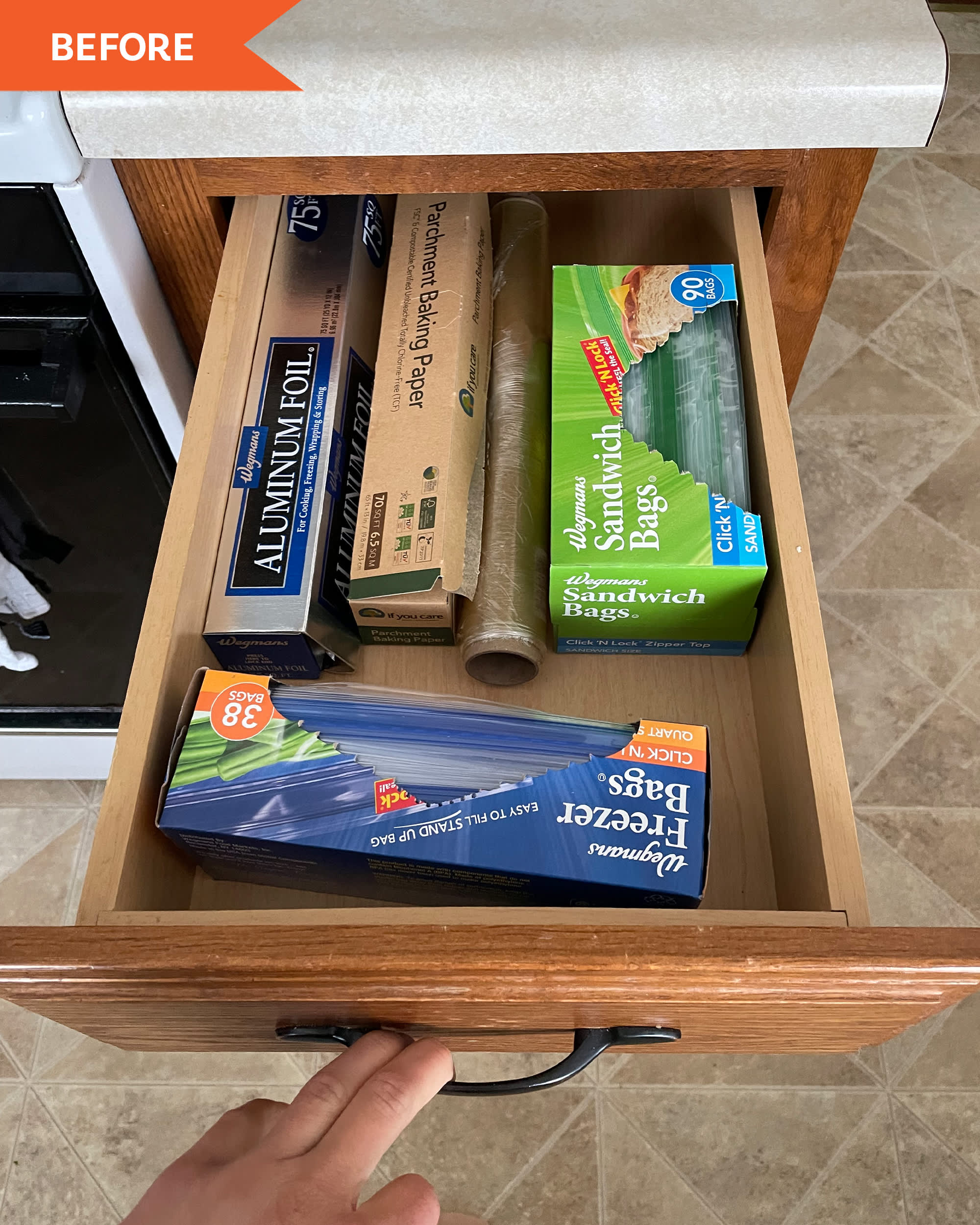
Credit: www.thekitchn.com
Final Thoughts
Organizing foil and plastic wrap may seem like a small task, but it delivers big benefits. You’ll save time, reduce kitchen stress, and keep supplies in top condition. By choosing the right organizer, decluttering regularly, and using smart habits, your kitchen will feel more efficient and welcoming.
Remember, the perfect system is the one that fits your space and daily life. Try one of these solutions today, and enjoy a cleaner, more organized kitchen tomorrow.