
A clean and healthy kitchen is the heart of every home. But even the best-looking kitchen can attract unwanted guests: pests. Ants, cockroaches, rodents, and other insects love kitchens because they find food, water, and shelter there. An infestation can quickly turn your kitchen from a safe food space into a health hazard. Pests can spread bacteria, contaminate food, and even damage appliances and furniture. Preventing these problems is much easier, cheaper, and safer than dealing with an infestation after it starts.
This article will guide you step-by-step on how to prevent pest infestation in the kitchen. You’ll learn practical tips, common mistakes, and effective habits to keep pests out for good. Whether your kitchen is large or small, old or new, these strategies will help you maintain a pest-free environment. Let’s get started.
Why Kitchens Attract Pests
Kitchens are a paradise for pests for three main reasons: food, water, and warmth. Even small crumbs or drops of water can invite ants, cockroaches, and rodents. Here’s why:
- Food is everywhere: Leftovers, crumbs, open packages, and even pet food are easy meals for pests.
- Water sources: Dripping faucets, spills, and damp sponges offer the moisture pests need to survive.
- Warm, hidden spaces: Appliances, cabinets, and cracks give pests a safe place to hide and breed.
Understanding these factors helps you focus your prevention efforts where they matter most.
Essential Daily Habits To Prevent Pests
Small actions every day can make a huge difference in keeping pests away.
1. Clean Up Food Debris Immediately
After every meal, wipe countertops, sweep floors, and clean up crumbs or spills. Don’t let dirty dishes pile up in the sink overnight. Even a few crumbs can attract ants and cockroaches.
2. Store Food Properly
Keep food in airtight containers made of glass or hard plastic. Avoid leaving bread, snacks, or fruits uncovered. Pests can chew through cardboard and thin plastic bags.
3. Take Out Trash Regularly
Empty your kitchen garbage every day, especially if it contains food scraps. Use bins with tight-fitting lids to keep pests from getting inside.
4. Wipe Sinks And Counters Dry
Pests like cockroaches need water to survive. After washing dishes, wipe the sink and counters dry. Don’t leave wet sponges or dishcloths out overnight.
5. Check For Pet Food
If you have pets, don’t leave their food out for hours. Clean up uneaten pet food and wash pet bowls daily.
Non-obvious Tips Most People Miss
- Don’t ignore appliance crumbs: Toasters, microwaves, and ovens collect crumbs inside and underneath. Clean these areas weekly.
- Keep fruit bowls in the fridge: Ripening fruit attracts fruit flies and ants. Store fruits in the refrigerator if possible.
Deep Cleaning And Maintenance
Daily habits are the first line of defense, but deep cleaning is essential to target hidden pest hotspots.
Key Areas To Target
- Behind and under appliances: Pull out your fridge, stove, and dishwasher every few months. Clean behind and underneath, as these dark, warm spots attract cockroaches and rodents.
- Inside cabinets and drawers: Remove items, vacuum crumbs, and wipe down shelves with soapy water.
- Ventilation and hood filters: Grease buildup attracts pests. Clean your range hood and filters every few months.
Regular Maintenance Tasks
- Check for leaks under sinks, behind the fridge, or near dishwashers. Fix drips quickly to eliminate water sources.
- Seal cracks and gaps in walls, floors, and around pipes. Even tiny holes let pests inside.
Example Cleaning Schedule
| Task | Frequency |
|---|---|
| Wipe Counters & Sweep Floor | Daily |
| Clean Sink & Dry Surfaces | Daily |
| Take Out Trash | Daily |
| Clean Appliances (Outside) | Weekly |
| Clean Under Appliances | Monthly |
| Deep Clean Cabinets | Every 2-3 Months |
| Check for Leaks & Cracks | Monthly |
Proper Food Storage Techniques
Food storage mistakes are one of the leading causes of kitchen infestations. Learn how to keep your food safe and unappealing to pests.
Best Practices For Food Storage
- Use airtight containers: Store cereals, flour, sugar, and snacks in containers with tight lids. This stops ants and pantry moths from getting in.
- Don’t store food on the floor: Always keep food, including bulk rice and flour, on shelves at least 6 inches above the ground.
- Label and rotate: Mark containers with the date opened. Use older food first and check for signs of pests before use.
Comparing Storage Containers
Here’s a quick look at how different containers perform against pests.
| Container Type | Pest Resistance | Durability | Best For |
|---|---|---|---|
| Glass (airtight) | Excellent | High | Dry goods, leftovers |
| Thick Plastic (airtight) | Good | High | Snacks, cereals |
| Thin Plastic Bags | Poor | Low | Temporary use |
| Cardboard Boxes | Poor | Low | Short-term storage |
| Metal Tins | Very Good | High | Tea, coffee, spices |
Common Mistakes To Avoid
- Storing opened bags inside cabinets without sealing them
- Forgetting to check expiration dates—old food attracts bugs
- Using damaged containers with loose lids
Waste Management And Composting
Kitchen waste is a pest magnet if not managed correctly. Proper disposal and composting can keep pests out.
How To Manage Kitchen Waste
- Use bins with tight lids: Open bins let pests crawl in and lay eggs.
- Empty trash daily: Don’t let garbage build up, especially in hot weather.
- Clean bin interiors weekly: Wash with soap and water to remove odors and residue.
- Separate food scraps: If you compost, keep a small, airtight container for scraps and empty it often.
Composting Without Attracting Pests
Composting is eco-friendly, but it can invite pests if not done properly.
- Keep compost sealed: Use a bin with a locking lid.
- Never compost meat, dairy, or oily foods: These attract rodents and flies.
- Add carbon materials: Mix in dry leaves or paper to balance moisture and reduce smells.
- Empty indoor compost bins frequently: Take scraps outside every 1–2 days.
Data: How Waste Attracts Pests
According to the National Pest Management Association, kitchens with unsealed food waste are 50% more likely to experience cockroach and ant infestations. This highlights the importance of sealing and promptly removing waste.
Sealing Entry Points
Even the cleanest kitchen can have hidden entry points for pests. Sealing these gaps is one of the most effective prevention steps.
Where To Check
- Gaps around windows and doors
- Spaces where pipes enter walls or floors
- Cracks in baseboards, cabinets, and backsplashes
- Openings around vents and exhaust fans
How To Seal Gaps
- Use silicone caulk for small cracks and gaps.
- Install weatherstripping on doors and windows.
- Fit mesh screens over vents and drains.
- Replace damaged door sweeps to block the gap under exterior doors.
Example: Common Entry Points
| Entry Point | Best Sealing Method |
|---|---|
| Window edges | Weatherstripping |
| Pipe holes | Silicone caulk or steel wool |
| Cabinet gaps | Wood filler or caulk |
| Vent openings | Metal mesh screens |
| Door bottoms | Door sweeps |
Two Insights Beginners Miss
- Steel wool is excellent for blocking rodent entry—they can’t chew through it.
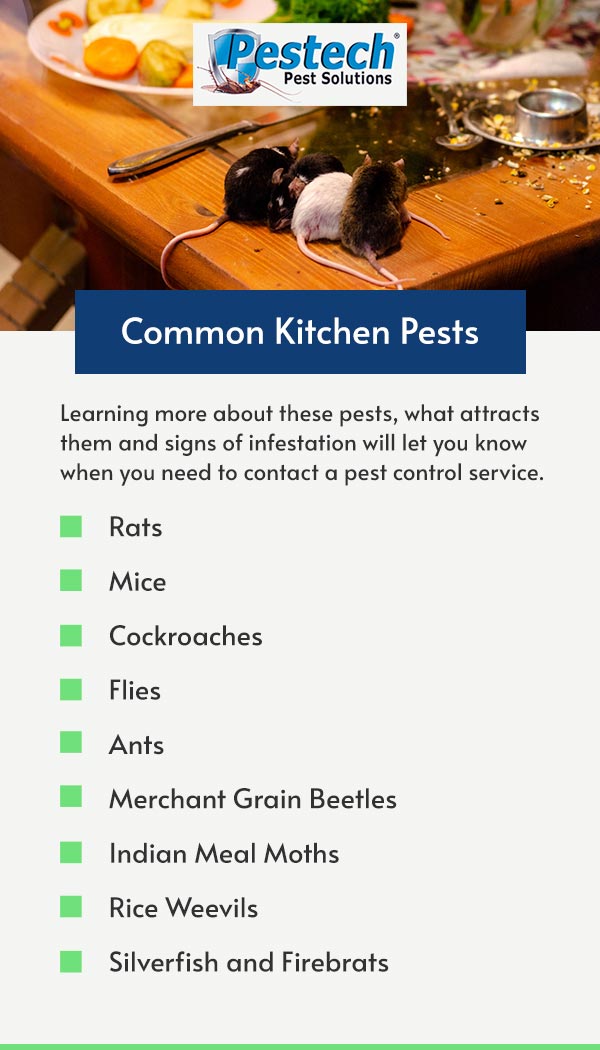
- Gaps can be tiny: Mice can squeeze through holes as small as a coin. Don’t ignore even small cracks.
Credit: pestech.com
Managing Moisture And Humidity
Many kitchen pests, especially cockroaches and silverfish, love moisture. Keeping your kitchen dry is a powerful way to deter them.
Steps To Reduce Moisture
- Fix leaks immediately: Even small drips under the sink or behind the fridge can attract pests.
- Use a dehumidifier if your kitchen is damp.
- Ventilate while cooking: Use the exhaust fan or open a window to let out steam.
- Wipe up spills quickly: Don’t let water pool on counters or floors.
- Hang wet towels to dry outside the kitchen.
Example: Humidity And Pest Risk
Research shows that kitchens with high humidity have a 30–40% higher risk of cockroach infestations. Keeping the air dry, especially in summer, is essential.
Organizing And Decluttering
A messy kitchen is a pest’s dream. Clutter gives insects and rodents places to hide and makes cleaning harder.
Tips For A Clutter-free Kitchen
- Minimize items on countertops: Store appliances and utensils you don’t use daily.
- Organize cabinets: Use baskets or dividers to keep items neat and easy to inspect.
- Avoid paper piles: Old newspapers and bags can harbor cockroaches.
- Store bags and boxes off the floor.
Why Decluttering Works
When your kitchen is tidy, you spot pest signs earlier—like droppings or chewed packaging. Clutter also blocks cleaning, letting crumbs and spills build up unnoticed.
Recognizing Early Signs Of Pests
Early detection can prevent a small problem from becoming a full-blown infestation. Learn what to look for.
Common Warning Signs
- Droppings: Small black pellets (cockroaches, mice) or sawdust-like material (pantry moths).
- Gnaw marks: On packaging, wires, or furniture—usually rodents.
- Unusual smells: A musty or oily odor can signal cockroaches.
- Dead insects: Finding dead bugs in cabinets or drawers means others are likely hiding.
- Shed skins or egg cases: Especially from cockroaches and pantry pests.
What To Do If You Spot Signs
- Don’t panic, but act fast.
- Clean the area, remove all food, and inspect nearby spots.
- Set traps or sticky boards to monitor pest activity.
- If you find evidence in multiple places, consider professional help.
Using Natural Deterrents
Not every pest problem needs harsh chemicals. Simple, natural repellents can keep many kitchen pests away.
Effective Natural Options
- Bay leaves: Place in pantry shelves to repel ants and moths.
- Cucumber slices: Deter ants from entry points.
- Vinegar spray: Cleans surfaces and deters ants. Mix equal parts vinegar and water.
- Diatomaceous earth: Sprinkle in cracks and behind appliances. It’s harmless to humans but deadly to insects.
Important Note
Natural deterrents work best when combined with good cleaning and sealing habits. They’re not a substitute for proper hygiene.
When To Call A Professional
Sometimes, prevention isn’t enough. If you spot a large number of pests, persistent droppings, or damage, professional help is needed.
Signs You Need Pest Control
- Pests keep returning despite your efforts
- You see pests during the day (often a sign of a big infestation)
- Structural damage (chewed wires, gnawed wood)
- Allergic reactions or asthma attacks (from cockroach droppings)
Choosing A Pest Control Service
Look for a company with:
- Good reviews and certifications
- Experience with kitchen and food-safe treatments
- Clear explanation of chemicals used and safety precautions
Don’t delay—an untreated infestation will only get worse and more expensive.
Preventing Seasonal Pest Surges
Some pests are worse in certain seasons. Here’s how to prepare:
- Spring and summer: Ants, flies, and cockroaches multiply quickly. Be extra careful with food storage and sealing gaps.
- Autumn and winter: Rodents seek warmth indoors. Check for new holes and add weatherstripping.
Seasonal Cleaning Checklist
- Deep clean behind appliances before winter
- Inspect and seal all exterior cracks in autumn
- Store all grains and nuts in airtight containers before summer
These simple changes at the right time of year can prevent the biggest pest problems.

Credit: www.peskypossum.com.au
Educating Family And Housemates
Prevention works best when everyone in the home follows the same habits.
How To Get Everyone Involved
- Explain why it matters: Share the health risks and costs of infestations.
- Assign tasks: Divide cleaning and waste duties.
- Set reminders: Use notes or apps for trash, cleaning, and checking food storage.
Non-obvious Insight
- Teach kids and guests: Even visitors can bring in food or leave crumbs. Make kitchen rules clear to everyone.
Tools And Products That Help
Some simple tools can make pest prevention much easier.
- Airtight containers for all pantry items
- Trash cans with pedal lids
- Silicone caulk and weatherstripping for sealing
- Sticky traps to monitor pest activity
- Moisture sensors under sinks to detect leaks early
Investing in these basics pays off in fewer pest problems.
Credit: gharpedia.com
Common Myths About Kitchen Pests
Many people believe myths that can make pest problems worse. Here are the facts:
- Myth: Clean kitchens never get pests
Even spotless kitchens can be invaded if there are gaps, leaks, or stored food.
- Myth: Pets keep pests away
Pet food often attracts pests unless cleaned up.
- Myth: Pesticides alone solve the problem
Without fixing the root causes, pests will return after spraying.
Understanding the truth helps you focus on real prevention, not just quick fixes.
Key Data And Statistics
- Cockroaches can survive up to a month without food but only a week without water.
- Mice can enter holes as small as 1/4 inch (about the size of a pencil).
- Ants are found in over 30% of all U.S. homes every year, according to the National Pest Management Association.
- 80% of infestations start with poor sanitation or waste management.
For more scientific details, visit the Centers for Disease Control and Prevention (CDC).
Frequently Asked Questions
What Is The Most Effective Way To Prevent Pests In The Kitchen?
The most effective way is a combination of daily cleaning, proper food storage, and sealing entry points. No single method works alone. Consistency is key—make pest prevention part of your routine.
Are Natural Deterrents Enough To Keep My Kitchen Pest-free?
Natural deterrents can help, but they are not enough by themselves. They work best when combined with good hygiene, food storage, and sealing gaps. Use them as a support, not your only defense.
How Often Should I Deep Clean My Kitchen To Prevent Pests?
Deep clean under and behind appliances, inside cabinets, and around plumbing every 2–3 months. Regular daily cleaning is still important, but deep cleaning targets hidden areas where pests live.
Can Pest Infestations Affect My Health?
Yes. Pests like cockroaches and rodents can spread bacteria, viruses, and allergens. They contaminate food and surfaces, increasing the risk of food poisoning and allergic reactions.
What Should I Do If I Find Signs Of Pests?
First, clean the area and remove all food. Use traps to monitor activity. Check for entry points and seal them. If the problem continues or is widespread, contact a professional pest control service.
A pest-free kitchen is possible with the right habits and preventive steps. Focus on daily cleaning, proper food storage, and sealing gaps. Stay alert for early signs, educate everyone in your home, and use simple tools to make prevention easy.
With these strategies, you’ll keep your kitchen safe, healthy, and inviting—no matter the season.