
Roughing in a shower drain is one of those jobs that sits at the heart of any bathroom remodel or new construction project. Get it right, and you’ll enjoy years of worry-free use. Get it wrong, and you could face leaks, odors, and expensive repairs.
For many homeowners and even some handymen, the process can seem intimidating, especially when dealing with the hidden world beneath the floor. But with the right guidance, you can approach this task with confidence. This guide will walk you through every step of roughing in a shower drain, from planning and measuring to assembly and testing.
Along the way, you’ll learn practical tips, avoid common mistakes, and gain the insights that experienced plumbers use to make their installations trouble-free.
Understanding The Basics: What Does “rough In” Mean?
The term rough in refers to the process of installing plumbing pipes and fittings before the final fixtures—like the shower pan or tiles—are put in place. In the context of a shower, this means laying out the drain line, positioning the trap, connecting to the main waste line, and making sure everything is in the right place and at the correct height. This stage is critical because it determines whether your shower will drain properly and remain leak-free.
Unlike the final plumbing work, roughing in is usually hidden under floors or behind walls. That’s why accuracy and planning matter so much. Any mistake at this stage can be difficult and costly to fix later.
Tools And Materials You’ll Need
Before you start, gather all the necessary tools and materials. Having everything ready will make the process smoother and help avoid delays.
Essential tools:
- Tape measure
- Level (preferably a torpedo or small spirit level)
- Marker or pencil
- Pipe cutter or hacksaw (appropriate for your pipe type)
- Adjustable wrench
- Pipe wrench (for metal pipes)
- Channel-lock pliers
- Screwdriver set
- Drill and hole saw
- Shop vacuum (for cleanup)
Materials:
- Shower drain assembly (with gasket and strainer)
- P-trap (sized for your pipe)
- PVC, ABS, or cast iron pipes (usually 2-inch for showers)
- Pipe fittings (elbows, couplings, etc.)
- PVC or ABS primer and cement (for plastic pipes)
- Pipe supports or hangers
- Pipe insulation (optional, for noise reduction)
- Teflon tape (for threaded joints)
- Protective gloves and safety glasses
Tip: Double-check your pipe size. While most modern showers use 2-inch drains, some older homes may have 1.5-inch lines. Upgrading to 2-inch is often worth the effort for better drainage.
Planning Your Shower Drain Layout
Proper planning is the foundation for a successful rough-in. It’s not just about connecting pipes; you need to consider the position, height, slope, and connection points for everything involved.
Determining Drain Location
The shower drain location is usually dictated by the shower base or pan you plan to install. Most pre-formed pans have a drain opening in the center or slightly offset. For custom tile showers, you have more flexibility, but central placement is common for even drainage.
Steps:
- Mark the centerline of your shower stall on the subfloor.
- Measure and mark the exact spot where the drain will sit. Double-check with your shower base or plans.
- If replacing an old shower, note the existing drain location. Moving the drain may require more work, including cutting joists or rerouting pipes.
Considering Slope And Venting
A critical factor is the drain slope. Building codes generally require a minimum slope of 1/4 inch per foot for horizontal drain runs. This ensures water flows smoothly and helps prevent clogs.
Venting is another key part. Every drain must be vented to allow air into the system and avoid siphoning water from the trap. The vent connection should be as close as possible to the trap, usually within 5 feet for a 2-inch pipe.
Checking Local Codes
Building codes vary by location. For most homes in the US, the International Plumbing Code (IPC) or Uniform Plumbing Code (UPC) applies. Always check your local codes before starting, especially for:
- Minimum pipe sizes
- Trap requirements
- Maximum distance from vent
- Approved materials
If you’re unsure, your local building department can provide guidance. This helps you avoid costly code violations.
Removing Old Fixtures And Preparing The Work Area
If you’re remodeling, you’ll need to remove the old shower base, drain, and any subflooring in the work area. This can get messy, so take your time and protect surrounding surfaces.
Step-by-step:
- Turn off water supply to the bathroom.
- Remove the shower base or pan. If it’s tiled, break up the tiles and mortar with a hammer and chisel.
- Take out any old drain hardware and cut out the old P-trap if necessary.
- Inspect the subfloor for rot or damage. Replace or reinforce as needed.
- Clean the area thoroughly to remove debris, nails, or screws.
Pro tip: Many beginners overlook the condition of the subfloor. Even small amounts of rot can lead to future leaks. Always start with a solid, level surface.
Cutting The Drain Hole And Assessing Joists
With the work area clear, you’ll need to cut a hole for the new drain. The size depends on your drain fitting, but most require a 4-inch hole for a 2-inch pipe and fittings.
Steps:
- Mark the drain center on the subfloor.
- Use a drill and hole saw to cut a clean hole.
- Check the joist layout underneath. The drain and trap must fit between or through the joists.
- Avoid cutting through joists unless absolutely necessary. If you must, consult a structural engineer or use approved methods for reinforcing.
Common mistake: Cutting too much from a joist can weaken the floor structure. Always plan your pipe route to minimize joist notching or drilling.
Dry Fitting The Shower Drain And P-trap
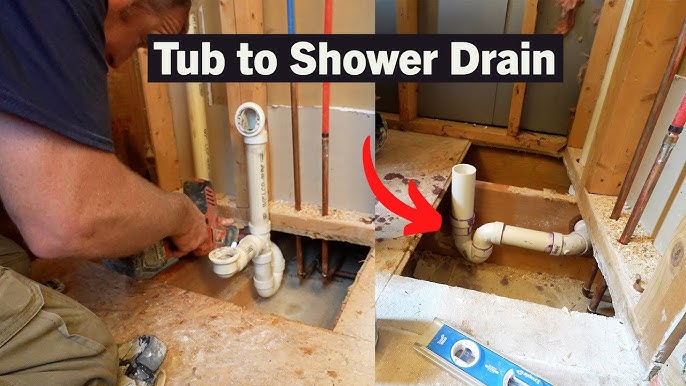
Before you glue or tighten anything, dry fit all pipes and fittings. This means assembling everything without glue to check alignment and measurements.
Sequence:
- Insert the shower drain fitting into the hole.
- Attach the P-trap directly below the drain opening.
- Connect the trap to the waste line, adding any elbows or couplings needed.
- Ensure the trap arm slopes correctly (1/4 inch per foot minimum).
- Check the height of the drain collar relative to the finished floor. Adjust as needed.
Tip: The P-trap should sit directly below the drain, not off to the side. Misalignment can cause slow drainage or leaks.
Connecting To The Main Waste Line
Once you’re satisfied with the dry fit, it’s time to connect your shower drain to the home’s main waste line. This step often requires working in a crawlspace or basement.
Key considerations:
- Use sweep elbows, not sharp 90-degree bends, to maintain good flow.
- Secure all pipes with hangers or supports to prevent movement.
- If tapping into a horizontal main line, use a wye fitting, never a T, for proper drainage.
Example: If your main waste line runs parallel to your shower wall, you’ll likely need a short horizontal run from the trap, then a wye fitting to connect.
Pro tip: Many DIYers forget to check for adequate pipe slope on long runs. Use a level to double-check as you install.
Installing The Shower Drain Assembly
With your pipes and trap in place, the next step is to install the actual shower drain assembly. This is the part that will connect to the shower base or tile floor.
General steps:
- Clean all pipe ends and fittings with primer (for PVC/ABS).
- Apply pipe cement and quickly assemble the connections, holding them for 30 seconds to set.
- Insert the drain body through the shower base or tile, then tighten the locking nut from below.
- Fit the rubber gasket to create a watertight seal.
- Install the strainer or grate on top.
Specifics may vary depending on the drain style:
- For pre-formed pans, the drain often screws in from above.
- For tile showers, a clamping ring or flange is used to secure the waterproof membrane.
Non-obvious insight: Many leaks happen due to over-tightening the drain nut or misaligning the gasket. Tighten firmly but do not use excessive force.

Credit: www.lowes.com
Waterproofing And Membrane Installation
If you’re installing a tiled shower, waterproofing is critical. This is usually done with a membrane (like a PVC or CPE liner) that sits under the tile and directs water into the drain.
Steps:
- Lay the membrane over the sloped mortar bed, bringing it up the walls several inches.
- Cut an X at the drain opening and fold the membrane into the drain flange.
- Secure the membrane with the clamping ring, ensuring it is evenly compressed.
- Test for leaks by blocking the drain and filling the pan with water (a “flood test”).
Tip: Never skip the flood test. Fixing leaks after tiling is much harder than at this stage.
Venting The Shower Drain
Every shower drain must be properly vented to allow air into the system. Without proper venting, you may hear gurgling, experience slow drainage, or even smell sewer gases.
How to vent:
- The vent should connect to the trap arm within 5 feet of the trap for a 2-inch pipe.
- The vent can rise vertically, then connect to the home’s vent stack.
- In some remodels, you may use an air admittance valve (AAV), but check your local code first.
Common mistake: Failing to vent the drain correctly is a top reason for failed inspections and drainage issues.
Credit: www.youtube.com
Testing The Rough-in For Leaks
Before closing up the floor or walls, always test your rough-in for leaks.
How to test:
- Plug the shower drain with a test plug or inflatable bladder.
- Fill the drain and trap with water using a bucket or hose.
- Inspect all joints for drips or moisture.
- Check under the floor for any signs of leaks.
- If possible, fill the shower pan with water and leave it overnight to check for slow leaks.
Pro tip: Even if everything looks dry, run your hand along joints to feel for hidden moisture.
Adjusting Drain Height For The Final Floor
One detail that beginners often overlook is adjusting the drain height for the finished floor surface. The top of the drain should be flush with the shower base or tile, not below or above it.
To adjust:
- Many modern drains have adjustable collars or threads.
- For tile showers, set the drain height to match the thickness of the tile plus thinset.
- For pre-formed bases, follow the manufacturer’s instructions.
Non-obvious insight: If you set the drain too low, water may pool around the grate. Too high, and you’ll have a trip hazard or poor sealing.
Dealing With Unusual Situations
Every home is different, and sometimes you’ll face unique challenges:
Working With Slab Foundations
In homes with concrete slabs, you may need to break up concrete to move or install a new drain. This is labor-intensive and may require renting a rotary hammer or jackhammer.
Steps:
- Mark the drain location.
- Break out the concrete in a neat square or rectangle.
- Excavate enough soil to lay the new pipes and trap.
- After installation, backfill with gravel, then pour new concrete.
Tip: Always support pipes on firm soil and compact before patching concrete.
Retrofitting In Tight Spaces
Small bathrooms can make roughing in a drain tricky. You may need to use offset fittings or flexible couplings to work around obstacles.
Advice: Don’t force pipes into place. Use the right fittings for a stress-free installation.
Upgrading Pipe Sizes
If your home has old 1.5-inch drain lines, consider upgrading to 2-inch. This improves drainage and is often required by code for new showers.
How to upgrade:
- Cut out the old pipes back to a larger main or stack.
- Use transition couplings to join different pipe sizes.
Common Mistakes To Avoid
Even experienced DIYers and contractors can make errors. Here are some of the top mistakes to watch out for:
- Not checking the slope: Insufficient slope causes standing water and slow drains.
- Improper venting: Leads to gurgling, odors, and code violations.
- Forgetting the flood test: Missing leaks before tiling can ruin your project.
- Not dry-fitting first: Assembling pipes without checking fit often results in misalignment.
- Cutting too much from joists: Weakens the floor structure and may require costly repairs.
- Overtightening drain nuts: Can deform gaskets and cause leaks.
- Wrong pipe size: Using 1.5-inch instead of 2-inch reduces drainage speed.
- Setting drain at wrong height: Can create sealing problems or trip hazards.
- Skipping permits or inspections: Can lead to failed inspections and extra costs.
- Mixing different pipe materials improperly: Always use approved transition fittings.
Comparison Of Drain Materials
Choosing the right pipe and drain material affects durability and ease of installation. Here’s a quick comparison:
| Material | Common Use | Durability | Ease of Installation | Cost |
|---|---|---|---|---|
| PVC | Most new homes | High | Easy | Low |
| ABS | Some regions, remodels | High | Easy | Low |
| Cast Iron | Older homes, high-rises | Very High | Difficult | High |
| Copper | Rare for drains | High | Medium | Very High |
Insight: For most DIYers, PVC offers the best balance of cost, durability, and ease.
Timeline For Roughing In A Shower Drain
Planning your time helps the project go smoothly. Here’s a typical timeline:
| Stage | Approximate Time | Notes |
|---|---|---|
| Planning & Measuring | 1-2 hours | Includes checking codes |
| Demo & Prep | 2-4 hours | Varies with old construction |
| Cutting & Dry Fitting | 1-2 hours | Double check all measurements |
| Final Assembly | 1-2 hours | Work quickly with pipe cement |
| Leak Testing | 1 hour | Do not rush this step |
| Inspection (if required) | Varies | Schedule with local authority |

Credit: www.reddit.com
Cost Considerations
The cost to rough in a shower drain depends on materials, labor, and whether you hire a professional.
- DIY cost: $60–$200 for materials (drain kit, pipes, fittings, cement)
- Professional labor: $300–$800 (may be more for complex jobs or slab work)
- Permit and inspection: $50–$150 (varies by location)
Tip: Doing it yourself can save money, but don’t skip permits or inspections for code compliance.
When To Call A Professional
While many handy homeowners can rough in a shower drain, certain situations call for a pro:
- Working with concrete slabs
- Modifying structural joists
- Complex venting or rerouting
- Historic homes or unusual layouts
- If you’re unsure about local code
Hiring a licensed plumber ensures your job is safe, code-compliant, and ready for inspection.
Essential Safety Tips
Don’t overlook safety during your project. Here are a few must-follow rules:
- Always wear gloves and eye protection when cutting pipes or handling cement.
- Make sure the work area is dry to avoid slips.
- Use a shop vacuum to keep debris clear.
- Ventilate the room if using solvent cements, as fumes can be hazardous.
- Never work alone when using power tools or breaking concrete.
Final Inspection And Closing Up
After your rough-in passes inspection and all leaks are fixed, you can move on to closing up the floor and walls. Replace subflooring, install your shower base or pan, and finish with tile or wall panels.
Tip: Keep photos of your rough-in for future reference or for the next homeowner.
Frequently Asked Questions
How Far Should The P-trap Be From The Shower Drain?
The P-trap should be directly under the shower drain, with as little horizontal run as possible. The maximum allowed distance is usually 24 inches, but closer is always better for smooth drainage.
Can I Use A 1.5-inch Pipe For My Shower Drain?
Most building codes require a 2-inch pipe for new shower installations. While older homes might have 1.5-inch pipes, upgrading to 2-inch is recommended for better drainage and code compliance.
Do I Need To Vent The Shower Drain Separately?
Yes, every shower drain needs a vent connection. This can be a dedicated vent or a shared one with nearby fixtures, as long as it meets local code and is within the allowed distance from the trap.
How Do I Test The Shower Drain For Leaks Before Finishing The Floor?
Plug the shower drain with a test plug or inflatable device, then fill the drain and trap with water. Check all joints and connections for leaks before proceeding with flooring or tiles.
What Is The Best Material For A Shower Drain Pipe?
PVC is the most common and easiest to use for DIY installations. It’s durable, affordable, and widely accepted by code. Cast iron is very durable but harder to work with and usually used in commercial or multi-story buildings. For more details, the Family Handyman website offers a comprehensive breakdown.
A well-roughed-in shower drain is the backbone of a leak-free, comfortable bathroom. With careful planning, the right materials, and attention to detail, you can achieve professional-quality results—even as a DIYer. Always check your local codes, don’t skip testing, and when in doubt, consult a pro.
Your future self—and your bathroom—will thank you.