
Sharpening a stainless steel knife might seem simple, but it is an art and science many people misunderstand. If you have ever tried cutting a ripe tomato with a dull knife, you know how frustrating it can be. A sharp knife is not only easier to use, but it’s also safer.
People often think stainless steel knives are harder to sharpen than other types, but with the right methods, anyone can master this skill. This guide will walk you through everything you need to know to sharpen a stainless steel knife, from basics and tools to advanced tips and common mistakes.
Whether you’re a beginner or want to refine your technique, you’ll find practical steps and insider advice to help your knives stay razor-sharp for years.
Why Knife Sharpness Matters
A knife’s sharpness is not just about cutting food cleanly. It also affects your safety, cooking quality, and how much you enjoy working in the kitchen. Dull knives require more force, increasing the risk of slipping and cutting yourself. In fact, studies show that kitchen accidents caused by dull knives are more common than those caused by sharp ones. With a well-sharpened knife, you get:
- Cleaner cuts for better food presentation
- Less bruising of delicate ingredients like herbs
- Easier slicing, which reduces fatigue during long prep work
- Increased safety, since you have more control
If you’ve noticed your knife crushing food instead of slicing, it’s time to sharpen.
Understanding Stainless Steel Knives
Before sharpening, it’s important to know what makes stainless steel knives unique. Stainless steel is a mix of iron, carbon, and at least 10.5% chromium. The chromium makes the steel resistant to rust and staining, which is why these knives are popular in kitchens worldwide.
However, stainless steel is usually harder than regular carbon steel. This means it can stay sharp longer, but it can also be more challenging to sharpen because the steel resists abrasion. Some stainless steel knives use special alloys that are even harder, such as VG-10, AUS-8, or Sandvik 14C28N. Knowing your knife’s steel type can help you choose the right sharpening method.

Credit: global.ichimonji.co.jp
How To Tell If Your Knife Needs Sharpening
Many people wait too long to sharpen their knives. Here are a few simple tests to see if your stainless steel knife needs attention:
- Paper Test: Hold a sheet of printer paper by one edge. Try slicing down through it with your knife. A sharp knife will cut cleanly; a dull one will tear or catch.
- Tomato Test: Try slicing a tomato. If the knife slides off or squashes the skin, it’s time to sharpen.
- Visual Inspection: Look at the edge under a bright light. If you see shiny spots or flat areas, these are dull zones.
- Fingernail Test: Gently rest the blade on your thumbnail at a 15-20 degree angle. If it slides off, it’s dull. If it ‘bites’ or stays in place, it’s sharp.
If your knife fails any of these tests, don’t wait—sharpen it before your next meal.
Essential Tools For Sharpening Stainless Steel Knives
Choosing the right tool is critical. Not all sharpeners are suitable for stainless steel, especially harder varieties. Here are the most common tools, with their pros and cons:
Whetstones (sharpening Stones)
Whetstones are the traditional and most versatile sharpening tool. They come in different grits, from coarse (200-400) for repairing chips, to fine (1000-8000) for polishing.
- Pros: Precise control, works with all knife types, excellent results
- Cons: Takes practice, more time-consuming
Manual Pull-through Sharpeners
These tools have pre-set angles and abrasive wheels.
- Pros: Easy to use, fast, affordable
- Cons: Removes more metal, less precise, may not fit all blade shapes
Electric Sharpeners
Electric sharpeners use motorized abrasive wheels.
- Pros: Fast, consistent angle, minimal effort
- Cons: Expensive, can wear out knives if used too often
Honing Rods (sharpening Steels)
A honing rod does not actually sharpen but realigns the edge.
- Pros: Maintains sharpness between sharpenings, quick
- Cons: Cannot fix a dull or chipped edge
Professional Sharpening Systems
Systems like the Edge Pro or Lansky have guided stones for perfect angles.
- Pros: Precise, suitable for hard stainless steels, repeatable results
- Cons: Expensive, setup time
Below is a quick comparison of the main tools:
| Tool | Best For | Skill Level | Price Range | Edge Quality |
|---|---|---|---|---|
| Whetstone | All knives, fine edges | Intermediate/Expert | $15-$100 | Excellent |
| Manual Sharpener | Quick touch-ups | Beginner | $10-$30 | Good |
| Electric Sharpener | Frequent use | Beginner/Intermediate | $40-$150 | Good |
| Honing Rod | Edge maintenance | All levels | $10-$50 | Fair (maintenance) |
| Sharpening System | High-end knives | Intermediate/Expert | $50-$200 | Excellent |
Step-by-step Guide: Sharpening A Stainless Steel Knife With A Whetstone
Using a whetstone is the gold standard for sharpening stainless steel knives. Here’s how to do it right.
1. Gather Your Materials
You will need:
- A whetstone (1000/6000 grit recommended for most kitchen knives)
- A stone holder or damp towel (to keep the stone steady)
- A bowl of water (for soaking and rinsing the stone)
- A towel for drying
2. Soak The Whetstone
Most whetstones need to be soaked in water for 10-15 minutes. This helps slurry (the sharpening paste) form on the surface, which is key to effective sharpening. If your stone is “splash and go,” just wet the surface.
3. Set The Sharpening Angle
Most kitchen knives use a 15-20 degree angle. Hold the knife so the blade is raised off the stone at this angle. A matchbook under the spine can help you visualize this.
4. Start With The Coarse Side
Place the stone coarse side up. Holding the knife firmly, draw the blade across the stone from heel to tip, maintaining the same angle. Use gentle, even pressure. Repeat this movement 10-15 times per side, or until you feel a burr (a tiny wire edge) on the opposite side.
5. Switch To The Fine Side
Flip the stone. Repeat the same process on the fine side to polish the edge and remove the burr. Use lighter pressure and more strokes (15-20 per side).
6. Test The Edge
Use the paper test or tomato test to check sharpness. If not sharp enough, repeat the fine side.
7. Clean And Dry
Rinse the knife and stone. Dry the knife completely to prevent any water spots or rust.
8. Optional: Strop The Edge
For an extra-sharp finish, use a leather strop loaded with polishing compound. Run the knife edge backward along the strop a few times.
Using A Manual Or Electric Sharpener
If you want a faster method, manual and electric sharpeners are good options, especially for beginners. Here’s how to use them safely and effectively.
Manual Pull-through Sharpeners
- Place the sharpener on a stable surface.
- Insert the blade into the slot, heel first.
- Pull the knife through at a steady speed, applying gentle pressure.
- Repeat 3-6 times, then check sharpness.
- Clean the blade to remove any metal filings.
Electric Sharpeners
- Turn on the sharpener and select the right slot (coarse or fine).
- Insert the knife, then slowly draw it through the slot, following the machine’s instructions.
- Alternate sides if your sharpener has multiple stages.
- Clean the blade carefully.
Pro Tip: Don’t over-sharpen. Too many passes can wear down your knife quickly.
Honing: Keeping Your Knife Sharp Between Sharpenings
Sharpening removes metal to create a new edge. Honing, on the other hand, realigns the edge without removing much material. Use a ceramic or steel honing rod every few uses to keep your knife performing well.
How To Hone A Stainless Steel Knife
- Hold the rod vertically with the tip on a towel.
- Hold the knife at a 15-20 degree angle to the rod.
- Draw the blade from heel to tip, alternating sides, about 6-8 times per side.
- Wipe the blade clean.
Honing only takes a minute and greatly extends the time between sharpenings.
Advanced Techniques: Sharpening Hard Stainless Steels
Some stainless steels, especially in high-end Japanese knives, are very hard (60+ HRC). They need more attention and sometimes special tools.
Diamond Stones
Diamond stones are harder than any steel and cut quickly, making them ideal for premium stainless blades. However, they can remove metal quickly, so use a light touch.
Guided Sharpening Systems
These systems keep your angle perfect, which is especially important for hard steels. They use clamps and multiple stones to ensure consistency.
Polishing And Stropping
Hard stainless steel can be polished to a mirror finish using extra-fine stones (8000 grit or higher) and leather strops. This results in a scary-sharp edge.
| Sharpening Method | Best For | Edge Retention | Skill Required |
|---|---|---|---|
| Whetstone (1000/6000 grit) | Standard kitchen knives | Very Good | Moderate |
| Diamond Stone | Hard stainless (VG-10, S30V) | Excellent | Moderate-High |
| Electric Sharpener | Home cooks, quick maintenance | Good | Low |
| Sharpening System | Knife collectors, enthusiasts | Excellent | High |
Common Mistakes When Sharpening Stainless Steel Knives
Even experienced cooks make errors that can damage their knives or reduce sharpness. Here are some mistakes to avoid:
- Wrong angle: Using too steep or too shallow an angle can make the edge weak or ineffective.
- Too much pressure: Pressing hard can cause uneven edges or scratches.
- Inconsistent strokes: Changing the angle or pressure mid-stroke results in a wavy edge.
- Skipping grits: Not starting with a coarse grit for dull knives wastes time and effort.
- Neglecting to clean: Metal filings or stone particles left on the knife can cause rust or contamination.
- Over-sharpening: Removing too much metal shortens your knife’s life.
- Not honing: Skipping regular honing means the edge dulls faster.
How Often Should You Sharpen Your Knife?
The answer depends on how often you use the knife and what you cut. As a general rule:
- Home cook (daily use): Sharpen every 2-3 months, hone weekly.
- Professional chef: Sharpen every 2-4 weeks, hone daily.
- Occasional use: Sharpen every 6 months, hone before each use.
If you notice your knife is struggling, don’t wait for a set time—sharpen as needed.
Care And Maintenance After Sharpening
A sharp knife also needs proper care to stay sharp:
- Hand wash and dry immediately after use. Dishwashers can dull the edge.
- Store properly: Use a knife block, magnetic strip, or blade guard. Tossing knives in a drawer dulls them fast.
- Avoid hard surfaces: Don’t cut on glass, stone, or metal. Use wood or plastic cutting boards.
- Don’t pry or twist: Knives are for cutting, not for opening cans or prying things apart.
- Check the edge regularly: Quick tests help you catch dullness early.
Choosing The Right Whetstone Grits
Selecting the right grit makes sharpening more effective. Here’s a simple breakdown:
- Coarse (200-400 grit): For repairing chips or reshaping very dull knives.
- Medium (800-1000 grit): For regular sharpening.
- Fine (3000-8000 grit): For polishing and refining the edge.
| Grit Size | Use Case | Result |
|---|---|---|
| 200-400 | Edge repair | Removes chips, resets bevel |
| 800-1000 | Sharpening dull knives | Restores sharpness |
| 3000-8000 | Finishing/polishing | Razor-sharp, smooth edge |
Insider tip: Most home cooks only need a 1000/6000 combo stone. Coarse stones are for damaged knives, while superfine stones are for perfectionists.

Credit: knifewear.com
Non-obvious Insights For Beginners
1. Stainless Steel “feels” Different
When sharpening, you’ll notice stainless steel glides more smoothly on the stone compared to carbon steel. Don’t mistake this for a lack of progress. Check the burr—once you feel it, you’re ready to switch sides.
2. Water Is Your Friend
Many people underuse water on their whetstone. Keeping the stone wet reduces friction, carries away metal filings, and helps you achieve a cleaner edge. If the stone feels dry or begins to clog, add more water.
3. Avoid Oil With Most Stainless Knives
Unlike some carbon steels, stainless steel does not need oil during sharpening. In fact, oil can clog many modern stones and reduce their effectiveness. Stick with water unless your stone specifically says “oil stone. ”
4. Sharpening Angle Guides Help
If you’re new, consider using an angle guide. This little plastic or metal piece clips onto your knife and helps keep a consistent angle until you develop muscle memory.
5. Some Knives Need Special Care
High-end Japanese stainless knives (like Shun or Global) often have thinner edges and harder steel. Never use a pull-through sharpener on these—they can chip. Stick with whetstones or guided systems.
When To Seek Professional Help
Even the best home sharpening cannot fix everything. If your knife has:
- Large chips or broken tips
- Serious bends
- Expensive or rare steel
…it’s wise to visit a professional sharpener. They use specialized machines and have the skill to restore damaged knives without making things worse.
Sharpening Serrated Stainless Steel Knives
Serrated knives (like bread knives) need different care. Do not use a flat whetstone or pull-through sharpener. Instead:
- Use a ceramic sharpening rod that fits into the serrations.
- Work each groove individually, following the original angle.
- Hone gently; don’t over-sharpen.
- For best results, let a pro handle expensive serrated knives.
Safety Tips During Sharpening
- Always sharpen away from your body.
- Use a non-slip base for your stone or sharpener.
- Wipe blades clean before testing sharpness.
- Never rush. Most injuries happen when people hurry.
Troubleshooting: Why Your Knife Isn’t Getting Sharp
If your knife still won’t slice well after sharpening, check these points:
- Wrong angle: Too steep or shallow.
- Not enough strokes: Hard stainless needs more passes.
- Stone is clogged: Clean and soak your stone.
- Burr not fully removed: Repeat fine side or strop more.
- Cheap knife steel: Some very cheap knives cannot hold a sharp edge, no matter what you do.
Recommended Resources
For visual learners, YouTube has excellent sharpening tutorials. Trusted sources like America’s Test Kitchen and Serious Eats offer step-by-step videos. For deeper reading, see guides at Chef Knives To Go.
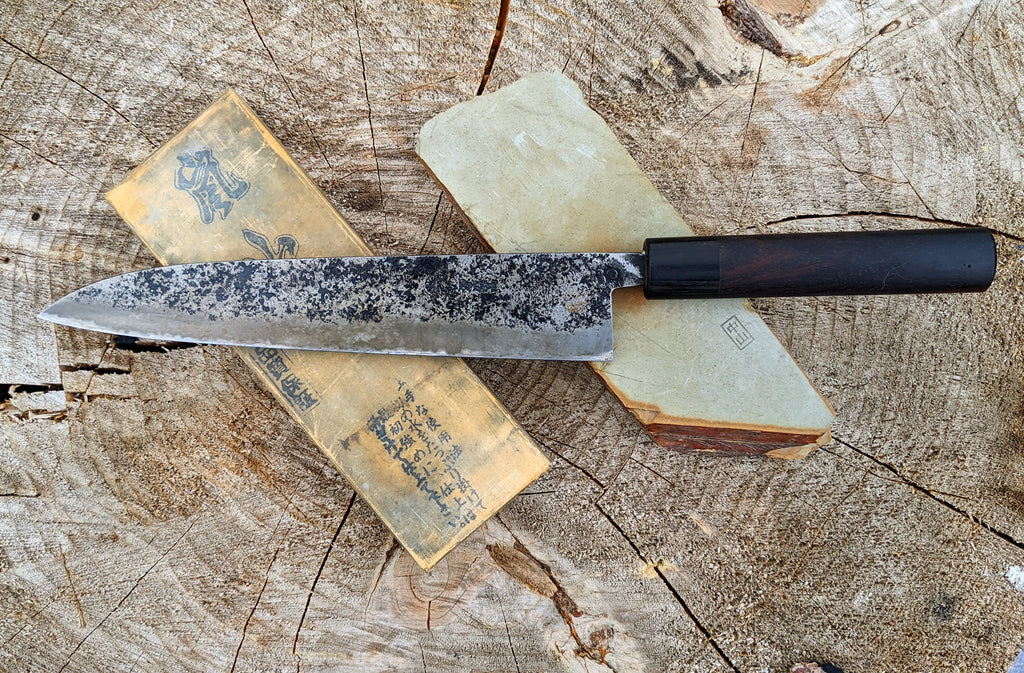
Credit: knifewear.com
Frequently Asked Questions
How Do I Know What Angle To Sharpen My Stainless Steel Knife?
Most kitchen knives use a 15-20 degree angle. Japanese knives are closer to 15°, while Western knives (like German brands) are around 20°. If unsure, start with 17-18°—this works for most stainless steel blades.
Can I Use Oil Instead Of Water On My Whetstone?
Only use oil if your stone is labeled as an oil stone. Most modern whetstones are designed for water, especially when sharpening stainless steel. Oil can clog the stone and make sharpening less effective.
How Often Should I Sharpen Versus Hone My Knife?
Hone your knife every few uses to keep the edge aligned. Sharpen with a stone or sharpener every 2-3 months for home cooks, or sooner if you notice dullness.
Is It Safe To Use An Electric Sharpener On All Stainless Steel Knives?
Electric sharpeners are safe for most Western-style stainless steel knives. Avoid them for very thin or hard Japanese knives, as the aggressive wheels can chip or damage the edge.
What Should I Do If My Knife Gets A Chip Or Nick?
Small chips can be fixed with a coarse whetstone (200-400 grit). For large chips or broken tips, it’s best to let a professional handle the repair to avoid making the damage worse.
Keeping your stainless steel knives sharp is a skill that pays off every day in the kitchen. By understanding your tools, choosing the right techniques, and caring for your blades, you can enjoy safe, smooth slicing for years. Whether you choose a whetstone, pull-through sharpener, or professional service, regular maintenance makes cooking easier and more enjoyable.
With patience and practice, anyone can master the art of sharpening stainless steel knives.