
Slow cooking is a method loved for its ability to create tender, flavorful dishes with minimal effort. Many people use a slow cooker, but what if you don’t have one? The good news is, you don’t need a dedicated appliance to enjoy the benefits of slow cooking.
With the right approach and common kitchen tools, you can achieve similar results using your oven, stovetop, or even a rice cooker. This article will guide you, step by step, on how to slow cook without a slow cooker, explain what really matters for success, and share practical tips that most beginners overlook.
Understanding Slow Cooking
Before you start, it’s important to know what slow cooking actually means. Slow cooking is about gently cooking food at low temperatures over a long period. This method breaks down tough meat fibers, brings out deep flavors, and makes vegetables soft and tasty. The process usually takes several hours—often between 4 to 12 hours—depending on the recipe and equipment.
Slow cooking is not just about time; it’s about temperature control. Most slow cookers cook food at around 170°F (77°C) on low and 200°F (93°C) on high. If you mimic these temperatures with your oven or stovetop, you can get almost the same results.
Why Slow Cook Without A Slow Cooker?
You might wonder why someone would want to slow cook without a slow cooker. Here are a few common reasons:
- Space limitations: Not everyone has room for another kitchen appliance.
- Budget: Slow cookers are not expensive, but you might not want to buy one for occasional use.
- Flexibility: Some recipes need browning or searing, which most slow cookers can’t do well.
- Preference: Some people simply enjoy using their oven or stovetop for more control.
Whatever your reason, learning how to slow cook without a slow cooker gives you more options in the kitchen.
:max_bytes(150000):strip_icc()/9207299-9504da02f49e470397233879869ff55b.jpg)
Credit: www.allrecipes.com
Essential Tools For Slow Cooking Without A Slow Cooker
You don’t need fancy equipment, but certain tools can make the process easier and better. Here’s what you need:
- Heavy-bottomed pot or Dutch oven: Cast iron or enameled Dutch ovens are best because they retain and distribute heat evenly.
- Oven-safe dish with a tight lid: A casserole dish with a good-fitting lid works well for oven slow cooking.
- Large saucepan or stockpot: For stovetop recipes, a pot that doesn’t scorch food is important.
- Aluminum foil: If your pot or dish doesn’t have a lid, tightly layered foil can trap moisture.
- Thermometer: An oven thermometer helps check that your oven is at the right temperature.
- Rice cooker or multi-cooker: Some rice cookers have “keep warm” settings that work for slow cooking.
- Baking sheet: For dishes that might bubble over, placing a baking sheet underneath helps keep your oven clean.
Many home cooks already have most of these items, making slow cooking accessible to almost everyone.
Methods To Slow Cook Without A Slow Cooker
There are three main ways to slow cook without a slow cooker: the oven, stovetop, and rice cooker method. Each has its own strengths and works best for different recipes.
Oven Slow Cooking
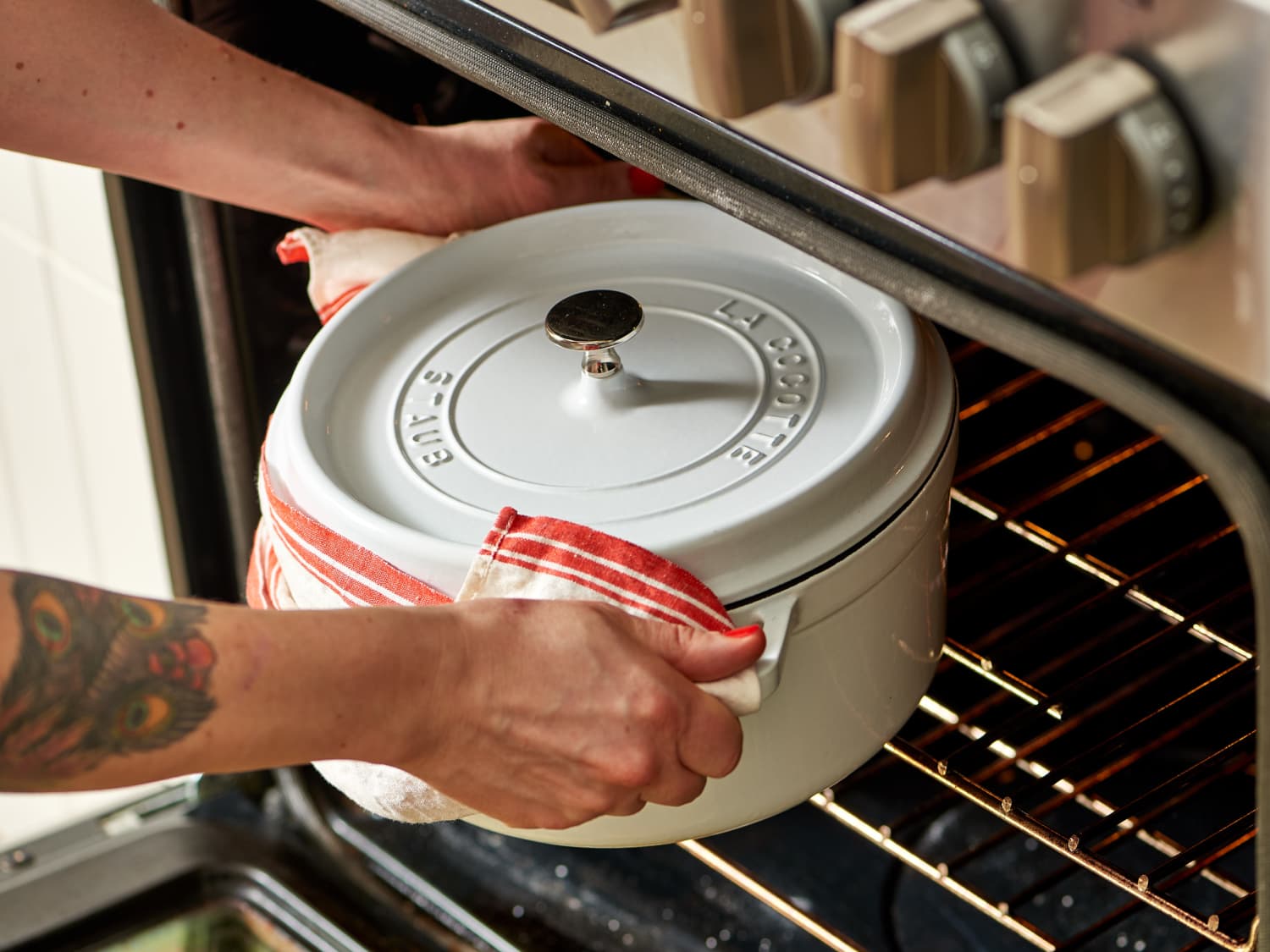
The oven is the most reliable substitute for a slow cooker. It provides steady heat and works for large quantities.
How To Do It
- Preheat your oven: Set your oven to a low temperature, usually between 200°F (93°C) and 275°F (135°C). For most slow cooker recipes, 225°F (107°C) is a sweet spot.
- Prepare your ingredients: Brown meat and sauté vegetables if the recipe calls for it. Layer ingredients in your Dutch oven or casserole dish.
- Add enough liquid: Slow cooking requires moisture. Add broth, water, wine, or sauce so ingredients are at least halfway submerged.
- Cover tightly: Use a fitted lid or foil to keep moisture in.
- Cook for the needed time: Most recipes take 4-8 hours in the oven. Check after 4 hours for tenderness and liquid levels.
- Let it rest: When done, let the dish sit for a few minutes before serving.
Example
A classic beef stew cooks perfectly in the oven. After searing the beef and sautéing onions and carrots, add potatoes, broth, and seasonings. Cover and cook at 225°F for 6 hours. The result is tender beef and flavorful vegetables.
Non-obvious Insight
Ovens can have “hot spots. ” Rotate your pot halfway through cooking for even results. Also, oven temperatures are sometimes inaccurate; use a thermometer to verify.
Stovetop Slow Cooking
The stovetop is great for soups, stews, and braised dishes. It gives you more control but requires a bit more attention.
How To Do It
- Use a heavy-bottomed pot: Thin pots cause burning. A Dutch oven or thick pot is best.
- Layer your ingredients: As with oven cooking, brown meat and add liquids.
- Set to low heat: Bring to a gentle simmer, then reduce to the lowest setting. You want small bubbles, not a boil.
- Stir occasionally: This prevents sticking and helps even cooking.
- Cover partially: Keep the lid slightly ajar so some steam escapes, but moisture stays.
- Check every hour: Monitor liquid levels and add more if needed.
Example
A chicken cacciatore can be made by browning chicken, adding tomatoes, peppers, and herbs, then simmering on low for 3-4 hours.
Non-obvious Insight
Some stovetops have very hot “low” settings. Try using a heat diffuser—a metal plate that sits between the burner and pot—to lower the temperature further.
Rice Cooker Or Multi-cooker Method
Not all rice cookers are good for slow cooking, but some have “keep warm” or “slow cook” settings.
How To Do It
- Check your rice cooker’s manual: Some can only run for an hour at a time; others can go for many hours.
- Layer ingredients and liquid: Just like other methods, add enough moisture.
- Use the lowest setting: “Keep warm” is usually best if “slow cook” is too hot.
- Stir and check every hour: These appliances can cook unevenly.
Example
Pulled pork can be made by placing pork shoulder, barbecue sauce, and onions in the rice cooker. Cook for 6-8 hours, turning occasionally.
Non-obvious Insight
Rice cookers may switch from “cook” to “warm” if too much liquid evaporates. Make sure there is always enough moisture.
Credit: www.thekitchn.com
How To Convert Recipes For Slow Cooking Without A Slow Cooker
When adapting slow cooker recipes, a few changes are needed for best results.
Adjusting Temperature
Most slow cookers run at 170°F (low) or 200°F (high). Most home ovens and stovetops can’t go this low, so set the oven to 225°F and check food early to avoid overcooking.
Adjusting Cooking Time
Without a slow cooker, food often cooks faster, even at low oven settings. As a general rule:
- 8 hours on LOW (slow cooker) = 4-5 hours at 225°F (oven)
- 4 hours on HIGH (slow cooker) = 2-3 hours at 275°F (oven)
Check tenderness with a fork instead of relying only on the clock.
Adjusting Liquid
Slow cookers lose almost no moisture. Ovens and stovetops lose more. Start with the same amount of liquid as the slow cooker recipe, but check halfway through and add more if needed.
Browning And Searing
Unlike most slow cookers, you can brown meat and vegetables right in your pot before adding liquid. This step boosts flavor and is worth the extra effort.
Layering Ingredients
Place root vegetables (potatoes, carrots) on the bottom, meat in the middle, and delicate vegetables (peas, bell peppers) near the top or add them near the end.
Comparing Slow Cooking Methods
Here’s a side-by-side comparison of the three main methods:
| Method | Best For | Temperature Range | Supervision Needed | Moisture Loss |
|---|---|---|---|---|
| Oven | Large roasts, stews | 200-275°F (93-135°C) | Low | Moderate |
| Stovetop | Soups, braises | Simmer (180-205°F/82-96°C) | Medium | High |
| Rice Cooker | Pulled meats, beans | Warm/Slow Cook (160-190°F/71-88°C) | High | Low |
Ingredients That Work Best For Slow Cooking
Not every ingredient is ideal for slow cooking. Some shine, others don’t. Here are the best options:
- Tough cuts of meat: Chuck roast, brisket, short ribs, pork shoulder. These become tender and juicy.
- Root vegetables: Potatoes, carrots, parsnips, turnips hold their shape and absorb flavors.
- Legumes: Beans and lentils cook slowly and evenly.
- Whole poultry: Chicken thighs and drumsticks stay moist.
- Tomato-based sauces: These develop richness over time.
- Aromatics: Onions, garlic, celery, and herbs release flavors slowly.
Ingredients To Avoid
- Delicate fish or seafood: They overcook and fall apart.
- Quick-cooking veggies: Zucchini, spinach, peas are better added late.
- Dairy: Milk and cream can curdle if cooked too long.
Step-by-step Example: Oven-braised Short Ribs
Let’s walk through a slow-cooked dish using your oven instead of a slow cooker. Braised short ribs are a classic comfort food and a perfect way to practice.
Ingredients (for 4 Servings)
- 3 pounds beef short ribs
- 2 tablespoons vegetable oil
- 1 large onion, chopped
- 2 carrots, chopped
- 2 celery stalks, chopped
- 4 garlic cloves, smashed
- 2 tablespoons tomato paste
- 2 cups beef broth
- 1 cup red wine (optional)
- 2 sprigs thyme
- 1 bay leaf
- Salt and pepper
Instructions
- Preheat oven to 275°F (135°C).
- Season ribs with salt and pepper.
- Heat oil in a Dutch oven over medium-high heat.
- Brown ribs on all sides, 8 minutes total. Remove and set aside.
- Sauté onion, carrots, celery in the same pot for 5 minutes.
- Add garlic and tomato paste, cook for 2 minutes.
- Pour in broth and wine, scraping the pot’s bottom.
- Return ribs to pot, add thyme and bay leaf.
- Cover tightly and place in oven.
- Bake for 3 to 3.5 hours until meat is fork-tender.
- Rest 10 minutes, then serve.
Cooking Tips
- Skim off fat before serving for a lighter sauce.
- If you don’t have wine, use extra broth.
- For a richer sauce, boil it uncovered on the stovetop for 10 minutes after cooking.
Troubleshooting Common Problems
Even experienced cooks run into slow cooking issues. Here’s how to solve them:
Food Cooks Too Fast
- Lower the oven temperature by 25°F (about 15°C).
- Check your oven thermometer—some ovens run hot.
Food Is Too Dry
- Add more liquid halfway through.
- Cover the pot tightly.
- For stovetop, use a heat diffuser.
Food Is Bland
- Brown meat and vegetables before adding liquid.
- Add fresh herbs near the end for more aroma.
- Season in layers, not just at the start.
Vegetables Are Mushy
- Cut them into larger chunks.
- Add delicate veggies in the last hour.
Sauce Is Watery
- Remove the lid for the last 30 minutes to reduce liquid.
- Thicken with a slurry of cornstarch and water if needed.
Cleaning Up After Slow Cooking
One hidden benefit of slow cooking is easy cleanup, especially if you use one pot. Here’s how to make it even easier:
- Soak the pot with warm water and baking soda for 30 minutes before scrubbing.
- For stuck-on food, fill the pot with water and simmer for 10 minutes to loosen debris.
- Avoid using metal scouring pads on enameled or nonstick cookware.
Safety Tips For Slow Cooking Without A Slow Cooker
Food safety is critical when cooking at low temperatures. Here’s how to keep your meals safe and healthy:
- Start with hot ingredients: Brown meat and heat liquids before assembling the dish.
- Keep food above 140°F (60°C): This prevents bacteria growth.
- Don’t leave cooked food at room temperature: Refrigerate leftovers quickly.
- Use a food thermometer: Check that meats reach a safe internal temperature (beef/pork: 145°F, poultry: 165°F).
How Slow Cooking Affects Nutrition
Slow cooking can actually make some foods healthier. Here’s why:
- Nutrient retention: The gentle heat helps keep more vitamins and minerals compared to boiling.
- Less fat needed: Tough cuts become tender without lots of oil.
- Better for digestion: Collagen in meat breaks down into gelatin, which is easier on your stomach.
However, some vitamin C and B vitamins may be lost if cooking times are very long.

Credit: www.cottercrunch.com
Real-world Data: Energy Use
Many people ask if using the oven for slow cooking wastes energy compared to a slow cooker. Here’s a quick look:
| Appliance | Average Power (Watts) | 6-Hour Usage (kWh) | Estimated Cost* |
|---|---|---|---|
| Slow Cooker | 200 | 1.2 | $0.16 |
| Oven | 2000 | 12.0 | $1.60 |
| Stovetop | 1000 | 6.0 | $0.80 |
*Estimated at $0. 13 per kWh (U. S. average)
Ovens do use more energy. If energy savings is your top concern, try using a rice cooker or stovetop on low.
Slow Cooking Tips Most Beginners Miss
- Check oven seals: If your oven door doesn’t seal well, you’ll lose heat and moisture. Replace the gasket if needed.
- Rest meats before serving: Letting meat sit for 10 minutes allows juices to redistribute.
- Start with room temperature meat: Cold meat lowers the pot temperature and increases cook time.
- Don’t overload the pot: Crowding leads to uneven cooking.
- Add acids like vinegar or tomato: These help break down tough fibers in meat.
- Taste and adjust seasoning near the end: Flavors develop slowly and may change.
Recipes You Can Try Without A Slow Cooker
If you want to experiment, here are some classic dishes that work perfectly with these methods:
- Oven-braised beef brisket
- Stovetop chili
- Rice cooker pulled pork
- Baked beans in a Dutch oven
- Moroccan lamb tagine
- Vegetarian lentil stew
- Braised chicken thighs
Each of these recipes can be adapted using the steps and tips above.
When To Use Which Method
Not sure which method to use? Here are guidelines:
- Use oven for large cuts, roasts, and baked casseroles.
- Use stovetop for soups, stews, and braises you want to check often.
- Use rice cooker for one-pot, saucy dishes and beans.
If you want even more ideas, the Bon Appétit Guide to Slow Cooker Alternatives offers more inspiration.
Frequently Asked Questions
How Do I Know If My Oven Is Set To The Right Temperature For Slow Cooking?
Use an oven thermometer to check your oven’s actual temperature. Most ovens are off by at least 10-15°F. Place the thermometer in the center and adjust your settings if needed. For best results, keep the temperature between 200-275°F (93-135°C).
Can I Leave Food Unattended In The Oven As I Would With A Slow Cooker?
You can, but it’s safer to check every 1-2 hours, especially the first time you try a recipe. Ovens can lose heat or dry out food faster than slow cookers. Always make sure there’s enough liquid and that your oven is in good working order.
What Should I Do If My Dish Is Cooking Too Quickly?
Lower the oven temperature by 25°F (about 15°C), and check for doneness early. If using the stovetop, move the pot to a smaller burner or use a heat diffuser. If the food is already done, remove it from heat and keep it covered to stay warm.
Is It Safe To Cook Meat At Low Temperatures For A Long Time?
Yes, as long as the internal temperature of the meat reaches safe levels: 145°F (63°C) for beef and pork, 165°F (74°C) for poultry. Use a meat thermometer to be sure. Don’t leave partially cooked food out at room temperature.
Can I Slow Cook In A Pressure Cooker Or Instant Pot Without The Slow Cook Function?
Most pressure cookers have a “keep warm” or “simmer” setting. You can use these, but results may vary. Watch the food closely, add enough liquid, and check manufacturer instructions. Pressure cookers also allow slow cooking under pressure, but the method is a bit different.
Slow cooking without a slow cooker is not only possible—it’s often more flavorful and flexible. By understanding the basics, using the right tools, and applying a few key tips, you can enjoy rich, tender meals any day of the week.
Try it for yourself, and you’ll soon find that you don’t need a special appliance to create delicious slow-cooked dishes at home.