
If you’re tired of cabinet doors slamming shut and making a loud noise in your kitchen or bathroom, you’re not alone. Many people face this problem, and it can be more than just annoying. Over time, slamming can damage your cabinets, loosen hinges, and even chip paint or wood.
Luckily, there are several effective ways to stop cabinet doors from slamming, and most solutions are simple enough for anyone to do—even if you don’t have much DIY experience. Whether you want a quick fix or a long-term upgrade, this guide will walk you through the best options.
Plus, you’ll learn practical tips, common mistakes to avoid, and insider advice most beginners miss.
Why Do Cabinet Doors Slam?
To fix a problem, it helps to know why it’s happening. Cabinet doors slam shut for a few main reasons:
- Gravity and momentum: When you close a cabinet door quickly, its weight and speed make it hit the frame hard.
- Old or worn hinges: Hinges that are loose or rusty can cause doors to move less smoothly, making them slam.
- No soft-close system: Traditional cabinets simply don’t have any built-in way to slow the door as it closes.
- Air pressure: Sometimes, when another door or window in the room is opened or closed, it creates a rush of air that pushes cabinet doors shut.
Knowing the cause helps you choose the right solution. In many cases, a simple upgrade or small adjustment can make a big difference.
The Risks And Damage Of Slamming Cabinet Doors
You might think slamming is just a noise problem, but it can lead to real damage:
- Loose hinges: The repeated impact can loosen screws and hinges, making the door sag.
- Cracked paint or wood: Over time, the force can create small cracks or chips.
- Broken latches or hardware: The shock can weaken catches and knobs.
- Shorter cabinet lifespan: All these issues reduce the life of your cabinets, leading to costly repairs.
If you have children or elderly family members, slamming doors can also pinch fingers or cause injury. That’s why finding a solution is worth your time.
Easy Fixes To Stop Cabinet Doors From Slamming
Let’s start with some simple solutions you can try today. These fixes are affordable and don’t require special tools.
1. Install Cabinet Door Bumpers
Cabinet door bumpers are small, soft pads you stick to the inside corners of your cabinet doors. When the door closes, the pad cushions the impact, reducing noise and shock.
How to use:
- Clean the area where the bumper will go.
- Peel off the sticky backing.
- Place the bumper on the corner of the door, where it touches the frame.
Types: Bumpers come in rubber, silicone, or felt. Rubber and silicone are best for absorbing sound.
Pros:
- Cheap (usually $5–$10 for a pack)
- Takes just a few minutes
- No tools needed
Cons:
- Needs replacement after a year or two
- May not stop hard slams completely
Pro tip: Use two bumpers per door (top and bottom) for the best effect.
2. Add Soft-close Adapters
Soft-close adapters are small devices that slow the door down just before it closes, so it gently latches instead of slamming.
How to use:
- Choose the right adapter for your cabinet type (frameless or face-frame).
- Screw or stick the adapter inside the cabinet, near the hinge.
- Test and adjust as needed.
Pros:
- Works with most existing cabinets
- Easy to install (usually with just a screwdriver)
- Lasts for years
Cons:
- More expensive than bumpers ($10–$20 per adapter)
- May need one for every door
Example: Blum and Damper are popular brands. These are the same systems used in many new kitchens.
3. Adjust Cabinet Hinges
Sometimes, doors slam because the hinges are too tight or too loose. Adjusting them can help.
How to adjust:
- Open the door and look for screws on the hinge.
- Use a screwdriver to turn the screws and change the tension.
- Test the door after each adjustment.
Signs your hinges need adjusting:
- The door won’t stay closed.
- The door moves too freely.
- The door is not aligned.
Non-obvious insight: Many European-style hinges have a built-in soft-close feature. If your cabinets are newer, check for a small switch on the hinge arm. Flipping it may activate soft-close.
4. Replace Hinges With Soft-close Hinges
If you want a permanent solution, consider replacing your old hinges with soft-close hinges. These have a built-in damper that slows the door automatically.
Steps:
- Remove the old hinges with a screwdriver.
- Attach the new soft-close hinges in the same holes.
- Adjust for alignment.
Cost: Around $20–$40 for a set of 10 hinges.
Benefits:
- No need for separate adapters or bumpers.
- Lasts for many years.
- Makes your cabinets feel high-end.
Tip: Measure your old hinge carefully and match the size and type (overlay, inset, etc.) before buying.
5. Use Magnetic Catches
A magnetic catch is a small device that uses a magnet to hold the door closed. It does not stop slamming but can help slow the door right before it latches.
How to install:
- Screw the magnet part inside the cabinet.
- Attach the metal plate to the door.
- Test for the right pull strength.
When to use: Magnetic catches work best for lightweight cabinet doors.
Drawbacks: Strong magnets may make doors hard to open, while weak magnets won’t hold well.
Advanced Solutions For Stopping Cabinet Slams
If you want to go beyond quick fixes, there are more advanced options. These may need more tools or skill, but they provide lasting results.
1. Upgrade To Soft-close Drawer Slides
If your cabinets have drawers that slam, soft-close drawer slides can help. These slides use a hydraulic damper to gently pull the drawer shut.
How to upgrade:
- Remove the old drawer slides.
- Measure and buy new soft-close slides of the same length.
- Install the new slides using the old screw holes.
Benefits:
- Stops both noise and impact.
- Makes drawers safer for children.
Cost: Around $15–$30 per drawer.
Non-obvious tip: For older cabinets, you may need to fill old holes and drill new ones for a perfect fit.
2. Install Pneumatic Dampers
Pneumatic dampers use air pressure to slow doors as they close. These are small cylinders that attach to the inside of the cabinet.
How to install:
- Screw the damper to the cabinet frame near the hinge.
- Adjust the tension as needed.
Benefits:
- Works well for heavy or large doors.
- More durable than stick-on bumpers.
Cons:
- More expensive ($8–$15 per damper).
- Installation takes more time.
3. Retrofit With Touch-latch Systems
A touch-latch system allows you to open and close cabinet doors with a gentle push, reducing the need to pull or slam.
How it works:
- Push the door to open it.
- Push again to close and latch.
Installation:
- Attach the latch mechanism inside the cabinet.
- Install the corresponding catch on the door.
When to use: Best for handleless or modern-style cabinets.
Drawback: The feel may be unfamiliar at first.
4. Add Surface-mounted Door Dampers
Surface-mounted dampers stick or screw onto the cabinet frame. When the door closes, the damper absorbs the force.
How to install:
- Clean the area.
- Attach the damper with screws or adhesive.
- Adjust as needed.
Advantage: No need to remove the door.
Cost: About $5–$10 each.
5. Replace Cabinet Doors
If your doors are old, warped, or cracked, sometimes the best solution is a full replacement. New doors will close more smoothly and can accept modern hardware.
What to know:
- Measure carefully for a good fit.
- Choose materials that resist warping (like MDF or plywood).
- Consider factory-installed soft-close features.
Cost: Varies widely; simple doors can cost $30–$80 each.

Credit: www.youtube.com
Comparing Solutions: Cost, Difficulty, And Longevity
To help you choose, here’s a detailed comparison of the most popular options:
| Solution | Cost (per door) | Difficulty | Lasts |
|---|---|---|---|
| Cabinet Bumpers | $1–$2 | Very Easy | 1–2 years |
| Soft-Close Adapters | $10–$20 | Easy | 5+ years |
| Soft-Close Hinges | $2–$4 | Medium | 10+ years |
| Pneumatic Dampers | $8–$15 | Medium | 7+ years |
Insight: While bumpers are the cheapest, soft-close hinges or adapters offer the best long-term value.
Step-by-step Guide: Installing Soft-close Hinges
If you’re ready for a more permanent fix, here’s a clear guide to installing soft-close hinges. This is a project most homeowners can do in a few hours.
Tools And Materials Needed
- New soft-close hinges (make sure they match your current hinge type)
- Screwdriver (manual or electric)
- Drill (for new holes, if needed)
- Ruler or tape measure
- Pencil
Steps
- Remove the door: Open the cabinet and unscrew the old hinges from the frame and door. Keep the screws if they’re in good shape.
- Align the new hinge: Place the new hinge in the same spot as the old one. Mark holes with a pencil if they don’t line up exactly.
- Attach the hinge: Screw the hinge to the door, then to the cabinet frame.
- Adjust alignment: Many soft-close hinges have adjustment screws to fine-tune the door position. Open and close the door to check alignment and smooth motion.
- Test the soft-close: Close the door firmly. It should slow down and close quietly at the end.
Common mistake: Not matching the overlay type. Hinges come in full overlay, half overlay, and inset. Using the wrong type will make your door sit incorrectly.
Extra Tips
- If your doors are very heavy, choose heavy-duty soft-close hinges.
- If you have glass cabinet doors, look for hinges designed for glass.
- For a clean look, choose concealed (hidden) hinges.

Credit: www.amazon.com
Mistakes To Avoid When Fixing Slamming Cabinet Doors
Many beginners make the same errors when trying to fix slamming doors. Here’s what to watch out for:
- Using too few bumpers: One bumper may not be enough. Use two per door for best results.
- Installing bumpers in the wrong spot: Place them right where the door meets the frame, not in the middle.
- Overtightening hinges: This can make the door bind or squeak.
- Mixing old and new hardware: For a uniform look and performance, replace all hinges on a cabinet at once.
- Ignoring door alignment: If the door is crooked, it may still slam or not close properly.
Non-obvious insight: If you live in a humid climate, wood cabinets can swell and cause doors to misalign. Check alignment and adjust seasonally if needed.
When To Call A Professional
Most cabinet door fixes are easy for DIYers, but there are times when it’s best to get help:
- The cabinet frame is damaged or cracked.
- The door is very heavy or made of glass.
- You want custom hardware installed.
- You are unsure which solution fits your cabinet type.
A pro will have the right tools and experience to get perfect results. If you’re not confident, it’s worth the small extra cost.
How To Maintain Quiet Cabinet Doors
Once you’ve fixed the slamming problem, a little maintenance will keep things quiet:
- Check bumpers and dampers every six months. Replace worn ones.
- Tighten hinge screws at least once a year.
- Clean hinges with a damp cloth to prevent dust and rust.
- Lubricate moving parts with a silicone spray (avoid oil-based sprays on wood).
Tip: If you repaint or refinish your cabinets, remove the bumpers and hinges first, then reinstall or replace them after the finish dries.
Comparing Soft-close Solutions For Different Cabinet Types
Every cabinet setup is different. Here’s how the main soft-close solutions work with various cabinet types:
| Cabinet Type | Best Solution | Notes |
|---|---|---|
| Face-frame cabinets | Soft-close adapters or hinges | Adapters fit easily; hinges require overlay match |
| Frameless (European) cabinets | Soft-close hinges | Look for concealed hinge designs |
| Glass cabinet doors | Special soft-close hinges | Check weight limits and glass compatibility |
| Extra-tall or heavy doors | Pneumatic dampers | Use heavy-duty hardware for safety |
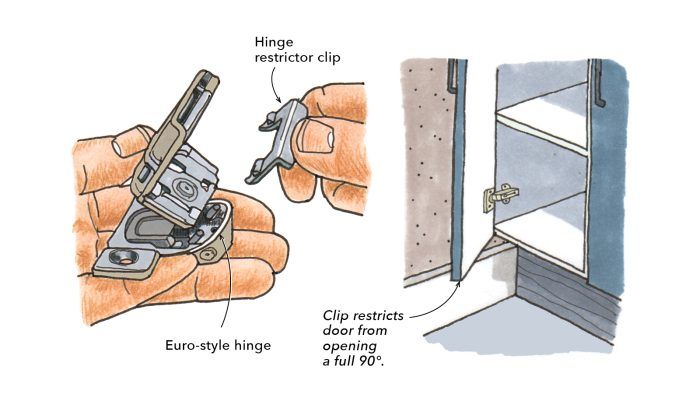
If you’re not sure which style you have, look at the edge of the cabinet box. Face-frame cabinets have a visible wood frame around the front; frameless cabinets do not.
Credit: www.finehomebuilding.com
Are Soft-close Upgrades Worth The Investment?
Many homeowners wonder if upgrading to soft-close is worth the time and money. Here’s what the research and experts say:
- Resale value: Homes with soft-close cabinets often have higher appeal to buyers.
- Safety: Reduces risk of finger pinching, especially for children.
- Durability: Cabinets with soft-close hardware last longer because they suffer less impact damage.
- Convenience: Once you get used to soft-close, you’ll notice the difference every day.
According to a Houzz survey, over 60% of homeowners who remodeled their kitchens chose soft-close doors and drawers.
Frequently Asked Questions
How Long Do Cabinet Bumpers Last?
Most cabinet bumpers last 1 to 2 years, depending on how often you use the doors and the quality of the bumper. Rubber and silicone types usually last longer than felt.
Can I Add Soft-close Features To Existing Cabinets?
Yes, you can add soft-close adapters or hinges to most existing cabinets. Make sure to choose the right type for your cabinet (face-frame or frameless) and follow the installation instructions.
Why Do My Soft-close Hinges Stop Working?
Soft-close hinges may stop working if the damper inside wears out, if the hinge is clogged with dirt, or if screws become loose. Try cleaning the hinge and tightening the screws. If that doesn’t help, replace the hinge.
Are Soft-close Solutions Safe For Children?
Yes, soft-close systems are safer than traditional hinges because they prevent doors from slamming shut, reducing the risk of pinched fingers.
Do I Need To Replace All My Cabinet Hinges At Once?
For the best look and function, it’s a good idea to replace all the hinges on a cabinet or in a room at the same time. Mixing old and new hinges can lead to uneven alignment and performance.
If you follow the steps and tips in this guide, you can enjoy a quieter, safer, and more comfortable kitchen or bathroom. Cabinet door slamming is an easy fix with lasting benefits, and most solutions can be done in a single afternoon.
With a little effort, your home will feel calmer and more modern—no more noisy surprises every time you open or close a cabinet.