
Storing chocolate for a long time is both an art and a science. Many people believe chocolate simply lasts forever, but that’s not true—at least, not if you want to keep its best taste and texture. Whether you’re a home baker, a chocolate collector, or someone who buys in bulk, knowing how to store chocolate long term can save you money and prevent disappointment.
Let’s explore the best ways to keep chocolate fresh for months, or even years, without losing its magic.
Why Long-term Storage Of Chocolate Matters
Chocolate is a delicate product. It’s made from cocoa solids, cocoa butter, sugar, and sometimes milk, all of which react differently to air, moisture, heat, and odors. If you store chocolate the wrong way, it can develop a white film called bloom or lose its snap and shine. Old or poorly kept chocolate can taste dull, crumbly, or even stale.
For businesses, chocolate spoilage is costly. For home users, wasted chocolate is just heartbreaking. With the right knowledge, you can protect your investment and enjoy chocolate at its best, even months after purchase.
How Chocolate Changes Over Time
Chocolate does not exactly “expire” in the same way as milk or bread, but it does change:
- Fat bloom: White or gray streaks on the surface, caused by cocoa butter rising.
- Sugar bloom: Grainy white spots from sugar crystallizing after contact with moisture.
- Flavor loss: Chocolate absorbs odors and loses its unique flavors over time.
- Texture change: Old chocolate can become dry, crumbly, or gritty.
These changes do not always make chocolate unsafe, but they do affect quality. Understanding what happens helps you prevent it.
Shelf Life Of Different Types Of Chocolate
Not all chocolate is the same. Here’s a quick look at how long you can expect different kinds to last if stored well.
| Type of Chocolate | Typical Shelf Life (Unopened) | Notes |
|---|---|---|
| Dark Chocolate | 18-24 months | Less sugar, no milk; keeps longest. |
| Milk Chocolate | 12-16 months | Contains milk powder; more sensitive. |
| White Chocolate | 8-12 months | Mostly cocoa butter and milk; shortest shelf life. |
| Filled Chocolates (Truffles, etc.) | 2-4 months | Fresh cream, fruit, or nuts spoil faster. |
Non-obvious insight: Even when chocolate “expires,” it is usually safe to eat for months after, but the taste and texture will not be the same.
Factors That Affect Chocolate Storage
To keep chocolate long term, you must control four main enemies:
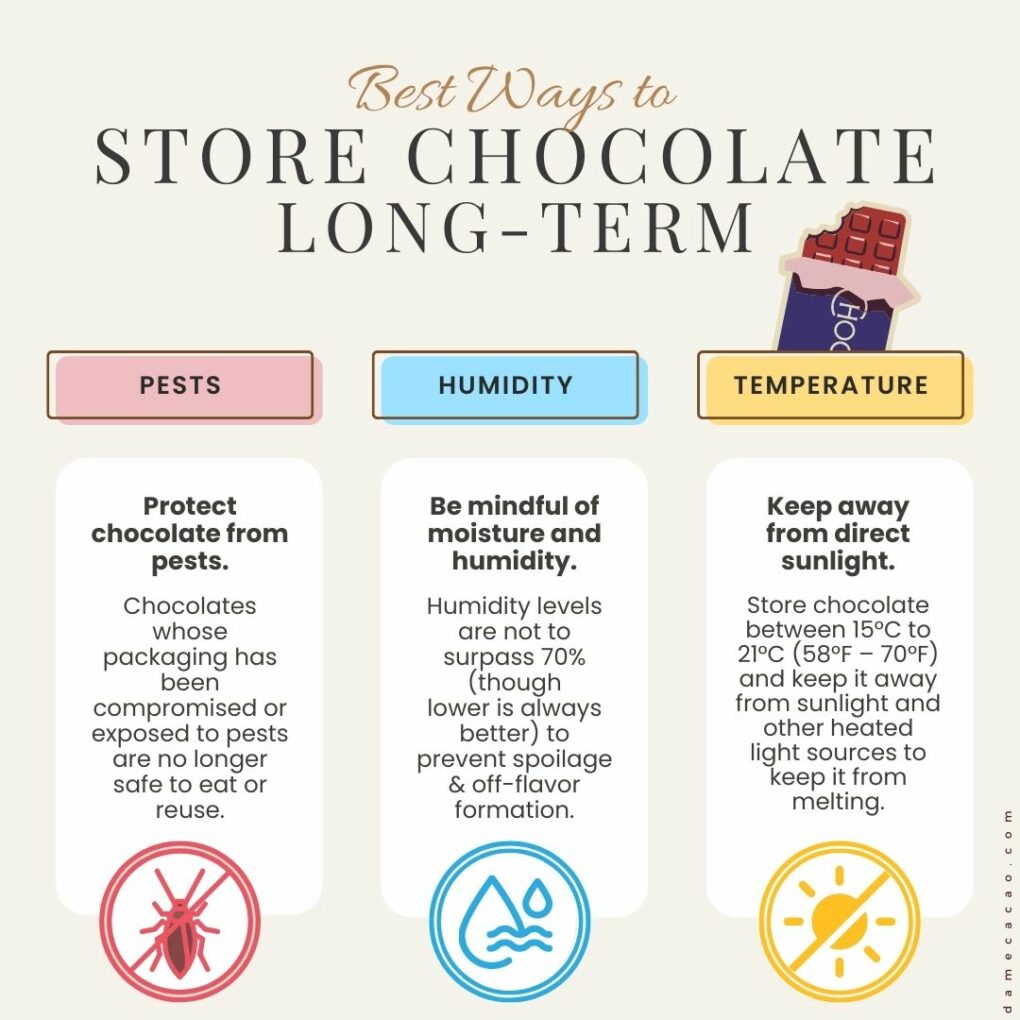
- Temperature: High heat melts cocoa butter, causing bloom. Too cold causes condensation.
- Humidity: Moisture leads to sugar bloom and mold.
- Light: Sunlight or strong artificial light fades color and flavor.
- Odors: Chocolate absorbs smells from nearby foods—onions, spices, even soap.
Practical tip: Store chocolate away from windows, ovens, fridges, and cleaning products.

Credit: www.youtube.com
The Ideal Storage Conditions For Chocolate
Think of chocolate as you would wine: it needs a stable, gentle environment.
- Temperature: The sweet spot is 15-18°C (59-64°F).
- Humidity: Under 50% is best.
- Light: Keep it dark—inside a cupboard or pantry.
- Air: Wrap tightly to keep out air and odors.
Here’s a quick comparison of common storage places:
| Location | Good for Chocolate? | Why/Why Not |
|---|---|---|
| Kitchen Counter | No | Too warm, too many smells. |
| Pantry/Cupboard | Yes | Stable, dark, and cool (if away from heat sources). |
| Refrigerator | Sometimes | Can cause condensation and odor absorption. |
| Freezer | Only for very long-term | Risk of texture change and condensation. |
Non-obvious insight: Chocolate is safer in a cool, dark bedroom closet than in a kitchen near the stove.
Wrapping And Packaging For Maximum Freshness
How you wrap chocolate is as important as where you keep it.
- Original packaging: Factory wrapping is usually good for unopened chocolate.
- Airtight containers: Once opened, move chocolate to a container that seals out air.
- Food-grade plastic wrap: For extra protection, wrap bars or pieces before putting them in a box.
- Vacuum sealing: The gold standard for very long-term storage—removes air entirely.
For chocolate you intend to keep for over a year, vacuum-sealing and double-wrapping (plastic wrap inside a container) give the best results.
Pro tip: Avoid aluminum foil unless you wrap plastic around the chocolate first. Aluminum alone can react with acids in the chocolate.
Should You Refrigerate Chocolate?
This is a common question, and the answer depends on your situation.
- If room temperature is below 20°C (68°F): No need to refrigerate.
- If your home is hot or humid: Refrigeration is better than letting chocolate melt.
- When refrigerating: Always wrap chocolate tightly and place in an airtight container. Before opening, let it sit at room temperature (still wrapped) for a few hours. This prevents condensation.
Common mistake: Taking chocolate straight from the fridge and unwrapping it immediately causes sugar bloom and texture loss.
Freezing Chocolate For Extreme Long-term Storage
Freezing is a last resort for keeping chocolate over a year, but it must be done right:
- Double wrap: First in plastic wrap, then in an airtight freezer-safe container or bag.
- Cool first: Put the wrapped chocolate in the fridge for 24 hours before freezing. This gentle change prevents shock.
- Freeze: Store for up to 2-3 years.
- Defrost slowly: Move from freezer to fridge for 24 hours, then to room temperature before opening.
Practical example: High-quality dark chocolate bars can be frozen for up to 3 years with minimal loss of flavor if you follow this method.
Credit: damecacao.com
Storing Different Kinds Of Chocolate
Storing Dark Chocolate
Dark chocolate is the easiest to store. Because it contains little or no milk, it resists spoilage and mold.
- Store in a cool, dry, dark place.
- If wrapped well, can last up to 2 years at room temperature.
- For longer, vacuum seal and freeze.
Storing Milk Chocolate
Milk chocolate contains milk solids, which can go stale or rancid over time.
- Keep tightly wrapped, away from light and heat.
- Best stored in airtight containers, especially in warm climates.
- Lasts up to 1 year at room temperature, longer if refrigerated or frozen.
Storing White Chocolate
White chocolate is mostly cocoa butter and sugar, with no cocoa solids. It’s highly sensitive to heat and moisture.
- Store in airtight containers.
- Protect from strong odors—white chocolate absorbs smells easily.
- Lasts 8-12 months at room temperature.
Storing Filled Or Flavored Chocolates
Truffles, pralines, and other filled chocolates spoil much faster.
- Most should be eaten within weeks or a couple of months.
- If keeping longer, refrigerate in airtight containers.
- Never freeze chocolates with cream, fresh fruit, or alcohol fillings—the texture will suffer.
Pro tip: Separate filled chocolates from plain bars to avoid flavor mixing and moisture transfer.
How To Store Chocolate In Hot Or Humid Climates
If you live in a warm, humid place, storing chocolate can be tricky.
- Use an air-conditioned room or a wine fridge set to 16°C (61°F).
- If using a regular fridge, always wrap tightly and place in the warmest part (usually the upper shelves).
- Add silica gel packs or moisture absorbers to containers for extra protection.
Example: In Southeast Asia, specialty chocolate shops use wine fridges to maintain perfect storage conditions.
Storing Homemade Chocolate
Homemade chocolate or chocolate-covered treats often lack preservatives.
- Store in airtight containers.
- Use wax paper between layers to prevent sticking.
- Keep in the fridge if it contains dairy, fruit, or nuts.
Homemade chocolate usually lasts 2-4 weeks at best, unless vacuum-sealed and frozen.
How To Tell If Chocolate Has Gone Bad
Chocolate rarely becomes dangerous to eat, but it does lose quality. Here’s what to look for:
- Smell: Should smell like chocolate, not cardboard, onions, or soap.
- Appearance: Look for mold (rare), bloom, or gray spots.
- Texture: Should be smooth and firm, not crumbly or sticky.
- Taste: Off flavors mean it’s past its best, even if safe.
Pro tip: If chocolate smells or tastes odd, don’t risk it. For old but not spoiled chocolate, use it in baking.
Common Mistakes When Storing Chocolate
Even careful people make errors. Here are some pitfalls to avoid:
- Storing chocolate near strong-smelling foods: Chocolate quickly absorbs odors from onions, garlic, or spices.
- Using plastic containers with a smell: Old containers can ruin chocolate with leftover odors.
- Unwrapping chocolate before storing: Always keep it wrapped, even inside containers.
- Ignoring temperature swings: Moving chocolate from hot to cold (or vice versa) quickly can cause condensation and sugar bloom.
- Freezing filled chocolates: Most fillings (like caramel or cream) do not freeze well and can become gritty or separate.
Best Containers For Long-term Chocolate Storage
Not all containers are created equal. Here are the best choices:
- Glass jars: Airtight and odor-free, but heavy and breakable.
- Food-grade plastic boxes: Lightweight, but make sure they are truly odorless.
- Vacuum bags: Remove air, perfect for long-term storage and freezing.
- Metal tins: Good for short-term if lined with parchment or plastic.
Avoid cardboard boxes unless chocolate is still factory-sealed. Cardboard lets in air and odors.
Bulk Storage: Tips For Large Quantities
If you buy chocolate in bulk, organization matters:
- Divide into smaller, airtight packages. Only open one at a time.
- Use vacuum sealers for best results.
- Label containers with the date and type of chocolate.
- Rotate stock, using the oldest chocolate first.
Experience-based tip: For large families or small businesses, set up a “chocolate storage zone” in a cool closet with shelves and labels.
Storing Chocolate Chips And Cooking Chocolate
Chocolate chips and baking chocolate follow the same rules as bars.
- Keep in original packaging until opened.
- After opening, move to airtight containers.
- For very long-term, vacuum seal and freeze.
Cooking chocolate with higher cocoa content lasts longer than milk or white chips.
Chocolate Storage For Special Situations
During Travel
- Use insulated bags or coolers.
- Keep chocolate in the passenger compartment, not the trunk.
- For long trips, freeze chocolate ahead of time and let it thaw in the bag.
For Gifts
- Store gift chocolate in a cool, dark place until giving.
- If giving in summer, include a note to refrigerate before opening.
In Commercial Settings
- Use climate-controlled storage rooms.
- Monitor temperature and humidity daily.
- Never store chocolate near cleaning products or chemicals.
How To Store Chocolate With Nuts, Fruit, Or Other Additions
Add-ins like nuts, dried fruit, or spices change storage needs.
- Nuts can go rancid. Store chocolate with nuts in the fridge if keeping more than a month.
- Fruit can add moisture—keep away from plain chocolate bars.
- Spices may fade over time, but won’t spoil chocolate.
For chocolate with add-ins, shorter shelf life is normal—plan to eat within 3-6 months.
Credit: www.thepurposefulpantry.com
Eco-friendly Chocolate Storage
If you want to avoid plastic, try these options:
- Use glass jars with silicone seals.
- Wrap chocolate in unbleached parchment paper, then store in a tin.
- Reuse wine bottle stoppers for airtight glass jars.
Note: Eco-friendly options may not work for freezing or very long-term storage, but are fine for daily use.
When To Use Old Chocolate
If your chocolate is past its best but not spoiled, don’t waste it. Use it in:
- Brownies, cakes, or cookies
- Hot chocolate drinks
- Homemade chocolate sauces or syrups
Older chocolate may not be as tasty on its own, but it’s still perfect for baking.
Myths About Chocolate Storage
Let’s clear up some common myths:
- “Chocolate never goes bad.” False. It lasts a long time, but flavor and texture decline.
- “You should always refrigerate chocolate.” Only when necessary.
- “Bloom means chocolate is unsafe.” Usually false; it’s just a sign of fat or sugar changes, not spoilage.
Storing Other Chocolate Products
Not all chocolate is the same. Here’s how to handle:
- Hot chocolate powder: Keep dry and airtight; lasts over a year.
- Chocolate spreads: Check for oil separation; refrigerate after opening if the label says so.
- Chocolate syrups: Refrigerate after opening, especially if they contain dairy.
Data: Chocolate Storage And Waste
Did you know? According to the National Confectioners Association, nearly 10% of chocolate purchased in the U.S. is thrown away due to spoilage or poor storage. Better storage means less waste, more savings, and better chocolate experiences.
For more scientific details, check out this Wikipedia article on chocolate.
Frequently Asked Questions
How Long Does Chocolate Last If Stored Properly?
If stored in a cool, dry, airtight place, dark chocolate can last 18-24 months, milk chocolate 12-16 months, and white chocolate about 8-12 months. Filled chocolates have a much shorter shelf life—usually 2-4 months.
Is It Safe To Eat Chocolate After Its Expiration Date?
Most chocolate is safe to eat a few months after the “best by” date if there’s no mold, odd smell, or bad taste. The texture and flavor may decline, but it’s rarely harmful.
Can I Store Chocolate In The Fridge Or Freezer?
Yes, but only if you wrap it well to prevent moisture and odor problems. Move chocolate to the fridge for 24 hours before freezing, and thaw slowly to avoid bloom.
What Is The White Stuff On Chocolate?
This is called bloom. If it’s fat bloom, it’s harmless but looks and feels different. If it’s sugar bloom, it means moisture touched the chocolate. In both cases, it’s safe but not ideal for eating plain.
What’s The Best Way To Store Chocolate Long Term At Home?
Keep chocolate in a cool, dark place in an airtight container. For storage over a year, vacuum-seal and freeze. Always avoid strong odors and temperature swings.
Chocolate deserves careful handling. By following these tips, you can enjoy great-tasting chocolate any time—whether it’s a special treat or just a simple pleasure at home.