
Dehydrated apples are a favorite for many people who enjoy healthy snacks and want to avoid food waste. Drying apples removes most of their moisture, which helps prevent bacteria and mold from growing. But how you store dehydrated apples long term matters just as much as the drying process itself. Good storage can keep your apples tasty and safe to eat for months or even years. If you do it wrong, you risk losing all your hard work to spoilage, mold, or loss of flavor.
Let’s take a deep look at how to store dehydrated apples for the longest shelf life. You’ll learn about the best containers, storage conditions, common mistakes, and expert tips that beginners often miss. Whether you dry apples at home or buy them from a store, these steps will help you keep your apples fresh, safe, and delicious.
Why Dehydrated Apples Need Special Storage
Dehydrated apples have had most of their water removed, but not all of it. If you leave them exposed to air, they can absorb moisture again. This moisture can lead to mold growth, spoilage, and a chewy, unpleasant texture. Proper storage protects your apples from moisture, air, light, and pests.
There’s also a science to long-term storage. Dehydrated apples can last from 6 months to over 2 years—if stored correctly. That’s a huge difference! Knowing exactly what causes apples to spoil helps you avoid mistakes.
Main Threats To Dehydrated Apples
- Moisture: Even a small amount can ruin a batch.
- Oxygen: Leads to oxidation, color loss, and flavor change.
- Light: Breaks down vitamins and changes taste.
- Heat: Speeds up spoilage and changes texture.
- Pests: Insects and rodents are always looking for a snack.
Choosing The Best Container For Long-term Storage
The type of container you use is the single biggest factor in how long your dehydrated apples will last. Not all containers are equal. Let’s compare some common options:
| Container Type | Protection Level | Reusable | Cost |
|---|---|---|---|
| Glass Jars (Mason Jars) | Excellent (if sealed with oxygen absorber) | Yes | Medium |
| Mylar Bags | Best (with oxygen absorber) | No (usually single-use) | Low-Medium |
| Vacuum-Sealed Bags | Very Good | No | Low-Medium |
| Plastic Zip Bags | Poor | Yes | Low |
| Plastic Storage Containers | Fair | Yes | Low |
Glass Jars
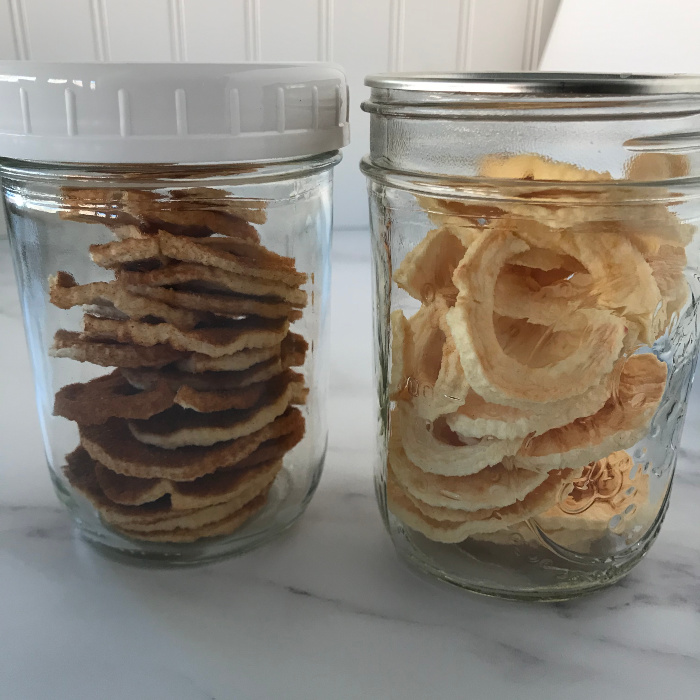
Glass jars, especially Mason jars, are popular for home storage. They are airtight, reusable, and don’t react with food. For long-term storage, always add an oxygen absorber before sealing. The downside? Glass breaks easily and is heavy for travel.
Mylar Bags
Mylar bags are excellent for blocking light, air, and moisture. When combined with an oxygen absorber, they offer the best protection for several years of storage. They’re not reusable, but they are perfect for bulk storage and emergencies.
Vacuum-sealed Bags
Vacuum sealing removes most of the air from the bag. This slows down spoilage and keeps apples fresh. However, most vacuum bags let in some light and are not as strong as Mylar for blocking oxygen over years.
Plastic Zip Bags And Containers
These are good for short-term snacks but not for long-term storage. They let in air and are not fully airtight.
Key Insight
Many beginners think any airtight container is enough. But for long-term storage, oxygen absorbers and the right material (like Mylar or glass) are critical. Regular plastic bags let in more air than you realize.

Credit: www.amazon.ae
The Importance Of Oxygen Absorbers
Oxygen absorbers are small packets that remove oxygen from sealed containers. This is the main way to protect dehydrated apples from mold, color changes, and spoilage.
How Oxygen Absorbers Work
Each packet contains iron powder. When sealed in a container, the iron reacts with oxygen and removes it from the air. This creates an environment where mold and bacteria can’t grow.
How Much Do You Need?
The right size depends on the container. Use about 300-500cc oxygen absorber per one-gallon container for dried apples. Using more is better than using too little.
Where To Place Oxygen Absorbers
Always add the absorber on top of the apples before sealing the container. Don’t open the absorber package until you’re ready to seal, as they start working immediately.
Common Mistake
Some people use silica gel packets by accident. Silica gel only absorbs moisture, not oxygen. For dried apples, you need oxygen absorbers.
Best Storage Conditions For Maximum Shelf Life
Even the best container can’t save your apples if they’re stored in a bad environment. Four things matter most: temperature, light, humidity, and cleanliness.
Temperature
Store your apples in a cool place. The ideal temperature is below 70°F (21°C), but cooler is better. High temperatures speed up spoilage and can ruin flavor.
Light
Light destroys vitamin C and changes the color of dried fruit. Store your containers in a dark cupboard, pantry, or basement.
Humidity
Humidity should be below 60%. High humidity makes apples absorb moisture and become sticky or moldy. Avoid places near sinks, stoves, or laundry machines.
Cleanliness
Store apples away from chemicals, cleaning products, or anything with a strong smell. Dried apples can absorb odors and taste strange.
Storing In Bulk Vs. Small Batches
If you have a lot of apples, divide them into small containers. This way, you only open what you need and the rest stays safe. Every time you open a large container, you let in air and moisture.

Credit: www.walmart.com
Step-by-step Guide To Storing Dehydrated Apples Long Term
Here’s how to prepare and store your apples for the best long-term results.
1. Condition Your Dehydrated Apples
After drying, apples don’t always have the same moisture level. “Conditioning” means equalizing moisture to avoid problems later.
- Place apples loosely in a large jar.
- Shake the jar daily for 7 days.
- Watch for moisture drops or sticking. If you see any, put the apples back in the dehydrator.
2. Choose And Prepare Your Storage Container
Pick Mylar bags with oxygen absorbers for the longest shelf life, or use glass jars if you plan to eat them within a year.
- Make sure containers are clean and completely dry.
- Label with the date and type of apple.
3. Add Oxygen Absorbers
Use the right size packet (see above). Place it on top of the apples, then seal the bag or jar immediately.
4. Seal The Container Properly
- Mylar bags: Use a flat iron or heat sealer to close the bag.
- Glass jars: Screw the lid on tightly. For extra protection, use a vacuum sealer attachment.
- Vacuum bags: Use a vacuum sealer machine to remove air.
5. Store In The Best Location
Put your containers in a dark, cool, dry place. A closet, pantry, or basement works well.
6. Check For Signs Of Spoilage
Every few months, inspect your containers. Look for:
- Moisture inside the bag or jar
- Mold spots
- Color changes
- Off smells
If you see any of these, discard the apples to avoid food poisoning.
7. Rotate Your Stock
Use the oldest apples first. Mark containers with the packaging date and use-by date (usually 1-2 years from packing).
How Long Do Dehydrated Apples Last?
The shelf life depends on how you store them. Here’s a quick comparison:
| Storage Method | Expected Shelf Life | Notes |
|---|---|---|
| Mylar Bag + Oxygen Absorber | 2-5 years | Best for emergencies/long-term |
| Glass Jar + Oxygen Absorber | 1-2 years | Great for home pantries |
| Vacuum-Sealed Bag | 1 year | Short-term, easy to open |
| Plastic Zip Bag | 2-3 months | Snacking, not storage |
Tips For Best Results
- Dry apples fully. If they are not crisp or leathery, they have too much moisture for long-term storage.
- Test dryness: Bend a slice. It should not feel squishy or wet.
- Avoid sugar or sticky coatings. These make apples harder to store and can cause stickiness or clumping.
- Use clean hands or gloves when handling dried apples. Even a little oil from your skin can cause spoilage.
- Label everything. Include the date, type of apple, and any special notes (e.g., “cinnamon added”).
- Don’t mix old and new apples in the same container.
Mistakes To Avoid
Even experienced people sometimes make these common errors:
- Not conditioning apples after drying. This causes uneven moisture and higher risk of mold.
- Using the wrong container. Regular zip bags or thin plastic containers let in too much air.
- Storing in the kitchen. Heat and humidity are higher here, which shortens shelf life.
- Opening containers too often. Every time you open, you let in air and moisture.
- Using too few oxygen absorbers. It’s better to use more than less.
Credit: www.foodstoragemoms.com
How To Tell If Dehydrated Apples Have Gone Bad
Sometimes, even well-stored apples can go bad. Here’s how to check:
- Smell: A sour or musty smell means the apples are spoiled.
- Texture: If they feel sticky, wet, or spongy, throw them out.
- Color: Black spots or odd colors are a sign of mold.
- Taste: If in doubt, don’t taste! Eating spoiled dried fruit can cause illness.
How To Rehydrate Dehydrated Apples
When you’re ready to use your apples, you may want to rehydrate them for cooking or baking.
- Place apple slices in a bowl.
- Cover with boiling water.
- Let soak for 15-30 minutes.
- Drain and use as needed.
Rehydrated apples are great for pies, oatmeal, or sauces. But if you want a snack, enjoy them dry!
Advanced Tips Most Beginners Don’t Know
Storing In The Freezer
You can freeze dehydrated apples to extend their shelf life even further. Put them in a vacuum-sealed bag or Mylar bag with an oxygen absorber, then freeze. This can add several years to storage time.
Adding Desiccant Packets
Along with oxygen absorbers, add a food-safe desiccant packet for extra moisture control—especially if you live in a humid area.
Monitoring With A Humidity Indicator
Place a small humidity indicator card inside your jar or bag. If humidity rises above 60%, you know it’s time to check your apples or replace absorbers.
Using A Food-safe Oxygen Meter
Serious preppers sometimes use a food-safe oxygen meter to test jars or bags. This is not necessary for most people but gives peace of mind for very long-term storage.
Storing Spiced Or Sweetened Apples
If you add cinnamon, sugar, or other flavors, shelf life can be shorter because these attract moisture. Store spiced apples in smaller batches and check them more often.
Sustainable And Safe Storage Practices
- Reuse glass jars. Clean and dry them well between uses.
- Recycle old Mylar bags if possible.
- Share with friends and family. If you have too many apples, give some away to avoid waste.
- Rotate stock every year, even if you think apples will last longer.
Practical Example: Storing 10 Pounds Of Dehydrated Apples
Let’s say you have 10 pounds of dried apples. Here’s a practical plan:
- Condition all apples for 7 days in large jars.
- Divide into one-gallon Mylar bags, each holding about 2 pounds.
- Add a 500cc oxygen absorber to each bag.
- Seal bags with a heat sealer.
- Label each with the packing date and type of apple.
- Store bags in a dark, cool closet.
- Check one bag after 3 months for quality, then check yearly.
This method lets you open one bag at a time, keeping the rest safe for years.
Comparing Home-dehydrated Apples To Store-bought
Home-dried apples and store-bought dried apples both benefit from good storage, but there are some differences:
| Feature | Home-Dehydrated | Store-Bought |
|---|---|---|
| Additives | None (unless added) | Often contains preservatives |
| Moisture Content | Varies, sometimes higher | Usually lower, more stable |
| Shelf Life | 1-5 years (properly stored) | 6 months–1 year (after opening) |
| Flavor | Customizable (spices, thickness) | Consistent, but less control |
Frequently Asked Questions
How Do I Know If My Dehydrated Apples Are Dry Enough For Storage?
Your apples are dry enough when they feel leathery and do not stick together. Break a slice in half—it should not feel wet inside. If you see moisture drops in your storage jar after a few days, dry the apples again.
Can I Store Dehydrated Apples At Room Temperature?
Yes, if you use airtight containers with oxygen absorbers and keep them in a cool, dry, dark place. Room temperature is fine as long as it does not get too hot or humid.
Do I Need To Refrigerate Or Freeze Dehydrated Apples?
Refrigeration is not needed if you store them correctly. Freezing is optional and can extend shelf life even longer, especially in hot or humid climates.
What Is The Difference Between An Oxygen Absorber And A Silica Gel Packet?
Oxygen absorbers remove oxygen to prevent mold and bacteria. Silica gel only absorbs moisture. For dehydrated apples, use oxygen absorbers for best results.
Is It Safe To Eat Dehydrated Apples That Are A Few Years Old?
If the apples were stored properly, look and smell normal, and have no signs of spoilage, they are usually safe. If you see any mold, off smells, or wetness, throw them away. When in doubt, it’s better to be safe.
Storing dehydrated apples long term is simple once you know the key steps. With the right containers, proper use of oxygen absorbers, and storage in a cool, dark place, you can enjoy your apples all year round. For more detailed tips on food preservation, the National Center for Home Food Preservation is a trusted resource.
Learning to store your apples the right way will save you money, reduce waste, and make healthy snacks always available. Use these methods and enjoy the taste of fresh apples, even months or years after harvest.