
Many people own both aluminum and stainless steel cookware, but not everyone can tell the difference between them by sight alone. You might pick up a pan and wonder: is this sturdy pot stainless steel, or is it lightweight aluminum? Making the right choice matters. Aluminum and stainless steel react differently with food, heat, and even dishwashing detergents. If you cook with acidic foods or want to avoid scratches and stains, using the correct metal is important for your health, your recipes, and the lifespan of your kitchen tools.
Learning how to identify aluminum from stainless steel cookware is not only practical for home cooks—it’s also useful for professional chefs, kitchen staff, and even recyclers. This guide will walk you through simple tests, visual clues, and expert advice that will help you confidently recognize the type of cookware you’re handling.
Along the way, you’ll discover tips that most beginners miss, including how to spot signs of wear, and why some cookware blends both metals. By the end, you’ll have a clear, step-by-step approach to distinguishing between these two popular metals, with real-life examples and expert-backed insights.
Why It Matters: Aluminum Vs. Stainless Steel
Choosing between aluminum and stainless steel cookware affects much more than just the look of your kitchen. These metals have different properties that influence your cooking, your health, and how long your cookware will last.
Aluminum is popular because it heats up quickly and distributes heat evenly. This means less waiting for your pan to get hot and fewer hot spots that burn your food. However, aluminum is a soft metal. It scratches easily, and it can react with acidic foods like tomatoes or vinegar, sometimes giving your dish a metallic taste.
On the other hand, stainless steel is known for its strength, durability, and resistance to rust. It’s less likely to react with foods, and it can handle rough cleaning or metal utensils. But it doesn’t conduct heat as well as aluminum, which is why some high-end pans use both metals together.
Understanding which type you’re using helps you care for your cookware, avoid damaging it, and even make your meals taste better. It also makes recycling and resale easier, since these metals have different values and uses.
The Basics: What Are Aluminum And Stainless Steel?
Before you start testing, it’s helpful to know what makes these metals unique.
Aluminum is a light, silvery-white metal found naturally in the earth. It’s the third most common element in the earth’s crust. Pure aluminum is soft, but most cookware uses “anodized” or alloyed aluminum, which is a bit harder and more resistant to scratches.
Stainless steel is an alloy made mainly of iron, with at least 10.5% chromium added. The chromium helps prevent rust and gives the metal its shiny, mirror-like finish. Some stainless steel cookware also contains nickel or molybdenum to improve corrosion resistance.
Key Physical Properties
- Weight: Aluminum is much lighter than stainless steel.
- Color: Aluminum is usually duller and grayer, while stainless steel is brighter and shinier.
- Magnetism: Stainless steel can be magnetic, but aluminum is never magnetic.
- Reactivity: Aluminum reacts with acids; stainless steel does not.
Understanding these basics will help you spot differences quickly.

Credit: prudentreviews.com
Simple Visual Clues
One of the easiest ways to tell aluminum from stainless steel cookware is by looking closely. Here are the main visual clues:
- Shine and Finish
- Stainless steel usually has a bright, reflective, shiny appearance. It can look almost like a mirror.
- Aluminum often looks duller. Even when polished, it rarely reaches the same level of shine as stainless steel.
- Color Tone
- Aluminum is more gray, sometimes with a bluish or matte finish.
- Stainless steel has a whiter or silver color with a slightly cooler tone.
- Surface Texture
- Aluminum can show scratches, dents, or even light pitting after some use.
- Stainless steel is harder and more resistant to scratches. If you see deep scratches or bends, it’s more likely aluminum.
- Markings and Stamps
- Many manufacturers stamp “Stainless Steel” or “18/10” (which means 18% chromium, 10% nickel) on the bottom of the cookware.
- Aluminum cookware often has “Aluminum,” “Alum,” or sometimes just the brand and “Made in…” with no reference to steel.
- Handles and Rivets
- Stainless steel cookware usually has solid, heavy handles, often riveted with steel rivets.
- Aluminum pans sometimes have lighter handles, which can feel slightly loose over time.
Example
Pick up two similar-sized pots, one aluminum and one stainless steel. Notice how the stainless steel one shines brighter and feels colder to the touch. The aluminum pot will feel warmer and less reflective, especially under strong light.
Weight Test: Light Vs. Heavy
A very effective way to distinguish between aluminum and stainless steel cookware is by checking the weight.
- Aluminum cookware is noticeably lighter. Even thick-walled aluminum pans can often be lifted easily with one hand.
- Stainless steel cookware is much heavier. A similar-sized stainless steel pan can feel almost twice as heavy as aluminum.
How To Do The Weight Test
- Hold the cookware in your hand and gently bounce it up and down.
- Compare it with another pan of similar size and shape.
- If the pan feels light, it is likely aluminum. If it feels heavy and solid, it’s probably stainless steel.
Non-obvious Insight
Many beginners forget that some cookware is clad—meaning it has a layer of aluminum sandwiched inside stainless steel. In this case, the pan will be heavy but may have both metals. To check, look at the edge of the pan; sometimes you can see a thin line of a different metal.
Magnet Test: Quick And Reliable
The magnet test is one of the fastest ways to tell aluminum from stainless steel. This is because aluminum is not magnetic, while some stainless steel cookware is.
How To Perform The Magnet Test
- Take a simple kitchen magnet (like one from your refrigerator).
- Place it on the side or bottom of the cookware.
- If the magnet sticks firmly, the cookware is likely stainless steel (specifically, types with higher iron content).
- If the magnet does not stick, it’s likely aluminum—or it could be a type of stainless steel with low magnetism, known as “austenitic” stainless steel.
Key Detail
Not all stainless steel cookware is magnetic. Some high-end stainless steel pans use a non-magnetic alloy. However, nearly all aluminum cookware is completely non-magnetic.
Practical Example
Try the magnet test on several pots and pans at home. You may find that some “stainless steel” pans don’t attract the magnet—these are made from a different stainless steel grade but are still not aluminum.
Sound Test: The Ring And The Thud
The sound a pan makes when you tap it with a spoon can reveal its material.
- Stainless steel gives a bright, ringing sound when tapped.
- Aluminum makes a duller, lower “thud” or “clunk.”
How To Do The Sound Test
- Hold the pan by the handle.
- Tap the side with a metal spoon.
- Listen for a high-pitched ring (stainless steel) or a flat, quiet thud (aluminum).
This test is especially useful when you don’t want to scratch the cookware. It’s also a favorite trick among restaurant kitchen staff.
Little-known Tip
Older, heavily used aluminum pans can sometimes ring more than new ones, as the metal hardens with age. Always combine the sound test with other methods for best results.
Check For Manufacturer Marks And Codes
Look at the bottom or side of your cookware for stamped marks or codes.
- Stainless steel cookware often has numbers like “18/10,” “304,” or “316,” which refer to the percentages of chromium and nickel.
- Aluminum cookware may say “Aluminum,” “Pure Aluminum,” “Anodized,” or have no numbers at all.
These marks are usually permanent, but they can wear away with time and washing.
How To Read The Codes
- 18/10: This is high-quality stainless steel, with 18% chromium and 10% nickel.
- 304 or 316: These are standard grades for cookware.
- No code: If there’s no code and the pan is very light, it’s likely aluminum.
Example
A pan marked “18/10 Stainless Steel” is never aluminum. If you see “Anodized” or “Aluminum,” you know what you’re holding.
Reaction With Acid Test
Aluminum and stainless steel react differently with acidic foods.
- Aluminum can discolor or react with acids, especially after repeated use.
- Stainless steel usually shows no reaction.
How To Test
- Squeeze a little lemon juice or vinegar onto a small area of the pan.
- Leave it for 5–10 minutes.
- Wipe clean and check for discoloration.
- Aluminum may develop a grayish or white spot.
- Stainless steel should remain unchanged.
Caution
Never use this test on expensive or new pans, as it may damage the finish.
Heat Conductivity Test
Aluminum is an excellent conductor of heat; stainless steel is not. This affects how quickly and evenly your pan heats up.
- Aluminum pans get hot much faster than stainless steel when placed on the stove.
- Stainless steel pans heat slowly and may develop “hot spots.”
How To Test
- Place a small amount of butter in the center of the pan.
- Put the pan on medium heat.
- Watch how quickly the butter melts.
- If it melts almost instantly and spreads evenly, the pan is likely aluminum.
- If it melts slowly, it’s probably stainless steel.
Real-world Example
Chefs often choose aluminum for sauté pans because they need quick temperature changes, while stainless steel is chosen for tasks that require durability and even browning.
Price Differences: What Does Cost Reveal?
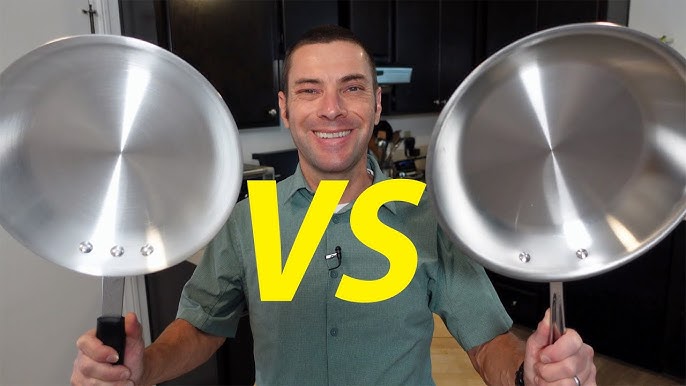
There’s a clear price gap between aluminum and stainless steel cookware. While price alone can’t always tell you the material, it’s a strong clue.
- Aluminum cookware is usually cheaper, especially in non-stick lines.
- Stainless steel cookware is more expensive due to the higher cost of materials and manufacturing.
Price Comparison Example
Here’s a simple comparison of average prices for similar-sized frying pans:
| Material | Average Price (USD) | Typical Use |
|---|---|---|
| Aluminum | $15–$40 | General, non-stick, lightweight |
| Stainless Steel | $30–$150 | Professional, heavy-duty, multi-layer |
If you bought a pan for $10 at a discount store, it’s almost certainly aluminum. High-end pans costing $50 or more are likely stainless steel.
Credit: www.youtube.com
Durability And Longevity
Both metals have their strengths and weaknesses.
- Aluminum is softer, so it dents, bends, and scratches more easily.
- Stainless steel is very hard and durable. It resists dents, stains, and corrosion.
Longevity Comparison
| Material | Expected Lifespan | Common Problems |
|---|---|---|
| Aluminum | 2–5 years (non-anodized) | Warping, staining, reactivity |
| Stainless Steel | 10–30+ years | Browning, tough cleaning, possible pitting |
Stainless steel pans can last a lifetime if cared for properly, while aluminum pans usually need replacing more often.
Reaction To Cleaning Products
Aluminum and stainless steel react differently to harsh cleaning products.
- Aluminum can be damaged by strong alkaline cleaners like dishwasher detergents.
- Stainless steel resists most chemicals and can be cleaned with almost any product.
Cleaning Test
If you’ve put your pan in the dishwasher and it turned dull or developed a white, chalky surface, it’s likely aluminum. Stainless steel pans will come out shiny, unless they have burnt-on stains.
Important Note
Never use steel wool on aluminum pans—it will scratch the surface quickly. Stainless steel can handle tougher scrubbing.

Credit: www.youtube.com
Oven And Dishwasher Safety
Most stainless steel cookware is safe for oven and dishwasher use. Many aluminum pans are not.
- Stainless steel handles and bodies can usually go in the oven at high temperatures.
- Aluminum pans may warp, discolor, or lose their non-stick coating in the oven or dishwasher.
Manufacturer Instructions
Always check the bottom of the pan or the packaging. If the pan is labeled “dishwasher safe” and “oven safe up to 500°F,” it’s almost always stainless steel.
Heat Distribution Patterns
If you look at the bottom of an old pan, you may see different heat marks.
- Aluminum pans often show wide, even heat marks across the base.
- Stainless steel pans can show ring patterns or concentrated dark spots where the heat is strongest.
This is a subtle clue, but it’s useful for well-used cookware.
Comparing Cooking Performance
Understanding how each metal performs with different foods can help you identify your cookware.
- Aluminum excels at fast, even heating, making it perfect for omelets, pancakes, and sautéing.
- Stainless steel is better for browning meat, deglazing, and recipes needing a strong sear.
Performance Comparison
| Cooking Task | Aluminum | Stainless Steel |
|---|---|---|
| Frying Eggs | Excellent (if non-stick) | Good, may stick |
| Browning Meat | Average | Excellent |
| Simmering Sauces | Very Good | Excellent |
The right material can make a big difference in your cooking results.
Health And Food Safety Considerations
Some people worry about aluminum leaching into food, especially with acidic dishes. While modern science shows most aluminum cookware is safe, a small amount of aluminum may transfer to food if the pan is scratched or worn.
Stainless steel is generally considered safer, as it does not react with foods. That’s why many hospitals and restaurants prefer stainless steel.
Non-obvious Insight
Anodized aluminum pans have a special coating that prevents most reactions, but if the coating is damaged, the pan can still leach aluminum.
Common Mistakes When Identifying Cookware
Beginners often make these mistakes:
1. Judging By Color Alone
Some aluminum pans are coated to look like stainless steel. Always combine color with other tests.
2. Relying Only On Magnet Test
Not all stainless steel is magnetic. Use more than one method for the best results.
3. Ignoring Manufacturer Labels
Over time, labels fade. Don’t rely only on markings—check weight, shine, and sound too.
4. Confusing Non-stick Coatings
Many aluminum pans have non-stick coatings that hide the metal. Check the outside and weight for clues.
5. Assuming Heavier Means Stainless
Some aluminum cookware is thick and heavy. Compare with a known stainless steel pan for accuracy.
Avoid these mistakes for more confident identification.
Special Cases: Multi-layer And Clad Cookware
Modern cookware often combines metals for better performance.
- Clad cookware has a core of aluminum sandwiched between layers of stainless steel. These pans are heavy, shiny, and often labeled as “Tri-Ply” or “5-Ply.”
- To identify these pans, look at the edge: You may see a thin aluminum layer between two layers of steel.
If in doubt, check the manufacturer’s website or product guide for details.
Recycling And Environmental Considerations
Both aluminum and stainless steel are recyclable, but they must be sorted correctly.
- Aluminum is widely recycled and can be melted down easily.
- Stainless steel recycling is more specialized but in high demand for industry.
If you plan to recycle old cookware, identify the material first. Some recycling centers pay more for one metal over the other.
For more details about recycling and metal values, see this resource from the Wikipedia Recycling Page.
Quick Reference: Step-by-step Identification
If you want a fast way to identify your cookware, follow these steps:
- Look for Markings: Check the bottom for “Stainless Steel,” “18/10,” or “Aluminum.”
- Try the Magnet Test: If it sticks, it’s likely stainless steel.
- Check the Weight: Light = aluminum, heavy = stainless steel.
- Examine the Shine: Dull = aluminum, mirror-like = stainless steel.
- Test with a Spoon Tap: Ring = stainless steel, thud = aluminum.
- Check the Price/Brand: Cheap and lightweight is usually aluminum.
- Look for Wear: Deep scratches or dents = aluminum.
If you use at least three of these methods, you’ll have a confident answer.
Frequently Asked Questions
How Can I Tell If My Cookware Is Aluminum Or Stainless Steel Without Any Markings?
Use the magnet test and compare the weight and shine. Aluminum is lighter, duller, and never magnetic. Stainless steel is heavier, shinier, and may attract a magnet.
Is It Safe To Cook With Aluminum Cookware?
Most modern aluminum cookware is safe for cooking, especially if it’s anodized or coated. Avoid using scratched or damaged pans with acidic foods to reduce any risk of aluminum leaching.
Can Stainless Steel Cookware Rust?
High-quality stainless steel is resistant to rust due to its chromium content. However, low-quality or damaged stainless steel can develop rust spots, especially if exposed to saltwater or harsh chemicals.
Do Professional Chefs Prefer Aluminum Or Stainless Steel?
Professional chefs use both. Aluminum is favored for its fast, even heating in sauté pans, while stainless steel is chosen for durability and browning. Many commercial kitchens use clad pans that combine both metals.
What Should I Do If My Aluminum Pan Turns Dull Or Chalky After Washing?
A dull or chalky surface means the aluminum reacted with dishwasher detergent or harsh cleaners. Hand-wash aluminum pans with mild soap and water to keep them looking good.
The next time you reach for a pan, you’ll know exactly what you’re holding—and why it matters. Proper identification helps you cook smarter, care for your cookware, and make better choices for your kitchen.