
If you have invested in a set of Cutco knives, you already know the value of sharp, reliable kitchen tools. But even the best knives get dull over time, and a dull blade is not only frustrating—it can be dangerous. The good news is that Cutco knife sharpeners are designed to keep your knives performing like new. Using the sharpener correctly is key to protecting your investment and enjoying safe, effortless cutting every day.
Many people are unsure about the right way to use a Cutco sharpener. Some worry about damaging their knives, while others struggle to achieve that razor-sharp edge they want. This detailed guide will give you everything you need to know.
Whether you are a beginner or someone who has used sharpeners before, you will learn practical steps, clear explanations, and useful tips that Cutco owners often miss.
Let’s make sure you get the most from your Cutco knives—starting with the right sharpening technique.
Understanding The Cutco Knife Sharpener
Before using any tool, it helps to understand how it works. The Cutco knife sharpener is not just any kitchen gadget. It is designed specifically for the steel and angle of Cutco blades, making it different from other sharpeners you might see in stores.
Cutco offers two main types of sharpeners:
- Cutco Knife Sharpener (often called the “sharpener” or “handheld sharpener”)
- Cutco Honing Tool (used for touching up the edge)
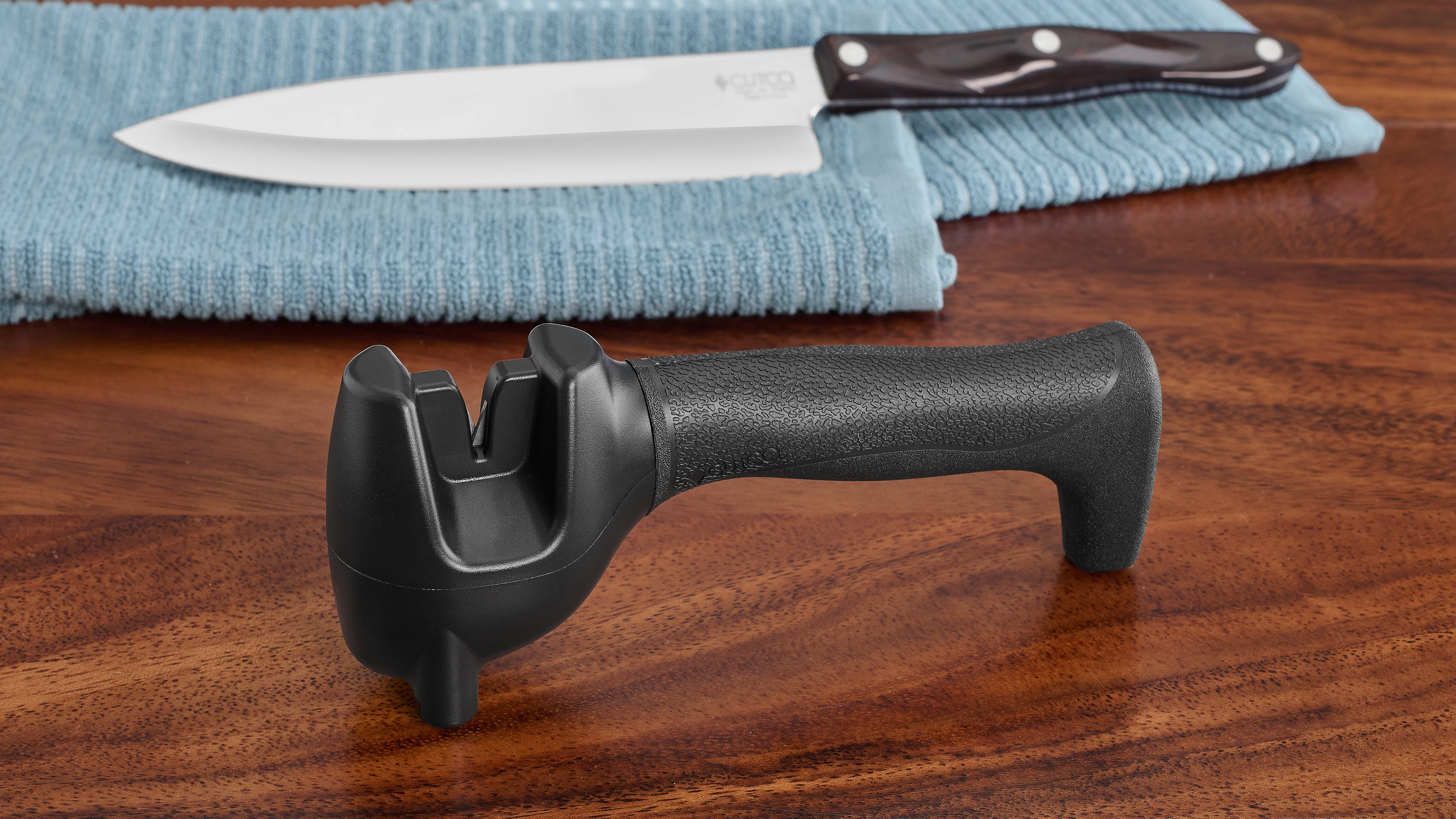
The main sharpener is a handheld device, usually with a comfortable handle and two V-shaped sharpening wheels made from carbide. When you pull your knife through these wheels, they remove a small amount of metal from the edge, restoring the sharpness.
The honing tool, on the other hand, realigns the knife edge between sharpenings but does not remove much metal. Think of it as a maintenance tool.
Why Use The Cutco Sharpener?
Some people try to sharpen their Cutco knives with other devices, but this is risky. The Cutco sharpener is designed to match the 15-degree angle of Cutco’s straight-edge knives. Using the wrong angle or tool can damage your knives and void the warranty.
Preparing To Sharpen Your Cutco Knife
Sharpening is not just about running the blade through the sharpener. Preparation is important to get the best results and avoid mistakes.
Check The Knife Type
Cutco makes both straight-edge and Double-D® edge knives. The sharpener is meant for straight-edge knives only. Double-D® edge knives (like serrated bread knives) should not be sharpened at home. For these, you need to send them to Cutco’s free sharpening service.
Clean Your Knife
Before sharpening, wash and dry your knife. Dirt, grease, or bits of food can affect the sharpening process and may even scratch the blade.
Set Up A Safe Work Area
Sharpening should be done on a flat, stable surface with good lighting. Make sure your hands are dry to prevent slipping.
Inspect The Blade
Look closely at your knife. If it has nicks, chips, or deep damage, sharpening with the handheld tool won’t fix these issues. In that case, contact Cutco for professional repair.
Step-by-step: How To Use The Cutco Knife Sharpener
Now, let’s walk through the exact steps to sharpen a straight-edge Cutco knife. Follow these instructions carefully for safe, effective results.
1. Hold The Sharpener Correctly
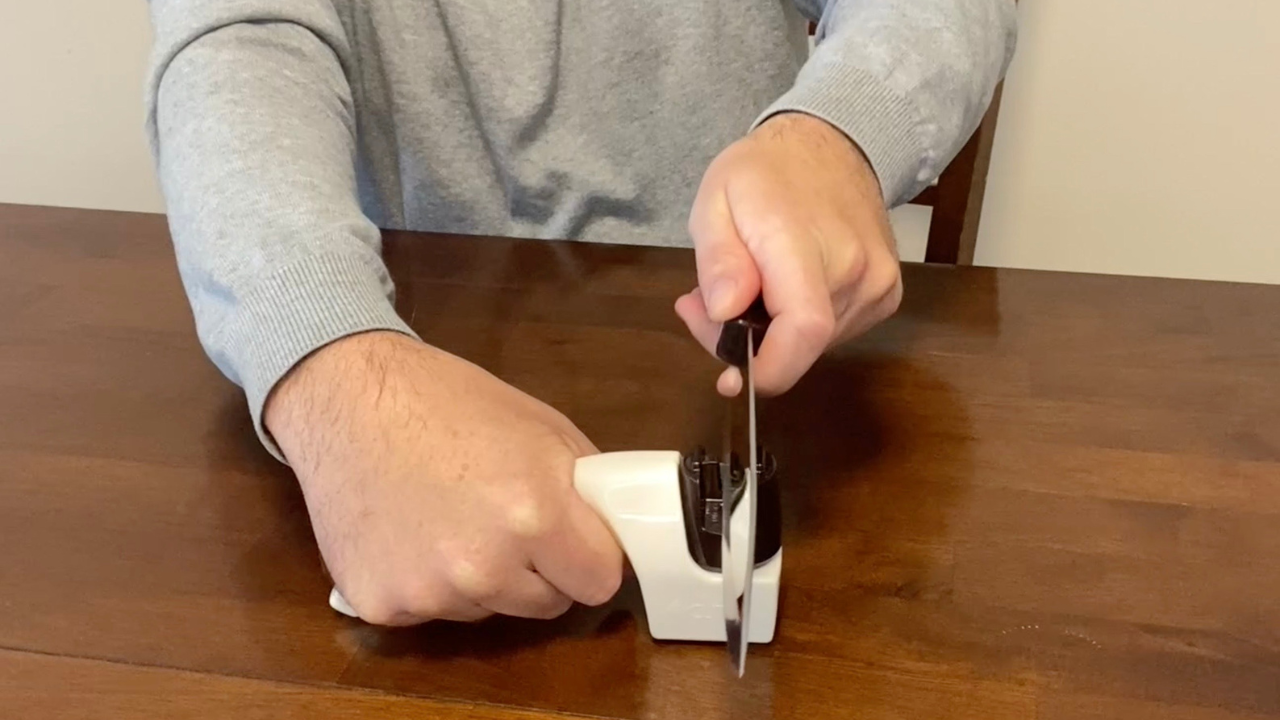
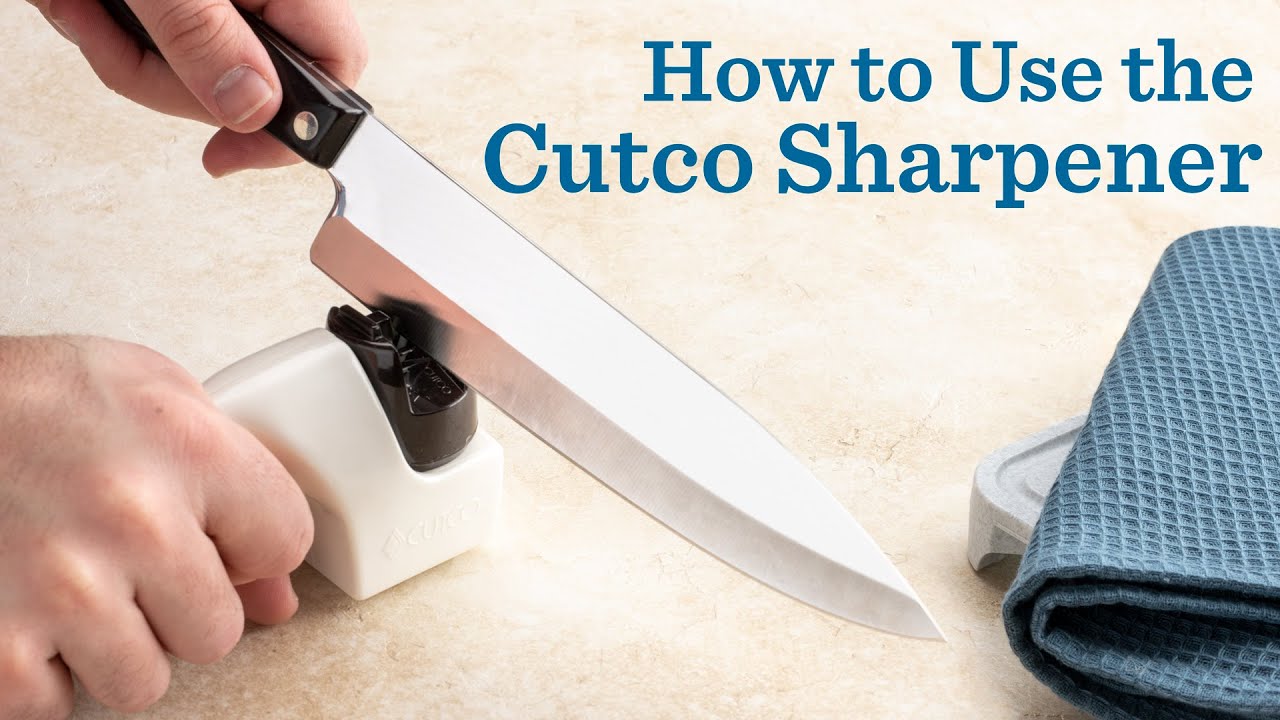
Place the sharpener on a sturdy, flat surface. Hold the handle firmly with your non-dominant hand, keeping your fingers away from the sharpening wheels.
2. Position The Knife
With your dominant hand, hold the knife by the handle. Place the heel (the part closest to the handle) into the V-shaped slot of the sharpener, with the blade perpendicular to the countertop.
3. Apply Gentle, Even Pressure
Do not press down hard—gentle, even pressure is best. Too much force can damage the blade or the sharpener.
4. Draw The Knife Through The Sharpener
Pull the knife smoothly through the slot from heel to tip. Keep the blade straight and steady as you move. One full stroke should take about 1–2 seconds.
5. Repeat As Needed
For most knives, 3 to 5 passes are enough. If your knife is very dull, you may need a few more strokes. Check the sharpness between passes (more on testing below).
6. Clean The Knife After Sharpening
After sharpening, wipe the blade with a damp cloth to remove metal shavings. Wash and dry the knife before using it.
Table: Comparing Cutco Knife Sharpener And Other Common Sharpeners
Here’s a quick comparison of the Cutco sharpener with other types you may have seen:
| Sharpener Type | Best For | Ease of Use | Angle Control | Works with Cutco? |
|---|---|---|---|---|
| Cutco Knife Sharpener | Cutco straight-edge knives | Very easy | Perfectly matched | Yes |
| Rod/Whetstone | Professional chef knives | Medium-hard | Manual | No (not recommended) |
| Electric Sharpener | Various straight-edge knives | Easy | Fixed/varies | No (angle may not match) |
| Pull-through (Non-Cutco) | Budget knives | Easy | Not matched | No |
As you can see, the Cutco sharpener is specifically tailored for their knives. Other sharpeners may not give you the same results and can even cause permanent damage.
Tips For Sharpening Different Cutco Knives
Not all Cutco knives are the same size or shape. Here’s how to handle some common types:
Paring Knives
These small knives are easy to sharpen. Use short, controlled strokes. Be careful as the blade is small and your fingers are closer to the edge.
Chef’s Knives
For larger blades, keep the motion steady. Make sure the entire edge passes through the wheels. You might need to make a slightly longer pull.
Utility Knives
Utility knives are medium-sized. Follow the standard steps, but check the sharpness after three strokes.
Specialty Knives
Knives with a curved belly (like Santoku) can be sharpened, but move slowly and keep the blade straight in the slot.
How To Test Knife Sharpness After Sharpening
Don’t just assume your knife is sharp—test it safely.
- Paper Test: Hold a sheet of paper by one edge and try to slice it. A sharp knife will cut through easily.
- Tomato Test: Try slicing a tomato. If the knife glides through the skin without crushing, it’s sharp.
- Onion Test: A sharp knife will cut an onion cleanly with little pressure.
Avoid testing sharpness with your thumb or finger; this can lead to injury.
Maintaining Your Cutco Knives Between Sharpenings
Sharpening is only part of knife care. Here’s how to keep your knives sharp longer:
- Use a cutting board made from wood or plastic. Glass or stone surfaces dull knives quickly.
- Hand wash knives and dry immediately. Dishwashers can damage the blade edge.
- Store knives properly. Use a knife block, magnetic strip, or blade guard.
- Use the right knife for the job. Don’t use your knives to cut bones, frozen food, or pry open cans.
When To Use The Cutco Honing Tool
The Cutco honing tool is for light maintenance, not full sharpening. It helps realign the edge and can extend the time between sharpenings.
To use it, hold the tool in your non-dominant hand, and the knife in your dominant. Run the knife along the rod at the correct angle (about 15 degrees). Do this a few times on each side. Honing works best if your knife is still fairly sharp.
Table: How Often To Sharpen And Hone Cutco Knives
Different knives and uses mean different maintenance schedules.
| Knife Type | Home Use (Sharpening) | Professional Use (Sharpening) | Honing Frequency |
|---|---|---|---|
| Paring/Utility | Every 3–6 months | Monthly | Every 2 weeks |
| Chef’s/Santoku | Every 2–4 months | Bi-weekly | Weekly |
| Serrated/Double-D® | Do not sharpen at home | Send to Cutco | N/A |
If you cook daily, you may need to sharpen more often. For occasional cooks, less frequent sharpening is fine.
Common Mistakes When Using The Cutco Knife Sharpener
Avoid these errors to protect your knives and get the best results:
- Sharpening Double-D® (serrated) blades – These require professional sharpening and should never be done with the handheld device.
- Using too much force – Pressing hard can damage both the blade and the sharpener. Light, steady pressure is best.
- Moving too quickly – Rushing can cause an uneven edge.
- Not cleaning the knife after sharpening – Metal shavings can get into food if the blade is not wiped clean.
- Sharpening dirty knives – Dirt and food bits can scratch the blade and reduce the sharpener’s life.
- Ignoring angle control – Although the device is designed for the right angle, holding the knife at a strange tilt can still cause problems.
Credit: www.amazon.com
How To Tell If Your Cutco Knife Needs Sharpening
Many people wait until a knife is very dull, which makes sharpening harder and uses more metal. Here are signs it’s time to sharpen:
- The knife slides off food instead of biting in.
- It crushes tomatoes or onions rather than slicing cleanly.
- You have to use extra force to cut.
- The blade feels rough or catches on paper.
- Food sticks to the blade more than usual.
Regular testing helps you catch dullness early. Frequent light sharpening is better than waiting for the knife to get very dull.
Caring For Your Cutco Sharpener
The sharpener itself needs some attention to keep working well.
- Clean the wheels: After many uses, metal shavings can build up. Wipe the wheels with a dry cloth.
- Check for damage: If the sharpener gets dropped or the wheels don’t spin smoothly, contact Cutco for support.
- Store safely: Keep the sharpener in a drawer or cabinet, away from moisture and out of reach of children.
What If The Knife Still Feels Dull?
Sometimes, even after sharpening, the knife does not perform as expected. Here’s what you can do:
- Check your technique. Did you use light, even pressure and keep the blade straight?
- Try a few more passes. Very dull knives might need extra sharpening.
- Inspect for damage. Look for chips or bends in the blade.
- Contact Cutco. Remember, Cutco offers a Forever Guarantee. You can send your knife for free professional sharpening or repair.
Table: Cutco Knife Warranty And Service Options
Here’s what Cutco offers to keep your knives in top shape:
| Service | What’s Included | Cost | How to Access |
|---|---|---|---|
| Forever Guarantee | Repair, replacement, sharpening | Free (you pay shipping) | Mail to Cutco or contact local rep |
| Professional Sharpening | Factory edge restoration | Free (shipping only) | Mail-in service |
| Replacement Parts | Handles, rivets, other parts | Free (shipping only) | Request online or phone |
For more details, check the official Cutco Guarantee.
Credit: www.youtube.com
Non-obvious Insights For Cutco Knife Owners
Many beginners miss these points:
- Sharpening too often wears out knives faster. Sharpen only when needed. Honing keeps the edge aligned and reduces the need for full sharpening.
- Blade angle is built-in. The Cutco sharpener is designed for the right angle, but you still need to keep the knife vertical in the slot for best results.
- Water can damage the sharpener wheels. Always keep the sharpener dry.
- Sharpening can slightly change the knife’s shape over time. If you notice a big change, ask Cutco for professional service.
Safety Tips When Sharpening Cutco Knives
Knife sharpening should always be done carefully. Remember:
- Keep the blade pointed away from your body and fingers.
- Never try to catch a knife if it slips.
- Store the sharpener and knives out of reach of children.
- Wear cut-resistant gloves if you are new to sharpening.
What Makes The Cutco Sharpener Unique?
Compared to other brands, the Cutco sharpener stands out because:
- It is custom-engineered for Cutco’s steel and blade design.
- The sharpening wheels are high-quality carbide, which lasts for years.
- The handle is ergonomic, reducing hand fatigue.
- It is compact and easy to store.
- The sharpener is covered by the same Forever Guarantee as the knives.
Many other sharpeners on the market cannot match this level of compatibility and support.
How To Extend The Life Of Your Cutco Knives
Proper sharpening is just one part of knife care. Here’s how to make your knives last a lifetime:
- Avoid twisting or prying with the blade.
- Do not use knives on hard surfaces (ceramic, stone, or metal).
- Do not soak knives in water for long periods.
- Sharpen and hone regularly, but not excessively.
If you follow these habits, your Cutco knives will serve you well for decades.
Credit: cutco.com
Frequently Asked Questions
How Do I Know If My Knife Is A Straight-edge Or Double-d® Edge?
Look closely at the blade. Straight-edge knives have a smooth, flat edge. Double-D® edge knives have small, saw-like teeth. Only straight-edge knives should be sharpened at home.
Can I Use The Cutco Sharpener On Other Brands Of Knives?
The sharpener is designed for Cutco’s steel and 15-degree angle. It may work on other straight-edge knives with similar steel and angle, but results are not guaranteed.
How Often Should I Sharpen My Cutco Knives?
It depends on use, but for most home cooks, every 3–6 months is enough. Hone the edge more often to keep it sharp between sharpenings.
Is It Safe To Wash The Cutco Sharpener In The Dishwasher?
No. Hand clean only with a dry cloth. Dishwashers can damage the sharpening wheels and handle.
What Should I Do If My Knife Gets Damaged During Sharpening?
Stop using the knife and contact Cutco customer service. Their Forever Guarantee covers repairs and sharpening, often for free except shipping.
A sharp knife is a safe knife, and with the right care, your Cutco tools will last a lifetime. Using the Cutco knife sharpener properly is easy, and it means you’ll always have clean, precise cuts in the kitchen. If you ever feel unsure, Cutco’s support and resources are there to help. For more information about knife care and maintenance, you can also check the WikiHow Sharpening Guide.
Take a few minutes to care for your knives today, and you’ll notice the difference every time you cook.