
If you want to make healthier meals and enjoy easy cleanup, using a GreenPan pot can make a real difference in your kitchen. These pots are known for their nonstick ceramic coating, eco-friendly manufacturing, and versatility. But many people don’t realize that using GreenPan cookware is not exactly the same as using traditional pots and pans. If you want your GreenPan to last and perform its best, you need to understand the right way to use, clean, and care for it.
Whether you’re cooking for one or making meals for a family, this guide will help you get the most from your GreenPan pot. You’ll learn not only the basics but also some advanced tips that most beginners miss. By the end, you’ll know how to use your GreenPan safely, keep its nonstick surface in top shape, and avoid common mistakes that can ruin your investment.
What Makes A Greenpan Pot Special?
GreenPan pots stand out for their Thermolon ceramic nonstick coating. Unlike traditional nonstick pans that use PTFE (like Teflon), GreenPan uses a ceramic-based material made without toxic chemicals like PFAS, PFOA, lead, or cadmium. This means you can cook at higher temperatures without worrying about releasing harmful fumes.
Another key feature is that GreenPan pots are made with recycled aluminum and sustainable practices. They heat up quickly and evenly, so your food cooks better and you use less energy. You can find GreenPan pots in different sizes, styles, and with different handles or lids, making them suitable for boiling pasta, simmering soups, or making sauces.
Beginners often overlook that GreenPan’s nonstick surface, while durable, still needs gentle handling. It’s not indestructible. Using the wrong tools or high heat can damage the coating faster than you think.
Getting Started: Preparing Your Greenpan Pot
Before you cook anything, it’s important to prepare your GreenPan pot the right way. Many people skip this step and shorten the life of their pot.
- Wash Before First Use
- Wash the pot with warm, soapy water and a soft sponge.
- Rinse and dry completely.
- This removes any dust or residues from manufacturing or packaging.
- Seasoning Is Optional
- Unlike cast iron, GreenPan does not require seasoning.
- However, some users like to rub a drop of cooking oil on the surface and wipe away the excess. This can help maintain the nonstick quality, especially after many washes.
- Check for Compatibility
- Make sure your GreenPan pot is suitable for your stove type (gas, electric, induction).
- Most GreenPan pots work on all stovetops, but check the label or manual to be sure.
- Inspect for Damage
- Look for chips or cracks. If you see any, contact the seller before use.
Not preparing your pan can lead to poor nonstick performance right from the start.
How To Cook With A Greenpan Pot
Cooking with a GreenPan pot is simple, but there are a few important differences compared to regular nonstick or stainless steel pots. Here’s how to get the best results:
Choosing The Right Utensils
To protect the ceramic nonstick surface, always use:
- Wooden
- Silicone
- Plastic (BPA-free)
Avoid metal utensils. Even one scrape can scratch the nonstick coating and cause it to wear out faster.
Preheating Your Pot
GreenPan pots heat up quickly. Preheat on low or medium heat for about 1-2 minutes. Never preheat an empty pot on high heat, as ceramic nonstick coatings can break down at very high temperatures.
Adding Oil Or Butter
Although GreenPan is nonstick, adding a small amount of oil or butter can help food brown better and prevent sticking, especially with eggs or fish. Avoid using cooking sprays, which can leave a residue that is difficult to clean off.
Cooking Temperatures
- Low to medium heat is best for most foods.
- High heat is rarely needed and can shorten the life of your pot.
- For boiling water (like pasta), high heat is fine, but reduce the heat once the water boils.
Stirring And Flipping
Use gentle motions when stirring or flipping food. Don’t drag utensils across the surface.
Using Lids
GreenPan pots often come with glass lids. Use the lid to keep heat and moisture in, which helps cook food faster and saves energy. Make sure the lid fits well but leave a small gap if you need to release steam.
Oven Use
Many GreenPan pots are oven-safe up to a certain temperature (often 350°F to 600°F, depending on the model and handle material). Always check the manual before placing your pot in the oven.
Advanced Cooking Tips
- Deglazing: To make sauces after sautéing, add a small amount of wine or broth to the hot pot. This lifts stuck bits without damaging the surface.
- Simmering: GreenPan pots are great for slow-cooked dishes because they hold heat well. Use the lowest setting for best results.
Common Mistakes To Avoid
Many beginners make mistakes that can ruin their GreenPan pot quickly. Here’s what to avoid:
- Overheating: Never heat your GreenPan pot on high for a long time. Ceramic coatings can break down above 450°F (232°C).
- Metal Utensils: Don’t use forks, knives, or metal spatulas.
- Cooking Spray: Sprays can leave a sticky layer that is hard to clean and reduces nonstick power.
- Thermal Shock: Don’t place a hot pot directly under cold water. This can warp the pot or crack the coating.
- Dishwasher Overuse: While some GreenPan pots say dishwasher-safe, frequent washing in a dishwasher can dull the coating. Hand wash when possible.
- Stacking Without Protection: If you stack pots, put a soft cloth or paper towel between them to avoid scratching.
A surprising mistake many people make is using sharp tools to cut food inside the pot. Even careful slicing can damage the ceramic.
Cleaning Your Greenpan Pot
To keep your GreenPan pot looking and working like new, clean it properly after every use.
Step-by-step Cleaning
- Let It Cool
- Wait until the pot is cool before washing.
- Sudden temperature changes can harm the coating.
- Hand Wash
- Use warm water, mild dish soap, and a soft sponge or nylon brush.
- Do not use steel wool, abrasive pads, or harsh cleaners.
- Soak for Stubborn Stains
- If food is stuck, fill the pot with warm, soapy water and let it soak for 10-20 minutes.
- Gently lift off stuck bits with a non-abrasive tool.
- Dry Thoroughly
- Use a clean towel to dry your GreenPan pot.
- Don’t air dry for long periods, as moisture can lead to water spots or stains.
- Remove Discoloration
- For brown or rainbow stains, use a paste of baking soda and water. Rub gently, rinse, and dry.
Dishwasher Use
While some GreenPan pots can go in the dishwasher, hand washing is always safer. Dishwasher detergents can be abrasive, and high heat can weaken the nonstick surface over time.
Deep Cleaning Tips
- For tough stains, mix baking soda and vinegar inside the pot, let it fizz, then scrub lightly with a soft sponge.
- Avoid bleach or strong chemicals.
Beginners sometimes think their pan is ruined when it looks stained, but most discoloration is just surface-level and can be removed with gentle care.
Storing Your Greenpan Pot
Proper storage protects the ceramic coating and extends the life of your pot. Here’s how to do it right:
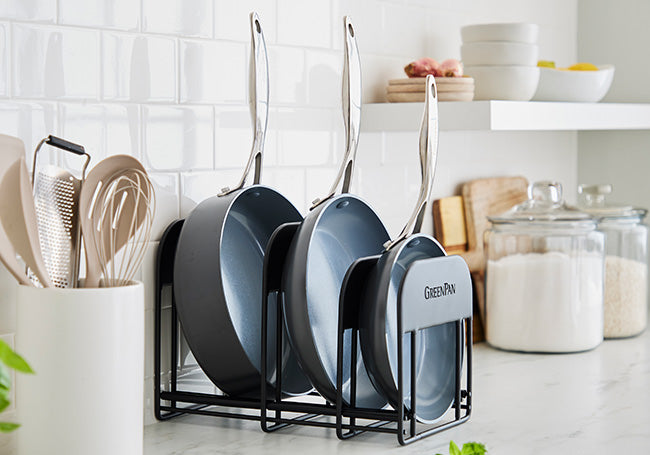
- Use Pot Protectors
- Place a soft pad, paper towel, or cloth between pots if stacking.
- This prevents scratches and chips.
- Hang Pots if Possible
- Hanging keeps pots from touching each other.
- Make sure the hanging system is sturdy and does not touch the nonstick surface.
- Store Lids Separately
- Glass lids can scratch ceramic if stored on top.
- Keep lids in a rack or stand.
- Keep Dry
- Store your GreenPan pot in a dry place to avoid moisture damage.
One insight most people miss: long-term moisture exposure (like in a damp cabinet) can cause the handles or base to loosen or corrode, even if the pot itself looks fine.
Comparing Greenpan Pots With Other Cookware
It’s helpful to see how GreenPan pots perform compared to other popular cookware types. Here’s a comparison for easy reference:
| Feature | GreenPan Pot | Traditional Nonstick | Stainless Steel | Cast Iron |
|---|---|---|---|---|
| Nonstick Coating | Ceramic (PTFE/PFOA-free) | PTFE (Teflon) | None | Natural (seasoned) |
| Heat Tolerance | Up to 450-600°F | Up to 400-500°F | Very high | Very high |
| Ease of Cleaning | Very easy | Easy | Medium | Requires seasoning |
| Reactivity with Food | Non-reactive | Non-reactive | May react with acids | May react unless seasoned |
| Eco-friendliness | High | Low | Medium | Medium |
As you can see, GreenPan pots offer a good balance of nonstick performance, safety, and eco-friendliness.
When To Use A Greenpan Pot
GreenPan pots are versatile, but they shine in certain tasks more than others. Here are some best uses:
- Eggs and Omelets
- The nonstick surface makes it easy to cook eggs without sticking or tearing.
- Sauces and Soups
- Even heating prevents burning or uneven cooking.
- Rice and Grains
- Less sticking means fluffier rice and easy cleanup.
- Stews and Curries
- The pot can simmer ingredients for a long time without food sticking to the bottom.
- Sauteing Vegetables
- Use less oil and still get good browning.
- Delicate Fish
- The gentle nonstick surface is perfect for fish fillets.
GreenPan pots are not the best for high-heat searing (like steak) or for deep-frying, as the oil can get too hot and damage the coating.
Recipes: Simple Dishes To Try In Your Greenpan Pot
Trying out a few easy recipes can help you get comfortable with your GreenPan pot. Here are two beginner-friendly options.
Vegetable Stir-fry
Ingredients:
- 1 tablespoon olive oil
- 1 cup broccoli florets
- 1 cup sliced bell peppers
- 1/2 cup sliced carrots
- 1/2 cup snap peas
- 1 tablespoon soy sauce
- 1 teaspoon minced garlic
- 1/2 teaspoon ground black pepper
Instructions:
- Preheat your GreenPan pot over medium heat for 1 minute.
- Add oil, then garlic. Stir for 30 seconds.
- Add all vegetables. Stir-fry for 4-5 minutes.
- Add soy sauce and pepper, stir well.
- Serve hot with rice or noodles.
Creamy Tomato Soup
Ingredients:
- 2 tablespoons olive oil
- 1 medium onion, chopped
- 2 cloves garlic, minced
- 1 can (28 oz) crushed tomatoes
- 2 cups vegetable broth
- 1/2 cup heavy cream
- Salt and pepper to taste
- Fresh basil (optional)
Instructions:
- Add oil to your GreenPan pot. Heat on medium.
- Add onions and garlic. Cook until soft (3 minutes).
- Pour in crushed tomatoes and broth. Simmer for 10 minutes.
- Reduce heat to low, add cream, stir.
- Season with salt, pepper, and basil. Serve warm.
These recipes show how you can use the GreenPan for both quick stir-fries and longer-simmered dishes.
Longevity: How To Make Your Greenpan Pot Last
With proper care, a GreenPan pot can last for years. Here’s how to maximize its lifespan:
- Stick to Medium Heat
- Most daily cooking can be done at medium or lower.
- High heat is rarely necessary.
- Avoid Cooking Sprays
- Use real oil or butter, which don’t leave a sticky residue.
- Gentle Cleaning
- Hand wash after every use.
- Soak instead of scrubbing if food is stuck.
- Don’t Stack Without Padding
- Protect the nonstick surface from scratches.
- Store in a Dry Place
- Prevent rust on handles or base.
- Check for Wear
- If the nonstick surface becomes badly scratched or starts peeling, stop using the pot. Replace it for safety.
One non-obvious insight: If you notice food starting to stick more, try cleaning with a baking soda paste before assuming the pot is “worn out.” Sometimes buildup, not damage, is the problem.
Credit: www.greenpan.us
Troubleshooting Common Greenpan Pot Issues
Even with careful use, you might encounter some problems. Here’s how to solve them:
Food Starts Sticking
- Clean with baking soda paste.
- Make sure you’re not using too high heat.
- Add a small amount of oil before cooking.
Stubborn Stains Won’t Come Off
- Soak in warm, soapy water overnight.
- Use a soft brush with baking soda.
- Avoid harsh scrubbing, which can scratch the surface.
Warped Pot
- Usually caused by sudden temperature changes (thermal shock).
- Always let the pot cool before washing.
Loose Handle
- Check if your pot has a screw in the handle. Tighten gently.
- If the handle remains loose, contact GreenPan support.
Coating Peeling Or Flaking
- Stop using the pot. Contact customer service.
- Peeling can release nonstick particles into food.
These solutions can help you avoid replacing your pot too soon.
Greenpan Pot Safety And Health Benefits
GreenPan pots are designed with health and safety in mind. The ceramic nonstick surface does not release toxic fumes even at higher temperatures. No PFAS, PFOA, lead, or cadmium is used in manufacturing.
Studies have shown that traditional nonstick coatings can release unhealthy chemicals when overheated. GreenPan’s Thermolon is made from sand and does not break down in the same way. This makes it a better choice for people with allergies, families, or anyone wanting to reduce chemical exposure.
One thing beginners miss is that GreenPan pots can help you cook with less oil. The nonstick surface means you can sauté vegetables or cook eggs with just a few drops of oil, supporting a lower-fat diet.

Credit: greenpan.com.au
Caring For Your Greenpan Pot Over Time
Like all cookware, GreenPan pots need periodic checks and care:
- Inspect for scratches and chips every few months.
- Reapply a tiny amount of oil if the surface looks dull.
- If food starts to stick more, deep clean with baking soda.
- Don’t use the pot if the coating is badly damaged.
Over time, gentle use and cleaning will keep your GreenPan looking and working like new.
Environmental Impact Of Greenpan Pots
Many people choose GreenPan for its eco-friendly production. The company uses recycled materials for the aluminum base and a clean production process for the ceramic coating. This means fewer greenhouse gases and less waste compared to traditional nonstick cookware.
If you care about the environment, GreenPan is a good choice. For more details, you can check their official site or read about eco-friendly cookware on Wikipedia.
Table: Greenpan Pot Care Vs. Other Nonstick Cookware
Let’s look at how GreenPan care compares with other nonstick cookware:
| Task | GreenPan Pot | PTFE Nonstick | Enamel Coated |
|---|---|---|---|
| Utensil Type | Wood/Silicone/Plastic | Wood/Silicone/Plastic | Any (with care) |
| Cleaning | Hand wash preferred | Hand or dishwasher | Hand wash only |
| Heat Range | Low–medium best | Low–medium best | Medium–high OK |
| Longevity | 3–5 years with care | 2–4 years | 5–10 years |
This shows that GreenPan pots are easy to care for but need gentle handling.
Table: Greenpan Pot Sizes And Uses
Choosing the right size GreenPan pot can make cooking easier. Here’s a quick guide:
| Pot Size | Best For | Typical Use |
|---|---|---|
| 1–2 Quart | 1–2 people | Soups, sauces, reheating |
| 3–4 Quart | 2–4 people | Stews, grains, small pasta |
| 5–6 Quart | Families | Large soups, boiling pasta, curries |
Choose a pot size based on your family size and most common recipes.

Credit: cookerswar.com
Frequently Asked Questions
How Long Does A Greenpan Pot Last?
With proper care, a GreenPan pot typically lasts 3 to 5 years. Lifespan depends on how often you use it, the cooking temperatures, and how you clean and store it.
Can I Use My Greenpan Pot On Induction Cooktops?
Most GreenPan pots are induction compatible, but not all. Check the bottom for an induction symbol or read the product manual. If it’s not induction-ready, it won’t heat up on those stoves.
Is The Greenpan Pot Dishwasher-safe?
Some GreenPan pots are labeled as dishwasher-safe, but hand washing is always better for the nonstick coating. Frequent dishwasher use can dull or damage the surface over time.
What Should I Do If My Greenpan Pot Gets Scratched?
If the ceramic coating is scratched but not flaking, you can still use the pot for a while. If it starts peeling or large scratches appear, stop using it to avoid eating nonstick particles.
Can I Use Oil Sprays With My Greenpan Pot?
It’s best to avoid oil sprays. They often contain additives that leave a sticky residue, which reduces nonstick performance. Use a small amount of regular cooking oil or butter instead.
Using a GreenPan pot is simple, but taking a little extra care gives you healthier food, easy cleanup, and a pot that lasts. With the steps and tips above, you’ll get the most from your GreenPan for years to come.