
When you first see a Thermador dishwasher, you may notice its modern look and feel. It promises great cleaning power, but only if you know how to use it properly. Many people buy a high-end dishwasher and end up using just the basic cycles, missing out on useful features. With a little guidance, you can get the most out of your Thermador dishwasher, making your kitchen life easier and your dishes spotless.
This guide walks you through everything you need to know—from setup to daily use, special features, troubleshooting, and care. Whether you are new to dishwashers or switching brands, you’ll find clear instructions and practical tips here. By the end, you’ll know exactly how to use your Thermador dishwasher for the best results, while saving time, water, and energy.
Understanding Your Thermador Dishwasher
Before you begin, it helps to get familiar with the dishwasher’s parts and functions. Thermador offers several models, but they share common features.
Main Features
- Flexible racks: Adjustable height and tines for different dish sizes.
- Powerful jets: Ensure deep cleaning, even with stuck-on food.
- Multiple wash cycles: Standard, Auto, Quick, Extra Dry, and more.
- Smart controls: Digital displays, touch panels, and WiFi (on some models).
- Quiet operation: Noise levels as low as 42 dBA.
- Energy efficiency: Most are ENERGY STAR® certified.
Control Panel Layout
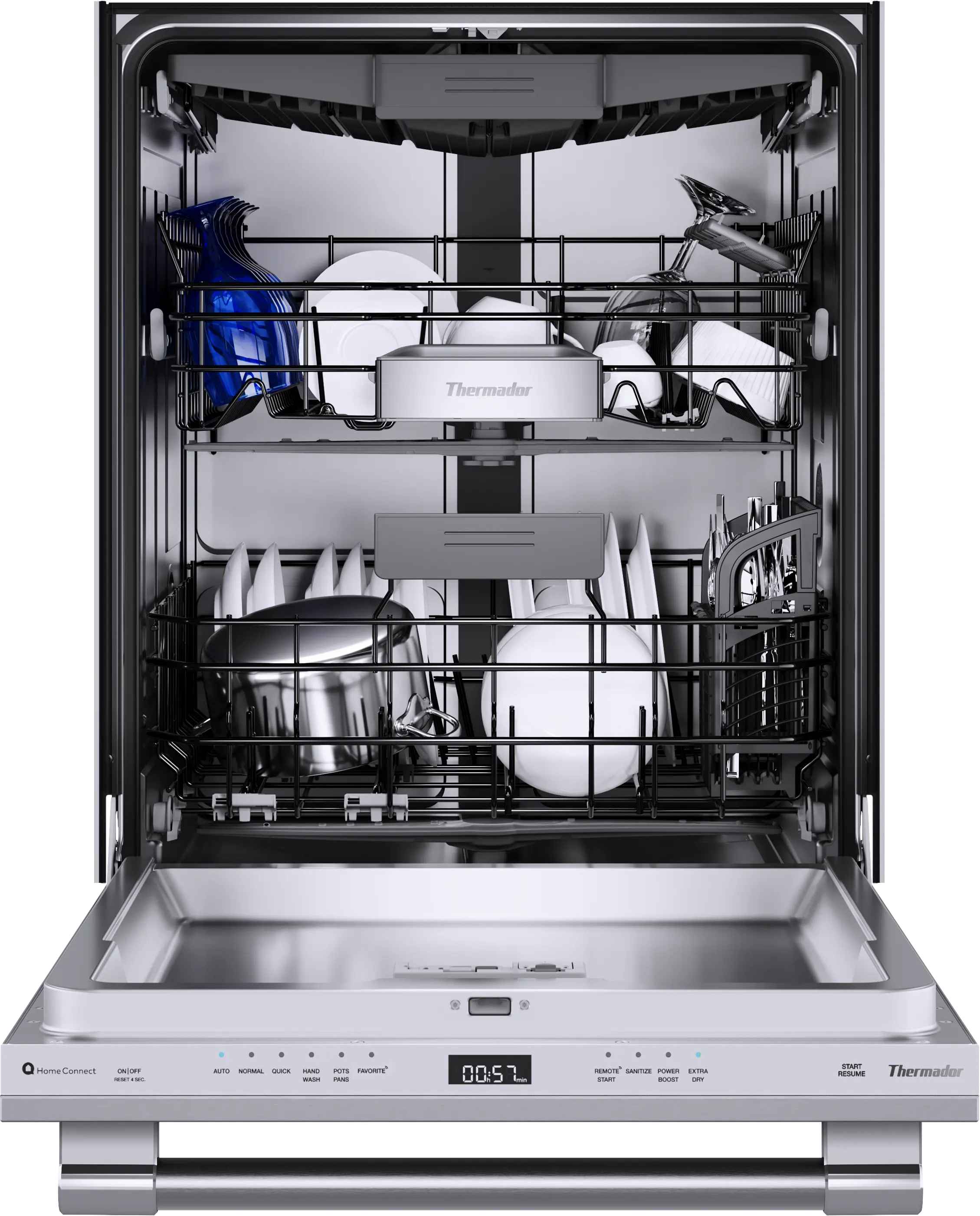
Thermador dishwashers may have a control panel on the top edge (hidden when closed) or on the front. Key buttons include:
- Power
- Start/Pause
- Cycle selection
- Delay start
- Options (like Extra Dry, Half Load)
Some models have an LCD display showing the remaining cycle time.
Interior Layout
Inside, you’ll find:
- Upper rack: For glasses, mugs, and small bowls.
- Lower rack: For plates, pots, and large items.
- Third rack: For cutlery and small utensils (on newer models).
- Detergent dispenser
- Rinse aid dispenser
- Spray arms (usually 2 or 3)
- Filter system: Located at the bottom, easy to remove for cleaning.
It’s easy to miss the third rack if you’re used to older dishwashers. This rack is ideal for small, flat items that need thorough cleaning.
First Steps: Setup And Preparation
Setting up your Thermador dishwasher for the first time is simple, but skipping steps can cause issues later.
Unpacking And Installation
If you’ve just bought your dishwasher, check that it was installed by a qualified technician. Proper installation is critical for leak-free operation. Make sure:
- The unit is level (to prevent water pooling).
- Hoses and power are connected securely.
- There’s no packaging material left inside.
Water Hardness Setting
Water hardness affects how well your detergent works. Thermador dishwashers let you set the water hardness level:
- Find your area’s water hardness (ask your supplier or use a test strip).
- Adjust the setting on your dishwasher (usually through the control panel).
- Add dishwasher salt if needed (for very hard water).
This step ensures sparkling glassware and prevents mineral buildup.
Loading Rinse Aid
Rinse aid helps water slide off dishes, preventing spots. Fill the rinse aid dispenser before your first wash. Use a high-quality, compatible product and follow the fill line.
Adding Dishwasher Salt (if Required)
Some Thermador dishwashers have a salt compartment. Only use dishwasher-specific salt—never table salt:
- Open the compartment (usually in the bottom, near the filter).
- Pour in salt using a funnel.
- Wipe away any spilled grains to avoid rust.
Salt is essential if you have hard water, as it softens the water for better cleaning.

Credit: www.youtube.com
Daily Use: Loading And Running Cycles
Getting your dishes clean starts with smart loading and the right cycle.
How To Load Your Thermador Dishwasher
Many users make mistakes by stacking dishes too closely or blocking spray arms. Here’s the best way to load:
- Scrape off large food pieces. No need to pre-rinse, but remove bones, pits, and pasta chunks.
- Place plates and pots in the lower rack. Face the dirty side towards the center.
- Glasses and cups go in the upper rack. Tilt them for better drying.
- Utensils: Use the cutlery basket or third rack. Mix up spoons and forks to avoid nesting.
- Plastic items: Keep them in the top rack to avoid melting.
- Don’t overload. Leave space for water to reach all surfaces.
- Check spray arms can spin freely before closing.
Example Of A Well-loaded Dishwasher
A family of four’s dinner dishes: 4 dinner plates, 4 bowls, 4 glasses, 8 utensils, 2 pans. Plates in the lower rack, glasses in the upper, cutlery in the basket, pans at the sides—nothing blocks the spray arms.
Choosing The Right Cycle
Thermador dishwashers offer cycles for every need. Here’s a quick guide:
| Cycle Name | Best For | Typical Time | Water Usage (L) |
|---|---|---|---|
| Auto | Mixed loads, everyday use | 90–120 mins | 6–10 |
| Normal | Regular dirty dishes | 110–135 mins | 9–12 |
| Quick | Lightly soiled dishes | 30–45 mins | 6–8 |
| Heavy | Pots, pans, baked-on food | 135–160 mins | 12–15 |
| Eco | Energy/water saving | 120–150 mins | 6–8 |
| Rinse | Pre-wash, no detergent | 10–15 mins | 3–4 |
Auto is the most versatile—sensors adjust water and time based on soil level. Use Heavy for stubborn messes, and Quick for clean-ups after snacks or drinks.
Selecting Options
Beyond basic cycles, you can customize:
- Extra Dry: For plastic items or faster cupboard-ready results.
- Half Load: Saves water/energy if washing a few items.
- Sanitize: Raises water temperature to kill bacteria—good for baby bottles or cutting boards.
- Delay Start: Set the dishwasher to run later (1–24 hours in advance).
These options appear as buttons. Choose your main cycle, then tap the desired options.
Adding Detergent
Use only dishwasher detergent (powder, gel, or pods). Never use regular dish soap. Check the dispenser for the right amount—usually 1–2 tablespoons for powder, or 1 pod. Overfilling can cause residue.
Non-obvious tip: If your water is soft, use less detergent. Too much causes cloudy glassware.
Starting The Dishwasher
- Close the door firmly.
- Press Power.
- Select cycle and options.
- Press Start.
Some models have an InfoLight or similar feature—a light shines on the floor while running. If the door opens during a cycle, press Start again to resume.
Advanced Features And Smart Functions
Thermador dishwashers include clever extras that set them apart from basic models.
Wifi And Home Connect
Many new models support Home Connect (Thermador’s smart app):
- Start, stop, or schedule cycles from your phone.
- Monitor cycle progress remotely.
- Receive maintenance reminders.
- Download custom wash programs for special needs (e.g., glassware, pots).
To use, download the Home Connect app, link your dishwasher, and follow prompts.
Insight: If you often forget to run the dishwasher, set a phone alert or use voice assistants (like Alexa or Google Home) for reminders.
Interior Lighting
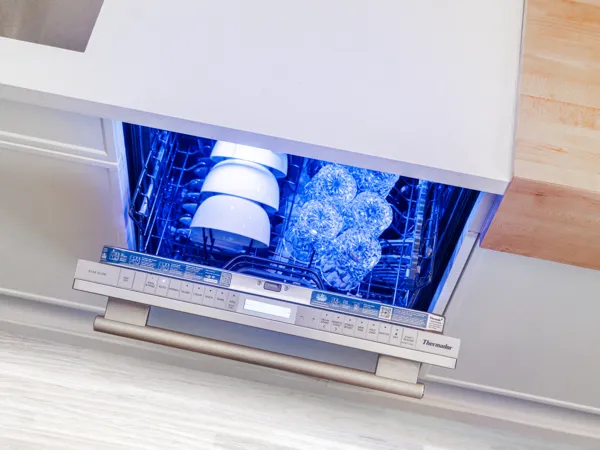
Select Thermador dishwashers have LED lights inside. This makes loading and unloading easier, especially at night.
Zeolite Drying
Some high-end models use zeolite crystals for ultra-fast, energy-saving drying. Zeolite absorbs moisture and releases heat, so plastics and dishes come out dry without extra electricity.
Beginner tip: If you notice your plastic is still wet, check if the Zeolite function is enabled and if you’ve selected Extra Dry.
Third Rack Innovations
The third rack isn’t just for cutlery. You can place espresso cups, spatulas, or even small lids here. It slides out for easy access and can often be adjusted in height.
Aquastop Leak Protection
Thermador’s AquaStop system detects leaks and shuts off water automatically. If you see an error or water in the base, call service—don’t try to reset repeatedly.
Cleaning And Maintenance
Regular care keeps your dishwasher running like new and prevents odors, stains, or breakdowns.
Cleaning The Filter
The filter sits at the bottom. Clean it every 1–2 weeks or if you notice dirty dishes.
- Twist and lift out the filter.
- Rinse under hot water. Use a soft brush for debris.
- Check for glass shards or bones.
- Reinstall securely.
Missed by beginners: If you skip filter cleaning, your dishwasher may smell or leave grit on dishes.
Wiping The Door And Gasket
Once a week, wipe the door edges and rubber gasket with a damp cloth. This prevents mold and keeps the seal tight.
Descaling And Interior Cleaning
If you have hard water, run a descaling cycle every 2–3 months:
- Use a dishwasher cleaner (follow the package).
- Run the hottest cycle with an empty dishwasher.
Checking Spray Arms
Remove and rinse spray arms if you notice poor cleaning. Food bits or mineral deposits can block holes.
Refilling Salt And Rinse Aid
Check levels monthly. If glasses start to show spots or the dishwasher warns you, refill as needed.
Keeping The Exterior Clean
Use a soft, damp cloth for the exterior. Stainless steel models can show fingerprints—use a special cleaner if needed, and always wipe in the direction of the grain.
Troubleshooting Common Problems
Even the best dishwashers have issues sometimes. Here are solutions to frequent problems.
Dishes Not Coming Out Clean
- Overloaded racks: Rearrange to allow water flow.
- Clogged filter or spray arms: Clean them.
- Wrong cycle or not enough detergent: Choose a stronger cycle or add more detergent.
- Hard water: Add salt or use a rinse aid.
Dishwasher Smells Bad
- Dirty filter: Clean it.
- Standing water: Check for blockages.
- Run a hot wash with vinegar: Place a bowl of white vinegar on the top rack, run hottest cycle.
Dishwasher Doesn’t Start
- Door not fully closed: Push firmly.
- Power issue: Check plug or circuit breaker.
- Child lock activated: Look for a lock symbol or check the manual.
Water Not Draining
- Clogged drain hose or filter: Clear blockages.
- Kinked hose: Straighten it.
- Pump issue: If the above fails, call for service.
Error Codes
Thermador displays error codes like E15 (leak detected) or E24 (drain problem). The manual has a full list. For major errors, unplug and call support.
Credit: www.thermador.com
Energy And Water Saving Tips
Thermador dishwashers are efficient, but smart habits can save even more.
Run Full Loads
Dishwashers use almost the same energy and water for half-loads. Wait until it’s full, or use the Half Load option.
Skip Pre-rinsing
Modern dishwashers are designed to handle light mess. Scrape, don’t rinse, to save water.
Use Eco Mode
Eco cycles use less water and energy, though they take longer. Great for everyday washing if you’re not in a hurry.
Choose Off-peak Hours
If your electricity is cheaper at night, use Delay Start to run after hours.
Use Rinse Aid
It speeds drying, reducing energy from extra heat.
Insight: Using the right cycle and options can lower your yearly water use by up to 3,000 gallons compared to handwashing.
Comparing Thermador With Other Brands
If you’ve used other dishwashers, you might wonder how Thermador stands out. Here’s a comparison with two common premium brands.
| Feature | Thermador | Bosch | Miele |
|---|---|---|---|
| Noise Level (dBA) | 42–48 | 44–50 | 42–46 |
| Third Rack | Yes, flexible | Yes, standard | Yes, cutlery tray |
| Smart Features | Home Connect | Home Connect | WiFi@Home (select models) |
| Drying System | Zeolite (high-end) | Condensation/Zeolite | AutoOpen Dry |
| Warranty | 2 years full | 1 year | 1–2 years |
Thermador stands out for quiet operation, a flexible third rack, and zeolite drying. Beginners often miss the value of these features, especially the drying technology, which helps with plastics.
Safety And Child Lock Features
Thermador includes several safety options:
- Child lock: Prevents accidental changes or opening. Activate by holding the lock button for 3–5 seconds.
- AquaStop: Stops leaks automatically.
- Hot water safety: Keeps water at safe temperatures for washing but not scalding.
Always activate the child lock if you have kids at home, as the door can open easily.
When To Call For Service
Some problems require professional help:
- Persistent leaks or error codes
- No power after checking the outlet
- Strange noises (grinding or banging)
- Door won’t close or latch
Thermador offers a 2-year full warranty and a large service network. Have your model and serial number ready when you call.
For more details, see the official Thermador support page.
Credit: www.thermador.com
Frequently Asked Questions
How Much Detergent Should I Use In My Thermador Dishwasher?
You need about 1–2 tablespoons of powder detergent, or 1 pod per load. If your water is soft, use less to prevent residue. Always use detergent designed for dishwashers.
Can I Wash Nonstick Pans Or Sharp Knives In My Thermador Dishwasher?
It’s not recommended. Nonstick pans can lose their coating, and sharp knives can dull or damage the racks. Wash these items by hand to keep them in good shape.
What Do I Do If My Thermador Dishwasher Smells Bad?
Clean the filter, check for food stuck in the door or racks, and run a hot cycle with a bowl of white vinegar on the top rack. This removes buildup and odor.
How Do I Activate The Child Lock On My Thermador Dishwasher?
Hold the lock button (or the option button with a lock symbol) for 3–5 seconds until you see a lock icon on the display. Repeat to unlock.
Is It Safe To Open The Dishwasher During A Cycle?
You can open the door to add an item, but steam and hot water may escape. The cycle will pause—close the door and press Start to resume.
Thermador dishwashers combine advanced technology with everyday convenience. By following the steps here, you’ll get spotless dishes, lower bills, and a long-lasting appliance. Take a few minutes to understand your machine, and you’ll enjoy years of hassle-free cleaning.