
Using an oven thermometer might sound simple, but it can make a surprising difference in your cooking. Many people believe their oven’s dial tells the truth about the temperature inside. But in reality, most ovens are off by at least 10-25°F (5-15°C).
Sometimes, the difference is even bigger. This can mean undercooked chicken, burnt cookies, or bread that never rises. Learning how to use a thermometer in your oven is a smart step. It’s not just for professional chefs—home cooks get more reliable results too.
In this guide, you’ll discover everything you need to know about using an oven thermometer, from choosing the right one to cleaning and maintenance. You’ll also find out about mistakes people often make, and how to avoid them. With this knowledge, you can cook with more confidence, waste less food, and impress your friends and family.
Why Oven Temperature Matters
You may wonder why being exact with oven temperature is so important. The answer is simple: precision in temperature affects both safety and quality. If you bake a cake at the wrong temperature, it might be raw inside and burnt outside. If you roast meat too cool, bacteria may survive. When you use the correct temperature, food cooks as recipes expect. This means better taste, texture, and safety.
Home ovens often have “hot spots” and “cold spots.” These are areas where the temperature is higher or lower than the dial says. For example, in a test of 100 home ovens, 70% were found to be at least 15°F (8°C) off from their settings. This is why professional bakers and chefs always use thermometers. You don’t need to be a professional to benefit, though. Even for simple dishes like pizza or roast vegetables, using a thermometer can help.
Types Of Oven Thermometers
Not all oven thermometers are the same. Choosing the right one helps you get the best results. Here are the main types you’ll find:
1. Dial Oven Thermometers
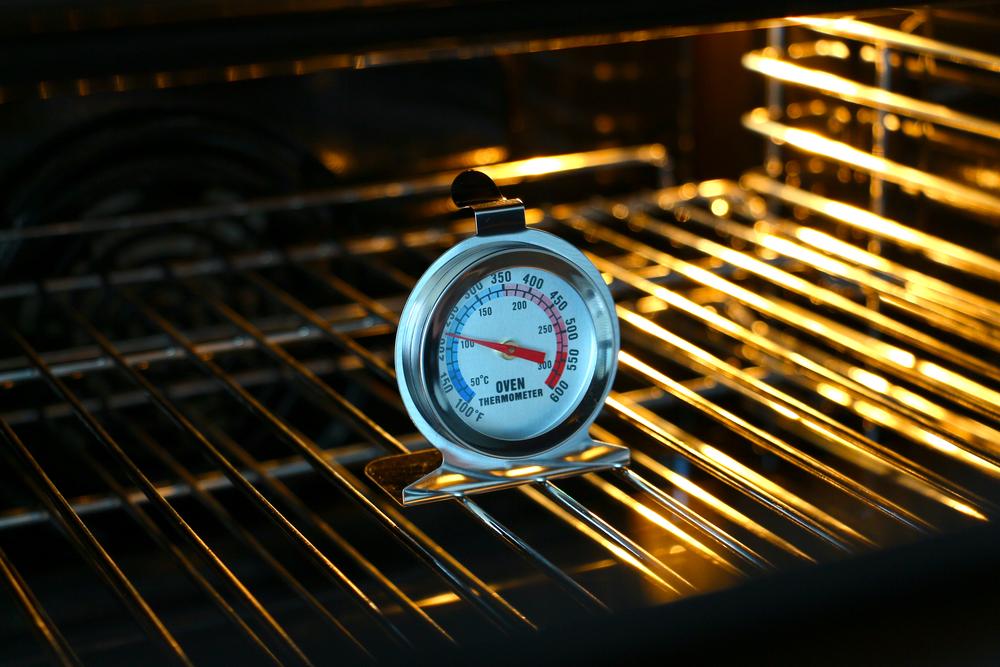
Dial thermometers are the most common type for home ovens. They look like a small clock with a metal base. You place them inside the oven, and the needle shows the temperature. They’re simple, affordable, and don’t need batteries.
Pros:
- Cheap and widely available
- Easy to use
- No batteries needed
Cons:
- Can be hard to read through the oven window
- Some models react slowly to temperature changes
2. Digital Oven Thermometers
Digital thermometers have a small screen that shows the temperature in numbers. Some have a probe you can stick in food, while others measure the air inside the oven.
Pros:
- Easy to read
- More accurate (in many cases)
- Some have alarms for target temperatures
Cons:
- Need batteries
- Some are not oven-safe (check instructions)
3. Probe Thermometers
These are also called leave-in meat thermometers. A wire runs from the probe (inside the oven or food) to a display outside the oven. Many can show both the oven’s air temperature and the food’s internal temperature at the same time.
Pros:
- Useful for roasting meat
- Can track food and oven temperature
- Alarms for set temperatures
Cons:
- Wires can get damaged if not careful
- Usually more expensive
4. Infrared Thermometers
Infrared thermometers are hand-held devices that measure surface temperature using laser light. They are not usually used for measuring oven air temperature, but can help check the temperature of pizza stones or oven walls.
Pros:
- Fast and easy to use
- No contact needed
Cons:
- Only measures surface temperature
- Not for air temperature inside the oven
Comparison Of Main Types
Here’s a quick comparison of popular oven thermometer types:
| Type | Best For | Accuracy | Needs Batteries |
|---|---|---|---|
| Dial | General baking/roasting | Medium | No |
| Digital | Precise baking/candy making | High | Yes |
| Probe | Roasts/meats | High | Yes |
| Infrared | Pizza stones/surfaces | Medium | Yes |
For most home cooks, a simple dial or digital oven thermometer is enough. If you cook a lot of meat or want more control, a probe thermometer might be worth it.
How To Choose The Right Oven Thermometer
Selecting the best thermometer depends on your needs, cooking style, and oven type. Here’s how to choose wisely:
- Check Your Oven Type: Standard ovens work with all types. Convection ovens (with fans) may move light thermometers, so pick a stable or hanging model.
- Think About Visibility: If you want to see the temperature without opening the oven, choose a thermometer with a large face or digital display.
- Consider What You Cook Most: For baking cakes or cookies, accuracy is key. For roasting meat, a probe thermometer is helpful.
- Material and Build Quality: Stainless steel models last longer and resist rust. Avoid cheap plastics, which can melt.
- Temperature Range: Make sure it covers the range you need. For example, pizza ovens need thermometers that go above 500°F (260°C).
- Ease of Cleaning: Simple designs are easier to clean. Avoid models with complex shapes where grease can hide.
A practical tip: read recent reviews online before buying. Sometimes, even popular brands have models with frequent problems.
Step-by-step Guide: How To Use A Thermometer In The Oven
Many people buy a thermometer but never use it correctly. Here’s how to do it right, step by step.
Step 1: Place The Thermometer In The Oven
- Where to put it: The best spot is the center of the middle rack. This is where most recipes expect you to bake or roast.
- Why the middle? The top is usually hotter, and the bottom cooler. The middle gives a “true average.”
- Don’t let it touch metal: If your thermometer touches the oven wall or rack, it may read too hot.
Some dial thermometers can hang from the rack, while others sit on a flat base. Make sure it’s stable and not likely to fall.
Step 2: Preheat The Oven
- Turn the oven on to the temperature you want.
- Wait at least 10-15 minutes after your oven says it is “ready.” Many ovens beep early, before reaching the true temperature.
- Check the thermometer through the oven window if possible. Don’t open the door too often, or you’ll lose heat.
Step 3: Read The Temperature
- When the oven is steady (no more rising), check the number on the thermometer.
- If it matches your oven dial, you’re lucky! If not, note the difference.
For example, if your oven is set to 350°F (177°C) but the thermometer shows 330°F (166°C), your oven runs cool.
Step 4: Adjust Your Oven
- If your oven is too hot or too cold, adjust the dial to “correct” it.
- For example, if you want 350°F but your oven is 20°F too cool, set the dial to 370°F.
Record these adjustments for next time. Every oven is different, and temperatures can drift over time.
Step 5: Monitor During Cooking
- Keep the thermometer inside for the first 20-30 minutes of baking or roasting.
- If you’re baking for a long time, check again halfway through. Some ovens heat unevenly over time.
If you need to remove the thermometer to make space, do it with oven mitts—metal gets very hot.
Step 6: Remove And Clean
- After cooking, let the thermometer cool before handling.
- Wash with warm, soapy water if it’s greasy. Dry it well to prevent rust.
Common Problems And Solutions
- Thermometer fogs up: This is normal when cold glass meets hot air. It usually clears after a few minutes.
- Numbers hard to read: Use a flashlight through the oven window, or choose a model with larger numbers.
- Thermometer falls over: Pick a heavier or hanging type, or place it in a corner where food won’t hit it.
Using A Probe Thermometer For Food Safety
Probe thermometers are a special case. They’re used to check the internal temperature of meats and baked goods. This matters for safety and taste.
How To Use A Probe Thermometer
- Insert the probe into the thickest part of the food, away from bone or fat. For chicken, use the breast or thigh.
- Place the food on the rack, with the probe wire running out of the oven door (most doors seal around the wire).
- Set the target temperature on the display (many have alarms).
- Wait until the thermometer beeps or shows the right number.
Safe Temperatures For Common Foods
Here’s a quick guide to minimum safe temperatures:
| Food | Minimum Safe Temp (°F) | Minimum Safe Temp (°C) |
|---|---|---|
| Chicken (whole) | 165 | 74 |
| Beef (medium) | 145 | 63 |
| Pork | 145 | 63 |
| Bread (center) | 190-210 | 88-99 |
Probe thermometers are especially useful for roasts, turkeys, and loaves of bread. They take the guesswork out of cooking.
Calibrating Your Oven Thermometer
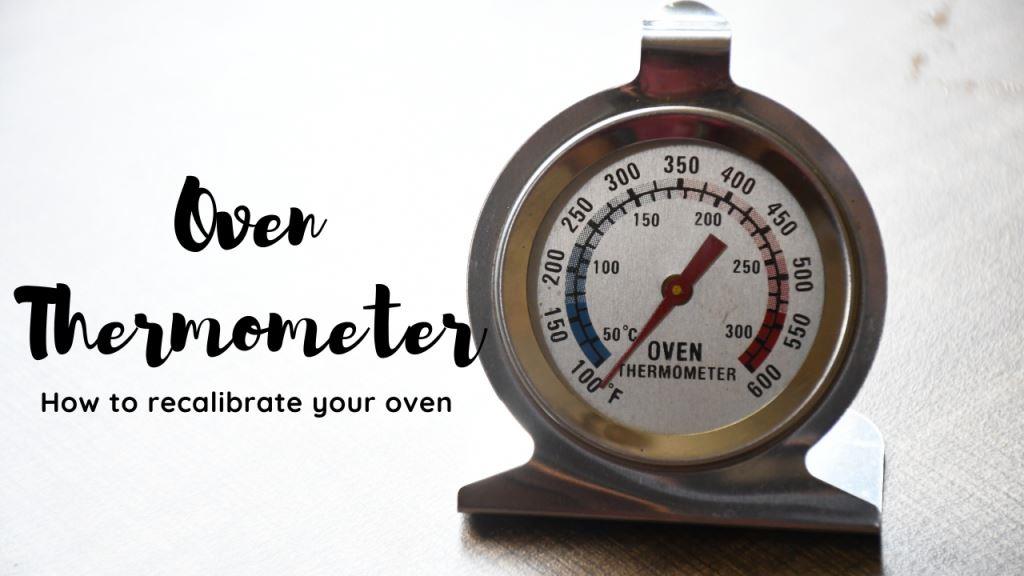
Even good thermometers can become inaccurate over time. Here’s how to check and fix yours.
The Boiling Water Test
- Boil water in a pot (sea level: 212°F or 100°C).
- Hold your thermometer in the boiling water for a few seconds (do not touch the pot).
- It should read close to 212°F (100°C). If not, note the difference and adjust your readings in the oven.
Tip: Elevation changes boiling point. At higher altitudes, water boils at a lower temperature.
The Ice Water Test
- Fill a glass with ice and water.
- Let it sit for a few minutes.
- Place the thermometer in the ice water (not touching the glass).
- It should read 32°F (0°C).
If your thermometer shows a big error, it may need replacing.
Cleaning And Maintaining Your Oven Thermometer
A dirty or greasy thermometer can give wrong readings. Ovens can get messy fast, so regular cleaning helps.
- Wash after every few uses: Use mild soap and a soft sponge. Avoid strong chemicals that can damage the glass or dial.
- Dry completely: Water can cause rust, especially on cheaper models.
- Check for cracks: If the glass is cracked or the numbers are fading, replace the thermometer.
- Store safely: Don’t leave it in the oven during the self-clean cycle. High heat can melt parts or damage the mechanism.
Advanced Tips: Getting The Most From Your Oven Thermometer
Many people stop at basic use. But there are ways to get even more from your thermometer.
1. Map Your Oven’s Hot And Cold Spots
Move the thermometer to different spots: front, back, sides, and center. Take readings at the same oven setting. You may find one corner is always hotter. This helps you know where to bake sensitive foods like macarons.
2. Double-check For Long Bakes
For recipes that take over an hour, like roasts or casseroles, check the temperature every 30-40 minutes. Ovens can drift as they cycle on and off.
3. Use Multiple Thermometers
For very accurate baking, try using two thermometers in different places. Compare the readings. This is how bakeries find “hot spots” and adjust tray positions.
4. Adjust For Convection Ovens
Convection ovens (with a fan) cook faster and often run hotter. Reduce your oven temperature by 20-25°F (10-15°C) if following regular recipes, but always check with your thermometer.
5. Keep Records
Write down your oven’s “real” temperatures at different dial settings. This turns your oven into a more reliable tool, especially for baking.
Common Mistakes When Using An Oven Thermometer
Even with good tools, mistakes happen. Here are some common errors and how to avoid them.
- Placing the thermometer on the oven floor: The bottom is usually much hotter than the racks, giving a false reading.
- Leaving the thermometer in during self-clean: Self-clean cycles are 800°F (425°C) or more—too hot for most thermometers.
- Not waiting for the oven to stabilize: Ovens swing above and below the set temperature as they heat up. Wait until the thermometer shows a steady number.
- Using a broken or old thermometer: Numbers can fade, or the mechanism can stick. Replace if readings seem odd.
- Not checking calibration: Over time, thermometers can “drift.” Calibrate every few months.
Special Cases: Pizza Ovens, Toaster Ovens, And More
Oven thermometers are not just for big kitchen ovens. Smaller ovens, pizza ovens, and toaster ovens can all benefit.
Pizza Ovens
These ovens often reach 700°F (370°C) or more. Use a thermometer rated for high heat. Infrared thermometers are popular for measuring pizza stones and surfaces.
Toaster Ovens
Space is limited, but a small dial thermometer can fit on the rack. Toaster ovens often have bigger temperature swings, so checking is important.
Air Fryers And Countertop Ovens
Some countertop ovens have glass doors. Use a small digital thermometer that can sit inside safely. Many air fryers run hotter than labeled.
Credit: bakestarters.com
When To Replace Your Oven Thermometer
No tool lasts forever. Here’s when it’s time to get a new one:
- The glass is cracked or fogged up permanently.
- The dial or display is loose or unreadable.
- The thermometer fails calibration tests.
- Metal parts are rusting or corroded.
- You notice strange or “stuck” readings.
Replacing is safer than guessing, especially when food safety is involved.
Real-world Example: Baking Bread
Imagine you want to bake a loaf of bread. The recipe says 400°F (204°C) for 35 minutes.
- Place your oven thermometer in the center of the oven.
- Preheat your oven. The dial says 400°F after 10 minutes, but your thermometer shows only 370°F.
- Wait another 10 minutes. Now the thermometer shows 400°F.
- Put in the bread and bake for 35 minutes.
- Check the thermometer halfway. It stays steady.
- The bread comes out perfectly golden and cooked through.
Without the thermometer, you might have started baking too soon, leading to a pale, doughy loaf.
Credit: gayathriscookspot.com
Data: Oven Temperature Inaccuracy
Studies show that home ovens can be quite unreliable:
- Consumer Reports found that 55% of ovens tested were off by at least 25°F (14°C) compared to their dials.
- Older ovens (10+ years) are more likely to have large errors, sometimes 50°F (28°C) or more.
- Even new ovens can be wrong, depending on how the temperature sensors are placed.
This proves why a thermometer is a smart investment for better cooking.
Troubleshooting: What To Do If Temperatures Are Way Off
If your oven is more than 50°F (28°C) off from the dial:
- Check if the thermometer is working properly (try the boiling water test).
- Make sure the thermometer is not touching metal.
- Clean any grease from the thermometer.
- Try a second thermometer to confirm.
If both thermometers agree, your oven likely needs repair or recalibration. Some ovens have a “calibration” setting—check your manual. If not, you may need a professional to fix it.

Credit: www.youtube.com
Summary Table: How To Use An Oven Thermometer
Here’s a quick reference for the main steps:
| Step | Action | Key Point |
|---|---|---|
| 1 | Place thermometer in middle of oven | Avoid touching metal |
| 2 | Preheat oven fully | Wait after “ready” signal |
| 3 | Check thermometer reading | Look for steady temperature |
| 4 | Adjust oven as needed | Note differences for future |
| 5 | Monitor during cooking | Check for long bakes |
| 6 | Clean and store thermometer | Replace if damaged |
Extra Insights: What Most Beginners Miss
- Thermometers take time to adjust. Don’t trust the first reading—wait 3-5 minutes for the needle to settle.
- Oven doors leak heat. Each time you open the door, the temperature drops by 25-50°F (14-28°C). Check through the window if possible.
- Many recipes are written for inaccurate ovens. With a good thermometer, you may need to adjust cooking times or temperatures for best results.
- Humidity changes oven behavior. Baking on a rainy day? Your oven may take longer to heat, and bread may brown less.
Frequently Asked Questions
What Is The Best Place To Put An Oven Thermometer?
The center of the middle rack is best. This is where most recipes expect you to place food. Avoid corners or touching the oven walls, as these areas can be much hotter or cooler than the center.
Can I Leave My Oven Thermometer Inside While Baking?
Yes, most dial and probe thermometers are designed to be left inside during baking or roasting. However, never leave them in during the oven’s self-clean cycle, as the extreme heat can damage them.
How Often Should I Calibrate My Oven Thermometer?
It’s a good idea to check your thermometer’s accuracy every 3-6 months, especially if you bake often or notice strange cooking results. Use the boiling water or ice water test to confirm it’s still correct.
Are Expensive Oven Thermometers More Accurate?
Not always. Some affordable models are just as accurate as expensive ones. The most important things are proper use, reading reviews, and checking calibration regularly.
Where Can I Learn More About Oven Safety And Food Temperatures?
A reliable resource is the USDA Safe Temperature Chart, which gives detailed information on safe cooking temperatures for all types of food.
Learning how to use a thermometer in your oven is a small effort with big rewards. With every use, your confidence grows, and your food gets better. Remember, your oven is only as good as your thermometer says it is.
Happy cooking!