
If you’ve ever noticed stubborn dark spots in your swimming pool that don’t go away with normal cleaning, you’re likely dealing with black algae. These invaders can be a nightmare for pool owners. Many people search online for “pictures of black algae in pool” because identifying this problem is not easy—black algae often looks like simple dirt or stains. But knowing exactly what you’re looking at is the first step toward fixing it for good.
This article will guide you through everything you need to know about black algae in pools. You’ll learn how to spot it, what it looks like in real pools, why it appears, and what you can do to prevent and remove it.
Along the way, you’ll see how to tell the difference between black algae and other pool problems, and you’ll get answers to the most common questions people have about this issue. Whether you’re a new pool owner or have been dealing with pools for years, you’ll find practical advice and expert tips here.
What Is Black Algae?
Black algae is a type of cyanobacteria, not a true algae, but it acts like one in swimming pools. It forms very dark green, blue-green, or black spots on pool surfaces. These spots are usually small at first—about the size of a pencil eraser—but can grow and spread if not treated.
Unlike green algae, black algae has a protective outer layer that makes it tough to remove. The roots of black algae also dig deep into pool plaster, grout lines, or concrete, which is why brushing often doesn’t work. The stubborn nature of black algae makes it one of the most difficult pool problems to solve.
Key facts about black algae:
- Grows in pools with poor circulation or low chlorine.
- Common in concrete or plaster pools, less so in vinyl pools.
- Appears as hard, dark spots that don’t brush off easily.
Why Are Pictures Of Black Algae In Pool Important?
Many pool owners mistake black algae for regular dirt, dark stains, or even mold. Pictures of black algae in pool help you know what you’re dealing with before you try to fix it. If you treat the problem like normal algae or stains, you’ll waste time and money.
Seeing real pictures is valuable because:
- Identification: You can compare your pool to real examples and confirm if you have black algae.
- Avoiding mistakes: You won’t try the wrong cleaning methods.
- Understanding severity: You’ll know if your problem is minor or widespread.
Pro tip: Don’t rely only on one photo. Black algae can look slightly different depending on your pool’s surface, lighting, and how long it’s been growing.
Common Signs Of Black Algae In Pools
Knowing the visual clues makes spotting black algae much easier, even before you start searching for pictures. Here’s what to look for:
- Small dark dots or patches: Usually found in shaded or less-used areas, especially along steps, corners, or grout lines.
- Hard texture: When you touch the spots, they feel rough and hard, not slimy.
- Don’t brush off: Even after strong brushing, the spots remain.
- Color: Deep black, dark blue, or blue-green. Unlike green algae, it’s never bright.
- Clusters: Often appears in groups, not just single spots.
Real-world Pictures Of Black Algae In Pool
If you search online, you’ll see many photos showing black algae in different types of pools. While we can’t display photos here, we’ll describe what you’ll see in the most common images and how to interpret them.
Photo 1: Black Algae On Pool Steps
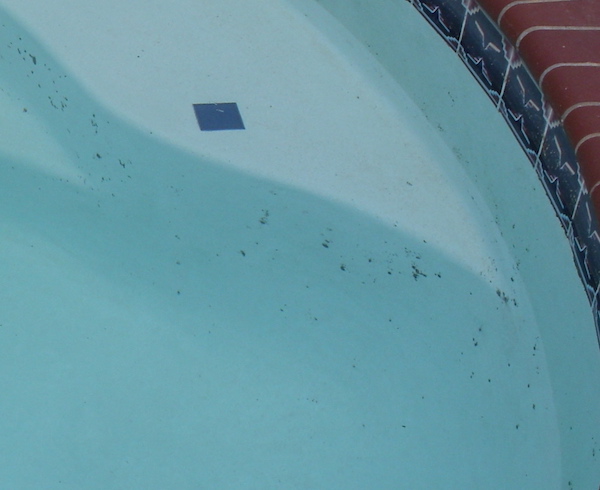
You’ll notice small, round dark spots scattered along the edges of white or light-colored pool steps. These spots look like someone dotted the surface with a marker. No matter how clean the rest of the pool is, these dark dots stand out sharply, and they don’t smear or brush off.
Photo 2: Black Algae In Tile Grout
Some images show fine lines of black or dark blue running along the grout lines between tiles. Sometimes, the algae form little “beads” or clusters in the corners where the pool wall meets the floor. It’s easy to mistake this for mold, but it’s much harder to remove.
Photo 3: Large Black Patches On Pool Floor
In older or neglected pools, you’ll see bigger, irregular patches of black algae. These look like paint spills or burned areas. The edges may be fuzzy, but the center is usually very dark. Even after a thorough brushing, the spots stay in place.
Photo 4: Algae In Plaster Cracks
Black algae often finds its way into tiny cracks or pits in pool plaster. Photos show thin, thread-like streaks of black running along these cracks. This is a sign that the algae has “roots” deep in the surface.
Photo 5: Comparison With Other Algae
Some helpful photos show black algae next to green or yellow algae for comparison. The difference is clear: black algae is much darker, tougher, and doesn’t spread out in a “cloud” like green algae.
Remember: Light can change how black algae looks in photos. In bright sunlight, the spots may look blue-green. In shade, they appear jet black.
How Black Algae Differs From Other Pool Problems
It’s easy to confuse black algae with other pool issues, especially if you only look at photos. Here’s a side-by-side comparison to help you tell them apart.
| Problem | Color | Texture | Removes with Brushing? | Common Location |
|---|---|---|---|---|
| Black Algae | Black or blue-green | Rough, hard | No | Steps, grout, cracks |
| Green Algae | Bright green | Slippery, soft | Yes | Anywhere |
| Yellow (Mustard) Algae | Yellow or brown | Powdery | Partially | Shaded walls |
| Dirt/Stains | Brown or black | Flat, no texture | Usually | Floor, corners |
| Mold | Black, gray | Soft, slimy | Yes | Above water, grout |
Non-obvious insight: True black algae is rough and resists chlorine. If you can scrape it off with your fingernail and it smears, it’s probably not black algae.
Why Does Black Algae Grow In Pools?
Black algae thrives in pools that give it a chance to settle and grow. Here are the main reasons it appears:
- Low chlorine levels: Black algae survives when chlorine is too low or unevenly distributed.
- Poor water circulation: Spots with little water movement, like corners and steps, are prime spots.
- Rough surfaces: Plaster, concrete, and unsealed grout give black algae a place to anchor.
- Sunlight: Black algae loves sunlight and often grows in pools that get direct sun.
- Contaminated equipment: Items like pool brushes, floats, or swimsuits used in lakes can carry black algae spores into your pool.
Advanced tip: Black algae can survive in microscopic cracks in your pool. Even if you kill the surface algae, if you don’t treat the roots, it will return.

Credit: www.aussiepools.com.au
Stages Of Black Algae Growth
Black algae doesn’t appear overnight. Understanding its life cycle helps you spot the problem early.
- Spore stage: Invisible to the eye, but the algae has entered your pool.
- Early growth: Tiny, dark specks appear, usually in shaded or quiet areas.
- Colonization: Spots grow larger and deeper, forming clusters.
- Mature colonies: Large, hard patches that resist brushing, often with deep roots in plaster or grout.
- Spreading: Algae breaks off and starts new colonies elsewhere in the pool.
Important: Early action at stage two or three makes removal much easier.
Dangers And Risks Of Black Algae
Many people ask, “Is black algae dangerous?” The answer is that while it doesn’t release toxins into the water, it creates other problems:
- Harboring bacteria: Black algae’s protective coat shelters bacteria, including harmful ones like E. coli.
- Slippery surfaces: When wet, algae can make pool steps or floors slippery and increase the risk of falls.
- Damaging pool surfaces: The roots break down plaster and grout, leading to expensive repairs.
- Chlorine demand: Black algae consumes chlorine, making it harder to keep your pool sanitized.
Non-obvious insight: Pools with black algae often fail water quality tests, even if the water looks clear.
Credit: pinchapenny.com
How To Confirm Black Algae: Simple Tests
Before you start treatment, you want to be sure you’re dealing with black algae. Here are two simple tests:
- Scrape test: Use a coin or flat tool to scrape a spot. If it doesn’t smear and remains after scraping, it’s likely black algae.
- Chlorine test: Place a chlorine tablet directly on a spot for a few minutes. If the spot lightens but doesn’t disappear, it’s probably black algae.
If the spot disappears completely with brushing or chlorine, it’s probably not black algae.
How To Remove Black Algae From Your Pool
Getting rid of black algae requires patience and the right steps. Here’s a proven approach:
- Brush aggressively: Use a stiff wire or stainless-steel brush. Regular pool brushes are not enough.
- Shock the pool: Use a high dose of chlorine shock (triple the normal amount).
- Apply algaecide: Use a specialized black algae algaecide. Regular algaecides won’t work.
- Scrub again: Focus on each spot, breaking the algae’s protective layer.
- Run the filter: Keep your filter running 24 hours for several days.
- Repeat as needed: Black algae often needs several treatments to fully remove.
Pro tip: For stubborn spots, crush a chlorine tablet and rub it directly on the algae.
Chemicals That Work Against Black Algae
Not all pool chemicals are strong enough for black algae. Here’s a comparison of common options:
| Chemical | Effectiveness on Black Algae | Special Notes |
|---|---|---|
| Chlorine Shock | High | Must use very high dose |
| Black Algaecide | High | Specifically targets black algae |
| Regular Algaecide | Low | Works on green/yellow algae only |
| Borates | Medium | Good for prevention, not removal |
| Copper-based Algaecide | Medium | Can stain pool surfaces |
Expert guidance: Always follow label instructions and avoid overusing copper-based products to prevent pool stains.
Tools And Equipment For Black Algae Removal
Having the right tools makes a huge difference. Here are the essentials:
- Stainless steel algae brush: Essential for plaster/concrete pools. Not for vinyl pools.
- Chlorine tablets: For direct application on spots.
- Manual vacuum: Removes debris after brushing.
- Pool test kit: To check chlorine and pH levels during treatment.
- Protective gloves and goggles: For safety when handling chemicals.
Mistake to avoid: Don’t use wire brushes on vinyl pools—they can tear the liner.
Step-by-step Black Algae Removal Process
- Balance pool water: Adjust pH to 7.2–7.6 and alkalinity to 80–120 ppm.
- Brush all black algae spots: Loosen the protective layer.
- Shock the pool: Use three times the normal chlorine dose at night.
- Apply black algaecide: Follow the product instructions carefully.
- Brush again after 24 hours: Focus on all spots.
- Vacuum dead algae: Use a manual pool vacuum, not the automatic cleaner.
- Clean the filter: Backwash sand/DE filters or clean cartridge filters.
- Repeat if needed: Some infestations require two or more cycles.
How Long Does It Take To Remove Black Algae?
With aggressive treatment, small infestations may clear up in 3-7 days. Severe cases, especially with deep “roots,” can take 2-4 weeks. Patience is key—don’t stop treatment too soon.
Non-obvious insight: Even after the spots disappear, keep up high chlorine levels for at least a week to kill any remaining spores.
Preventing Black Algae: What Really Works
Prevention is much easier than removal. Here’s how you can keep black algae from coming back:
- Maintain high chlorine levels: Never let chlorine drop below 1.5 ppm.
- Brush weekly: Focus on steps, corners, and cracks.
- Fix surface damage: Repair cracks and rough patches in plaster or grout.
- Good circulation: Run your pump long enough to turn over all the pool water daily.
- Clean equipment: Disinfect pool brushes, floats, and swimsuits if used in natural bodies of water.
- Use borates: These chemicals help prevent algae growth.
- Regular shocking: Shock your pool every 1-2 weeks in summer.
Pro tip: If you travel or leave the pool unused, ask someone to check and treat the water weekly.
Black Algae In Different Pool Types
Not all pools are equally at risk. Here’s how black algae behaves in different pool materials:
| Pool Type | Black Algae Risk | Why |
|---|---|---|
| Concrete/Plaster | High | Rough surface, cracks for roots |
| Tile | Medium | Grows in grout lines |
| Vinyl Liner | Low | Cannot root in smooth surface |
| Fiberglass | Low | Smooth, non-porous |
Note: Even “low-risk” pools can get black algae if equipment is contaminated.
Common Myths About Black Algae
Many pool owners believe things about black algae that simply aren’t true. Let’s clear up some myths:
- “Chlorine alone will kill black algae.”
Not always. Black algae’s protective layer shields it from regular chlorine levels.
- “It’s just a stain, not algae.”
Black algae is alive. Stains don’t grow or spread.
- “If I drain the pool, it will die.”
Spores can survive in plaster cracks even when dry.
- “Only dirty pools get black algae.”
Even well-maintained pools can get black algae if water balance or circulation slips.
Non-obvious insight: Some black algae can survive winter and return in spring if not treated fully.
When To Call A Professional
Sometimes, black algae becomes too much for DIY treatment. Call a pool professional if:
- Spots keep coming back after several treatments.
- Algae has spread to most of the pool surface.
- You see cracks or major surface damage.
- You have a vinyl pool and don’t know how to proceed.
Professionals can acid wash, re-plaster, or use commercial chemicals that aren’t available to homeowners.
Black Algae And Pool Health: What Science Says
Research shows that black algae isn’t directly toxic, but its presence means your pool isn’t fully sanitized. It can host bacteria and other pathogens, making swimming less safe. Regular water testing is essential.
For more scientific details, you can check resources like the Wikipedia entry on black algae.
What To Do After Black Algae Removal
Once you’ve beaten black algae, keep your pool safe:
- Disinfect all brushes and equipment.
- Scrub pool steps, ladders, and floats.
- Test and balance water weekly.
- Keep an eye on old algae spots for quick action if they return.
- Educate anyone who uses the pool about not bringing in contaminated gear.
Staying proactive is the best way to prevent future outbreaks.

Credit: www.youtube.com
Frequently Asked Questions
What Does Black Algae Look Like In A Pool?
Black algae appears as small, dark spots or patches on pool surfaces. The spots are rough, hard, and don’t brush off easily. They’re usually deep black or blue-green, and often grow in clusters along steps, grout lines, or cracks.
Is Black Algae Dangerous To Swim In?
While black algae itself is not poisonous, it can shelter harmful bacteria like E. coli. This increases the risk of skin irritation or illness. It also makes pool surfaces slippery, which can lead to falls.
How Can I Tell If My Pool Has Black Algae Or Just Stains?
Try scraping the spot with a coin. If it doesn’t come off and feels rough, it’s likely black algae. Stains usually have no texture and may lighten or disappear with brushing or chlorine.
Can Black Algae Come Back After Removal?
Yes, if you don’t kill the algae’s roots or if pool conditions allow it to return. Keep chlorine levels high, brush regularly, and fix cracks in the surface to prevent new outbreaks.
Will Draining The Pool Remove Black Algae?
Draining the pool alone does not kill black algae. The spores can survive in cracks and rough surfaces. You must use chemicals and brushing to fully remove it.
Black algae is one of the toughest pool problems, but with the right knowledge and consistent care, you can keep your pool clean and safe all season long. Don’t be discouraged—most pool owners deal with black algae at some point.
With a sharp eye and quick action, you’ll be able to spot, treat, and prevent black algae for good.