
A pool can be the heart of your backyard, especially in hot climates. But when winter comes, your pool faces risks that aren’t always obvious—especially if your freeze protection system fails. A working freeze protection system is not just a “nice to have.” It can be the difference between a healthy, usable pool in spring and thousands of dollars in freeze damage. If you’ve found your pool freeze protection not working, understanding why this happens and how to fix it is essential. Let’s dive into the details to protect your investment, your peace of mind, and your pool.
What Is Pool Freeze Protection?
Freeze protection is a system that keeps your pool equipment from freezing when temperatures drop. It works by automatically turning on your pool pump and sometimes your heater when the air temperature gets near freezing—usually around 35°F (1.5°C) to 38°F (3.3°C). This movement of water helps prevent ice from forming in pipes, pumps, and filters.
A basic freeze protection setup includes:
- Temperature sensor: Detects air temperature.
- Controller: Sends signals to turn the pump or heater on.
- Pool pump: Circulates water to prevent freezing.
- Heater (optional): Warms water if needed.
If any part of this system fails, your pool equipment is left vulnerable to freezing.
Why Freeze Protection Matters
A freeze-damaged pool system is expensive to fix. Pipes can burst, pumps can crack, and filters can split. In the US, freeze damage claims sometimes reach $5,000–$15,000 per pool, and that’s not counting the headache of repairs, downtime, and water loss.
It’s a common myth that only northern pools need freeze protection. In fact, most damage happens in warmer states like Texas, Arizona, and Florida—because homeowners don’t expect severe cold and their systems are less prepared.
Signs Your Pool Freeze Protection Is Not Working
If your freeze protection system isn’t working, you may notice:
- Pump is off during freezing temperatures.
- Water is not circulating when it’s cold.
- Ice forming on pipes, skimmers, or surface.
- Controller error messages or blank display.
- Breaker tripped or power issues with pool equipment.
Sometimes, the signs are less obvious. A small leak or a strange noise from the pump can also be a sign of freeze-related damage.
Main Causes Of Pool Freeze Protection Failure
1. Faulty Temperature Sensor
The temperature sensor is a small part, but it’s the most common failure point. If it reads the wrong temperature, your system won’t turn on when needed.
- Wiring issues or corrosion can cause false readings.
- A sensor placed in a sunny or sheltered spot may not detect cold air accurately.
2. Controller Problems
Your pool automation controller (or timer box) decides when to activate freeze protection. Issues here can include:
- Software glitches: Some systems need a reset after a power outage.
- Blown fuses or tripped breakers.
- Misconfigured settings—sometimes the freeze protection feature is not enabled.
3. Power Supply Failure
No power, no protection. If your pool’s breaker trips or there’s an outage, your equipment won’t run. Some pools are on a dedicated circuit, but others share with outdoor lights or outlets—leading to unexpected shutdowns.
4. Pump Or Motor Issues
A pump that won’t start (due to a seized motor, bad capacitor, or burned-out windings) leaves water sitting still. Even if the controller is working, a broken pump means no freeze protection.
5. Manual Override Or Incorrect Settings
Sometimes, freeze protection is accidentally disabled or set incorrectly.
- “Service mode” or “manual mode” can override automation.
- If the freeze protection setpoint is too low (e.g., 32°F/0°C), the system may not turn on in time.
6. Sensor Placement Errors
Sensors must be in the right place. If a sensor is installed inside a control box or under a pool deck, it may not measure true air temperature.
7. Outdated Or Unsupported Equipment
Older freeze protection systems may not work well with new pumps or automation upgrades. Compatibility problems can quietly break freeze protection.
8. Low Flow Problems
Even if the pump is running, low flow (from a clogged skimmer, dirty filter, or closed valves) can let water freeze in pipes.
9. Communication Problems (smart Systems)
Modern pools may use Wi-Fi or wired communication between sensors and controllers. A lost signal or bad cable can break the link.
How To Diagnose Freeze Protection Issues
Diagnosing the cause is key. Here’s a step-by-step approach:
- Check the controller display for error messages or status lights.
- Test the pump manually—can you turn it on via the control panel?
- Review settings in the controller menu—ensure freeze protection is enabled and set to 35–38°F.
- Inspect the temperature sensor—look for corrosion, loose wires, or damage.
- Measure actual air temperature near the sensor with a handheld thermometer.
- Check for tripped breakers or blown fuses.
- Watch water flow in the pool. Is the pump moving water during cold weather?
- Listen for unusual noises—grinding, humming, or silence from the pump.
- Look for ice on pipes, fittings, or the pool surface.
When To Call A Pro
If you find damage, can’t reset the system, or suspect electrical issues, call a licensed pool technician. Water and electricity are a dangerous mix.
How Freeze Protection Systems Work
Understanding how your system should operate helps you find what’s wrong. Here’s a simplified example:
- The temperature sensor detects air at 36°F.
- The controller receives the signal and turns on the pump.
- Water moves through the pipes, preventing freezing.
- When air warms above 38°F, the system turns off.
Some systems also activate the pool heater or valve actuators.

Credit: majesticpoolsinc.com
Comparison: Basic Vs. Advanced Freeze Protection
You may wonder if your system is outdated or enough for your climate. Here’s a comparison:
| Feature | Basic System | Advanced System |
|---|---|---|
| Sensor Type | Single air sensor | Multiple sensors (air, water, pipes) |
| Activation Method | Manual or timer | Automatic with adjustable setpoints |
| Integration | Standalone | Works with pool automation, smartphone alerts |
| Power Backup | None | Battery or generator support |
| Diagnostics | Limited (indicator light) | Error codes, remote monitoring |
If you live in a region with unpredictable weather, an advanced system can offer more security.
Step-by-step Troubleshooting Guide
If you suspect your pool freeze protection is not working, follow these steps:
1. Inspect The Power Supply
- Check that the breaker for the pool equipment is ON.
- Look for a GFCI outlet (ground fault circuit interrupter) that may have tripped.
- If there was a recent storm or outage, reset all circuits.
2. Verify Controller Settings
- Enter the controller menu (refer to your model’s manual).
- Ensure “Freeze Protection” is set to ON.
- Check the activation temperature—should be 35–38°F.
- Look for any “SERVICE” or “ERROR” messages.
3. Test The Temperature Sensor
- Find the sensor (usually a small probe with wires).
- Clean off any dirt or corrosion.
- Compare its reading to a reliable thermometer.
- If readings differ by more than 3°F, replace the sensor.
4. Examine The Pump And Valves
- Confirm the pump turns on automatically when cold.
- Check that all valves are in the correct position for full pool circulation.
- Listen for any odd sounds—grinding means a mechanical problem.
5. Check For Low Flow
- Clean the skimmer baskets and pump strainer.
- Backwash or clean your filter if pressure is high.
- Make sure there are no closed valves or blockages.
6. Review Automation Or Smart Features
- If you use a smartphone app, check for notifications or disconnections.
- Update firmware if advised by the manufacturer.
7. Test Manual Operation
- Switch the controller to “Manual” and turn the pump ON.
- If the pump doesn’t start, the problem is likely electrical or mechanical.
8. Look For Physical Damage
- Inspect pipes, fittings, and equipment for cracks or leaks.
- Frozen water expands—look for bulging or split plastic.
9. Document And Photograph
- Take notes and photos of any damage or error codes.
- This helps if you need to file an insurance claim or call a technician.
Credit: poolsupplydepot.net
Real-world Example: Texas Freeze Event
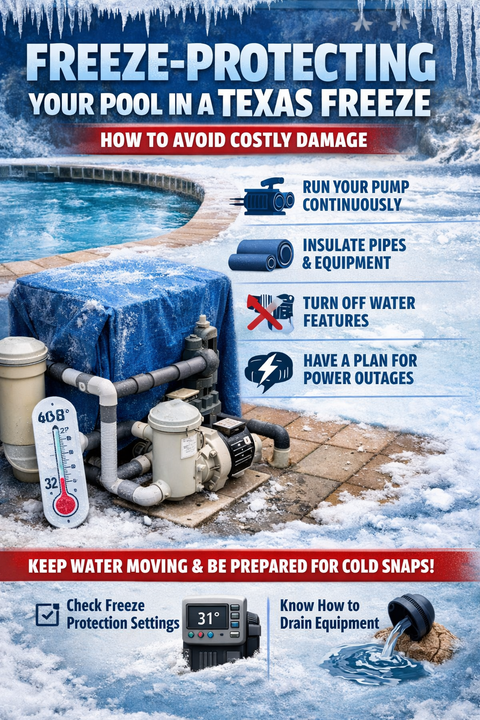
During the 2021 Texas freeze, thousands of pool owners discovered their freeze protection had failed. Many systems lost power for days. Pipes burst, pumps cracked, and repairs overwhelmed local pool companies.
What went wrong? In many cases:
- Freeze protection relied on power, which failed.
- Manual overrides left pumps off.
- Old sensors did not trigger at the right temperature.
One lesson: backup power and regular testing are critical, especially in areas not used to hard freezes.
How To Fix Common Freeze Protection Problems
Faulty Sensor Replacement
If the sensor reads the wrong temperature:
- Turn off power to the pool equipment.
- Remove the old sensor (usually a small probe with two wires).
- Install a new sensor—match the type and model.
- Restore power and test.
Resetting The Controller
Sometimes, a simple reset solves glitches:
- Turn off power at the breaker for 30 seconds.
- Turn power back on.
- Check settings and verify freeze protection is ON.
Repairing Or Replacing The Pump
If the pump won’t start:
- Check for a tripped breaker or blown fuse.
- Inspect for visible damage (burned wires, water leaks).
- Replace bad capacitors or motors as needed.
If in doubt, call a qualified electrician or pool technician.
Fixing Low Flow Issues
- Clean all baskets and filters.
- Open all necessary valves.
- Remove debris from pool and skimmers.
How To Prevent Freeze Protection Failures
Prevention is always better than repair. Here’s how to keep your system reliable:
Regular Maintenance
- Test freeze protection at least twice per season (fall and mid-winter).
- Replace sensors every 3–5 years or as recommended.
- Lubricate and check pump seals and O-rings.
Upgrade Outdated Systems
If your system is over 10 years old, consider upgrading to a modern controller with:
- Multiple sensors
- Mobile alerts
- Battery backup
Add Backup Power
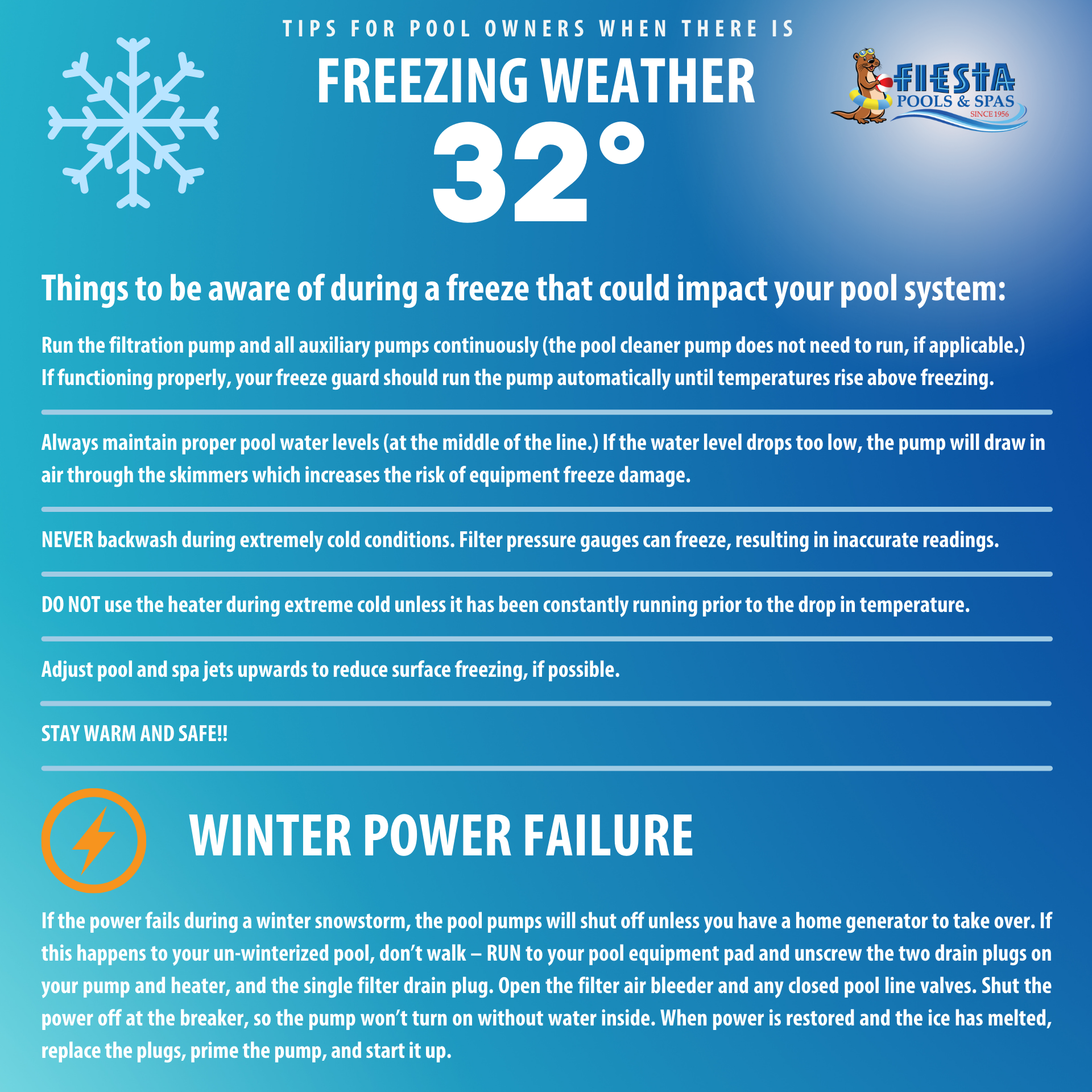
A generator or battery backup can keep your system running during outages.
Smart Monitoring
Many new systems offer remote monitoring via smartphone. You can receive alerts if the pump fails or temperatures drop.
Professional Inspection
Schedule a pool pro to inspect your system before winter—especially if you’re not confident with DIY checks.
Pool Freeze Protection Options: A Comparison
If you’re shopping for a new system, here’s a quick look at popular options.
| Brand/Type | Sensor Locations | Automation | Backup Power | Approx. Cost |
|---|---|---|---|---|
| Intermatic PF1102T | Air | Basic | No | $150-$200 |
| Pentair IntelliCenter | Air, water, pipes | Advanced | Optional | $1,000+ |
| Hayward Omnilogic | Air, water | Smartphone integration | Optional | $1,200+ |
| Manual Timer with Freeze Plug | Air | Manual | No | $80-$120 |
Tip: If you travel in winter or live in a freeze-prone area, invest in a system that can alert you remotely.
Credit: fiestapoolsandspas.com
Common Mistakes Homeowners Make
Many freeze protection failures are preventable. Here are mistakes to avoid:
- Ignoring system tests—if you haven’t tested since last year, you’re at risk.
- Setting activation temperature too low—freezing can start above 32°F due to wind chill.
- Disabling automation for repairs or cleaning, and forgetting to turn it back on.
- Not clearing skimmers and filters—debris blocks flow, letting water freeze.
- Relying on pool covers alone—they help, but don’t move water.
- Assuming “it never freezes here”—rare cold snaps cause the worst damage.
- Not having backup power—especially in areas with unreliable electricity.
- Installing sensors in the wrong location—always place in open air, not inside a box or under eaves.
- Failing to check after storms—wind and debris can knock loose wires or trip breakers.
Non-obvious Insights Pool Owners Miss
Many pool owners overlook these details:
- Sensor “lag” can delay activation: If your sensor is slow to react, your pump may start too late. Quality sensors react within seconds.
- Partial flow doesn’t prevent freezing: Even a running pump can leave dead zones. Verify all pipes and features (like waterfalls) are included in the freeze circuit.
- Heaters may have separate freeze protection: Sometimes, your pump is protected but the heater is not. Confirm both are set up correctly.
- Upgrades can break compatibility: Switching to a variable-speed pump or new automation system may disable freeze protection if not configured carefully.
What To Do If Damage Occurs
If you discover freeze damage:
- Turn off all power to the pool.
- Do not run the pump—running a pump with ice or cracked parts can destroy it.
- Take photos for insurance.
- Call a pool repair professional for a damage assessment.
- Contact your insurance company—freeze damage is sometimes covered.
Winterizing As A Backup Plan
If you live in a region with deep freezes or expect to be away, consider winterizing your pool:
- Drain water from pipes, pump, and heater.
- Add antifreeze to plumbing (never in the main pool).
- Cover the pool securely.
- Shut off all power.
This is a last resort but essential if freeze protection is unreliable or if the pool will not be used for months.
When To Upgrade Or Replace Freeze Protection
Upgrade your system if:
- Your controller is over 10 years old.
- You’ve switched to a variable-speed pump recently.
- Your system can’t be tested or configured easily.
- You want remote alerts or integration with smart home systems.
- Your area is seeing more frequent or severe cold snaps.
Newer systems are more reliable, energy-efficient, and easier to manage.
How Pool Professionals Handle Freeze Protection
Experienced pool pros:
- Test sensors and settings at each service visit.
- Recommend backup power for critical systems.
- Place sensors in the right location.
- Educate homeowners on how to check their system.
- Offer winterizing if freeze protection isn’t possible.
A good pro will also leave instructions or labels on your equipment for quick reference.
Key Takeaways For Pool Owners
- Test freeze protection before every cold season.
- Don’t trust automation blindly—verify it works.
- Keep water moving whenever temperatures drop below 38°F.
- Back up power is your best friend in a storm.
- Ask for help if you’re unsure—freeze damage is expensive to fix.
For more on freeze protection and pool safety, see this comprehensive guide.
Frequently Asked Questions
Why Did My Pool Freeze Protection Not Work During A Power Outage?
Most freeze protection systems need electricity to operate. If your home loses power, the pump and controls can’t run, leaving the pool unprotected. Consider a generator or battery backup for your pool equipment.
Can I Just Leave My Pump Running All Winter Instead?
Running your pump 24/7 does help, but it’s not energy efficient and doesn’t always protect every part. Automated freeze protection turns on only when needed, saving power and reducing wear.
How Often Should I Test My Freeze Protection System?
Test at least twice a year—once in the fall, once in mid-winter. If you have a smart system, check the app or display after every power outage.
What’s The Best Activation Temperature For Freeze Protection?
Set your system to activate at 35–38°F (1.5–3.3°C). This gives a safety margin above freezing, accounting for wind chill and temperature swings.
Is Freeze Protection Enough For Severe Winters?
No. In areas with long, deep freezes, you should fully winterize your pool (drain pipes, add antifreeze, cover the pool). Freeze protection works best for short cold snaps, not sustained hard freezes.
A reliable freeze protection system is your first line of defense against costly pool damage. With regular testing, smart upgrades, and a little attention, you can enjoy your pool for years—no matter what the weather brings.