
When you add a waterfall to your pool, it’s more than just decoration. The sound of falling water, the gentle movement, and the way sunlight dances through the stream can change the whole feeling of your backyard. But sometimes, you notice a problem: your pool waterfall is not flowing properly. Maybe it’s a weak trickle instead of a steady stream. Maybe the water is uneven, noisy, or stops and starts. This can be frustrating, especially if you spent time and money on your pool. The good news is that most waterfall problems have clear causes and practical solutions. By understanding how your waterfall works and what can go wrong, you can fix the issue and get back to enjoying your pool.
How Pool Waterfalls Work
Every pool waterfall has a few basic parts. There is a pump, which moves water from the pool up to the top of the waterfall. There are pipes or hoses that carry the water. There is a waterfall feature—this could be rocks, a spillway, or a special fountain. Finally, the water flows back into the pool, and the cycle starts again.
The pump is the heart of the system. If it doesn’t move enough water, or if something blocks the flow, you will notice right away. A well-designed waterfall should create a smooth, natural-looking stream with enough power to keep the water moving.
When this doesn’t happen, it’s a sign that something needs attention.
Common Causes Of Poor Waterfall Flow
There are several reasons why a pool waterfall might not be working properly. Some are simple, like a dirty filter, while others require more investigation. Let’s look at the main causes and what you can do about them.
1. Clogged Or Dirty Filter
A pool filter catches dirt and debris before water returns to the pool. If the filter is dirty, water can’t move through as quickly. This means less water reaches the waterfall, and the flow drops.
- Signs: Weak waterfall, water pressure is low, pool looks dirty.
- Solution: Clean or replace the filter. Cartridge filters can be rinsed. Sand and DE filters need backwashing.
2. Blocked Pump Basket Or Skimmer
Leaves, sticks, and small toys can get stuck in the pump basket or skimmer. This reduces water flow to the pump and waterfall.
- Signs: Pump sounds louder, waterfall flow is weak or uneven.
- Solution: Turn off the pump, open the basket or skimmer, and remove debris.
3. Air In The System
If air gets into your pool’s water lines, it can cause the pump to lose its “prime. ” The pump can’t move water as well, which means the waterfall will slow down or stop.
- Signs: Bubbles in the water, pump makes gurgling sounds, waterfall stops and starts.
- Solution: Check for leaks or loose fittings on the suction side (before the pump). Tighten connections or replace cracked hoses.
4. Low Water Level
If your pool’s water level is too low, the pump may suck in air instead of water. This will reduce flow to the waterfall and may even damage the pump.
- Signs: Waterfall stops working, pump runs dry, splashing near skimmer.
- Solution: Add water to the pool until it reaches halfway up the skimmer opening.
5. Faulty Or Undersized Pump
If the pump is not strong enough, it can’t move enough water for the waterfall to look or sound good. Sometimes, as pumps get older, they lose power.
- Signs: Weak or non-existent waterfall flow, pump seems slow or noisy.
- Solution: Check the pump’s size compared to waterfall needs. Replace or upgrade if necessary.
6. Clogged Or Narrow Pipes
Over time, pipes can fill with calcium deposits, algae, or debris. This reduces water flow.
- Signs: Waterfall flow drops slowly over weeks or months, pipes feel rough inside.
- Solution: Flush pipes with a hose or use a plumber’s snake. In some cases, pipes must be replaced.
7. Valve Issues
Most pool waterfalls have a valve to control water flow. If the valve is only partly open or is stuck, less water reaches the waterfall.
- Signs: Waterfall turns on but is weak, valve handle is hard to turn.
- Solution: Check the valve position. Lubricate or replace if stuck.
8. Electrical Problems
If the pump doesn’t get enough power, it won’t run at full speed. Sometimes, a tripped breaker or faulty wiring is the cause.
- Signs: Pump stops randomly, doesn’t start, or makes strange noises.
- Solution: Check your circuit breaker. Call a professional if you suspect wiring problems.
9. Waterfall Design Flaws
Some waterfalls are not designed well. For example, the spillway might be too high, too wide, or have sharp angles. This causes uneven flow, splashing, or weak streams.
- Signs: Waterfall never works smoothly, flow is always uneven, lots of splashing.
- Solution: A pool professional can redesign the feature or adjust the spillway.
10. Seasonal Or Environmental Factors
Cold weather, falling leaves, or heavy rainfall can affect waterfall flow. In winter, water can freeze in pipes or on the waterfall itself.
- Signs: Flow changes with weather, ice on pipes, debris collects after storms.
- Solution: Winterize pipes, use a pool cover, or check after storms.
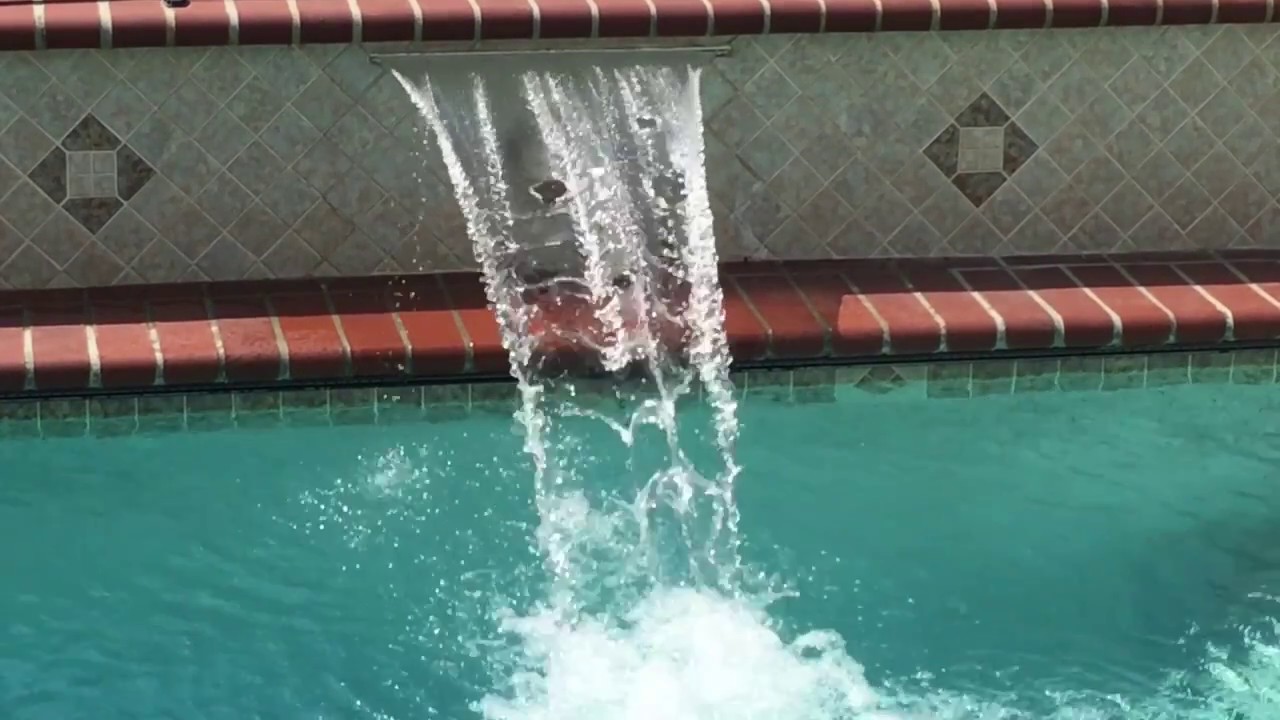
Credit: www.youtube.com
Diagnosing The Problem: Step-by-step
If your pool waterfall is not flowing properly, you need a methodical approach. Don’t guess or try random fixes. Here is a step-by-step guide:
- Turn off the pump for safety before checking anything.
- Inspect the water level in the pool. Add water if it’s low.
- Check the skimmer and pump basket for debris. Clean if needed.
- Look at the filter gauge. If the pressure is high, clean or backwash the filter.
- Examine pipes and valves for visible leaks or blockages.
- Restart the pump and listen for unusual sounds.
- Watch the waterfall as it runs. Notice if the flow is steady, weak, or stops and starts.
- Adjust the waterfall valve to see if that changes the flow.
- If the problem continues, inspect for air leaks or call a pool technician.
Many pool owners skip step 2, but low water is a common cause and easy to fix. Also, always check the filter and baskets first, as they are the most likely to get clogged.
Comparing Pool Waterfall Issues And Solutions
To make troubleshooting easier, the following table shows common problems, signs, and typical solutions.
| Problem | How It Looks | How to Fix |
|---|---|---|
| Dirty filter | Weak waterfall, cloudy pool | Clean or replace filter |
| Air in lines | Bubbles, gurgling pump | Check for leaks, tighten fittings |
| Low water level | Pump sucks air, waterfall stops | Add water to pool |
| Clogged pipes | Flow drops slowly, pipes rough | Flush or replace pipes |
| Valve stuck | Handle hard to turn, low flow | Lubricate or replace valve |
| Pump too small | Weak, uneven waterfall | Upgrade pump |
Understanding Pump Sizing For Waterfalls
A key detail many homeowners miss is proper pump size. Waterfall pumps are rated by how many gallons per minute (GPM) they move at a certain height (called “head”). If your waterfall is high or wide, it needs a stronger pump. Using your main pool pump for the waterfall can work, but only if it’s sized for both jobs.
- For a simple 2-foot wide spillway, you might need 40–60 GPM at 5 feet of head.
- Large rock waterfalls or multi-level features may need over 100 GPM.
If you use the wrong pump, the waterfall will always be weak, no matter how clean the system is.
How To Check Pump Sizing
Look at your pump’s label for model and specs. Compare these to your waterfall’s size and height. If you’re not sure, ask a pool expert or use an online calculator.
Water Chemistry And Its Impact
Many pool owners don’t realize that water chemistry can affect waterfall flow. High calcium, for example, causes scale build-up inside pipes, narrowing them and reducing water movement. Algae and bacteria can also grow inside pipes if chlorine is too low.
- Keep calcium hardness between 200–400 ppm.
- Maintain chlorine at 1–3 ppm to prevent algae.
- Check pH weekly (aim for 7.2–7.6).
If you ignore these numbers, pipes and pumps work harder, and the waterfall flow suffers.
Waterfall Design Flaws: What To Watch For
Some waterfalls never work well because of design mistakes. Here are a few common ones:
- Spillway too wide: Water spreads thinly, looks weak.
- Spillway too narrow: Water falls in a thin stream, not a sheet.
- Sharp corners: Water gets trapped or splashes, not a smooth flow.
- Too high above pool: Water falls too far, splashes and loses power.
A waterfall should be designed so water flows smoothly, evenly, and returns to the pool without much splash. If yours has design flaws, small changes—like adjusting the spillway or adding rocks—can help.
Seasonal And Environmental Challenges
Throughout the year, your waterfall faces different challenges:
- Autumn: Leaves and twigs clog baskets and filters.
- Winter: Water can freeze in pipes or on the waterfall, blocking flow.
- Spring: Pollen and seeds can clog the system.
- Summer: Algae grows faster, clogging pipes if chlorine is low.
Using a pool cover and doing regular checks—especially after storms or big weather changes—can help prevent problems.
Preventative Maintenance For Reliable Flow
The best way to keep your pool waterfall flowing properly is regular maintenance. Here’s a simple schedule:
- Weekly: Check and clean skimmer and pump baskets, inspect water level, test water chemistry.
- Monthly: Clean filter, inspect pipes and waterfall for buildup, lubricate valves.
- Seasonally: Deep clean pipes, check for leaks, inspect pump performance.
A little time each week saves big repair bills and keeps your waterfall beautiful.
Pool Waterfall Flow: Real-world Examples
Let’s look at a few real situations.
- Case 1: A family noticed their waterfall barely trickled during summer. The cause? Their cartridge filter was clogged with sunscreen and pollen. After cleaning, flow returned to normal.
- Case 2: A homeowner with a large rock waterfall saw flow slow over several months. Calcium scale had built up inside the pipes. They flushed the pipes with a descaling solution and flow improved.
- Case 3: In winter, a pool owner found the waterfall stopped working. Ice had formed in the exposed spillway. They learned to winterize the pipes and cover the waterfall before freezing weather.
These stories show that even simple actions—like regular cleaning and seasonal checks—can solve most waterfall flow issues.
Pool Waterfall Flow: Cost Comparison
Sometimes, fixing a waterfall is quick and cheap. Other times, it requires professional help. Here’s a cost comparison.
| Problem | DIY Cost | Professional Cost |
|---|---|---|
| Clean filter/baskets | $0–$20 (supplies) | $75–$150 (service call) |
| Replace pump | $200–$500 (pump only) | $500–$1,200 (with install) |
| Flush pipes | $20–$50 (tools/chemicals) | $200–$500 |
| Valve repair | $10–$40 (parts) | $100–$250 |
Most small problems can be solved at home with simple tools. For electrical issues, pump replacement, or major leaks, it’s safer to call a professional.
Tips For Better Waterfall Performance
Here are some less obvious tips many pool owners miss:
- Prime the pump correctly: Always fill the pump basket with water before starting, especially after cleaning. This helps the pump move water right away.
- Use a separate pump for large waterfalls: If your waterfall is big, a dedicated pump ensures good flow without hurting pool circulation.
- Check for hidden leaks: Sometimes, small leaks in underground pipes cause slow flow. Look for wet spots near the pool or waterfall.

Credit: www.reddit.com
When To Call A Professional
If you’ve checked water level, cleaned baskets, and still have problems, it’s time for expert help if:
- Waterfall flow is always weak, even with a new pump and clean filter.
- You see water pooling around pipes or the base of the waterfall.
- The pump makes loud, unusual noises or stops working.
Professionals have tools to pressure-test pipes, find leaks underground, and redesign waterfall features if needed.
Table: Quick Waterfall Troubleshooting Checklist
| Check | What to Look For | Action |
|---|---|---|
| Water level | Halfway up skimmer | Add water if low |
| Skimmer/pump baskets | Debris buildup | Clean out debris |
| Filter pressure | Above normal range | Clean or backwash filter |
| Pipes and valves | Leaks, blockages | Repair or flush as needed |
| Pump operation | Unusual noise, weak flow | Prime or replace pump |

Credit: www.amazon.com
Pool Waterfall Upgrades: When And Why
Sometimes, upgrading your waterfall system is the best solution. Here’s when to consider it:
- You want a stronger, more dramatic flow.
- Your current pump is too small or old.
- You want to add LED lighting or new features.
Modern pumps are quieter, use less energy, and provide adjustable flow. Adding automation lets you control your waterfall by remote or smartphone.
Waterfall Safety Tips
Waterfalls are beautiful, but they need to be safe. Always:
- Secure electrical wiring and keep away from water.
- Use non-slip surfaces near the waterfall.
- Teach children not to climb on rocks or the waterfall feature.
- Never run the pump dry—this can burn it out quickly.
Environmental Benefits Of A Flowing Waterfall
A properly working waterfall is not just for looks. It also:
- Aerates the pool water, adding oxygen and reducing algae.
- Helps with circulation, moving water that might otherwise be stagnant.
- Can lower water temperature slightly in hot climates.
These benefits make it worth keeping your waterfall in top shape.
Frequently Asked Questions
What Causes Sudden Loss Of Waterfall Flow?
Most sudden drops are caused by clogged pump baskets, dirty filters, or a low water level. Check these first. Sometimes, large debris like a pool toy or branch can block the intake quickly.
Can I Use My Main Pool Pump For The Waterfall?
Yes, if the pump is large enough for both jobs. For bigger waterfalls, a dedicated pump is better to avoid reducing pool circulation or filtration.
How Often Should I Clean My Pool Waterfall System?
Clean baskets and check water level weekly. Clean filters monthly or as needed. Inspect pipes and the waterfall feature for buildup every season.
Why Does My Waterfall Have Air Bubbles?
Air bubbles usually mean air is getting in before the pump. Check for loose fittings, low water level, or cracked hoses on the suction side. Fixing leaks will stop bubbles.
Can Scale Buildup Really Affect Waterfall Flow?
Yes. Calcium scale can narrow pipes, reducing flow over time. It often happens in hard water areas. Keep water balanced and flush pipes if you notice slow flow or rough pipes.
A flowing waterfall adds beauty, sound, and energy to your pool. Most problems can be solved with simple checks and regular care. If you need more guidance on pool maintenance or troubleshooting, the SwimmingPool.com Maintenance Guide offers detailed advice for every level of experience. With a little attention, your pool waterfall can work perfectly for years to come.