
If you own a swimming pool, you know how important water balance is. One key factor is the pH level. When the pH rises too high, your pool can become cloudy, uncomfortable, and even damage equipment. Some pool owners look for simple, low-cost ways to fix high pH. Using vinegar to lower pH in pool water is a common DIY suggestion. But is it really effective? Is it safe? Does vinegar work as well as traditional pool chemicals?
This article explores every angle of using vinegar for pH control in pools. You’ll learn the science, practical steps, risks, and what most pool experts recommend. We’ll compare vinegar to other options, explain how pH works, and give you clear guidance so you can keep your pool safe and enjoyable.
Understanding Pool Ph And Why It Matters
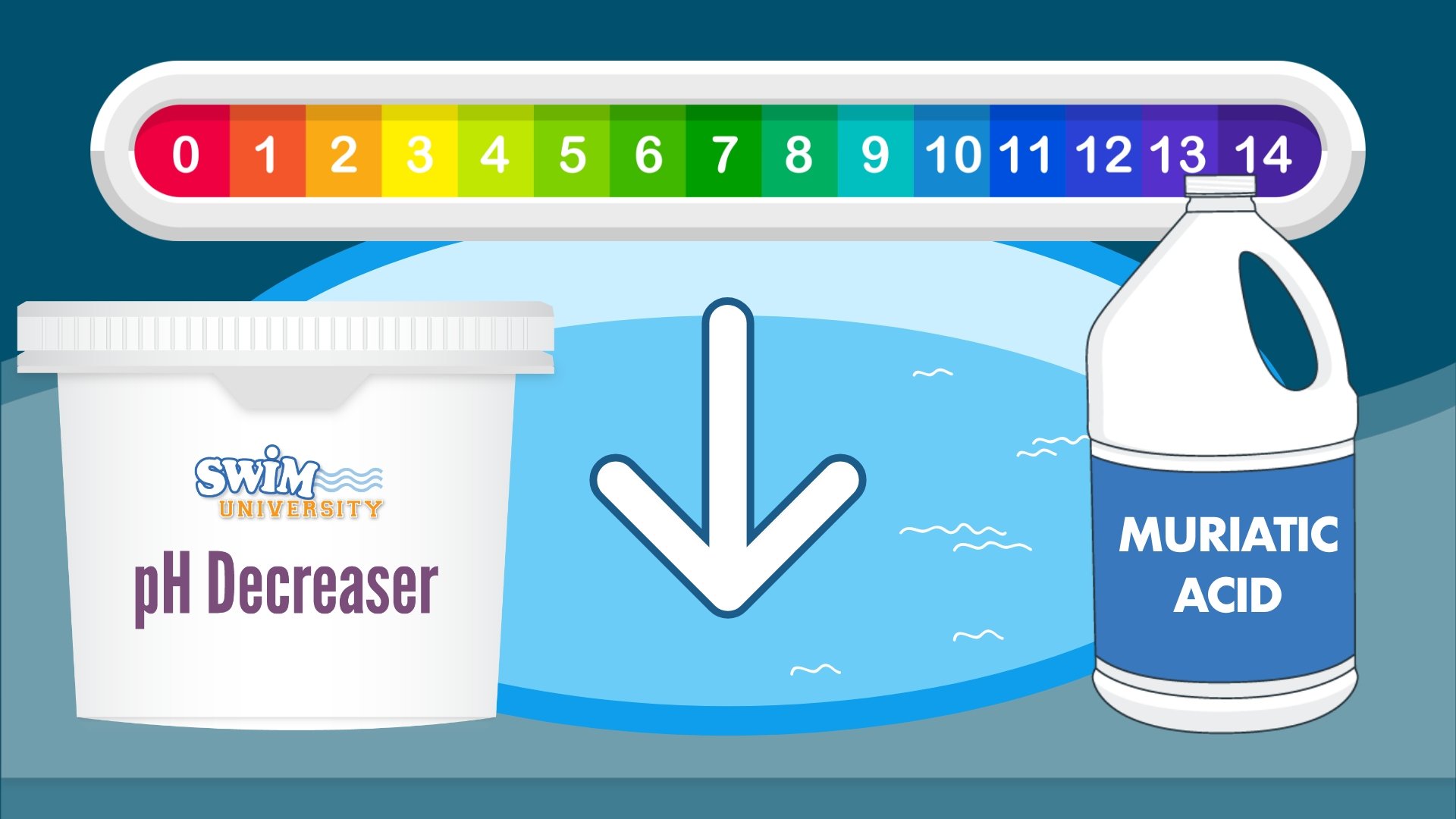
The pH level in your pool measures how acidic or basic the water is. The scale runs from 0 (very acidic) to 14 (very alkaline), with 7 as neutral. For swimming pools, the ideal pH range is 7.2 to 7.6. This range is comfortable for swimmers, safe for equipment, and helps chlorine work efficiently.
When pH rises above 7.6, several problems can occur:
- Chlorine becomes less effective, so the pool may not be sanitized properly.
- Water can turn cloudy or scale may form on surfaces.
- Swimmers may notice itchy skin or red eyes.
- Pool heaters, pumps, and pipes can suffer from mineral build-up.
If pH drops below 7. 2, the water becomes too acidic, which can also cause damage and discomfort.
Understanding and controlling pH is not just about comfort. It’s about protecting your pool investment and making sure your water is safe.
What Is Vinegar And How Does It Affect Pool Water?
Vinegar is a mild acid, most commonly made from fermenting grains, fruits, or alcohol. The main active ingredient in household vinegar is acetic acid, usually at 5% concentration. People use vinegar for cleaning, cooking, and sometimes even gardening.
When you add vinegar to water, it can lower the pH because acetic acid donates hydrogen ions. In theory, this means vinegar could reduce the pH in your pool. But the story is more complex.
Chemical Reaction In Pool Water
When vinegar is added to a pool, this is what happens:
- Acetic acid releases hydrogen ions, which can lower pH.
- The pool water’s buffering system (mainly bicarbonates) reacts with the acid to resist rapid pH changes.
- The effect depends on the amount of acid, pool volume, and water chemistry.
In a small bucket, vinegar can drop the pH quickly. But in a large pool with buffering chemicals, the impact is less dramatic.
Types Of Vinegar
There are several types of vinegar:
- White distilled vinegar (5% acetic acid) is the most common.
- Apple cider vinegar (also 5% acetic acid) is sometimes used, but it contains extra organic matter.
- Cleaning vinegar (6-7% acetic acid) is stronger, but not food-safe.
For pools, only white distilled vinegar is usually considered, and only at household concentrations.
Traditional Ways To Lower Ph In Pools
Before looking deeper at vinegar, let’s see what most pool owners use to adjust pH.
The standard chemicals for lowering pH are:
- Muriatic acid (hydrochloric acid): Strong, fast-acting, but must be handled with care.
- Sodium bisulfate (dry acid): Easier to use, often sold as “pH Down” or “pH Decreaser.”
These products are specifically designed for pools, with instructions for safe and accurate dosing. They are widely available and recommended by pool professionals.
Why Do Some People Suggest Vinegar?
The idea of using vinegar comes from its mild acidity and easy availability. People often have vinegar at home and see it as a safer, more “natural” solution compared to strong acids. Some DIY guides and online forums suggest vinegar for pools, especially for small, above-ground pools or hot tubs.
The main reasons people consider vinegar:
- It’s cheap and easy to find.
- It feels less dangerous than pouring strong acids.
- Some believe it’s more environmentally friendly.
But Does This Idea Hold Up In Real Pool Scenarios?
How Much Vinegar Would You Need?
Let’s look at the numbers. To lower the pH in a standard-sized pool, you need to add enough acid to overcome the water’s alkalinity (its resistance to pH change).
As an example, suppose you have a 10,000-gallon pool with pH at 8.0, and you want to lower it to 7.4.
To lower the pH in a 10,000-gallon pool from 8.0 to 7.4, you would typically need about 1 quart (32 oz) of muriatic acid or 2 pounds of sodium bisulfate.
Vinegar, at 5% acetic acid, is much weaker. To have the same effect, you’d need significantly more.
Here’s a comparison:
| Acid Type | Amount Needed (for 10,000 gallons) | Effectiveness |
|---|---|---|
| Muriatic Acid | 1 quart (32 oz) | Very High |
| Sodium Bisulfate | 2 pounds | High |
| White Vinegar (5%) | 2-4 gallons | Low |
As the table shows, you’d need several gallons of vinegar to lower the pH in an average-sized pool. This is not practical or cost-effective.
Step-by-step: Using Vinegar To Lower Pool Ph
If you still want to try vinegar, here’s how to do it safely and correctly. But remember, this method is mainly for small pools or as a temporary fix.
1. Test Your Water
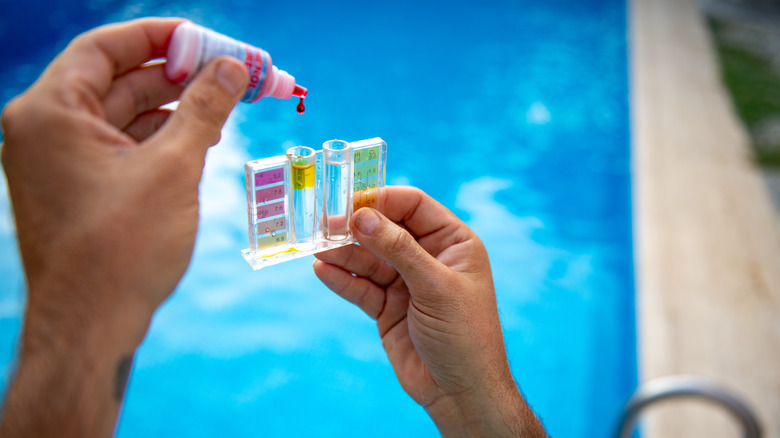
Always begin by testing the pH and alkalinity of your pool water using a reliable kit. Write down the numbers before you start.
2. Calculate Your Pool Volume
Know exactly how many gallons (or liters) your pool holds. This helps you estimate the amount of acid needed.
3. Calculate The Vinegar Dose
Use the chart above as a guide. For small pools (under 1,000 gallons), you might start with 1–2 cups of white vinegar. For larger pools, consider the practicality and cost.
4. Add The Vinegar
Pour the vinegar slowly around the pool’s perimeter with the pump running. This helps mix the acid evenly.
5. Wait And Retest
Let the pool circulate for several hours. Test the pH again. If it’s still too high, you can add more vinegar, but always go slowly.
6. Repeat If Needed
Never add large amounts all at once. Add in small doses and retest to avoid dropping the pH too low.
7. Monitor Side Effects
Watch for changes in water clarity, smell, or foaming. Vinegar can sometimes make the pool smell acidic or add organic matter, especially if not using plain white vinegar.
Pros And Cons Of Using Vinegar
Like any pool chemical, vinegar has upsides and downsides.
Pros
- Easily available in most homes.
- Mild acid so less risk of burns.
- Perceived as “greener” than harsh chemicals.
Cons
- Needs large volumes to affect pool pH.
- Can add organic matter to the water, promoting algae growth.
- May cause a vinegar smell.
- Not cost-effective for medium or large pools.
- Not approved by most pool manufacturers or professionals.
How Vinegar Compares To Other Pool Acids
It’s important to understand how vinegar stacks up against other acids, not just in strength but in safety, cost, and side effects.
| Acid Type | Strength | Cost per Treatment | Safety | Side Effects |
|---|---|---|---|---|
| Muriatic Acid | Very Strong | Low (due to small amount needed) | Hazardous if misused | Can cause burns, fumes |
| Sodium Bisulfate | Strong | Moderate | Safer than muriatic acid | Can raise sulfate levels |
| White Vinegar | Very Weak | High (requires gallons) | Low risk | Smell, organic residue |
Two insights most beginners miss:
- Vinegar is far less concentrated than pool chemicals, so it’s not just a matter of swapping one for the other.
- Adding gallons of vinegar introduces much more than acid: You add water, organic matter, and possibly sugars or flavors (if not using pure white vinegar).

Credit: www.swimuniversity.com
Safety Considerations
Using vinegar is not as dangerous as handling strong pool acids, but there are still risks.
- Over-acidification: Adding too much vinegar can drop the pH too low, making water uncomfortable or even corrosive.
- Organic growth: Vinegar contains trace nutrients and organics. In warm, sunny pools, this can encourage algae and bacteria.
- Equipment damage: Acetic acid is still an acid. If large amounts are used, it could affect metal parts or seals over time.
Always keep pool chemicals (even vinegar) away from children and pets.
What Pool Professionals Say
Most pool service experts and manufacturers do not recommend vinegar for pH control. The reasons:
- It’s not designed for pool chemistry.
- It can throw off other water parameters.
- It can void warranties on pool equipment.
- It is not approved by health regulations for public or commercial pools.
You’ll find some pool owners who have tried vinegar for small, inflatable pools or as a one-time fix. Rarely do they use it as a regular treatment.
For reliable results, stick to chemicals made for pools. If you want to avoid harsh acids, sodium bisulfate is the gentlest option.
Credit: www.housedigest.com
The Science: Why Vinegar Isn’t Ideal For Pools
Let’s look deeper at the chemistry. Pool water is a complex system with:
- PH
- Total alkalinity
- Chlorine
- Calcium hardness
- Stabilizer (Cyanuric acid)
When you add acetic acid (vinegar), it reacts with the pool’s alkalinity (bicarbonate). But the reaction produces carbon dioxide and acetate ions. Unlike muriatic acid or sodium bisulfate, which leave behind mostly neutral byproducts, vinegar adds acetate to your water.
Acetate isn’t harmful in small amounts, but it’s not neutral either. In large pools, this could cause long-term buildup, odd smells, or unpredictable water chemistry.
Another key difference: chlorine (used to disinfect pool water) is less effective if the water is loaded with organics or certain byproducts. Too much vinegar could make chlorine work less efficiently.
Common Mistakes When Using Vinegar
Beginners often make these errors:
- Using the wrong type of vinegar: Flavored or apple cider vinegars add sugars and extra organics.
- Adding too much at once: This can lead to a sharp pH drop, harming swimmers or equipment.
- Not testing pH and alkalinity: Guessing can easily throw off your water balance.
- Ignoring other pool chemicals: Vinegar does not replace chlorine or shock treatments.
If you try vinegar, always use plain white vinegar, add in small doses, and test frequently.
Alternatives For A “natural” Approach
If you want to avoid strong acids but don’t want to use vinegar, consider:
- Dilute sodium bisulfate: Easier and safer to handle than muriatic acid.
- Partial water changes: Replacing some water with fresh can help lower pH and remove build-up.
- CO₂ injection: Rare for home pools, but carbon dioxide gas can lower pH without adding acids (used in some commercial pools).
- Aeration: Running fountains or jets can slowly reduce pH by releasing CO₂, but this is a slow process.
Remember, “natural” isn’t always safer or better for pool water chemistry.
Case Study: Small Pool Vs. Large Pool
Consider two real-world examples.
Small above-ground pool (1,000 gallons):
- High pH (8.0)
- Owner adds 1 cup of white vinegar, waits, retests.
- PH drops to 7.7, so the owner adds another cup.
- Water clears, swimmers are happy, but slight vinegar smell noticed for a day.
Large in-ground pool (20,000 gallons):
- High pH (8.2)
- Owner tries using vinegar, needs over 8 gallons.
- Water develops slight haze and sour smell.
- PH drops only slightly, but chlorine demand rises.
- Owner switches back to sodium bisulfate for better results.
These examples show vinegar can be a temporary solution for small pools, but it’s not ideal for larger ones.
Environmental Impact
Many people believe vinegar is more eco-friendly than commercial pool acids. In reality, it’s more complicated.
- Muriatic acid and sodium bisulfate are both neutralized in the pool and don’t accumulate if used properly.
- Vinegar comes from a natural source, but in the amounts needed for pools, its production, transport, and packaging may outweigh the benefits.
- Adding gallons of vinegar to a pool, then draining it, could affect plants or soil due to acidity and organics.
If environmental safety is your main concern, use pool chemicals as directed and dispose of water responsibly.
When Is Vinegar A Reasonable Option?
Vinegar may be considered if:
- You have a very small pool (less than 500 gallons).
- You need a quick, temporary fix and have no pool chemicals available.
- You are comfortable with a slight vinegar smell and possible organic residue.
- You plan to drain or refill the pool soon.
For regular maintenance or larger pools, vinegar is not recommended.
Summary: Should You Use Vinegar To Lower Ph In Pool?
Vinegar can lower pool pH, but only in small pools and with significant drawbacks. It’s weak, requires large volumes, and adds unwanted byproducts to your water. For most pool owners, it’s better to use chemicals made for pools, such as muriatic acid or sodium bisulfate.
If you want a safer, greener option, choose sodium bisulfate. Always test your water and follow instructions carefully. Vinegar is best left for salads and household cleaning—not for regular pool care.
For more on pool chemistry and water balance, the Swimming pool sanitation Wikipedia page is a good resource.
Frequently Asked Questions
Can I Use Apple Cider Vinegar To Lower My Pool’s Ph?
It’s not recommended. Apple cider vinegar contains more organic material than white vinegar, which can feed algae and make your pool cloudy. Always use plain white vinegar if you try this method, and only in small pools.
How Quickly Does Vinegar Lower Pool Ph?
Vinegar works slowly, especially in large pools. After adding, wait at least a few hours for the water to circulate before retesting. Its effect is much less dramatic than pool-grade acids.
Will Vinegar Harm My Pool Equipment?
In small, occasional doses, vinegar is unlikely to harm equipment. However, using large amounts over time can cause corrosion, especially on metal parts. It also leaves acetate residues, which are not present with traditional pool acids.
Is Vinegar Safe For Swimming After Adding It To My Pool?
If used in small amounts and the pH is in the safe range (7.2–7.6), swimming is safe. However, large doses can make the water smell bad and may affect chlorine effectiveness. Always test the water before swimming.
What’s A Better Alternative To Vinegar For Lowering Pool Ph?
The best alternatives are muriatic acid or sodium bisulfate, both designed for pools. Sodium bisulfate is safer to handle and works well for most home pool owners. Always follow the product’s instructions and test water regularly.
Maintaining the right pH keeps your pool clear, comfortable, and safe. Choose your chemicals wisely, and remember: when in doubt, ask a pool professional for advice.
Credit: www.swimuniversity.com