
Storing spring onions the right way can save you money, reduce food waste, and keep your dishes fresh and flavorful. Whether you buy them from a local market or grow them in your backyard, spring onions (sometimes called green onions or scallions) often come in bunches larger than you need at one time.
If not stored properly, these vibrant greens wilt, turn slimy, and lose their crispness within days. Many people throw away spring onions because they think they spoil too quickly. But with the right methods, you can keep them fresh for weeks, even months.
Let’s explore all the practical and science-backed ways to store spring onions for maximum freshness.
What Are Spring Onions?
Spring onions are a type of allium vegetable, closely related to regular onions, leeks, and chives. They have long, green, hollow stalks and small white bulbs. Both parts are edible and add a mild, slightly sweet onion flavor to dishes. Spring onions are often confused with scallions, but true spring onions have a slightly more developed bulb. They are rich in vitamins A, C, and K, and add crunch, color, and nutrition to salads, soups, stir-fries, and garnishes.
Understanding the structure of spring onions helps when storing them. The green tops are more delicate and prone to wilting, while the white bulbs are sturdier but still need proper care to prevent spoilage.
Why Storage Matters
Proper storage of spring onions means:
- Less waste: Prevents tossing out slimy or wilted greens.
- Better taste and texture: Fresh onions add a crisp, zesty bite to meals.
- Nutrient retention: Preserves vitamins and minerals.
- Saves money: Fewer trips to the store and less food thrown away.
Surprisingly, most households lose up to 20–30% of their vegetables due to improper storage. Spring onions are especially sensitive to humidity, temperature, and airflow, so knowing the best techniques can make a big difference.
Preparing Spring Onions For Storage
Before you store spring onions, a little preparation goes a long way.
- Remove rubber bands and ties. These can cut into the stems and cause bruising or rot.
- Check for damage. Discard any slimy, yellow, or decaying parts.
- Do not wash until needed. Washing adds moisture, which speeds up spoilage.
- Trim roots if needed. If the roots are long and tangled, snip them to about 1 cm, but keep them attached. The roots help retain moisture.
- Pat dry. If the onions are damp from the store, gently pat with a paper towel.
These small steps prevent mold and extend freshness, no matter which storage method you choose.
Storing Spring Onions In The Refrigerator
For most people, the refrigerator is the go-to place for keeping spring onions fresh. But not all fridge storage is equal.
Basic Fridge Storage
The simplest way is to place unwashed spring onions in the vegetable crisper drawer. However, this often only keeps them fresh for about 3–5 days. For better results, try these methods:
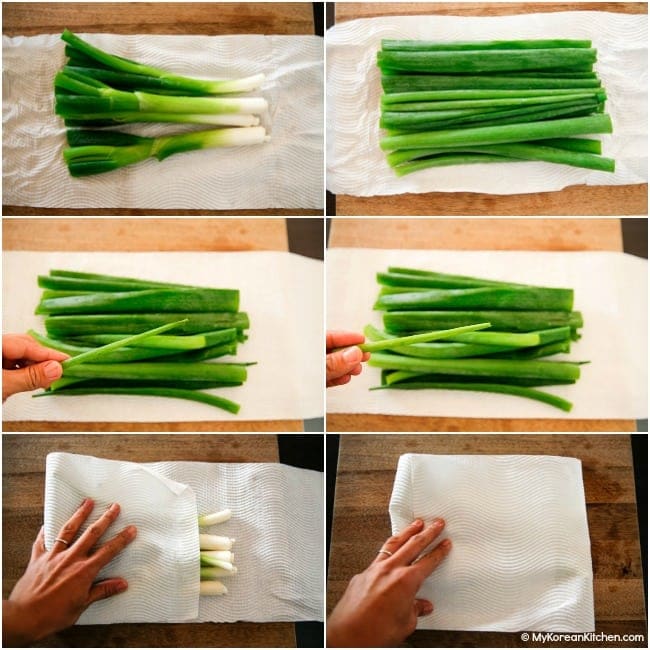
Method 1: Paper Towel Wrap
Wrap the spring onions loosely in a dry paper towel and place them inside a plastic bag or reusable container.
Why it works: The paper towel absorbs excess moisture, preventing sliminess, while the bag reduces airflow and dehydration.
Steps:
- Lay a few onions on a paper towel.
- Roll them up gently.
- Place the roll inside a plastic bag or airtight box.
- Store in the crisper drawer.
Result: Stays fresh for up to 10 days.
Method 2: Standing In Water
Some people swear by the “water glass” method.
Steps:
- Stand the spring onions upright in a glass or jar with 2–3 cm of water.
- Place a loose plastic bag over the tops.
- Store in the fridge. Change water every 2–3 days.
Why it works: The roots stay hydrated, and the bag prevents the tops from drying out.
Result: Can keep spring onions crisp for 1–2 weeks.
Method 3: Reusable Silicone Bags
Eco-friendly silicone bags are great for storing spring onions.
Steps:
- Slip dry, unwashed onions into the bag.
- Seal and store in the crisper.
Benefit: Silicone is breathable yet reduces dehydration, helping maintain texture.
Result: Freshness for up to 2 weeks.
Method 4: Perforated Plastic Bag
If you buy spring onions in a perforated plastic bag, don’t throw it away. The small holes allow some airflow but trap enough moisture to slow wilting.
Result: Lasts 7–10 days.
Refrigerator Storage Comparison
Here’s a quick comparison of the most popular fridge methods:
| Method | Freshness Duration | Notes |
|---|---|---|
| Paper towel wrap | 7–10 days | Simple, uses common items |
| Standing in water | 10–14 days | Best for long stalks |
| Silicone bag | 10–14 days | Eco-friendly |
| Perforated bag | 7–10 days | Works with store packaging |
Tips For Fridge Storage
- Keep spring onions away from fruits like apples and bananas. These release ethylene gas, which speeds up spoilage.
- Always check for moisture build-up. If you see condensation, change the paper towel or bag.
- Don’t overcrowd the crisper. Good airflow helps keep greens fresh.
Non-obvious insight: Some people cut off the green tops to store separately, thinking it preserves freshness. In reality, keeping the stalks and bulbs together helps both parts stay hydrated longer.
Storing Spring Onions At Room Temperature
Not everyone likes cold, refrigerated greens. In some climates, you can keep spring onions fresh at room temperature for short periods.
Method 1: Water Jar On The Counter
Stand spring onions upright in a jar with a bit of water (just enough to cover the roots).
- Place away from direct sunlight.
- Change water every 1–2 days.
Result: Lasts 4–7 days. Great for kitchens with cool, stable temperatures.
Method 2: Damp Cloth Wrap
Wrap the onions in a damp (not wet) kitchen towel. Store in a cool, dark cupboard.
- Keeps onions from drying out.
- Avoids exposure to light, which causes yellowing.
Result: Fresh for 3–4 days.
Important: If your kitchen is very warm or humid, it’s safer to use the fridge. Room temperature storage is best for short-term use.
When To Use Room Temperature Storage
- If you cook with spring onions daily.
- If you plan to use the bunch within a week.
- When fridge space is limited.
Non-obvious insight: Room temperature storage allows spring onions to keep growing. You might notice new green shoots or longer roots, which are still edible.
Freezing Spring Onions For Long-term Storage
If you have a big harvest or bought too many, freezing is the best way to store spring onions for months. While the texture softens, the flavor remains great for cooked dishes.
How To Freeze Spring Onions
- Wash and dry the onions thoroughly.
- Trim roots and any wilted tops.
- Chop into desired sizes (rings, slices, or pieces).
- Flash freeze: Spread pieces on a baking tray in a single layer. Freeze for 1–2 hours.
- Transfer to freezer-safe bags or containers. Squeeze out as much air as possible.
- Label with date.
Result: Frozen spring onions keep for 3–6 months.
Using Frozen Spring Onions
Add directly from the freezer to soups, stir-fries, or sauces. No need to thaw. They won’t be crisp but still provide flavor and color.
Freezing Whole Vs. Chopped
Some people freeze whole spring onions, but chopped pieces are more practical. Whole onions take longer to freeze and thaw unevenly.
Freezer Burn Prevention
- Use freezer bags, not regular plastic bags.
- Remove as much air as possible.
- Don’t refreeze thawed spring onions.
Freezer Storage Comparison
Here’s a quick look at freezing methods:
| Method | Texture After Thawing | Best For |
|---|---|---|
| Chopped and frozen | Soft, flavorful | Soups, stir-fries |
| Whole, frozen | More mushy | Broths, stocks |

Credit: www.youtube.com
Storing Spring Onions In The Garden
If you grow your own, sometimes the best storage is leaving them in the ground until needed. Spring onions can survive in the soil for weeks, especially in cool weather.
- Only water when soil feels dry.
- Harvest as needed.
- Cover with mulch if frost is expected.
Tip: Don’t let onions flower, as this signals the end of their life cycle and can reduce quality.
Regrowing Spring Onions In Water
One of the coolest tricks is regrowing spring onions from kitchen scraps.
How To Regrow
- Cut off the white bulbs with roots (about 2–3 cm).
- Place in a glass with enough water to cover the roots.
- Set on a sunny windowsill.
- Change water every 2 days.
- Greens will regrow in 5–7 days.
This method keeps you supplied with fresh greens for weeks. You can regrow the same bulb 2–3 times before it loses energy.
Non-obvious insight: The regrown greens are often milder and more tender than the original, perfect for garnishes.
Pickling Spring Onions
Pickling is a tasty way to preserve spring onions for months and adds a tangy crunch to dishes.
Basic Pickling Recipe
- 1 bunch spring onions (cleaned, trimmed)
- 1 cup vinegar (rice, white, or apple cider)
- 1 cup water
- 2 teaspoons salt
- 1 tablespoon sugar
- Optional: Peppercorns, garlic, red chili
Steps:
- Slice onions into rings or sticks.
- Mix vinegar, water, salt, and sugar. Bring to a boil.
- Pack onions into a clean jar.
- Pour hot liquid over onions. Seal.
- Cool, then refrigerate.
Pickled spring onions last 1–2 months in the fridge and add zing to salads, tacos, and sandwiches.
Drying Spring Onions
Drying is less common but useful for soups and seasoning.
How To Dry
- Slice onions thinly.
- Spread on a baking sheet.
- Dry in a low oven (about 60°C) for 3–4 hours or in a food dehydrator.
- Cool and store in airtight jars.
Dried spring onions last for up to a year and can be rehydrated in water.
Common Mistakes When Storing Spring Onions
It’s easy to make small errors that shorten the life of your spring onions.
- Washing before storage: Adds moisture, speeds up spoilage.
- Sealing in airtight bags while wet: Traps humidity, causes rot.
- Storing near ethylene-producing fruits: Apples, tomatoes, bananas make onions spoil faster.
- Ignoring condensation: Moisture in bags or containers means it’s time to change the wrapping.
- Forgetting to check regularly: Old onions can spoil the whole bunch.
- Overcrowding in the crisper: Blocks airflow, leads to sliminess.
How To Tell If Spring Onions Have Gone Bad
Even with the best care, spring onions don’t last forever. Look for these signs:
- Slimy texture: The most common sign of spoilage.
- Yellow or brown tips: Early sign of aging, but you can trim and use the rest.
- Strong, sour smell: Means decay or mold.
- Wilted, limp stalks: May be dehydrated but safe to use if not slimy.
- Visible mold: Discard immediately.
When in doubt, cut a small piece and taste. If it’s bitter or off, throw it away.
:max_bytes(150000):strip_icc()/how-to-extend-the-life-of-fresh-produce-4801922-scallions-2eaea720f7fb4c39af6792da4f88976c.jpg)
Credit: www.thespruceeats.com
How Restaurants And Markets Store Spring Onions
Professional kitchens use special tricks for freshness:
- Large bunches are kept in perforated crates with damp towels.
- Some restaurants rinse and spin onions dry with salad spinners, then wrap in towels.
- Markets often mist spring onions to keep them hydrated, but this shortens shelf life at home.
Tip: If you buy pre-chopped spring onions, use within 2 days. These spoil faster due to cut surfaces.
Best Containers For Spring Onion Storage
Choosing the right container makes a difference:
- Glass jars: Good for upright storage in water.
- Plastic bags: Easy, but watch for condensation.
- Silicone bags: Eco-friendly, reusable, and reduce plastic waste.
- Airtight boxes: Only use if onions are dry.
- Perforated bags or baskets: Good for short-term room storage.
Spring Onion Storage And Food Safety
Spring onions can sometimes carry bacteria like E. coli if grown in contaminated soil. Proper storage helps reduce risk, but also:
- Always wash before eating or cooking.
- Avoid storing near raw meat or eggs.
- If you see any sign of mold, discard the whole stalk.
Storage Duration Summary
Here’s a final comparison of how long spring onions last by method:
| Storage Method | Duration | Best For |
|---|---|---|
| Fridge (paper towel) | 7–10 days | Everyday use |
| Fridge (water glass) | 10–14 days | Long stalks |
| Room temp (jar) | 3–7 days | Quick use |
| Freezer | 3–6 months | Cooking, soups |
| Pickling | 1–2 months | Sandwiches, salads |
| Drying | 6–12 months | Seasoning |
| Regrowing in water | 2–3 regrowths | Windowsill supply |
Credit: mykoreankitchen.com
Eco-friendly Tips For Storing Spring Onions
- Use reusable containers and bags to cut down on plastic waste.
- Compost trimmings and old onions.
- Regrow roots instead of throwing them away.
Creative Uses For Leftover Spring Onions
If you have spring onions that are a bit wilted but not spoiled, try:
- Blending into salad dressings or dips.
- Adding to homemade stock or broth.
- Pureeing with herbs for a green sauce.
- Mixing into omelets, pancakes, or savory muffins.
Even less-than-perfect onions add flavor and nutrition.
Frequently Asked Questions
How Do I Keep Spring Onions Crisp For The Longest Time?
The best way is to stand them upright in a jar with a little water, cover loosely with a plastic bag, and refrigerate. Change the water every few days. This keeps both the bulbs and greens hydrated and crisp for up to two weeks.
Can I Store Spring Onions With Other Vegetables?
Avoid storing spring onions with fruits like apples, bananas, or tomatoes. These produce ethylene gas, which makes onions spoil faster. You can keep them with other low-ethylene vegetables, but always check for moisture build-up.
Is It Safe To Eat Slightly Wilted Spring Onions?
Yes, as long as they are not slimy, moldy, or have a sour smell. Wilted greens may be less crisp but are still good for cooking. Trim any yellow or dry parts before use.
Should I Wash Spring Onions Before Storing?
No, it’s better to wash spring onions just before using them. Washing adds moisture, which can cause spoilage during storage. If they are dirty, gently wipe with a dry cloth before storing.
Can I Regrow Spring Onions From Scraps?
Absolutely. Place the white root ends in a small glass of water on a sunny windowsill. The greens will regrow in a few days. You can cut and regrow them 2–3 times for a continuous supply.
If you want to dive deeper into the science of vegetable storage, check out this Wikipedia page on Allium species.
Storing spring onions well is a small habit that brings big rewards: less waste, more flavor, and a greener kitchen. Use these tips and tricks to enjoy fresh, crisp spring onions whenever you need them.