
Cleaning your oven can feel like a tough job. Grease, burnt food, and stubborn stains can build up over time, making your oven look dirty and even smell bad. Many people use strong chemical cleaners to solve this problem, but these products often have harsh smells and can be unsafe, especially if you have children or pets at home. Luckily, there is a natural and safe way to clean your oven: using lemon.
Lemon is not just for cooking or making drinks. This simple fruit has powerful cleaning properties. It contains natural acids that help break down grease and remove tough stains. Lemon also leaves a fresh scent behind, making your kitchen smell clean and inviting.
Using lemon to clean your oven is an eco-friendly choice. It avoids chemicals, saves money, and is gentle on your hands and the oven surfaces.
If you have never tried cleaning with lemon, or if you want to learn a safer method, this article will guide you step by step. You will find out how to use lemon to clean every part of your oven, why it works so well, and what to do if you face tough stains.
You will also discover common mistakes to avoid and get answers to the most common questions. Whether you are an experienced cleaner or a beginner, you will see that cleaning your oven with lemon is simple, effective, and satisfying.
Why Use Lemon For Oven Cleaning?
Lemon is famous for its natural cleaning power. But why is it so effective? The answer lies in the citric acid and natural oils found in lemons. These ingredients help break down grease and soften burnt-on food. Unlike chemical cleaners, lemon is gentle and does not leave harmful residues. Here are a few reasons to choose lemon for cleaning your oven:
- Natural degreaser: Lemon’s acid cuts through grease easily.
- Antibacterial properties: Lemon helps kill germs and bacteria.
- Fresh scent: Your oven will smell clean, not chemical.
- Environmentally friendly: Lemon is biodegradable and safe.
- Cost-effective: Lemons are cheap and easy to find.
Beginners often miss two important facts: First, lemon not only cleans but also helps loosen sticky residue, making wiping much easier. Second, lemon’s scent naturally absorbs and neutralizes bad odors, which chemical cleaners often mask instead of removing.
What You Need Before You Start
Before you begin, collect everything you need. Being prepared will make the process smoother and faster. Here’s what you should have on hand:
- 2–3 fresh lemons (medium to large size)
- Baking soda (optional, for extra cleaning power)
- A heatproof oven-safe bowl (glass or metal)
- A clean sponge or soft cloth
- A small scrubbing brush (an old toothbrush works well)
- A spray bottle (optional)
- A dry towel or microfiber cloth
- Rubber gloves (optional, but helpful for sensitive skin)
- Warm water
Using a bowl that can withstand oven temperatures is important. Do not use plastic containers, as they can melt or release toxins when heated.
Step-by-step Guide: How To Clean Your Oven With Lemon
Cleaning your oven with lemon is simple, but following the right steps ensures you get the best results. Here’s a detailed, clear process for both light and heavy cleaning needs.
1. Remove Oven Racks And Loose Debris
Start by taking out the oven racks. This gives you better access to all parts of the oven. Shake off or brush away any loose crumbs or burnt bits. For stubborn pieces, use a dry brush or a soft cloth to remove them.
2. Prepare The Lemon Cleaning Solution
Cut the lemons in half. Squeeze the juice from each half into the heatproof bowl. After squeezing, drop the leftover lemon halves into the bowl as well. Add about 1–2 cups of water to the bowl. If you want a stronger effect, sprinkle 1–2 tablespoons of baking soda into the mixture. The combination of lemon and baking soda creates bubbles that help lift grime.
3. Heat The Lemon Solution In The Oven
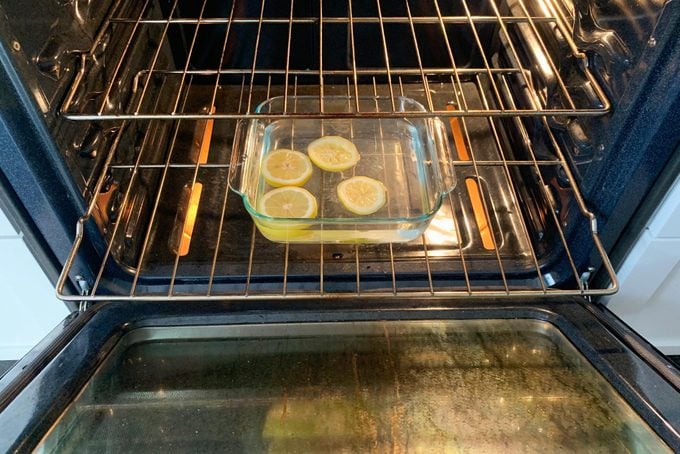
Place the bowl with the lemon mixture on the middle rack inside the oven. Close the oven door. Set the oven to 250°F (120°C) and let it heat for 30–35 minutes. As the lemon water heats, it will create steam that fills the oven. This steam helps to loosen grease and soften baked-on stains.
A key detail many forget: Letting the oven cool slightly before opening the door (about 5–10 minutes) allows the steam to settle, making it safer and easier to wipe surfaces.
4. Wipe Down The Oven Interior
After turning off the oven, carefully open the door. Be cautious of hot steam. Remove the bowl using oven mitts. The inside of your oven should now be coated with a thin layer of moisture and lemon oil.
Use a damp sponge or soft cloth to wipe down all interior surfaces. For areas with thicker grime, dip your sponge into the leftover lemon solution and scrub gently. Use the scrubbing brush for corners and hard-to-reach spots.
For stubborn stains, sprinkle a little baking soda directly on the area, add a drop of lemon juice, and scrub with the brush. The bubbling action helps lift stains without scratching the surface.
5. Clean The Oven Racks
While your oven is cooling, clean the racks separately. Place them in a sink or bathtub filled with hot water. Squeeze more lemon juice over them and let them soak for 15–20 minutes. Use a sponge or brush to scrub off any grease.
Rinse with clean water and dry with a towel.
6. Final Rinse And Dry
After wiping all surfaces, use a clean, damp cloth to remove any leftover lemon residue. Finish by drying all parts with a microfiber cloth. Replace the racks in the oven. You will notice a clean, shiny surface and a pleasant lemon scent.
What Parts Of The Oven Can You Clean With Lemon?
Lemon is safe for most parts of your oven. Here’s a quick look at what you can clean:
| Oven Part | Can Use Lemon? | Special Tips |
|---|---|---|
| Oven interior walls & floor | Yes | Scrub gently to avoid scratches |
| Oven door (glass inside) | Yes | Let lemon solution sit for 10 min before wiping |
| Oven racks | Yes | Soak before scrubbing for best results |
| Heating elements | No | Avoid liquid on electrical parts |
| Control knobs & exterior | Yes (diluted) | Spray, then wipe with damp cloth |
Never use lemon or water directly on electrical or gas connections. Always wipe surfaces dry to prevent rust.
How Lemon Cleans: The Science Explained
Many people wonder, “Is lemon really strong enough to clean an oven? ” The answer is yes, and science explains why.
Citric acid is the main cleaning agent in lemon. It reacts with grease and burnt food, breaking them down into smaller pieces that are easier to wipe away. The natural oils in lemon, called limonene, also help dissolve sticky substances.
When you heat lemon juice with water, steam forms. This steam carries lemon’s acid and oils to all corners of the oven, loosening dirt and making it easy to clean. This method is especially good for removing organic stains—those from food, oil, and sugar.
Here is a simple comparison of lemon vs. chemical oven cleaners:
| Feature | Lemon Cleaning | Chemical Cleaner |
|---|---|---|
| Main ingredient | Citric acid | Alkalis, solvents |
| Safety | Non-toxic | Can be harmful |
| Odor | Fresh, natural | Chemical, strong |
| Residue | Safe, edible | Needs careful rinsing |
| Cost | Low | Medium to High |
A non-obvious fact: Lemon also acts as a mild bleach, making surfaces look brighter without damaging them.
Cleaning Tough Oven Stains With Lemon
Sometimes, your oven may have stains that lemon steam alone cannot remove. For these tough spots, try these extra steps:
- Make a lemon-baking soda paste: Mix equal parts lemon juice and baking soda until you get a thick paste. Apply the paste to the stain and let it sit for 15–20 minutes. Scrub with a brush, then wipe clean.
- Use lemon slices directly: Rub a cut lemon half over the stained area. The rough surface helps scrub, and the acid works directly on the grime.
- Repeat the process: For old, baked-on stains, you may need to repeat the steam cleaning two or three times.
Never use metal scrapers or steel wool, as these can scratch the oven’s enamel surface.

Credit: www.thecooldown.com
Cleaning The Oven Door With Lemon
The oven door, especially the inside glass, often collects grease and splatters. Here’s how to clean it using lemon:
- Squeeze lemon juice over the glass.
- Sprinkle a thin layer of baking soda.
- Let it sit for 10–15 minutes.
- Wipe with a damp sponge, using a circular motion.
- Dry with a microfiber cloth for a streak-free finish.
If your oven door has double glass and dirt is trapped between the layers, do not try to take the door apart. This should be done by a professional.
Deodorizing Your Oven With Lemon
Strong smells can stay in your oven after cooking fish, meat, or spicy foods. Lemon is a natural deodorizer. After cleaning, you can keep your oven smelling fresh by:
- Placing a bowl of lemon slices and water in the oven at low heat (200°F or 90°C) for 20 minutes.
- Leaving the oven door open for a few minutes to air out.
This easy step helps neutralize odors instead of just covering them up.
Credit: www.tasteofhome.com
Cleaning Oven Exterior And Control Knobs
Lemon is also good for cleaning the outside of your oven, including the control panel, knobs, and handles. Mix equal parts lemon juice and water in a spray bottle. Lightly spray the surfaces and wipe with a soft cloth. For sticky spots, use a little baking soda on a damp sponge.
For electronic controls, spray the cloth (not the surface) to avoid moisture getting inside the buttons.
How Often Should You Clean Your Oven With Lemon?
Regular cleaning keeps your oven working well and prevents stains from becoming too hard to remove. Most home cooks should clean their oven every 2–3 months. If you bake or roast often, consider cleaning once a month.
A quick wipe after big spills can prevent hard-to-clean messes later. Always let your oven cool before cleaning.
Lemon Cleaning: Common Mistakes To Avoid
Even a simple method like lemon cleaning can go wrong if you’re not careful. Here are mistakes people often make:
- Using too much water: If you fill the bowl too full, it can spill or boil over.
- Letting the oven get too hot: High heat can dry out the lemon water before it steams.
- Scrubbing with rough tools: This can scratch the oven’s surface.
- Forgetting to rinse: Lemon juice left behind can become sticky or attract dust.
- Ignoring safety: Always use oven mitts when removing the hot bowl.
These tips help you avoid accidents and get the cleanest results.
Can Lemon Replace All Oven Cleaners?
Lemon works well for most routine cleaning and light to moderate grease. For very old, thick, or carbonized stains, you may need a stronger product or professional cleaning. However, for most households, lemon is enough for regular maintenance.
A practical insight: Combining regular lemon cleaning with quick spot cleaning after heavy use will keep your oven in good shape and reduce the need for harsh chemicals.
Comparing Lemon With Other Natural Cleaning Methods
You may wonder how lemon compares with other natural options like vinegar or baking soda alone. Here is a simple comparison:
| Natural Cleaner | Best For | Odor | Stain Removal Power |
|---|---|---|---|
| Lemon | Grease, mild stains, odor removal | Fresh, pleasant | Medium |
| Vinegar | Mineral deposits, limescale | Sharp, strong | High |
| Baking Soda | Scrubbing, tough stains | None | Medium to High |
| Lemon + Baking Soda | Baked-on food, sticky messes | Fresh, mild | High |
For most ovens, a mix of lemon and baking soda offers the best balance of cleaning power and safety.
Is Lemon Safe For All Oven Types?
Most modern ovens, including electric, gas, and convection models, can be cleaned with lemon. However, always check your oven’s manual, especially if you have a self-cleaning or special-coated oven. Some coatings can be sensitive to acids, though this is rare.
Never use lemon directly on heating elements or inside the vents. Always unplug the oven (if possible) before deep cleaning.
Benefits Beyond Cleaning
Cleaning your oven with lemon has extra benefits. It’s safe for children and pets, and there’s no risk of leftover chemicals in your food. Also, using lemons instead of store-bought cleaners reduces plastic waste and packaging.
A non-obvious tip: Lemon juice can also clean cutting boards, microwaves, and even polish sink faucets. You can use leftover lemon peels to freshen your garbage disposal or compost them for your garden.
When To Call A Professional
If you have a very dirty oven, burnt wiring smell, or cannot remove stains with natural methods, it’s best to call a professional. Trying to force open oven doors or disassemble parts can be dangerous and may void your warranty.

Credit: www.ovenclean.com
Where To Learn More
If you want more information about natural cleaning methods or the science of citric acid, check trusted sources like the Wikipedia entry on citric acid.
Frequently Asked Questions
How Long Does It Take To Clean An Oven With Lemon?
The full process usually takes about 1–1.5 hours. This includes 30–35 minutes for steaming, 15–20 minutes for soaking racks, and extra time for scrubbing and drying. If your oven is very dirty, you may need to repeat the process or spend more time on tough spots.
Can I Use Bottled Lemon Juice Instead Of Fresh Lemons?
Yes, bottled lemon juice works, but fresh lemons are better. Fresh juice contains more natural oils and has a stronger cleaning effect. Bottled juice often contains preservatives and less aroma.
Is It Safe To Use Lemon To Clean A Self-cleaning Oven?
You can use lemon for spot cleaning or light maintenance, but do not use it during the self-cleaning cycle. High heat may cause the lemon juice to burn or leave marks. Always check your oven’s manual first.
Will Lemon Damage The Oven’s Enamel Or Glass?
Lemon is gentle and safe for most enamel and glass surfaces. Avoid letting lemon juice sit for too long on metal parts, as it can cause mild discoloration. Always rinse and dry after cleaning.
What Should I Do If Lemon Cleaning Doesn’t Remove All Stains?
For very tough or old stains, repeat the lemon cleaning process. If stains remain, try a paste of baking soda and lemon, or use a small amount of white vinegar for extra power. For extremely stubborn dirt, consider a commercial cleaner or call a professional.
Cleaning your oven with lemon is simple, effective, and safe. It’s a smart choice for anyone who wants a fresh kitchen without harsh chemicals. With regular use, you’ll keep your oven looking and smelling great, and you’ll feel good knowing you’re using a natural solution that’s kind to your home and the environment.