
Keeping a stainless steel stovetop looking spotless isn’t just about beauty—it’s about hygiene, safety, and even the taste of your food. But if you’ve ever tried scrubbing away stubborn stains, smudges, or burnt-on grease, you know it’s not as simple as wiping with a wet cloth. Stainless steel can show every fingerprint, water mark, and streak if you don’t use the right methods. This article will guide you through the complete process to clean, polish, and protect your stainless steel stovetop. Whether you deal with daily messes, cooked-on spills, or want to avoid common mistakes, you’ll find every answer here.
Why Stainless Steel Stovetops Need Special Care
Stainless steel is popular in kitchens for a reason. It resists rust, handles heat, and looks modern. But unlike glass or enamel, it easily shows smears, streaks, and even tiny scratches if you use harsh tools or the wrong cleaner.
Over time, grease and food particles can bake onto the surface, making them difficult to remove. And using strong chemicals or steel wool can ruin the finish, causing permanent dull spots.
Another thing beginners often miss: stainless steel has a “grain.” If you clean against the grain, you can create tiny scratches that catch more dirt. Understanding this one fact can make your cleaning routine much more effective.
Understanding Your Stainless Steel Stovetop
Not all stainless steel is the same. Some stovetops have a brushed finish, while others are shiny and reflective. Most manufacturers use stainless steel grades like 304 or 430, which offer good resistance to stains and corrosion. However, even the best steel can discolor or pit if exposed to salt, acids, or harsh scrubbers.
Look at your stovetop under bright light. You’ll notice faint lines running in one direction—this is the grain direction. Always clean and polish following these lines to keep the surface smooth and reduce scratches.
If your stovetop has removable burner grates or covers, these might not be stainless steel, so you’ll need different cleaning methods for them. Check your appliance manual if you’re unsure.
Essential Tools And Supplies
Before you start cleaning, gather the right tools. Using the wrong items can damage your stovetop, so stick with these essentials:
- Microfiber cloths: These are soft and non-abrasive, perfect for picking up dirt and leaving no lint behind.
- Soft sponges: Avoid anything with a rough side.
- Non-abrasive scrub pads: For stubborn spots, look for pads specifically labeled safe for stainless steel.
- Spray bottle: Useful for applying homemade cleaners.
- Dish soap: Mild and effective for daily cleaning.
- White vinegar: Cuts grease and removes stains naturally.
- Baking soda: Gentle abrasive for tough stains.
- Olive oil or mineral oil: For polishing and removing streaks.
- Cotton swabs or old toothbrush: For corners and edges.
- Paper towels: For drying and buffing.
A common mistake is using steel wool or rough scouring pads—these can scratch and dull the surface quickly.
Preparing To Clean
Before applying any cleaner, make sure the stovetop is completely cool. Cleaning a hot surface can warp the metal, set stains, or cause burns. Remove all burner grates, knobs, and drip pans if possible. Set these aside for separate cleaning.
Gently shake off or sweep away any loose food crumbs with a dry cloth. This prevents you from grinding particles into the surface as you clean. If you spot large, sticky messes, use a plastic scraper to lift them off—never use metal blades.
Daily Cleaning For Stainless Steel Stovetops
Regular cleaning prevents buildup and makes deep cleaning much easier. Here’s a step-by-step guide:
- Mix a mild solution: Add a few drops of dish soap to warm water.
- Dip a microfiber cloth: Wring out excess water to avoid streaks.
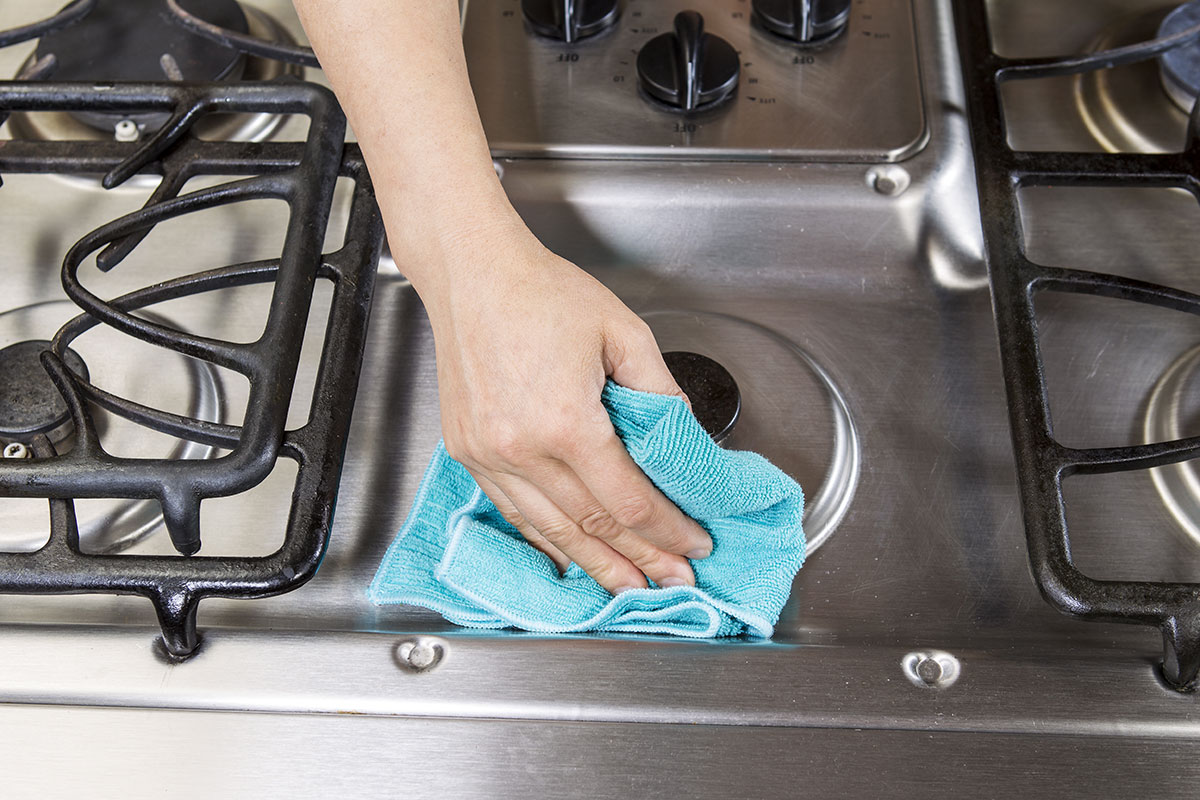
- Wipe with the grain: Gently clean the entire surface, paying extra attention to spills.
- Rinse with plain water: Use another clean, damp cloth.
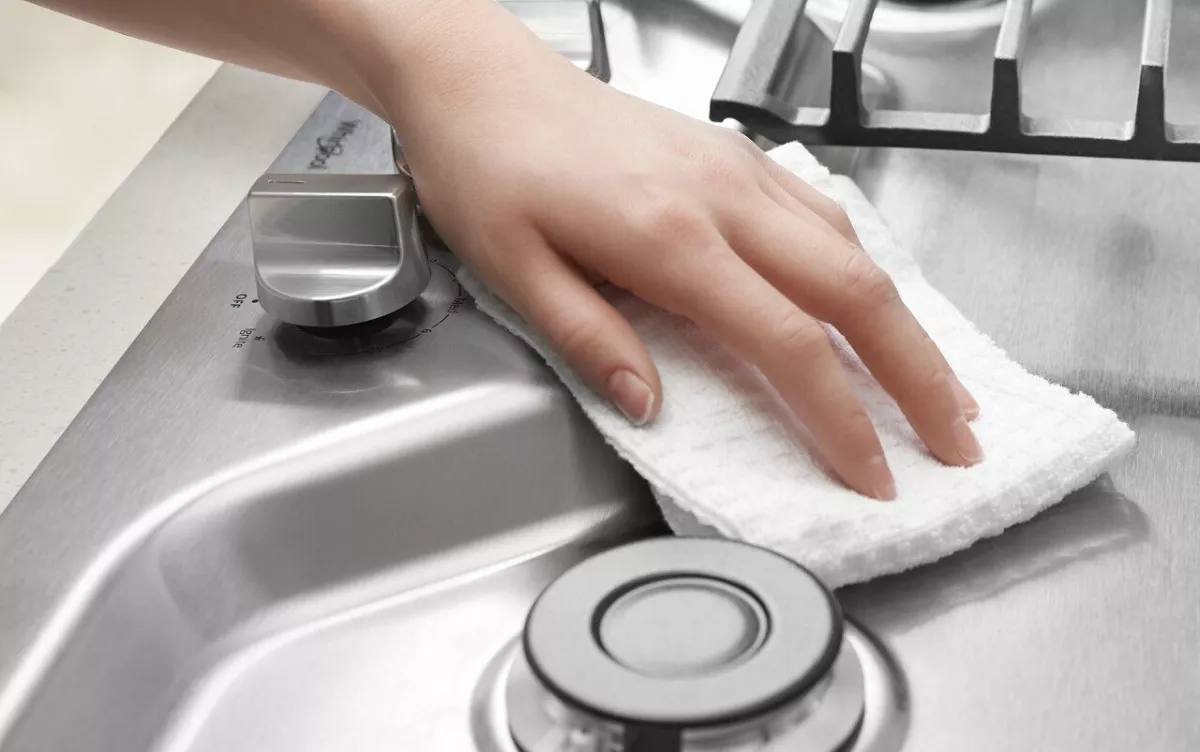
- Dry completely: Water spots are common if you let the surface air-dry. Use a dry microfiber cloth to buff the surface.
If you clean daily, you’ll rarely need heavy-duty cleaners. Water spots and small smudges come off easily, and your stovetop always looks presentable.
Dealing With Grease And Light Stains
Even with daily cleaning, grease can build up around burners and edges. For oily spots:
- Spray with white vinegar: Let it sit for 2-3 minutes.
- Wipe clean: Use a microfiber cloth, following the grain.
- Repeat if needed: For stubborn grease, sprinkle a bit of baking soda directly on the spot, then spray with vinegar.
- Rinse and dry: Vinegar can dull the shine if left on too long.
Baking soda is a gentle abrasive, safe for most stainless steel. However, don’t rub too hard—let the cleaner do the work, not your arm strength.
Removing Burnt-on Residue
Sometimes, spills get cooked onto the surface and won’t come off with soap or vinegar. Here’s how to tackle these tough spots:
- Make a paste: Mix 3 parts baking soda with 1 part water.
- Apply to residue: Spread the paste over the burnt area and let it sit for 10-15 minutes.
- Scrub gently: Use a non-abrasive pad or a soft-bristled brush.
- Wipe away residue: Use a damp cloth, rinsing often.
- Repeat if necessary: Some burnt spots may need two or three treatments.
Never use sharp tools or knives to scrape—these can leave permanent marks.
Example: Removing Heavy Stains
Let’s say you spilled tomato sauce and didn’t notice until it burned. After the stovetop cools, apply the baking soda paste. The acid in the sauce bonds to the steel, so it takes time to lift. If the first attempt only softens the stain, repeat the process, but avoid using more force.
Cleaning Knobs, Grates, And Drip Pans
Knobs and grates get greasy fast, but their cleaning needs are different:
- Knobs: If removable, soak in warm soapy water for 15-20 minutes. Use a toothbrush to clean crevices. Dry thoroughly before reattaching.
- Grates: Most are cast iron or porcelain-coated. Don’t soak in vinegar. Instead, scrub with soapy water and a sponge. For heavy buildup, use a paste of baking soda and water.
- Drip pans: If they’re stainless steel, clean as you would the stovetop. For stubborn stains, soak in vinegar and water, then scrub gently.
Make sure all parts are dry before returning them to the stovetop to prevent rust.
Polishing For A Streak-free Shine
After cleaning, your stovetop may look clean but lack the shiny finish you expect. Polishing removes fingerprints and streaks while adding a protective layer. Here’s how:
- Apply a small drop of olive oil or mineral oil to a clean microfiber cloth.
- Buff with the grain: Gently rub the oil over the surface.
- Wipe away excess: Too much oil can attract dust. Buff with a dry part of the cloth until the surface gleams.
Don’t use cooking spray or vegetable oil—they can become sticky over time.
Comparing Polishing Oils
Here’s a quick comparison of common polishing oils:
| Oil Type | Shine | Residue Risk | Food Safe |
|---|---|---|---|
| Olive Oil | High | Low | Yes |
| Mineral Oil | High | Very Low | Yes |
| Cooking Spray | Medium | High | No |
Mineral oil is often recommended by appliance makers because it leaves almost no residue.
Homemade Stainless Steel Cleaners
Commercial cleaners work, but many contain harsh chemicals. You can make safe, effective cleaners at home:
- Vinegar and water (1: 1): Cuts grease and disinfects.
- Baking soda paste: Removes stains without scratching.
- Rubbing alcohol: Quickly removes fingerprints and dries streak-free.
For a light polish, mix a few drops of lemon juice with olive oil. This leaves a fresh scent and a bright finish.
Diy Cleaner Comparison
How do homemade solutions stack up against store-bought cleaners? Here’s a look:
| Cleaner | Effectiveness | Safety | Cost |
|---|---|---|---|
| Vinegar & Water | Good for grease | Very Safe | Very Low |
| Baking Soda Paste | Excellent for stains | Very Safe | Very Low |
| Store Cleaner | Excellent for shine | Varies | Medium |
| Alcohol | Great for fingerprints | Safe | Low |
Homemade cleaners are usually enough for regular messes. For heavy-duty cleaning, choose a store-bought product labeled “safe for stainless steel. ”
What To Avoid When Cleaning Stainless Steel
Not all cleaning advice is good advice. Some methods can ruin your stovetop in one go. Here’s what to avoid:
- Abrasive powders: These can scratch the finish.
- Bleach or ammonia: Both can discolor or pit the steel.
- Steel wool pads: They leave deep scratches and can rust.
- Oven cleaners: Too harsh for stainless steel.
- Letting water sit: Water spots are hard to remove once they set.
Another common beginner mistake is using the same cloth to clean and dry. Always switch to a fresh, dry cloth for the final buff.
Deep Cleaning And Monthly Maintenance
Even with daily care, deep cleaning every month keeps your stovetop in top condition:
- Remove all parts: Soak grates, knobs, and drip pans as needed.
- Sprinkle baking soda: Cover the entire surface lightly.
- Spray with vinegar: The fizzing action helps loosen grime.
- Let sit for 10 minutes: This gives time for deep stains to lift.
- Wipe clean with a damp cloth: Rinse and repeat if needed.
- Polish as usual: Finish with a light oil buff.
Monthly deep cleaning helps prevent discoloration and keeps stainless steel looking new. If you notice “rainbow stains” (heat discoloration), gently buff with a paste of baking soda and water, then polish.
Protecting Your Stainless Steel Stovetop
Once your stovetop is clean, a few habits can keep it looking good:
- Wipe spills immediately: Don’t let sauces or grease harden.
- Use splatter guards: When frying, cover pans to reduce mess.
- Polish weekly: A thin layer of oil prevents fingerprints and smears.
- Use the right tools: Stick to microfiber and non-abrasive pads.
A practical insight many people miss: stainless steel is less likely to stain if you avoid cooking with high salt or acidic foods directly on the surface.
Troubleshooting Common Problems
Water Spots
If you notice dull, chalky spots, they’re likely from minerals in tap water. Wipe with a cloth dampened with vinegar, then rinse and dry thoroughly.
Rainbow Stains
High heat can cause blue or rainbow-like colors. Buff gently with a baking soda paste, then polish with oil. Avoid abrasive pads.
White Spots
These are usually from salty water or cleaning with bleach. Rinse well with plain water, then buff with vinegar.
Scratches
Fine scratches are hard to avoid, but you can minimize their look. Polish with mineral oil, always following the grain. Deep scratches may need professional repair.
Credit: westchestermagazine.com
How To Handle Tough Stains And Discoloration
Sometimes, even after all efforts, stains remain. Here’s what you can try:
- Bar Keepers Friend: This commercial cleaner is safe for stainless steel and removes most stains. Use as directed, rinse well, and dry.
- Club soda: Pour onto a cloth and buff the stain. It works well for minor discoloration.
- Cream of tartar paste: Mix with water, apply to stains, and let sit for 5-10 minutes before wiping clean.
Always test any new cleaner on a small, hidden area first to check for adverse reactions.
Myths About Stainless Steel Cleaning
You’ll find many cleaning myths online. Here’s what you should ignore:
- “Lemon juice removes all stains.” While lemon is good for shine, it can’t remove heavy, burnt-on residue.
- “Stainless steel doesn’t stain.” It’s more resistant, but not immune to discoloration or rust.
- “You can use any kitchen cleaner.” Many contain bleach or abrasives that damage the finish.
Stick to proven, gentle methods for the best results.
The Role Of Water Quality
One overlooked factor is your tap water. Hard water, which contains minerals like calcium and magnesium, leaves more spots and residue. If you live in a hard water area, consider wiping with distilled water for the final rinse. This small change can keep your stovetop shinier and spot-free.
Comparing Stainless Steel To Other Stovetop Materials
If you’re curious about how stainless steel compares to glass or enamel, here’s a quick overview:
| Material | Stain Resistance | Heat Resistance | Cleaning Difficulty |
|---|---|---|---|
| Stainless Steel | High | High | Medium |
| Glass | Medium | Low | High |
| Enamel | Medium | Medium | Low |
Stainless steel offers a good balance of durability and looks, but it needs the right cleaning routine to stay at its best.
Credit: www.whirlpool.com
Mistakes To Avoid For Long-lasting Shine
- Ignoring spills: Dried-on food is much harder to remove.
- Using abrasive cleaners: Even one mistake can ruin the surface.
- Cleaning against the grain: Always follow the brushed lines.
- Skipping the dry step: Water spots are easy to prevent with quick buffing.
- Overusing oil: Too much can make the stovetop sticky and attract dust.
Understanding these pitfalls can save you time, money, and frustration.
Professional Tips For A Spotless Finish
- Always keep two microfiber cloths handy—one for cleaning, one for drying.
- After heavy cooking, let the stovetop cool, then wipe immediately before stains set.
- For tight corners, wrap a damp cloth around a chopstick or pencil.
- To remove fingerprints fast, use a bit of rubbing alcohol on a cloth, then buff dry.
Appliance manufacturers often have special recommendations. If in doubt, check their website or manual for specific guidance.
When To Call A Professional
Most stains and marks can be handled at home, but if you see deep scratches, rust, or discoloration that won’t go away, consider professional help. Appliance repair services can buff out scratches or reapply a protective finish. Trying to fix these yourself with harsh chemicals or sandpaper can make things worse.
Frequently Asked Questions
How Often Should I Clean My Stainless Steel Stovetop?
Clean daily for best results, especially after cooking. This prevents buildup and reduces the need for harsh cleaners. A deep clean every month keeps the stovetop looking like new.
Can I Use Vinegar On All Parts Of My Stovetop?
Vinegar is great for the stainless steel surface but avoid using it on cast iron grates or aluminum parts, as it can cause corrosion. Always rinse well and dry after using vinegar.
What Should I Do If My Stovetop Gets Scratched?
Light scratches can often be minimized by polishing with mineral oil, always following the grain. Deep scratches may require a professional to refinish the surface.
Are Commercial Stainless Steel Cleaners Safe?
Most are safe if labeled for kitchen use, but always read the instructions. Avoid any cleaner with bleach or strong abrasives. Test on a small area first.
Is It Okay To Use Paper Towels For Cleaning?
Paper towels are fine for drying, but they can leave lint or small scratches if used for scrubbing. Microfiber cloths are better for the main cleaning steps.
A clean, shiny stainless steel stovetop adds real value to your kitchen—both in appearance and in the enjoyment of cooking. By following the steps above, you’ll keep your stovetop free of stains, streaks, and scratches. Remember, gentle and regular care is better than aggressive cleaning once a mess has set. For more about the science behind stainless steel care, visit the Wikipedia Stainless Steel page. With a little attention, your stovetop will stay looking new for years.

Credit: www.youtube.com