
Keeping your Joule Sous Vide clean is essential for safe cooking, long-lasting performance, and delicious results. Many owners love the convenience and precision of the Joule, but often overlook the importance of proper cleaning. Over time, even small amounts of mineral buildup, grease, or food particles can affect your device’s accuracy and reliability. If you want your sous vide machine to keep working perfectly, you need to know exactly how to clean it—inside and out. This guide will give you everything you need, whether you’re a beginner or an experienced home cook.
Why Cleaning Your Joule Sous Vide Matters
A clean sous vide isn’t just about hygiene. The Joule heats water with precise temperature control. Any buildup inside the device can reduce heating efficiency, cause noise, or even lead to failure. Small bits of food, oil, or minerals (especially from tap water) can accumulate over weeks or months. If you use your Joule often, regular cleaning prevents unpleasant smells and keeps your food safe.
Some users only clean when they see visible dirt or problems. But by that point, damage can already occur. Just like your coffee maker or kettle, a sous vide machine works best when it’s maintained consistently.
Understanding The Joule Sous Vide: Key Parts To Clean
Knowing what to clean is the first step. The Joule Sous Vide is made up of a few main components:
- Stainless Steel Cap: The bottom metal part that touches the water.
- Heating Coil: Inside the cap, heats the water.
- Propeller: Moves water for even temperature.
- Body (Plastic or Metal): The long tube above the cap.
- Intake/Outlet Vents: Small holes where water enters and exits.
- Power Cord and Connector: The cable and plug.
Most cleaning focuses on the bottom part (cap, coil, and propeller), but you shouldn’t ignore the rest. Even a quick wipe can help avoid dust, watermarks, or sticky spots on the body.
How Often Should You Clean The Joule Sous Vide?
Cleaning frequency depends on usage and water type. Here’s a simple guide:
- After Every Use: Quick rinse and wipe of exterior, especially if there’s visible food or water marks.
- Once a Month: Deep clean, including descaling (removing mineral buildup), especially if you use hard tap water.
- After Spills or Bag Leaks: Immediate, thorough cleaning to prevent smells and bacteria.
If you use distilled or filtered water, you may need less frequent descaling. But for most users, a monthly deep clean is best.
What You Need: Cleaning Supplies And Tools
You don’t need expensive products. Here’s what works best:
- Soft sponge or cloth: For wiping exterior and cap.
- Mild dish soap: Removes grease and dirt.
- White vinegar: Essential for descaling minerals.
- Small brush or old toothbrush: Gets into small spaces, like the cap and vents.
- Warm water: For rinsing and soaking.
- Microfiber towel: For drying without scratches.
- Cotton swab (optional): Cleans around the propeller.
Never use harsh chemicals, abrasive pads, or anything that can scratch the stainless steel or plastic.
Step-by-step: How To Clean The Joule Sous Vide
This section explains each cleaning method in detail. Follow the steps that match your situation.
1. Quick Cleaning After Each Use
After every sous vide session, a simple clean helps prevent buildup.
- Unplug the Joule: Always disconnect before cleaning.
- Let it cool: Wait until the device is safe to touch.
- Wipe the exterior: Use a damp cloth to remove water spots or splashes on the body.
- Clean the cap: If there’s food or residue, gently wipe with a sponge and a drop of dish soap.
- Rinse: Use warm water to rinse the cap and vents.
- Dry completely: Use a towel to avoid water stains.
This process takes less than 5 minutes and prevents most problems.
2. Deep Cleaning And Descaling (monthly)
Mineral deposits are common, especially with hard water. Descale your Joule to keep it efficient.
Descaling solution: Mix equal parts white vinegar and water (about 1 cup each).
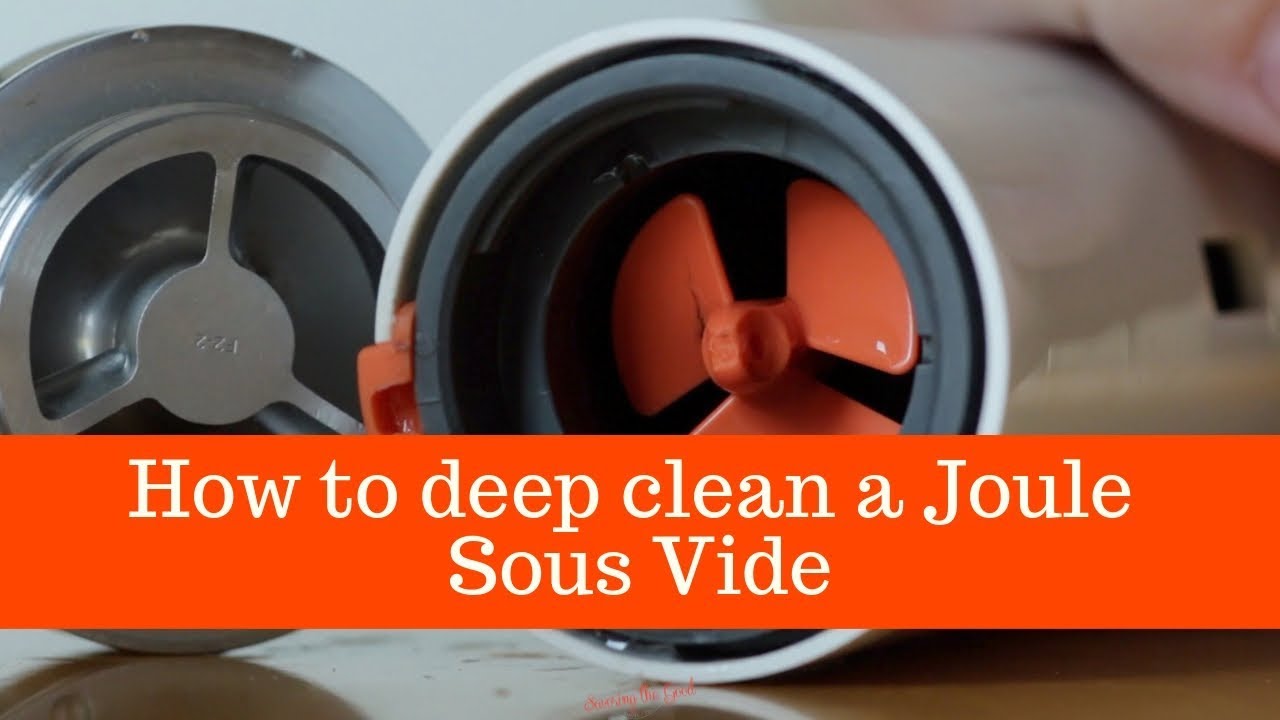
- Remove the cap: Hold the Joule upright, twist, and pull off the stainless steel cap. Set aside.
- Check for dirt: Look for white or greenish buildup around the coil or propeller.
- Soak the cap: Place the cap in the vinegar solution for 30 minutes.
- Clean the coil and propeller: Dip a brush or sponge in the vinegar mix. Gently scrub any buildup.
- Rinse: Wash all parts with warm water.
- Wipe the body: Use a damp cloth, but do not let water enter the electronic parts.
- Reassemble: Once dry, put the cap back on.
Running A Vinegar Cycle (internal Descaling)
For heavy buildup:
- Fill a pot: Add enough vinegar solution to cover the minimum water line.
- Insert the Joule: Place it in the solution, but keep the water below the maximum line.
- Run at 140°F/60°C: Let Joule heat and circulate for 20-30 minutes.
- Empty and rinse: Discard solution, rinse the Joule under running water, and dry.
This method cleans inside areas you can’t reach by hand.
3. Cleaning After A Bag Leak Or Food Spill
If a sous vide bag leaks, fat or food can get into the cap and vents. This needs immediate cleaning:
- Unplug and cool: Always let the Joule cool down.
- Remove the cap: Check for food particles or oil.
- Wash all parts: Use dish soap, warm water, and a brush to clean the cap, coil, and propeller.
- Soak if needed: For tough stains, soak in soapy water or vinegar for 30 minutes.
- Rinse well: Make sure there’s no soap left.
- Dry completely: Prevents rust or mold.
Pro tip: If oil got inside, repeat the wash and rinse twice. Oil can leave a film that causes off-smells later.
4. Cleaning The Power Cord And Body
Don’t ignore the body and cord:
- Wipe with damp cloth: Removes fingerprints, dust, or grease.
- Check for cracks: Look for damage, especially around the plug.
- Dry carefully: Don’t let water drip into the connector.
A clean cord is safer and lasts longer.
5. Final Drying And Storage
Never store your Joule while wet. After cleaning:
- Towel dry all parts: Especially the cap and propeller.
- Leave disassembled for a few hours: Air drying prevents moisture buildup.
- Store upright: In a dry, cool place, away from direct sunlight.
What To Avoid When Cleaning Your Joule Sous Vide
Some mistakes can damage your device. Always avoid:
- Submerging the upper body: Water can get into electronics and ruin the Joule.
- Abrasive cleaners or steel wool: These scratch and damage surfaces.
- Strong chemicals: Bleach, ammonia, or harsh sprays can harm plastic and metal.
- Dishwasher cleaning: Joule parts are not dishwasher-safe.
- Forcing removal: If the cap is stuck, wiggle gently. Don’t use tools that can bend or crack it.
Comparing Cleaning Methods
Let’s compare three popular cleaning methods for the Joule Sous Vide: manual, vinegar soak, and running a vinegar cycle.
| Method | Best For | Time Needed | Effectiveness | Notes |
|---|---|---|---|---|
| Manual (Brush & Soap) | Visible dirt, food spills | 10–15 min | Good for surface cleaning | Needs scrubbing, not for deep mineral scale |
| Vinegar Soak | Light to medium mineral buildup | 30–45 min | Very effective for scale | Easy, but needs soaking time |
| Vinegar Cycle Run | Internal buildup, hard water | 30–40 min | Best for inside areas | Needs heating, more hands-off |
How Water Quality Affects Cleaning
The type of water you use makes a big difference. Hard water contains more minerals (like calcium and magnesium) that build up quickly. Soft water or distilled water leaves less residue.
Here’s a quick look at how water type impacts your cleaning routine:
| Water Type | Cleaning Frequency | Common Issues | Recommended Action |
|---|---|---|---|
| Hard Tap Water | Monthly | Heavy scale, white deposits | Regular descaling with vinegar |
| Filtered Water | Every 2 months | Light scale, slow buildup | Less frequent descaling |
| Distilled Water | Every 3–4 months | Almost no scale | Basic cleaning only |
Insight: If you notice your Joule sounds louder, heats slower, or water looks cloudy, it’s time to clean—even if it hasn’t been a month.

Credit: support.chefsteps.com
Dealing With Common Joule Sous Vide Cleaning Problems
Some cleaning problems are more common than others. Here’s how to solve them:
1. Stuck Stainless Steel Cap
Sometimes, the cap is hard to twist off. This is usually from mineral buildup.
- Tip: Run the Joule in hot water for 10 minutes. The heat can loosen minerals.
- If still stuck: Apply a little white vinegar around the seam, wait 10 minutes, then try again.
2. Persistent Odors
If your device smells after cleaning, it’s often leftover oil or bacteria.
- Solution: Soak the cap in hot, soapy water for 1 hour, then vinegar for 30 minutes. Dry fully in sunlight if possible.
3. Cloudy Or Discolored Cap
This is common with hard water or after cooking with fats.
- Fix: Scrub gently with vinegar and a brush. Avoid abrasive pads.
4. Propeller Blockage
If the Joule is loud or vibrates, the propeller may be blocked.
- Action: Remove the cap, check for food or debris around the propeller, and clean with a cotton swab.
5. Water Inside The Electronics
If you see condensation under the clear plastic or suspect water entered the body:
- Warning: Do not use the Joule. Let it dry for at least 48 hours in a warm, dry place. If unsure, contact the manufacturer.
Advanced Care: Extending The Life Of Your Joule Sous Vide
Cleaning is just one part of caring for your sous vide. For best results:
- Always dry before storing: Moisture leads to rust and mold.
- Check the cord and plug regularly: Replace if there’s any damage.
- Avoid using Joule with salty water: Salt speeds up corrosion. If you use salt, clean immediately after.
- Don’t force the device into small containers: Bending or squeezing can damage seals.
- Update your app and firmware: This keeps your Joule running safely.
Non-obvious insight: Many users don’t realize that running your Joule without a bag (just for heating water) can help keep the inside clean. Do this with plain water every few weeks as a preventative rinse.
Credit: www.youtube.com
How To Store Your Joule Properly After Cleaning
Good storage habits keep your sous vide in top shape:
- Keep in an upright position: Prevents dust and water from entering vents.
- Use a protective sleeve or case: If you have the original box, that’s best.
- Avoid humid places: Kitchen cabinets near the stove or sink are not ideal.
- Check before next use: Make sure it’s fully dry, especially inside the cap.
Key Mistakes To Avoid For Joule Sous Vide Owners
Most problems come from a few common errors:
- Leaving the cap dirty: Even tiny food particles can cause smells and bacteria.
- Not descaling regularly: Minerals can block the coil and reduce performance.
- Letting water get into the electronics: This can ruin the device.
- Using abrasive cleaners: These scratch and age the metal and plastic.
- Ignoring the cord and plug: Frayed cords are a fire hazard.
Practical tip: Set a calendar reminder for monthly cleaning and descaling.
Real-life Example: Cleaning After A Cooking Disaster
Imagine you set a steak to cook overnight, but the bag leaks. Fat and meat juices are now inside your Joule. What should you do?
- Unplug and remove from water immediately.
- Disassemble the cap and propeller.
- Wash all affected parts with hot, soapy water.
- Use a brush to scrub any greasy spots.
- Rinse with vinegar to remove odors and kill bacteria.
- Let all parts air dry for several hours before reassembly.
Many users panic when this happens, but quick action saves your device.
Frequently Overlooked Cleaning Areas
Most people focus on the cap and coil, but miss these areas:
- Intake vents: Check for dust or lint, especially if you store the Joule in a drawer.
- Propeller shaft: Food can get stuck here after a leak.
- Underside of the cap: Wipe with a cotton swab for best results.
- Outer plastic seam: Dirt and grease can collect here, wipe regularly.

Credit: www.amazingfoodmadeeasy.com
When To Seek Professional Help
If you notice any of these, it’s best to contact support or a repair expert:
- Device won’t turn on after cleaning.
- Burning smell during use.
- Obvious cracks or breaks in the housing.
- Unusual noises that don’t stop after cleaning.
Do not try to open the Joule body or repair electronics yourself.
Eco-friendly Cleaning Choices
Care about the environment? Here’s how to clean green:
- Use white vinegar and baking soda: Both are safe and effective.
- Avoid disposable wipes: Use cloth towels that you can wash.
- Recycle old brushes and sponges: Replace only when worn out.
- Don’t pour large amounts of vinegar down the drain: Dilute with water first.
Comparing The Joule With Other Sous Vide Machines (cleaning Perspective)
How Does The Joule Compare To Other Brands?
| Feature | Joule Sous Vide | Anova Precision Cooker | Instant Accu Slim |
|---|---|---|---|
| Cap Removal | Easy twist-off | Twist, sometimes stiff | Needs screwdriver |
| Internal Cleaning | Simple access | Good, but more screws | Limited |
| Descaling Process | Vinegar soak/cycle | Vinegar soak/cycle | Manual only |
| Electronics Protection | Excellent | Good | Good |
The Joule is one of the easiest sous vide machines to clean, thanks to its simple cap removal and smooth surfaces.
Quick Checklist: Monthly Cleaning Routine
Here’s a routine to keep your Joule in top shape:
- Unplug and cool the device.
- Remove the cap and check for buildup.
- Soak cap in vinegar if needed.
- Scrub coil and propeller.
- Rinse all parts with warm water.
- Wipe down the body and cord.
- Dry all parts completely.
- Store upright in a dry place.
Set a reminder to repeat this every month.
Trusted Resources For Further Reading
For more details, you can check the official Joule care guide from ChefSteps at ChefSteps. They provide up-to-date info, troubleshooting, and tips from the manufacturer.
Frequently Asked Questions
How Do I Know If My Joule Needs Cleaning?
If you see white or greenish deposits, smell anything unusual, or notice slower heating or loud noises, it’s time to clean. Regular monthly cleaning prevents these issues.
Can I Use Lemon Juice Instead Of Vinegar For Descaling?
Lemon juice works for light mineral deposits, but vinegar is stronger and more effective. If you use lemon juice, rinse well to avoid sticky residue.
What Should I Do If Water Enters The Electronics?
Do not use the Joule. Let it dry in a warm, dry place for at least 48 hours. If you see water inside the clear plastic or the device won’t turn on, contact customer support before using again.
Is It Safe To Clean The Joule In The Dishwasher?
No. The Joule is not dishwasher safe. The high heat and water pressure can damage the cap, coil, and electronics.
How Often Should I Deep Clean If I Use Distilled Water Only?
If you use distilled water, deep cleaning every 3–4 months is enough. Still, check for any buildup or food residue monthly, especially after bag leaks.
Keeping your Joule Sous Vide clean is simple but essential. With these steps, you’ll enjoy safe, consistent cooking and a device that lasts for years. Make cleaning a habit, and your sous vide meals will always be perfect.