
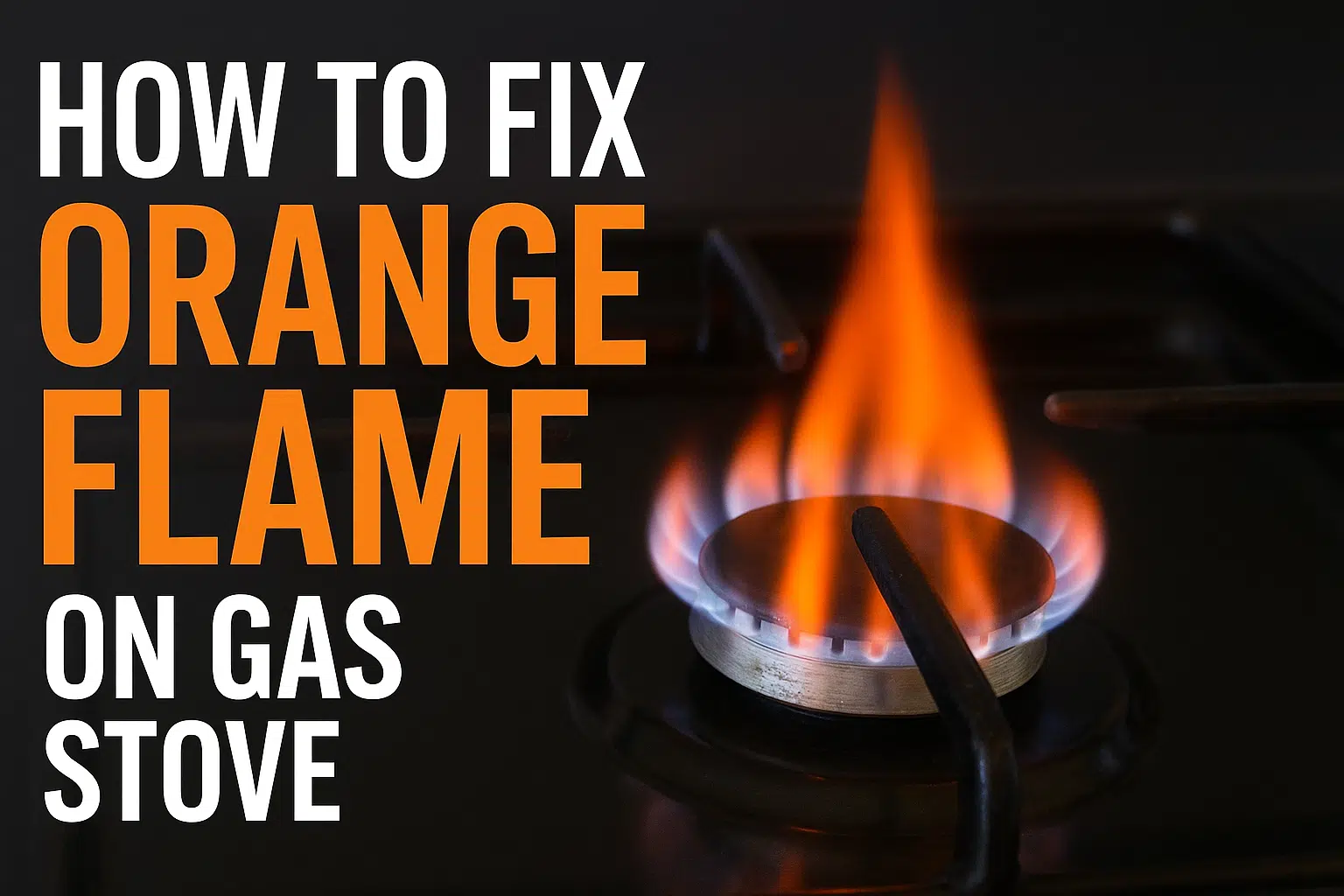
If you’ve ever noticed an orange flame on your gas oven, you might feel worried or confused. After all, most people expect a blue flame when cooking. An orange flame doesn’t just look strange—it can be a sign of a problem. It may mean your oven isn’t working efficiently, or worse, that it’s producing harmful gases like carbon monoxide. Fixing this issue is important for your safety, food quality, and energy bills.
This guide will walk you through everything you need to know about fixing an orange flame on your gas oven. You’ll learn why it happens, how to diagnose the problem, and what steps to take. Even if you’re not a technical expert, you’ll find clear instructions and practical tips to help you solve the issue.
By the end, you’ll understand how to get your oven burning blue again and keep your kitchen safe.
What Does An Orange Flame Mean?
A blue flame is the sign of a healthy gas oven. Blue means the gas is burning completely, producing heat efficiently, and not releasing dangerous gases. When the flame turns orange, it tells you something is wrong. The gas may not be burning fully. This can happen because of several reasons—dirty burners, wrong gas pressure, or problems with air flow.
An orange flame often means there is carbon or impurities in the flame. This incomplete burning can create carbon monoxide, which is poisonous. It can also make your food taste strange or leave soot inside your oven. If you see an orange flame, it’s a signal to take action right away.
Why Blue Flame Is Important
Blue flames are more than just a sign of a clean oven. They show that the air-to-gas ratio is correct. This means you’re using energy efficiently and safely. Blue flames are hotter, so your food cooks evenly.
When the flame is orange, several things can go wrong:
- Lower heat output: Your oven might not reach the right temperature.
- Soot and residue: Orange flames can leave black marks on pans and inside the oven.
- Health risks: Incomplete burning releases carbon monoxide, which is dangerous if it builds up indoors.
Knowing this, you can see why fixing an orange flame is not just about looks—it’s about safety and quality.
Common Causes Of Orange Flame On Gas Oven
To fix the problem, you need to know what causes an orange flame. There are several possible reasons, and sometimes more than one can happen at the same time.
- Dirty burners: Food spills, grease, or dust can block the gas ports.
- Wrong air-gas mixture: The oven might not be getting enough air to mix with the gas.
- Gas pressure problems: Too much or too little gas changes how it burns.
- Faulty gas regulator: This device keeps the pressure steady. If it’s bad, flames can turn orange.
- Wrong type of gas: Ovens are built for natural gas or propane. Using the wrong type can change the flame color.
- High humidity: Sometimes, water vapor in the air can briefly turn flames orange.
- Contaminants in gas: Chemicals or dust in the gas supply can create orange flames.
Let’s look at each one in detail and see how to fix them.
How To Diagnose The Problem
Before you start fixing your oven, you should make sure you understand the cause. Begin by observing the flame:
- Is the flame always orange, or only sometimes?
- Is the flame orange all over, or just at the tips?
- Is the oven working normally, or do you smell gas?
These clues can help you decide what to do next.
Tools You May Need
- Screwdriver set (usually Phillips and flat-head)
- Soft brush or old toothbrush
- Needle or pin (for cleaning burner holes)
- Mild detergent and water
- Flashlight
- User manual for your oven
If you need to test gas pressure or check for leaks, more advanced tools are required. In those cases, calling a professional is often safer.
Step 1: Safety First
Before you touch anything, always put safety first.
- Turn off the oven and let it cool completely.
- Shut off the gas supply at the main valve, usually behind or beneath the oven.
- Open windows to let out any gas or fumes.
- Have a fire extinguisher nearby just in case.
Never work on a gas appliance if you smell strong gas. If you do, leave your home and call the gas company immediately.
Step 2: Check And Clean Burners
Dirty burners are the most common reason for an orange flame. Over time, food, grease, or dust can block the holes where gas comes out.
How To Clean Gas Burners
- Remove the oven grates and any covers over the burners.
- Lift out the burners carefully. Most can be lifted straight up, but some are held by screws.
- Use a brush or old toothbrush to remove loose debris.
- For stubborn dirt, soak the burner in warm, soapy water for 20-30 minutes.
- Use a needle or pin to gently clear each burner hole. Do not make the holes bigger—just remove the blockage.
- Dry the burners completely before putting them back.
Sometimes, the burner orifice (the small hole where gas comes out) gets clogged. Use a needle to clear it gently.
Non-obvious tip: Even a small bit of grease can cause an orange flame. Clean all nearby surfaces, not just the burner itself.
Credit: www.repairmyappliance.ca
Step 3: Adjust The Air Shutter
The air shutter controls how much air mixes with the gas before it burns. If there’s not enough air, the flame will turn orange.
How To Adjust The Air Shutter
- Locate the air shutter. It’s usually a small metal plate near the burner tube.
- Loosen the screw holding the shutter in place.
- Open the shutter slowly while the oven is on. Watch the flame change color.
- When the flame turns blue with small yellow tips, tighten the screw to lock the shutter.
Caution: Only adjust the air shutter with the oven on if you are comfortable and confident. If not, ask a technician.
Non-obvious tip: Write down the original position of the shutter before you adjust it. If things get worse, you can return to the starting point.
Step 4: Check Gas Pressure
Gas pressure that’s too high or too low can change the flame color. Normal home gas pressure is about 7-10 inches of water column for natural gas, or 11 inches for propane.
Signs Of Wrong Gas Pressure
- Orange or lazy flame
- Uneven cooking
- Whooshing or hissing sound
If you suspect pressure is the problem, call your gas supplier or a certified technician. Testing pressure needs special tools and experience.
Step 5: Inspect Gas Regulator
The gas regulator keeps pressure steady. If it fails, you might see changes in flame color.
- Check for signs of wear, rust, or damage.
- If you smell gas near the regulator, stop using the oven and call for service.
Regulator problems are not a DIY fix. Always call a professional for this step.
Step 6: Check For Correct Gas Type
Gas ovens are designed for either natural gas or propane, but not both. Using the wrong type can turn the flame orange and damage your oven.
- Check your oven’s manual or label to see which type it uses.
- If you’ve moved recently, make sure the oven was converted if needed.
If you think the wrong gas is used, stop using the oven and have a technician check and convert it if needed.
Step 7: Consider Environmental Factors
Sometimes, things outside your oven can change the flame color briefly.
- High humidity: Extra water vapor can make orange flames for a short time.
- Cleaning sprays or aerosols: Chemicals in the air can change the color.
- Dust storms or construction nearby: Dust can get into the gas supply.
These usually go away on their own. If the orange flame stays for more than a few hours, check for other problems.
Step 8: Inspect For Gas Contaminants
Rarely, the gas supply itself may have dust, oil, or chemicals. This can happen after gas line work, storms, or in older homes.
If you suspect this, call your gas company. They can check and clean the gas lines if needed.

Credit: www.reddit.com
Step 9: Test And Observe
After you clean and adjust everything, turn on the oven and watch the flame:
- It should be mostly blue, with only small yellow tips at most.
- The oven should heat up quickly and evenly.
- There should be no smell of gas or soot.
Use your oven for a few cooking cycles and keep an eye on the flame. If it turns orange again, repeat the steps or call for help.
Step 10: When To Call A Professional
Some problems need expert help:
- You smell gas and can’t find the source.
- The flame stays orange after cleaning and adjusting.
- You hear strange noises from the oven.
- There is visible damage to pipes or the regulator.
Never take risks with gas appliances. Safety is more important than DIY savings.
Credit: appliancerepairexpert.ca
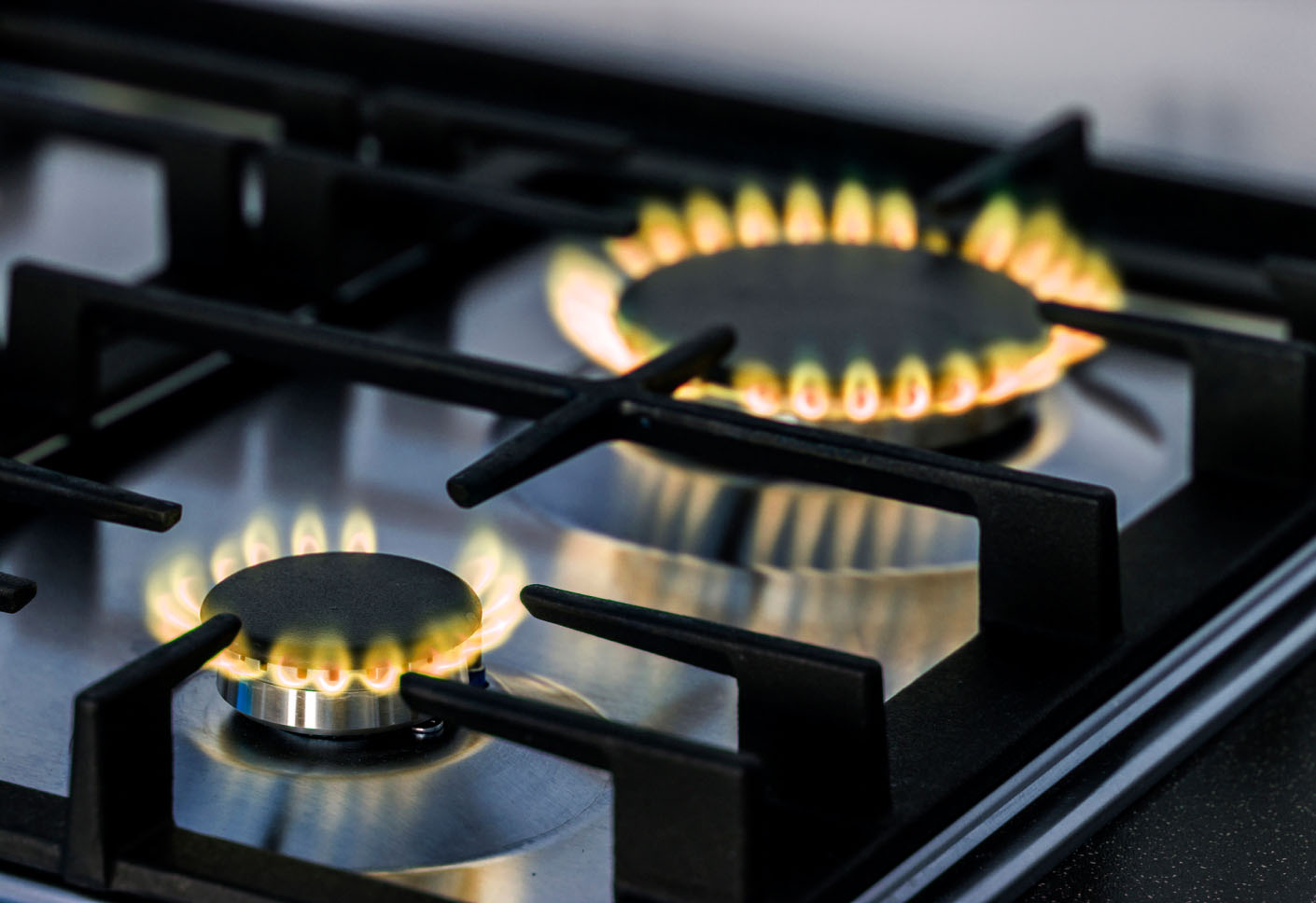
Comparing Flame Colors
Understanding flame color can help you diagnose problems faster.
| Flame Color | What It Means | Action Needed |
|---|---|---|
| Blue | Proper burning, safe and efficient | None |
| Orange | Incomplete burning, possible danger | Clean, adjust, or service |
| Yellow | Very poor burning, high risk | Stop using, call a technician |
| Red or green | Heavy contamination, chemical presence | Stop using, call for service |
Tips For Ongoing Maintenance
Keeping your gas oven in good shape can prevent orange flames in the future.
- Clean burners and oven interior every month.
- Check for food spills after every use.
- Keep the area around the oven free from dust and grease.
- Schedule a professional inspection every year.
- Use the right gas type and high-quality gas supply.
Non-obvious tip: If you use your oven rarely, dust can build up in the burner ports. Run the oven on high for a few minutes before cooking to clear out dust.
Table: Common Causes Vs. Fixes
Here’s a quick reference to link common causes with the right fix.
| Problem | Likely Cause | Solution |
|---|---|---|
| Orange flame | Dirty burner, wrong air mix | Clean burner, adjust air shutter |
| Flame pops or blows out | High gas pressure | Check regulator, call technician |
| Soot in oven | Incomplete burning | Clean burner, check gas type |
| Flame changes color randomly | Humidity, dust, chemicals | Ventilate, wait, clean if needed |
Advanced Tips For Troubleshooting
If you’ve tried the common fixes and still see orange flames, here are some advanced ideas:
- Check oven venting: Some ovens have vents that can get blocked. Make sure air can flow freely.
- Inspect for spider webs: In some places, spiders build webs inside burner tubes, blocking gas flow.
- Test with another burner: If only one burner is orange, the problem is local. If all are orange, it’s likely a gas supply or pressure issue.
- Use a mirror: Sometimes, the flame is hard to see. A small mirror can help you check the color in hidden areas.
Data On Gas Oven Safety
Gas ovens are generally safe when used and maintained properly. However, the U.S. Consumer Product Safety Commission reports that over 150 people die in the U.S. each year from carbon monoxide poisoning related to gas appliances. Most of these accidents happen because of blocked burners, poor ventilation, or failure to maintain equipment.
A blue flame is your best defense. If you see orange, act quickly to reduce risk.
How Food Quality Is Affected
Orange flames do more than just look bad. They can change how your food tastes and cooks.
- Soot on food: Incomplete burning can put black marks on bread or roasts.
- Uneven cooking: Orange flames usually give less heat, so food may cook slowly or unevenly.
- Strange smells: Sometimes, incomplete burning makes food smell or taste odd.
If you care about good food, fixing your oven flame is essential.
When To Replace Instead Of Repair
Sometimes, it’s better to replace your oven than repair it.
- The oven is over 15 years old and breaks often.
- Replacement parts are not available.
- You see signs of rust or serious damage to the gas lines.
A new oven will be safer, use less energy, and cook more evenly.
Environmental Impact
A blue flame uses gas efficiently. An orange flame wastes gas and creates pollution, especially carbon monoxide and soot. Fixing your oven helps the environment as well as your wallet.
The Role Of Gas Quality
Gas suppliers must follow strict rules, but sometimes gas can be contaminated with sulfur, dust, or oil. This can cause orange flames. If you suspect bad gas, contact your supplier. For more on gas composition and safety, see the Wikipedia page on natural gas.
Table: Maintenance Schedule
Here’s a sample schedule to help keep your oven in top shape.
| Task | How Often | Why |
|---|---|---|
| Clean burners | Monthly | Prevents blockages and orange flames |
| Wipe oven interior | After each use | Removes spills before they harden |
| Inspect gas lines | Yearly | Check for leaks or damage |
| Professional service | Every 1-2 years | Deep cleaning and safety check |
Frequently Asked Questions
Why Is My Gas Oven Flame Orange Instead Of Blue?
An orange flame usually means the gas is not burning completely. This can happen if the burner is dirty, the air-gas mix is wrong, or there are contaminants in the gas. Cleaning the burners and adjusting the air shutter are the first steps to fix this.
Is An Orange Flame On A Gas Oven Dangerous?
Yes, it can be dangerous. Orange flames often produce carbon monoxide, which is harmful if it builds up indoors. An orange flame also means your oven is not heating efficiently and may leave soot on your food.
Can I Fix An Orange Flame Myself?
In many cases, yes. You can clean the burners, check the air shutter, and make sure the right gas is being used. If these steps don’t work, or if you smell gas, it’s best to call a professional.
How Often Should I Clean My Oven Burners?
You should clean your burners at least once a month. If you use your oven heavily, clean them more often. This prevents blockages that cause orange flames.
What If Only One Burner Has An Orange Flame?
If only one burner shows an orange flame, that burner is likely dirty or blocked. Clean it carefully and check for damage. If all burners have orange flames, check your gas supply or call for service.
Solving the orange flame issue in your gas oven is important for safety, good food, and energy savings. Follow these steps, keep up with regular maintenance, and don’t hesitate to call a professional if you have any doubts. A blue flame means peace of mind—and better meals in your kitchen.