
A charcuterie board is more than just food—it’s an experience. Whether you’re serving it at a party, picnic, wedding, or family gathering, the board brings people together. But there’s one problem that almost everyone faces: keeping those delicious meats, cheeses, fruits, and dips fresh and cold. Nobody wants sweaty cheese, limp vegetables, or meats that feel unsafe to eat. If you’ve ever watched a beautifully arranged board wilt in the sun or on a warm counter, you know the struggle. The good news? With a few smart techniques, you can make your charcuterie board stay cold, safe, and appetizing for hours. Let’s dive into how you can do this, what tools work best, real-world examples, and expert tips that go beyond what most people know.
Why Keeping A Charcuterie Board Cold Matters
Food safety and taste are the main reasons to keep your board cold. Many cheeses and cured meats are at their best between 4°C and 10°C (about 39°F to 50°F). Go much higher, and you risk bacterial growth—especially with soft cheeses and deli meats. After just two hours at room temperature, harmful bacteria can multiply quickly. This isn’t just about taste; it’s a health issue.
But it’s also about presentation. Cheese starts sweating, fruit gets mushy, and crackers lose their crunch. A cold board keeps everything crisp, fresh, and inviting.
Factors That Affect Temperature Control
How long your board stays cold depends on several things:
- Room temperature: A board indoors in summer warms up faster than one outdoors in winter.
- Humidity: Humid conditions make foods sweat and soften faster.
- Type of foods: Hard cheeses last longer than soft ones; cured meats are safer than fresh meats.
- Board material: Wood, marble, slate, and metal all hold temperature differently.
- Board size and layout: A densely packed board can trap cold air; a spread-out board warms up faster.
- Direct sunlight: Sunlight can heat a board quickly, even in cool weather.
Understanding these factors helps you choose the right methods to keep your charcuterie board cold and safe.
Best Board Materials For Keeping Food Cold
Not all boards are created equal when it comes to holding the cold. Let’s look at the most common options:
| Material | Thermal Retention | Best For | Notes |
|---|---|---|---|
| Marble | Excellent | Cheese, meats, fruit | Stays cold longest; elegant look |
| Slate | Very good | Cheese, dips | Easy to chill; dark color looks modern |
| Metal | Excellent | All foods | Chills quickly; may sweat in humidity |
| Wood | Moderate | Bread, crackers, nuts | Does not stay cold long; traditional |
| Ceramic/Porcelain | Good | Cheese, fruit | Easy to clean; can be pre-chilled |
Marble and metal boards are the best for keeping foods cold. Wood looks classic but loses cold quickly. If you love wood, consider using cold inserts or chilling trays underneath.
Pre-chilling Your Board: The Foundation Step
No matter what material you choose, pre-chilling your board is a must. This is a step many people skip, but it can double the time your food stays cool.
- How to pre-chill: Place your empty board in the fridge for at least 2 hours. For marble, metal, or ceramic, you can even put it in the freezer for 20-30 minutes before serving.
- When to do it: Pre-chill the board as the first step, before you arrange any food. This prevents condensation and keeps items crisp.
- Pro tip: If your fridge is small, you can chill the board overnight, then wrap it in a clean towel until ready to use.

Credit: www.amazon.com
Ice Packs And Cooling Trays: The Hidden Helpers
Ice packs and cooling trays are some of the simplest and most effective tools. They go under or around the board and keep the temperature down without mess.
Types Of Cooling Tools
- Reusable ice packs: Slim, flat packs are best. Place them under the board or wrap them in a towel.
- Gel cooling mats: These can be cut to size, don’t sweat much, and stay cold for hours.
- Chilled serving trays: Some trays have built-in ice compartments. Add ice under the tray, and the board stays cold above.
- Cold plates or stones: Freeze metal or stone plates, then set the food directly on them or place them under your main board.
Example: For a two-hour outdoor party, place two thin ice packs under a marble board. Cover with a linen cloth, then arrange your meats and cheeses. This will keep the board cool for 3-4 hours, even in warm weather.
The Double-board Method
Layering is a trick used by caterers and restaurants. The double-board method means using two boards: one for serving, one for cooling.
- Place a chilled marble or metal board on the bottom.
- Add a thin wooden board (for looks or easy serving) on top.
- The cold from the bottom board rises, keeping everything above cool.
- If using a wooden top, make sure it’s not too thick—otherwise, the cold won’t reach the food.
This method is subtle and works well for formal events where you want the board to look traditional but work like a fridge.
Using Ice Bowls And Chilled Inserts
For dips, spreads, or anything that spoils quickly, use ice bowls or chilled inserts. These are containers that sit in or on ice, keeping their contents cold.
- Hollow out a space in your board for a small bowl.
- Fill the bowl with ice, then place a smaller serving bowl inside (like a double boiler).
- Add hummus, tzatziki, or cheese dip to the top bowl.
- The ice underneath keeps the dip cold without watering it down.
You can also buy insert bowls with gel walls that freeze and stay cold for several hours.
Keeping Foods Cold With Garnishes
Garnishes are not just for looks—they can help insulate and cool. Leafy greens, kale, and large lettuce leaves create a buffer between the cold board and the food. They also prevent direct contact, which can keep fragile items like fresh fruit from getting too cold or damp.
- Line the board with greens before adding cheese and meats.
- Place wet items (like grapes or berries) on a bed of lettuce to stop them from making the board soggy.
Smart Food Placement
Not all foods need the same temperature. Place high-risk foods (soft cheese, deli meats, seafood) in the coldest part of the board—usually the center or above ice packs. Place low-risk foods (bread, nuts, crackers) on the edges or on a separate, room-temperature platter.
Example: Arrange a ring of hard cheese and nuts around the outside. Place brie, camembert, and salami in the center, where the board is coldest.
Covering Your Board When Not In Use
Every time you open a party tray, cold air escapes. If your event is long, cover your board with a clean, damp tea towel or plastic wrap when not serving. This slows warming, keeps bugs away, and keeps food fresh.
- Use a damp cloth for short breaks (under 30 minutes).
- For longer periods, plastic wrap works best.
Rotating Boards For Large Events
If you’re serving a big crowd, don’t put out everything at once. Rotate boards every hour or two. Keep backup boards in the fridge and swap them out as needed. This keeps the food safe and always at the perfect temperature.
Tip: Label your backup boards so you know when each was put out. This helps avoid confusion and keeps everything safe.
Using Portable Coolers And Ice Buckets
For outdoor events or picnics, a portable cooler is your best friend. Store extra meats, cheeses, and fruit in the cooler, then refill the main board as needed.
- Use a small ice bucket next to the board for extra cheese or seafood.
- Keep the cooler shaded and closed tightly.
Shade And Ventilation: The Environment Matters
Sun and heat are the main enemies of a cold charcuterie board. Always set up your board in a shaded area—under an umbrella, tent, or indoors. Good ventilation also helps. A fan blowing gently near the board can keep air moving and slow down warming.
Serving In Smaller Portions
Instead of one huge board, make several smaller boards or platters. Refill or swap them every hour. This keeps food from sitting out too long and makes it easier to keep everything cold.
Practical example: For a party of 20, prepare three boards. Place one out, keep two in the fridge, and swap every 60-90 minutes.
The Role Of Ice Cubes And Crushed Ice
For casual events, you can use ice cubes or crushed ice directly. Fill a rimmed tray with ice, cover with parchment paper or a cooling rack, then arrange your meats and cheeses on top. The ice keeps everything cold, but the food doesn’t get wet.
Warning: Ice melts fast in warm weather. Check and replace as needed, and always keep a towel underneath to catch drips.
Using Insulated Servingware
New on the market are insulated serving trays designed to keep food cold. These have a double wall with gel or vacuum insulation, just like a thermos. Chill the tray in the freezer, then use as your base. They’re great for travel and outdoor events.
How Long Does A Charcuterie Board Stay Safe?
Food safety guidelines say perishable foods should not sit out more than two hours at room temperature (or one hour if it’s above 32°C/90°F). With cooling tools, you can safely stretch this to 3-4 hours, but always check for signs of spoilage:
- Cheese that is oily or slimy
- Meat that smells off or feels sticky
- Fruit that is mushy or discolored
If in doubt, move food back to the fridge.
Creative Presentation Ideas That Help Keep Food Cold
You don’t have to sacrifice style for safety. Here are some creative ideas:
- Mini boards: Give each guest a small, chilled plate. They can refill as needed.
- Tiered stands: Use multi-level trays with ice under the bottom layer.
- Frozen fruit garnishes: Use frozen grapes or berries as both decoration and cold packs.
- Edible ice bowls: Make bowls from frozen cucumber or melon. Fill with dips or cold shrimp.
Mistakes To Avoid
Many hosts make the same errors. Here’s what to watch out for:
- Skipping the pre-chill: Even a short chill helps.
- Using only wood boards: Wood warms up too fast.
- Overloading the board: Too much food traps heat.
- Ignoring the sun: Shade is critical.
- Forgetting backup food: Always keep extras cold.
Real-world Case Study: Charcuterie Board At A Summer Wedding
At a summer wedding with 100 guests, the caterer used three large marble boards, each pre-chilled for 4 hours. Under each board, two thin ice packs kept the base cold. Bowls of dip sat in chilled inserts. Boards were swapped every 90 minutes, and backups kept in a walk-in fridge. The result: fresh, safe, and beautiful boards for over five hours, even on a hot day.
Cleaning Up: What To Do After
After your event, get leftovers into the fridge right away. Wash boards and serving tools with hot, soapy water. For marble or stone, avoid acidic cleaners—they can damage the surface. Wood boards need oiling after washing to prevent drying out.
Tip: Never put marble or wood boards in the dishwasher—it can crack or warp them.
Advanced Tips And Non-obvious Insights
Most guides stop at ice packs, but there’s more you can do:
- Use salt blocks: Himalayan salt blocks can be chilled and used as serving platters. They stay cold and add a touch of flavor.
- Pre-chill serving utensils: Knives, forks, and tongs can be chilled in the freezer. This small detail slows down food warming when serving.
- Add herbs as insulation: Layering rosemary or thyme sprigs under cheese keeps it slightly elevated and cooler.
- Check board temperature with a kitchen thermometer: Place a probe on the board’s surface to check if it’s cold enough before serving.
- Rotate the board: Every 30-45 minutes, turn or move the board so all sides stay equally cold, especially outdoors.
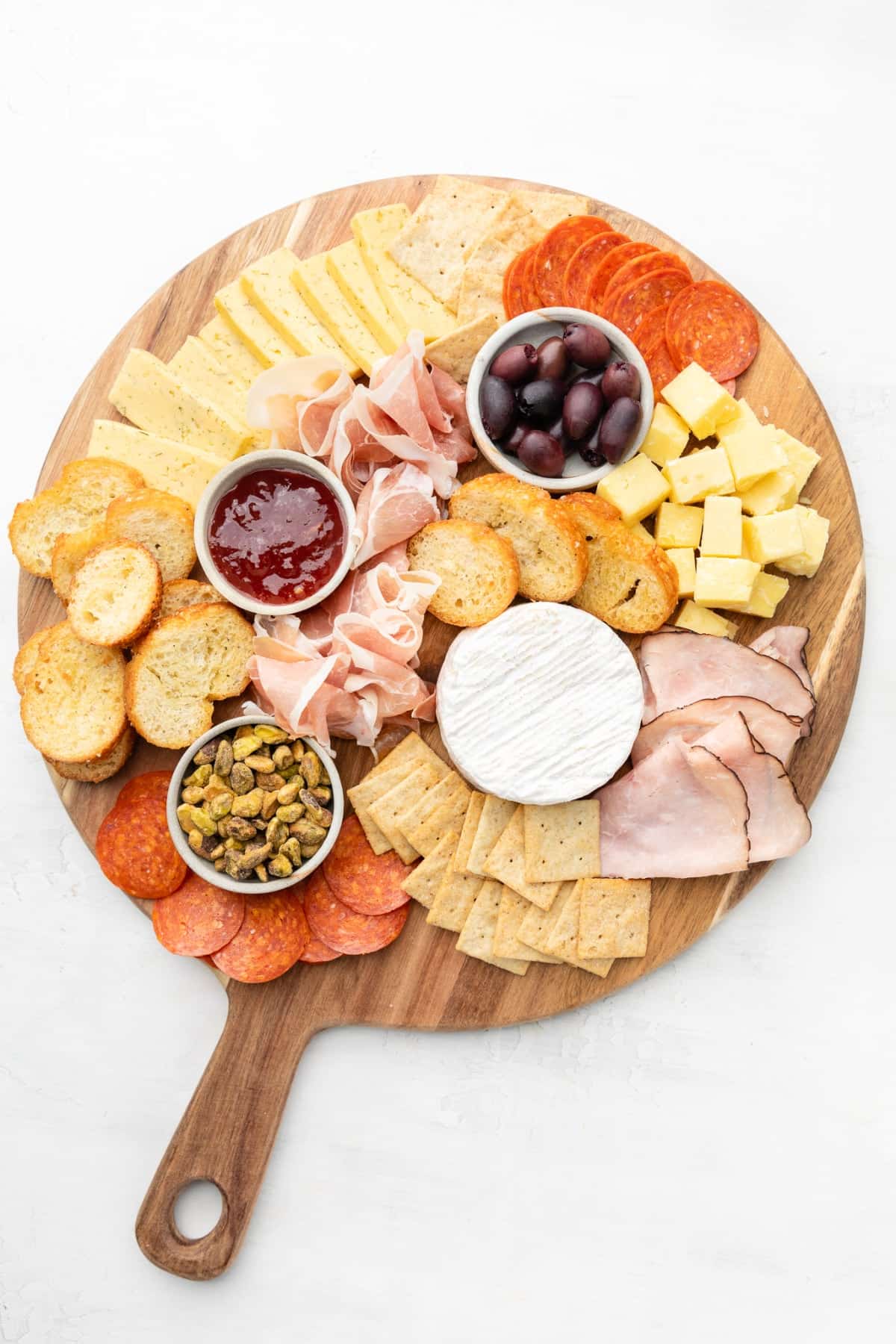
Credit: coconutsandkettlebells.com
Comparing Charcuterie Board Cooling Methods
Here’s a quick look at the most common ways to keep your board cold:
| Method | Cooling Duration | Best For | Cost | Mess Factor |
|---|---|---|---|---|
| Pre-chilled marble board | 2-4 hours | Cheese, meats | $$ | Low |
| Ice packs under board | 2-3 hours | All foods | $ | Low |
| Ice bed with rack | 1-2 hours | Outdoor events | $ | Medium |
| Chilled gel trays | 2-3 hours | Dips, fruit | $$ | Low |
| Salt block | 2 hours | Cheese, seafood | $$$ | Low |
Essential Supplies For A Cold Charcuterie Board
To get started, here’s what you’ll need:
- One or more chill-ready boards (marble, slate, metal, salt block)
- Flat ice packs or gel mats
- Cooling trays or racks (optional)
- Small bowls for dips, with inserts if possible
- Clean tea towels or wraps
- Backup platters for rotation
- Cooler or fridge space for extra food
- Serving utensils (chilled if possible)
- Garnishes (leafy greens, herbs, frozen fruit)
Step-by-step: Setting Up A Cold Charcuterie Board
- Choose your board: Pick marble, slate, or metal for best results.
- Pre-chill the board: Place in fridge or freezer for 2-4 hours.
- Prepare cooling tools: Ready ice packs or gel mats.
- Prep backup boards: Arrange extras and store in fridge.
- Arrange garnishes: Lay down lettuce, herbs, or kale.
- Place cooling tools: Put ice packs or trays under the board.
- Add food: Arrange cheese, meats, fruit, and dips.
- Use chilled inserts for dips: Keep perishable items coldest.
- Set up in shade: Avoid direct sunlight and heat.
- Rotate and cover: Swap boards and cover as needed.
- Monitor temperature: Check food every hour.
- Clean up quickly: Refrigerate leftovers and wash boards.
Common Questions Beginners Miss
Does color matter? Yes—darker boards (like black slate) absorb heat faster in sunlight. Use lighter colors outdoors.
Can I use crushed ice directly? Only if you have a barrier (parchment, rack, or greens) to keep food dry.
Do all foods need to be cold? No—bread, crackers, and nuts can stay at room temperature. Focus on cheese, meats, and fruit.
How can I tell if food is still safe? Trust your senses: if it smells, looks, or feels off, refrigerate or discard.
What if I don’t have marble or metal? Use a chilled ceramic plate or rimmed baking sheet with ice packs underneath.

Credit: curatedspread.com
Frequently Asked Questions
How Long Can A Charcuterie Board Stay Out Safely?
You should not leave a charcuterie board out for more than two hours at room temperature. If the temperature is above 32°C (90°F), reduce this to one hour. With proper cooling methods like ice packs or chilled boards, you can safely extend this to 3-4 hours. Always check food for freshness and refrigerate leftovers quickly.
What Are The Best Materials For A Charcuterie Board To Keep It Cold?
Marble and metal are the top choices for keeping food cold. They absorb and hold chill longer than wood. Slate and ceramic are also good options if pre-chilled. Wood is popular for its look but does not stay cold as long.
Can I Use Ice Directly Under The Food?
Yes, but it’s best to use a barrier like a cooling rack, parchment paper, or leafy greens between the ice and food. This keeps food dry and prevents sogginess. For dips or seafood, use ice bowls or chilled inserts.
How Do Professionals Keep Charcuterie Boards Cold For Big Events?
Caterers use a mix of methods: pre-chilled marble boards, ice packs or gel mats under the board, chilled inserts for dips, and rotating boards from the fridge every hour. They also set up in shaded areas and use garnishes for insulation.
What Is The Easiest Way For A Beginner To Keep A Board Cold?
Pre-chill your board (marble or ceramic works best), then place slim ice packs under it, covered with a towel. Arrange food and keep the board in the shade. Swap out the board every 1-2 hours if possible, and always have backup food chilled.
For more about food safety and temperature guidelines, check the FDA Food Safety Charts.
A charcuterie board can be the centerpiece of any party—if you keep it cold, you’ll keep it safe and delicious. With the right prep and a few simple tools, you can serve with confidence and style, no matter the season.