
Seasoning cast iron is a simple process, but the results are powerful. A well-seasoned pan is non-stick, rust-resistant, and can last a lifetime. Many oils can be used for seasoning, but grapeseed oil has become a favorite among chefs and home cooks. Its high smoke point, neutral flavor, and availability make it an excellent choice. This guide will walk you through everything you need to know about seasoning cast iron with grapeseed oil, from the science behind seasoning to step-by-step instructions, troubleshooting, and advanced tips that even experienced cooks often miss.
Why Season Cast Iron?
Cast iron cookware is unique. Unlike modern non-stick pans, it relies on a natural layer of polymerized oil for its non-stick properties. This layer, called “seasoning,” is created when oil bonds to the pan’s surface under high heat. If done right, it protects the pan from rust and creates a smooth cooking surface.
Seasoning is not just a one-time process. Every use of your cast iron pan can add to this layer, making the pan better over time. The right oil and method make a big difference in the seasoning’s quality and durability.
Why Choose Grapeseed Oil?
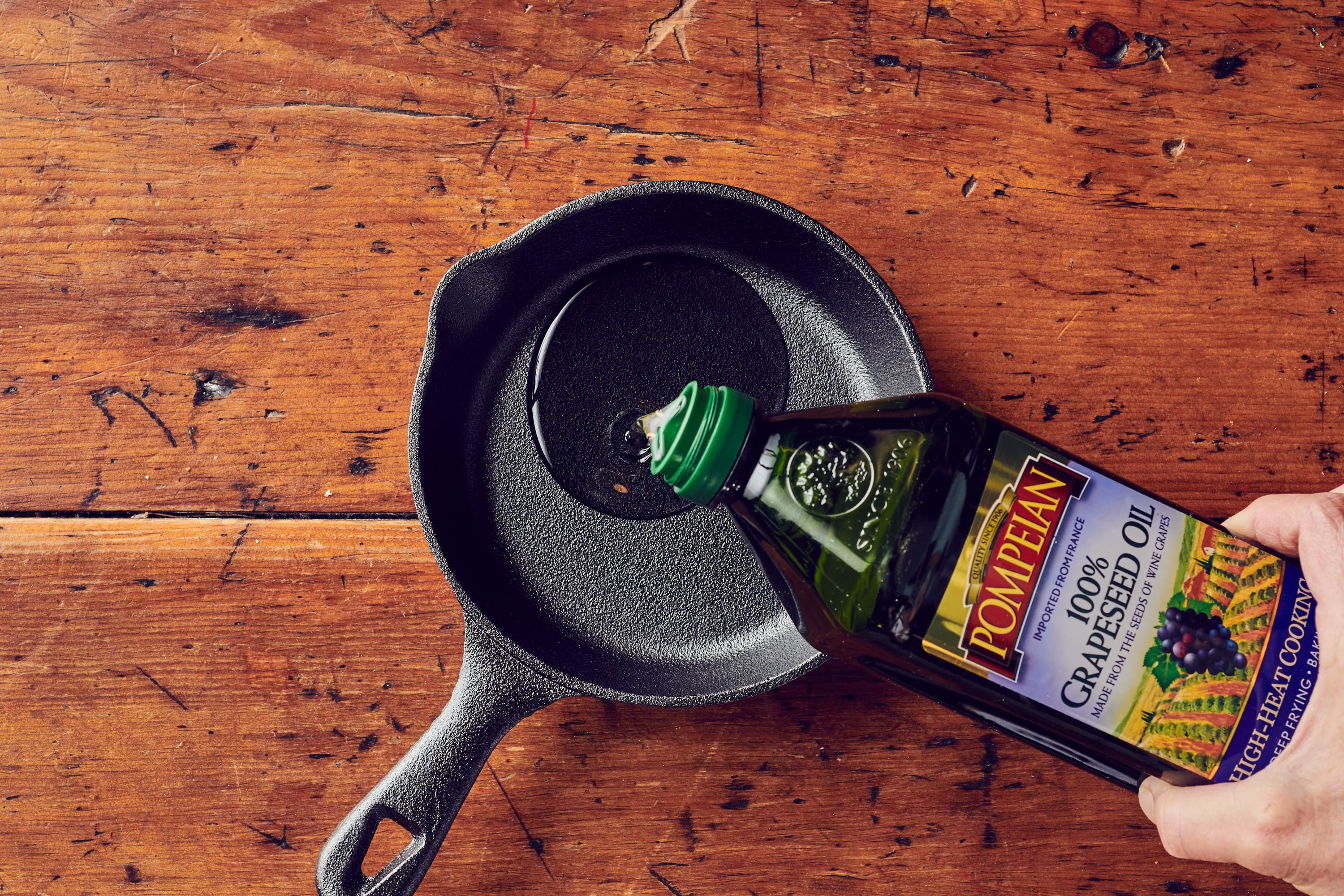
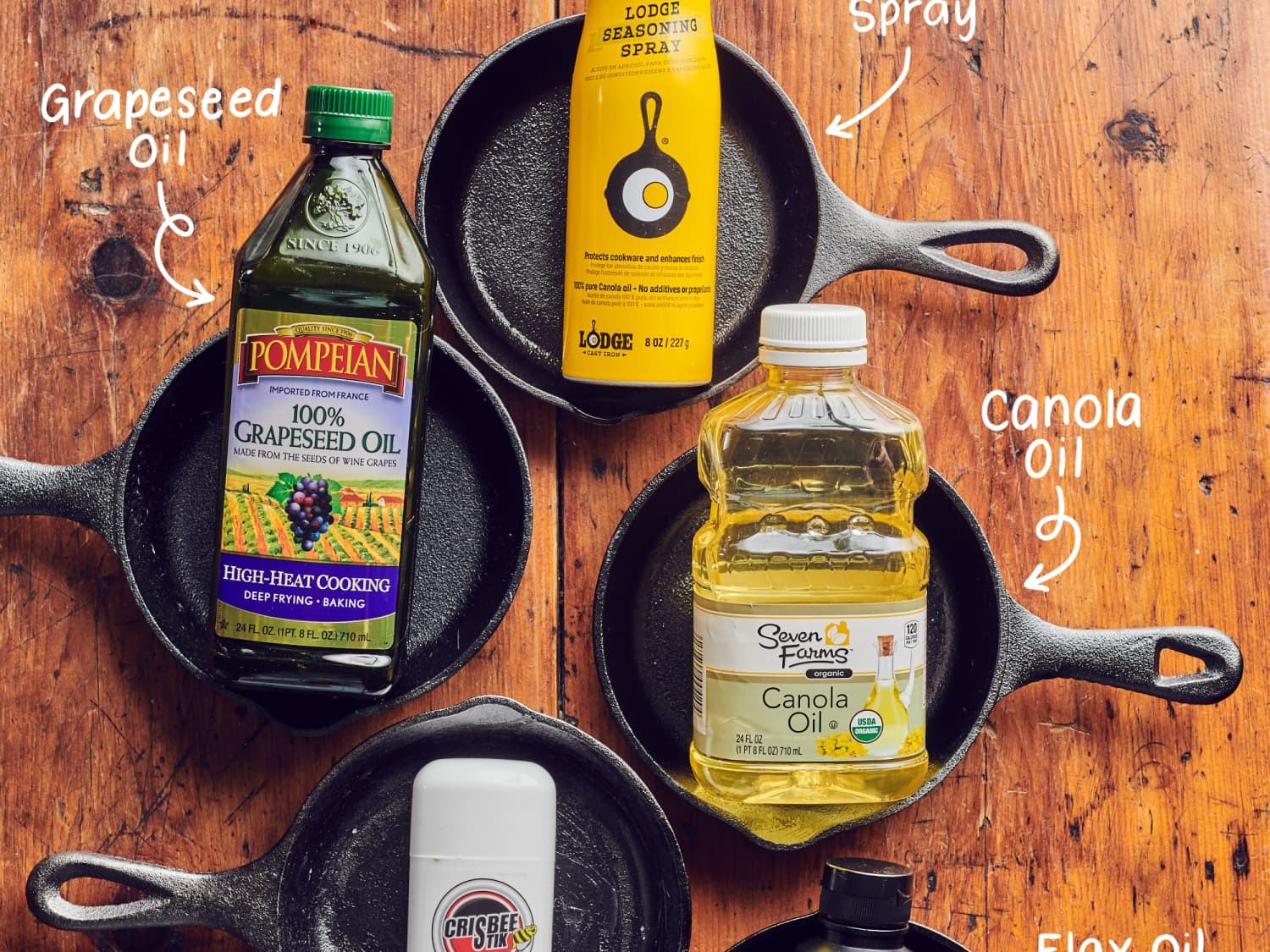
Many oils can be used to season cast iron, including flaxseed, vegetable, and canola. However, grapeseed oil stands out for several reasons:
- High smoke point: Grapeseed oil smokes at about 420°F (216°C), making it ideal for seasoning, which requires high oven temperatures.
- Neutral flavor: It doesn’t leave unwanted flavors on your cookware.
- Thin consistency: Spreads easily and creates a smooth layer.
- Rich in polyunsaturated fats: These fats polymerize well, creating a strong, durable seasoning layer.
Many professional chefs prefer grapeseed oil for these reasons. It’s also widely available in supermarkets and online.
Credit: www.thekitchn.com
Understanding The Science Of Seasoning
To get the most out of your cast iron, it helps to understand what’s happening during the seasoning process.
When you apply oil and heat it above its smoke point, the oil breaks down and bonds to the pan’s surface. This process, called polymerization, turns the oil into a hard, plastic-like coating. Each thin layer adds to the non-stick and protective qualities of your cast iron.
Some oils work better than others for seasoning. Oils high in polyunsaturated fats (like grapeseed) polymerize more completely than those high in saturated or monounsaturated fats. This is why grapeseed oil creates a more durable, even seasoning than, for example, olive oil.
What You Need To Season Cast Iron With Grapeseed Oil
Before you begin, gather the following:
- Cast iron pan or skillet (new or used, but clean)
- Grapeseed oil (pure, food-grade)
- Paper towels or lint-free cloth
- Aluminum foil
- Oven (or stovetop, but oven is best)
- Mild dish soap (only for initial cleaning)
- Non-abrasive brush or sponge
Optional but helpful:
- Heat-resistant gloves
- Tongs (if handling hot pans)
- Plastic scraper (for removing old seasoning)
Preparing Your Cast Iron For Seasoning
Whether your pan is brand new, rusty, or has old seasoning, proper preparation is key. Here’s what to do:
- Wash the pan: Even if your pan is new, wash it with mild dish soap and warm water. Scrub with a non-abrasive brush to remove factory coating, rust, or old food. Don’t worry—this is the only time you should use soap on cast iron.
- Dry thoroughly: Water is the enemy of cast iron. Dry the pan completely with a towel, then place it on the stovetop over low heat for a few minutes to evaporate any remaining moisture.
- Remove rust: If your pan has rust, scrub it with steel wool or a stiff brush. Rinse and dry again.
- Check for sticky spots: Old, sticky seasoning can create uneven results. If needed, use a plastic scraper or repeat the cleaning process.
A clean, dry surface is essential for the oil to bond properly.
Step-by-step: How To Season Cast Iron With Grapeseed Oil
Seasoning cast iron is simple but requires attention to detail. Follow these steps for best results.
1. Preheat Your Oven
Set your oven to 450°F (230°C). This temperature is high enough to polymerize grapeseed oil without burning it. Place a rack in the middle of the oven.
2. Apply A Thin Layer Of Grapeseed Oil
Pour about 1 teaspoon of grapeseed oil onto the pan. Use a paper towel or lint-free cloth to rub the oil over every surface—inside, outside, and handle. Wipe away all excess oil until the pan looks dry, not shiny or wet. Too much oil will create sticky spots.
3. Wipe Away Excess Oil
This is a step many beginners skip. After oiling, take a clean paper towel and wipe the pan again. The goal is to leave the thinnest possible layer. If oil pools or drips, it will not polymerize properly.
4. Bake The Pan Upside Down
Place a sheet of aluminum foil on the lower oven rack to catch drips. Place the pan upside down on the middle rack. This prevents oil from pooling inside the pan.
5. Bake For One Hour
Let the pan bake for one hour. The oil will smoke—this is normal. Good kitchen ventilation helps. Do not open the oven during this time.
6. Cool In The Oven
After one hour, turn off the oven and leave the pan inside to cool slowly. This prevents sudden temperature changes, which can warp or crack the pan.
7. Repeat As Needed
For a strong, even seasoning, repeat steps 2–6 2 to 4 times. Each thin layer builds up the seasoning. Brand new or stripped pans benefit from three or four cycles.
How To Maintain Seasoned Cast Iron
Proper maintenance keeps your cast iron non-stick and rust-free. Here’s how to care for your seasoned pan:
- Clean after each use: Wipe out food with a paper towel. For stuck-on food, use hot water and a brush (no soap).
- Dry immediately: Water causes rust. Dry with a towel and heat briefly on the stovetop.
- Oil lightly: After cleaning, wipe a thin layer of grapeseed oil over the pan. Heat until it just smokes, then cool and store.
- Avoid soaking: Never leave cast iron in water or put it in the dishwasher.
- Re-season as needed: If food sticks or you see dull spots, repeat the seasoning steps.
Common Mistakes And How To Avoid Them
Many people struggle with sticky, uneven, or flaking seasoning. Here’s how to avoid common pitfalls:
- Using too much oil: This is the number one mistake. Always wipe the pan until it looks dry.
- Not cleaning thoroughly: Residue or rust prevents good seasoning. Start with a spotless pan.
- Low oven temperature: Oil must reach its smoke point to polymerize. Set the oven to at least 450°F (230°C).
- Skipping multiple layers: One layer is rarely enough for lasting seasoning.
- Cooling too quickly: Letting the pan cool in the oven helps prevent cracking and gives the seasoning time to harden.
- Using the wrong oil: Some oils (like butter or extra virgin olive oil) burn at lower temperatures and create sticky or uneven seasoning.
Grapeseed Oil Vs. Other Oils For Seasoning
You may wonder how grapeseed oil compares to other popular choices. Here’s a quick comparison:
| Oil Type | Smoke Point | Flavor | Polymerization | Cost |
|---|---|---|---|---|
| Grapeseed Oil | 420°F (216°C) | Neutral | Excellent | Moderate |
| Flaxseed Oil | 225°F (107°C) | Slightly nutty | Very good | High |
| Canola Oil | 400°F (204°C) | Neutral | Good | Low |
| Vegetable Oil | 400°F (204°C) | Neutral | Good | Low |
| Lard | 370°F (188°C) | Porky | Fair | Low |
Grapeseed oil balances smoke point, neutral flavor, and availability. Flaxseed oil is popular for its polymerization but can be expensive and less stable. Canola and vegetable oil work well but may not create as strong a layer as grapeseed.
Advanced Tips For Better Seasoning
Seasoning cast iron is both art and science. Here are some advanced tips that can take your results to the next level:
1. Preheat The Pan Before Oiling
Warm your pan on the stovetop for 2–3 minutes before applying oil. This helps the oil spread more evenly and bond better. Many experienced cast iron users find this step creates a smoother finish.
2. Use A Dedicated Oiling Cloth
Paper towels can sometimes leave lint. A dedicated, clean cotton cloth or microfiber towel works well and can be washed and reused. This is especially helpful if you season cast iron often.
3. Buff The Oil With A Second Cloth
After applying oil, use a second clean cloth to buff away even more oil. The goal is a nearly invisible layer. This prevents sticky, uneven seasoning.
4. Season Outside As Well
Don’t forget to oil and bake the outside and handle. This prevents rust in humid climates and keeps your whole pan looking good.
5. Don’t Overcrowd The Oven
If seasoning multiple pans, leave space between them for air to circulate. This helps the oil polymerize evenly.
6. Try Different Ovens
If you have a convection oven, it can create a more even seasoning. Just reduce the temperature by about 25°F (15°C).
7. Use The Pan Often
Cooking with your pan (especially with oil-rich foods) naturally builds seasoning over time. Don’t be afraid to use your pan daily.
Credit: www.reddit.com
What To Expect After Seasoning
A newly seasoned pan with grapeseed oil should have a slightly shiny, dark brown or black surface. It may not look perfectly smooth at first—this is normal. With use and repeated seasoning, the surface becomes more even and non-stick.
Food should slide off easily, and cleaning should require little effort. If you notice sticky spots or rust, they can be fixed by repeating the seasoning process.
Troubleshooting: Fixing Common Problems
Even with the best technique, things can go wrong. Here’s how to fix common cast iron seasoning issues.
Sticky Or Gummy Surface
This is usually caused by too much oil or not enough heat. To fix:
- Bake the pan at 450°F (230°C) for another hour.
- Let it cool and check again.
- If still sticky, scrub with a little coarse salt and repeat seasoning with less oil.
Flaking Or Peeling Seasoning
This happens if old seasoning was not removed or the layer was too thick.
- Scrub off loose flakes with steel wool.
- Wash and dry completely.
- Re-season with very thin layers.
Rust Spots
Rust can form if the pan is not dried or oiled after washing.
- Scrub rust with steel wool or a stiff brush.
- Wash, dry, and re-season as needed.
Food Sticking
This can happen if the seasoning is new or too thin.
- Cook oil-rich foods (bacon, sausage) for the first few uses.
- Add more seasoning layers if needed.
Deep Cleaning And Re-seasoning
Sometimes, a pan needs to be stripped and re-seasoned from scratch. This is necessary if there is heavy rust, flaking, or rancid smells.
- Strip the pan: Scrub with steel wool and soap or use a self-cleaning oven cycle.
- Rinse and dry: Make sure the pan is bone dry.
- Follow the seasoning steps above.
For extremely stubborn rust or buildup, you can use a vinegar soak (equal parts vinegar and water for 30–60 minutes), but don’t soak too long, or the pan will pit.
Storing Seasoned Cast Iron
Proper storage keeps your pan in good shape:
- Store in a dry place.
- Keep the lid off to prevent moisture buildup.
- Place a paper towel or cloth between pans if stacking.
- Re-oil lightly if storing for long periods.
Health And Safety: Is Grapeseed Oil Safe For Seasoning?
Grapeseed oil is considered safe and healthy for both cooking and seasoning. It’s low in saturated fat and high in polyunsaturated fats. Once polymerized, the oil is transformed into a stable, inert layer that does not affect the taste or safety of your food.
One non-obvious insight: while grapeseed oil is healthy, the seasoning layer itself is not a significant source of dietary fat. Most of the oil is polymerized and not absorbed into food.
Environmental And Cost Considerations
Compared to specialty oils like flaxseed, grapeseed oil is affordable and widely available. It’s often made from the seeds left over from wine production, so it’s a byproduct that reduces waste.
A typical 16-ounce bottle can season dozens of pans, making it cost-effective. Always buy food-grade grapeseed oil, not cosmetic or industrial grades.
Credit: www.thekitchn.com
Popular Brands Of Grapeseed Oil
When choosing grapeseed oil for seasoning, look for cold-pressed, unrefined, or expeller-pressed varieties. Here are some reliable brands:
| Brand | Type | Available Size | Notes |
|---|---|---|---|
| Pompeian | Expeller-Pressed | 16 oz, 24 oz | Widely available, reliable quality |
| La Tourangelle | Cold-Pressed | 16.9 oz | Premium, mild flavor |
| Spectrum | Expeller-Pressed | 16 oz | Organic option, good for seasoning |
| 365 by Whole Foods | Expeller-Pressed | 16.9 oz | Affordable, organic available |
Choose a brand that is pure, food-grade, and within your budget.
Seasoning Cast Iron: Myths Vs. Facts
There are many myths about seasoning cast iron. Let’s set the record straight:
- “You can only use animal fat.” False. Modern oils like grapeseed are just as effective.
- “Never use soap on cast iron.” Mostly true, but a little soap for initial cleaning is safe.
- “Seasoning lasts forever.” No. It needs to be refreshed as you use the pan.
- “Rust means the pan is ruined.” Not true. Rust can usually be removed, and the pan re-seasoned.
- “Non-stick pans are easier.” Cast iron, when seasoned well, can be nearly as non-stick and much more durable.
Real-life Example: Seasoning A Vintage Pan
Let’s look at a real-life example. Suppose you found a rusty old skillet at a flea market. Here’s how you could restore it with grapeseed oil:
- Remove rust: Use steel wool and soapy water to scrub off rust and old seasoning.
- Dry thoroughly: Heat on the stove for 5–10 minutes.
- Apply grapeseed oil: Rub a thin, even layer inside and out.
- Wipe off excess: Buff until almost dry.
- Bake upside down at 450°F: One hour, then cool in the oven.
- Repeat three times: Each layer adds more protection.
- Cook with oil-rich foods: Bacon or sausage helps build up the seasoning.
The result: a smooth, black, non-stick skillet that will last for decades.
Non-obvious Insights For Beginners
- Less oil is more: Even when you think you’ve wiped away enough oil, wipe it again. The thinner the layer, the better the seasoning.
- Season the outside and handle: Many beginners focus only on the cooking surface. Oiling the whole pan prevents rust and gives a uniform look.
- Use your pan often: Frequent use with oil-rich foods improves seasoning. The less you use it, the faster the seasoning can degrade.
When To Re-season
You don’t need to fully re-season after every use. Re-season if:
- Food sticks more than usual
- The pan looks dull or gray
- You see rust spots
- After cooking acidic foods (like tomato sauce) that can strip seasoning
Otherwise, maintain seasoning with regular use and occasional thin oiling.
Frequently Asked Questions
How Often Should I Season My Cast Iron Pan With Grapeseed Oil?
You should season new or stripped pans 2 to 4 times in a row for best results. After that, you don’t need to season after every use. Re-season when food begins to stick or the surface looks dull, usually every few months with regular cooking.
Can I Use Grapeseed Oil For Daily Cast Iron Maintenance?
Yes. Grapeseed oil is excellent for daily maintenance. After cleaning, wipe a thin layer on the pan, heat it until it smokes lightly, then let it cool. This keeps the seasoning strong and prevents rust.
What Should I Do If My Seasoning Is Sticky Or Uneven?
Sticky seasoning is usually caused by using too much oil or not enough heat. Bake the pan at 450°F for another hour, or scrub with coarse salt and re-season with a thinner oil layer. Always wipe away as much oil as possible before baking.
Is Grapeseed Oil Better Than Flaxseed Oil For Seasoning?
Grapeseed oil is less expensive, more stable at high temperatures, and has a neutral flavor. Flaxseed oil polymerizes well but can be more prone to flaking and is more expensive. Both work, but grapeseed oil is often preferred for ease of use and durability.
Where Can I Buy High-quality Grapeseed Oil For Seasoning?
You can find grapeseed oil in most grocery stores, health food shops, and online. Look for brands like La Tourangelle or Spectrum. Always choose pure, food-grade oil. For more information, see this resource: Wikipedia: Grapeseed Oil.
A well-seasoned cast iron pan is a joy to use and can last for generations. With grapeseed oil and the right technique, you’ll have a non-stick, rust-resistant surface that improves with every meal. Take your time, use thin layers, and enjoy the process—your cast iron will thank you.