
When you install or repair plumbing, venting is one detail that can puzzle even experienced homeowners and DIYers. If you have ever wondered, “Can a toilet vent be upstream? ” You are not alone. The answer is surprisingly complex, and a mistake can lead to slow drains, foul smells, or even code violations.
In this article, we will look closely at how toilet venting works, what “upstream” and “downstream” mean, and what the rules are. We will also explore real-world examples, code requirements, and practical solutions so you can approach your project with confidence.
Understanding Plumbing Vents
Every plumbing system needs airflow to work smoothly. When water flows down a drain, it pushes air ahead and pulls air behind. Without a vent, negative pressure can form, sucking water out of traps and allowing sewer gases to enter your home. The vent lets air into the system, balancing pressure and keeping water in the traps.
There are different types of plumbing vents:
- Wet vents: These use the drain line of another fixture as a vent.
- Dry vents: These have a separate pipe that only allows air, not water.
- Air admittance valves (AAVs): These one-way valves let air in but keep gases out.
The position of the vent in relation to the fixture (like a toilet) is critical. If placed incorrectly, the vent might not do its job, causing problems that are hard to fix later.
What Does “upstream” Mean In Plumbing?
In plumbing, upstream means closer to the source of water flow. For example, if waste from a toilet flows toward the main sewer line, anything before the toilet in the direction of flow is upstream. Anything after is downstream.
Imagine a simple drain line:
- The toilet connects to a horizontal drain pipe.
- The pipe slopes downhill toward the main stack or sewer.
- Fixtures closer to the stack are downstream; those closer to the toilet are upstream.
When we talk about a vent being “upstream,” we mean placing the vent connection before the toilet, in the direction from which the waste comes.
Why Toilet Vent Placement Matters
Toilets use a large amount of water quickly. This surge can create strong negative pressure in the drain line. If a vent is not correctly placed, this pressure can pull water out of nearby traps or even slow down the toilet flush.
Here’s why the vent’s position is so important:
- Negative Pressure: Without a vent, flushing can suck water out of other traps, leading to sewer gas smells.
- Proper Drainage: A good vent allows waste and water to flow smoothly.
- Local Codes: Most plumbing codes specify exactly where a vent should be in relation to the toilet.
If you place the vent upstream, it might not protect the toilet or nearby fixtures. Understanding the effect of vent position is key to a healthy system.
Can A Toilet Vent Be Upstream? The Core Question
The short answer: In most cases, a toilet vent should NOT be upstream.
Let’s break down why:
- If the vent is placed before the toilet (upstream), the flush passes the vent opening before entering the main drain line.
- The surge of water from the toilet can push air ahead of it and create suction behind.
- Any fixtures connected between the vent and the main stack (downstream) can have their traps siphoned.
- The vent will not “see” the pressure changes caused by the toilet’s flush.
This is why most codes and best practices call for the vent to be downstream or as close as possible to the toilet, before any other connections.
Example Of A Common Layout
Suppose you have a horizontal drain pipe running across the bathroom. The toilet connects first, then the vent, then a sink. If you put the vent upstream (before the toilet), the flush can affect the sink’s trap. Placing the vent downstream (after the toilet but before other fixtures) protects all traps.
Plumbing Codes And Toilet Venting
Plumbing codes exist to protect health, safety, and property. Understanding the rules around toilet venting is essential for any project.
International Plumbing Code (ipc)
The IPC is used in most parts of the United States. It states:
- Each fixture must have a vent.
- The vent must connect to the drain line downstream of the trap but before other fixtures join the drain.
- The vent must be within a certain distance from the fixture (often 6 feet for a toilet).
Uniform Plumbing Code (upc)
The UPC, common in the western US, is even stricter:
- Toilets must have their vent as close as possible to the fixture connection.
- Wet venting is allowed, but only in specific arrangements.
Local Codes
Always check your local code. Some places allow air admittance valves; others do not. Some allow certain kinds of wet venting, others require a separate dry vent.
Real Example: Chicago Code
The city of Chicago does not allow air admittance valves at all. Every fixture must have a direct connection to a vent pipe, and that vent must be downstream of the fixture.
Table: Vent Placement Requirements By Code
| Code | Toilet Vent Position | Special Rules |
|---|---|---|
| IPC | Downstream of trap, before other fixtures | Wet venting allowed with restrictions |
| UPC | As close as possible to fixture | Strict limits on wet venting |
| Chicago Code | Downstream only | No air admittance valves |
This comparison shows that upstream venting is not accepted by any major code.
Common Toilet Venting Arrangements
There are several ways to vent a toilet, and each has its place.
1. Individual Dry Vent
A separate vent pipe rises from the toilet drain and connects to the main vent stack.
Pros: Simple, effective, and always code-compliant.
Cons: Requires more piping and space.
2. Wet Venting
A nearby fixture (like a sink) shares the vent with the toilet. The vent connection is made downstream of the toilet, but before other drains.
Pros: Saves space and materials.
Cons: Strict rules about which fixtures can share the vent, and pipe sizes must be correct.
3. Air Admittance Valve (aav)
A one-way valve allows air in when water flows, but closes to keep out gases. Usually only allowed for sinks, but sometimes used for toilets in special cases.
Pros: Useful for remodels where adding a vent stack is impossible.
Cons: Not allowed everywhere, and can fail with age.
Table: Comparison Of Toilet Vent Options
| Venting Method | Allowed for Toilets? | Main Benefits | Main Drawbacks |
|---|---|---|---|
| Individual Dry Vent | Yes | Always code-approved, reliable | More piping, higher cost |
| Wet Vent | Yes (with limits) | Space and cost savings | Complicated sizing, not always allowed |
| Air Admittance Valve | Rarely | Easy retrofit | Not always legal, mechanical parts can fail |
What Happens If You Vent A Toilet Upstream?
It might seem easier to put the vent before the toilet, especially in a tight space. However, this can lead to several problems:
1. Trap Siphonage
The biggest risk is trap siphonage. When the toilet flushes, it creates negative pressure downstream. If the vent is upstream, there is no air to balance that pressure, and water can be sucked out of the traps in nearby sinks or showers.
2. Slow Or Gurgling Drains
Without a proper vent, air cannot move freely in the pipes. This can cause slow draining, bubbling, or gurgling noises in other fixtures.
3. Sewer Gas Smell
Lost trap seals mean that sewer gases can enter your bathroom. This is not only unpleasant but also a health hazard.
4. Code Violations
Upstream venting is almost never approved by inspectors. You may have to redo the work, leading to extra cost and headaches.
5. Insurance And Resale Issues
Work that does not meet code can cause problems when you sell your home or make an insurance claim. Non-compliant plumbing may need to be fixed before closing.
Non-obvious Insights About Toilet Venting
Many guides cover the basics, but a few details are often missed:
1. Horizontal Drains And Flat Vents
A vent pipe must rise vertically or at a steep angle from the drain line. If you connect a vent horizontally near the toilet, waste can splash into the vent, causing blockages. Always use a 45-degree wye fitting or a vertical connection when possible.
2. The “wet Vent” Limitation
Not all fixtures can be wet-vented together. For example, a shower and toilet can often share a vent, but a kitchen sink cannot. The wet vent must be at least two inches in diameter (in most codes) if serving a toilet.
3. Distance Matters
Even if a vent is downstream, if it is too far from the toilet, it may not work. The maximum allowable distance is usually 6 feet horizontally for a 3-inch drain, but always check your code.
4. Order Of Connections
If you have multiple fixtures on one drain, always connect the vent before adding other drains. Never let another fixture connect between the toilet and its vent.
5. Basement And Slab Homes
In homes with basements or on a slab, venting is more difficult. Sometimes you must break concrete or use AAVs (if allowed). Plan venting before starting your project to avoid surprises.
How To Properly Vent A Toilet
If you are installing a new toilet or renovating, follow these steps for a code-compliant vent:
1. Plan Your Layout
Draw your bathroom on paper. Mark the position of the main drain, the toilet, and the vent stack. Identify the direction of flow.
2. Choose The Right Fittings
Use a wye fitting or a combination wye and 1/8 bend to connect the vent. Avoid tees, which can cause clogs.
3. Maintain Slope
The drain pipe should slope at least 1/4 inch per foot toward the main stack. The vent pipe should rise vertically or at a steep angle.
4. Keep The Vent Close
The vent connection should be within 6 feet of the toilet flange (for a 3-inch drain). Closer is better.
5. Size The Pipes Correctly
Use at least a 2-inch vent pipe for a toilet. If wet venting, the wet vent must also be 2 inches minimum.
6. Inspect Before Closing Walls
If possible, have your work inspected before covering pipes. This avoids costly mistakes.
7. Test For Airflow
Pour a bucket of water down the toilet and listen for gurgling in other fixtures. If you hear any, the vent may be blocked or incorrectly placed.
When Are Upstream Vents Ever Allowed?
In almost all cases, placing a vent upstream of a toilet is not allowed. However, there are rare exceptions:
- In very old homes, some grandfathered systems have upstream vents. These are usually not to modern code.
- Some industrial or commercial systems use loop vents, but these are engineered and rare in homes.
- If your local code has a special exception (very uncommon), an inspector may allow it with proof the system works.
In summary: Do not plan for an upstream vent unless you have written approval from your local authority.
Real-world Examples
Example 1: Bathroom Remodel Gone Wrong
A homeowner placed a vent connection before the toilet, then added a shower downstream. After finishing the project, they noticed sewer smells in the bathroom after every flush. An inspector found that the vent was upstream, and the shower trap was being siphoned.
The homeowner had to open the wall and move the vent downstream, costing hundreds of dollars in repairs.
Example 2: Successful Wet Vent Installation
A plumber remodeled a small bathroom. The toilet and sink were next to each other. By using a 2-inch wet vent from the sink, and connecting it downstream of the toilet with the right fittings, the system passed inspection and worked perfectly.
No gurgling or odor issues.
Example 3: Basement Bathroom
In a basement bathroom, space was tight. The plumber considered using an air admittance valve. However, the local code did not allow AAVs for toilets. The only solution was to break concrete and run a vent pipe to the main stack.
The extra work paid off with a reliable, code-compliant system.
Table: Common Mistakes In Toilet Venting
| Mistake | Consequence | Prevention |
|---|---|---|
| Upstream vent placement | Trap siphonage, odors, code violation | Always vent downstream |
| Horizontal vent connection | Clogs, poor airflow | Use vertical or steep fittings |
| Too small vent pipe | Slow drainage, failed inspection | Minimum 2-inch vent for toilets |
| Too far from toilet | Ineffective venting | Keep vent within code distance |
| Wet venting with wrong fixtures | Trap loss, code problems | Follow code-approved combinations |
What To Do If You Suspect A Venting Problem
If you have slow drains, gurgling sounds, or sewer smells in your bathroom, you might have a venting issue. Here’s what you can do:
- Inspect the Drain Layout: Try to locate where the vent connects. If you can, draw a simple diagram.
- Check for Trapped Air: Fill the sink, then let it drain quickly. Listen for gurgling in the toilet or shower.
- Look for Odors: Sewer smells after flushing are a sign of lost trap seals.
- Call a Licensed Plumber: If you’re unsure, a professional can diagnose and fix venting problems.
- Get an Inspection: Before selling your home, have your plumbing checked for code compliance.
Tips For Homeowners And Diyers
- Always read your local plumbing code before starting work.
- Never guess about vent placement. If unsure, ask an inspector or licensed plumber.
- Take photos of your work before closing walls. This helps with future repairs or inspections.
- Do not rely on online diagrams unless they match your code and situation.
- Remember that a small mistake can cause big problems later.
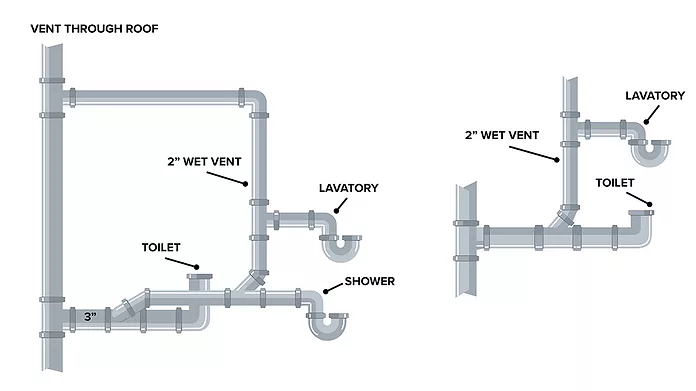
Credit: www.pmmag.com
Finding Reliable Information
For more details, you can visit the International Code Council for official code books and updates.
Frequently Asked Questions

Credit: terrylove.com
Can I Use An Air Admittance Valve (aav) Instead Of A Traditional Vent For My Toilet?
In most cases, AAVs are not approved for toilets, only for sinks or lavatories. Some local codes may allow their use in special situations, but this is rare. Always check with your local authority before using an AAV for a toilet.
How Far Can A Toilet Be From Its Vent?
The maximum distance depends on the pipe size and your local code. For a 3-inch drain, the IPC allows up to 6 feet between the toilet and the vent connection. The UPC may require even shorter distances. Closer is always better.

Credit: www.reddit.com
What Size Vent Pipe Do I Need For A Toilet?
A toilet vent pipe should be at least 2 inches in diameter. If you are wet venting, the wet vent must also be 2 inches or larger. Using a smaller pipe can cause poor drainage and failed inspections.
What Happens If My Toilet Is Not Vented Correctly?
Poor or incorrect venting can lead to slow flushing, gurgling drains, sewer gas odors, and even dangerous sewer gas entering your home. It can also cause failed inspections and the need for expensive repairs.
Is It Ever Legal To Put A Toilet Vent Upstream?
Almost never. Major plumbing codes (IPC, UPC) require the vent to be downstream of the toilet and as close as possible to the fixture. Only rare, special exceptions exist, and these require written approval from your local authority.
A well-vented toilet is essential for a safe, reliable bathroom. Take the time to do it right, and you will avoid headaches and problems for years to come. If in doubt, consult a licensed plumber or your local building department.
Proper venting is not just a detail—it’s the foundation of healthy, code-compliant plumbing.