
Quartzite countertops are becoming more popular in homes worldwide. Their natural beauty, durability, and unique patterns make them a top choice for kitchens and bathrooms. However, quartzite is not completely stain-proof. To keep its beauty and protect your investment, sealing quartzite is a smart step.
But with so many sealers available, which one truly works best for quartzite countertops? This guide will explain everything you need to know about choosing the best sealer, how to apply it, and tips to keep your countertops looking fresh for years.
Why Quartzite Needs Sealing
Quartzite is often confused with quartz, but they are not the same. Quartzite is a natural stone formed under heat and pressure, mainly from sandstone. While it is harder than granite and resistant to scratches, it can still absorb liquids and stains if left unsealed. Common spills like wine, oil, or juice can leave marks that are hard to remove.
A high-quality sealer creates an invisible barrier on the surface. This barrier stops liquids from soaking into the stone. Without sealing, even water can leave dark spots, and acidic foods can cause etching or dull areas. Sealing is not just a recommendation; it is a must for maintaining the countertop’s original look.
One important thing beginners miss is that not all quartzite slabs are the same. Some are more porous than others. This means the right sealer and sealing schedule can vary from one countertop to another.
Types Of Sealers For Quartzite Countertops
There are three main kinds of sealers for natural stone countertops, including quartzite. Each works differently and has its own pros and cons.
1. Penetrating Sealers (impregnators)
Penetrating sealers soak into the stone’s pores. They protect from inside by blocking liquids and stains before they can cause damage. Most are based on either silicone, silane, or fluoropolymer technology.
These sealers do not change the look or feel of quartzite. They are often the best choice for busy kitchens because they are long-lasting and do not build up on the surface. Many high-end products last 5-10 years between applications.
2. Topical Sealers
Topical sealers create a thin film on top of the stone. This layer can be glossy or matte. They physically block spills but can wear down over time, especially in high-traffic areas like kitchen counters. Topical sealers often need reapplication every 1-2 years.
A downside is that they can change the appearance of quartzite, making it look shinier or darker. They may also trap moisture underneath if not applied correctly.
3. Enhancing Sealers
Enhancing sealers serve two purposes. They protect and also deepen the color of the stone, making patterns and veins stand out. These are popular for stones with interesting colors or dramatic patterns. However, not everyone likes the “wet look” these sealers give.
Some enhancing sealers are also penetrating, so they last longer than topical ones. They are a good choice if you want to highlight your quartzite’s natural beauty.
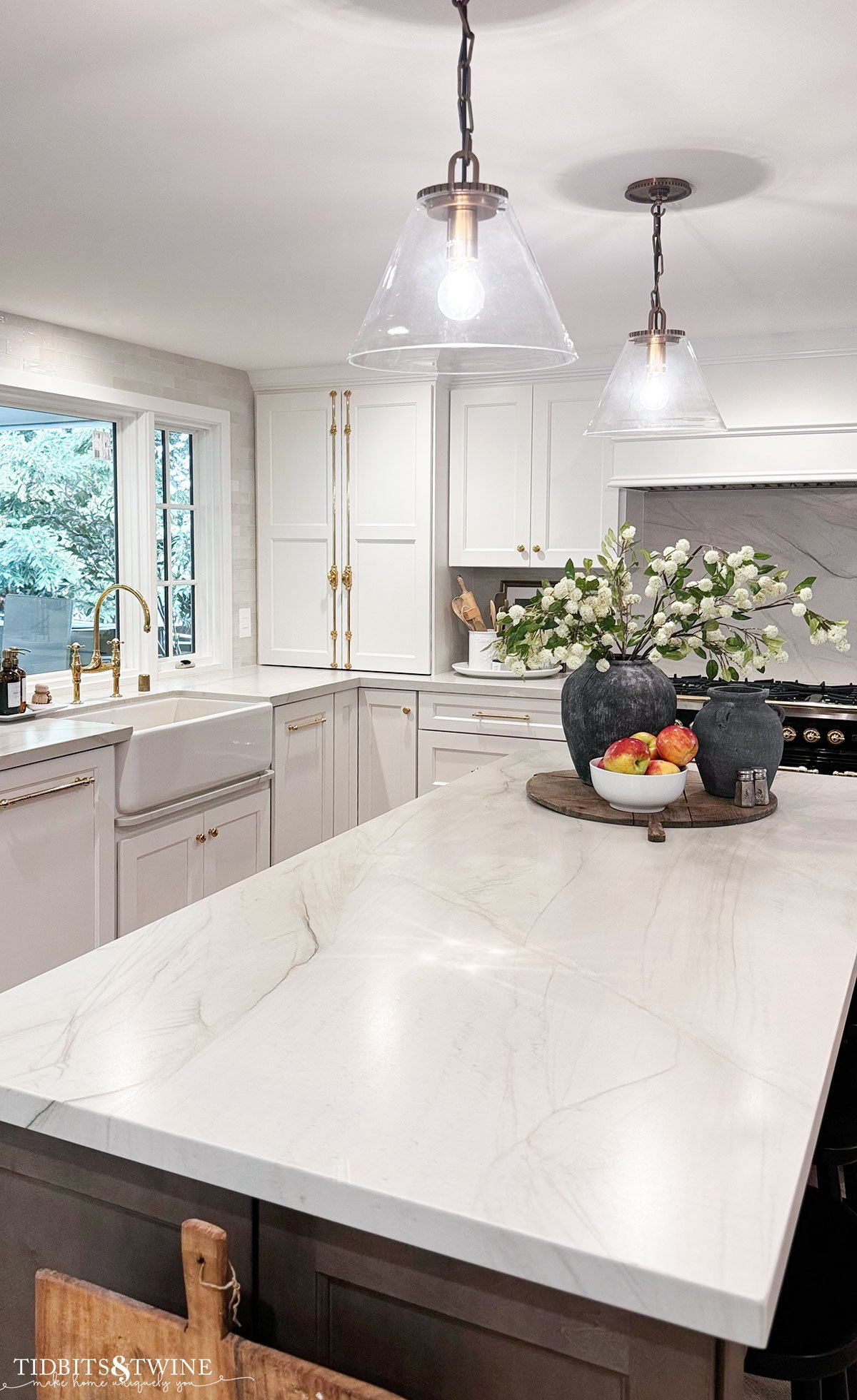
Credit: www.tidbitsandtwine.com
What Makes A Sealer “the Best” For Quartzite?
Choosing the best sealer is not just about picking a well-known brand. Here are the most important factors to consider:
- Porosity of your quartzite: Not all quartzite is equally porous. Some slabs need more protection. Test absorption by placing a drop of water on the surface. If it darkens in less than 10 minutes, your stone is absorbent and needs a strong sealer.
- Food safety: Kitchen countertops must be safe for food contact. Make sure the sealer is non-toxic once cured and is labeled as food-safe.
- Longevity: Some sealers last only a year, while others can last up to a decade. Consider how often you want to reapply.
- Stain and etch protection: Quartzite is sensitive to acids (like lemon juice). The best sealers protect against both stains and etching.
- Appearance: Some sealers change the look of your stone (gloss, color enhancement). Decide if you want a natural or enhanced look.
- Ease of application: Some sealers are simple to apply at home. Others might require a professional.
Many homeowners do not realize that using the wrong type of sealer can actually trap stains or cause cloudiness. Always check if a sealer is made for natural stone and specifically mentions quartzite.
Top Sealers For Quartzite Countertops (2024 Guide)
After testing and research, here are some of the best-performing sealers for quartzite countertops available today. This section will compare their strengths, weaknesses, and ideal uses.
1. Stonetech Bulletproof Sealer
StoneTech BulletProof is a leading choice for quartzite. It is a water-based penetrating sealer that offers long-lasting protection—up to 5 years in kitchens. It is designed for very dense stones, which means it is perfect for most quartzite slabs.
Pros:
- Excellent stain resistance
- Low odor, water-based formula
- Safe for food surfaces
Cons:
- Slightly more expensive
- May require two coats for maximum protection
2. Miracle Sealants 511 Porous Plus
Miracle Sealants 511 Porous Plus is a favorite among contractors. It is solvent-based, which helps it penetrate even the densest quartzite. It offers protection against oil and water-based stains.
Pros:
- Long-lasting (up to 15 years)
- Works on both indoor and outdoor quartzite
- Good for highly porous stones
Cons:
- Strong smell during application
- Not as eco-friendly
3. Dry-treat Stain-proof Original
Dry-Treat is known for its deep-penetrating technology. It bonds with the stone’s structure, offering up to 15 years of protection. It is especially good for preventing deep-set stains.
Pros:
- Maximum longevity (up to 15 years)
- Excellent for high-traffic kitchens
- Backed by a written warranty
Cons:
- Higher price point
- Needs careful application for best results
4. Aqua Mix Sealer’s Choice Gold
Aqua Mix is a water-based, no-sheen, natural-look sealer. It is popular for being eco-friendly and easy to use. It provides good stain resistance without changing the appearance of quartzite.
Pros:
- Fast drying
- Water-based and low odor
- Safe for food areas
Cons:
- May need reapplication every 2-3 years
- Not as effective on very porous slabs
5. Tenax Proseal
Tenax Proseal is a professional-grade, solvent-based sealer. It is often used by fabricators for both marble and quartzite because of its deep penetration and oil resistance.
Pros:
- Strong oil and water repellency
- Good for both polished and honed finishes
- Durable and long-lasting
Cons:
- Strong odor
- Needs proper ventilation during application
6. Black Diamond Stoneworks Granite Sealer
While marketed for granite, Black Diamond’s formula works well on quartzite. It is water-based, easy to apply, and safe for home use. It is a budget-friendly option for light-use kitchens.
Pros:
- Affordable
- Simple spray-on application
- No harsh chemicals
Cons:
- Needs frequent reapplication (every 6-12 months)
- Not ideal for heavy-duty kitchens
7. Mb Stone Care Mb-24 Barrier
MB-24 Barrier is a newer product gaining attention for quartzite owners. It uses advanced fluoropolymer technology for deep, invisible protection.
Pros:
- Strong stain resistance
- No color change
- Easy to reapply
Cons:
- Limited availability in some regions
- Not as tested as older brands
Comparing Top Sealer Choices
To see how the top sealers stack up, here is a comparison of key features:
| Sealer | Type | Longevity | Food Safe | Finish | Reapplication |
|---|---|---|---|---|---|
| StoneTech BulletProof | Penetrating | 5 years | Yes | Natural | Every 3-5 years |
| Miracle 511 Porous Plus | Penetrating | Up to 15 years | Yes | Natural | Every 10-15 years |
| Dry-Treat Stain-Proof | Penetrating | Up to 15 years | Yes | Natural | Every 10-15 years |
| Aqua Mix Sealer’s Choice Gold | Penetrating | 2-3 years | Yes | Natural | Every 2-3 years |
| Tenax Proseal | Penetrating | Up to 10 years | Yes | Natural | Every 5-10 years |
| Black Diamond Stoneworks | Penetrating | 6-12 months | Yes | Natural | Every 6-12 months |
| MB-24 Barrier | Penetrating | Up to 5 years | Yes | Natural | Every 3-5 years |
How To Test Your Quartzite For Sealing
Before picking a sealer, test how porous your quartzite is. This simple test helps avoid over-sealing or missing spots that need extra protection.
- Clean a small area and let it dry.
- Place a few drops of water on the countertop.
- Wait for 10-15 minutes.
- Wipe the water away.
If the stone darkens where the water was, it is absorbing liquids and needs sealing. If it stays the same, your quartzite is less porous, but sealing is still helpful for stain resistance.
Another practical test is with a few drops of cooking oil. If the spot gets darker or oily, sealing is essential.
Step-by-step: How To Seal Quartzite Countertops
Sealing quartzite is a project you can often do yourself. Here’s a step-by-step guide for best results:
1. Clean The Surface
Remove all items from the countertop. Use a stone-safe cleaner to wash away grease, dirt, and old spills. Let the surface dry completely (at least 1-2 hours).
2. Read Sealer Instructions
Every sealer is a bit different. Always read the label for special steps or safety rules. Some need gloves or extra ventilation.
3. Apply The Sealer
Pour or spray a small amount of sealer onto the stone. Use a clean microfiber cloth or a soft brush to spread it evenly. Work in small sections, and do not let the sealer dry on the surface.
4. Let It Soak
Let the sealer soak in for the time listed on the bottle (usually 10-15 minutes). If the stone absorbs it quickly, add more as needed.
5. Wipe Off Excess
After soaking, wipe away any leftover sealer with a dry, clean cloth. This step is important—extra sealer left on the surface can cause streaks or stickiness.
6. Cure Time
Let the countertop cure for the recommended time, usually 24-48 hours before heavy use or getting it wet.
7. Test And Repeat If Needed
After curing, do the water test again. If water still soaks in, apply a second coat. Some quartzite needs two or even three coats for full protection.
Common Mistakes To Avoid When Sealing Quartzite
Many homeowners make simple mistakes that reduce the effectiveness of sealers. Here is what to avoid:
- Skipping cleaning: Sealer cannot bond to dirt or oil. Always deep clean first.
- Using too much sealer: More is not always better. Excess sealer builds up and gets sticky.
- Not wiping off: Letting sealer dry on the surface leads to haze or streaks.
- Ignoring the label: Sealer instructions matter. Cure times, application tools, and safety steps are not optional.
- Not testing absorption: Applying the wrong type of sealer for your quartzite’s porosity is a common error.
- Waiting too long to reseal: Do not wait until you see stains. Stick to a regular schedule.
How Often Should You Reseal Quartzite?
How often you need to reseal depends on several things: sealer type, kitchen use, and the stone’s porosity. Most high-end sealers last 3-10 years. Lighter-use kitchens or baths may only need sealing every 5 years. Busy family kitchens or outdoor countertops might need more frequent attention.
A practical tip is to do a water-drop test every 6 months. If water no longer beads on the surface, it is time to reseal.
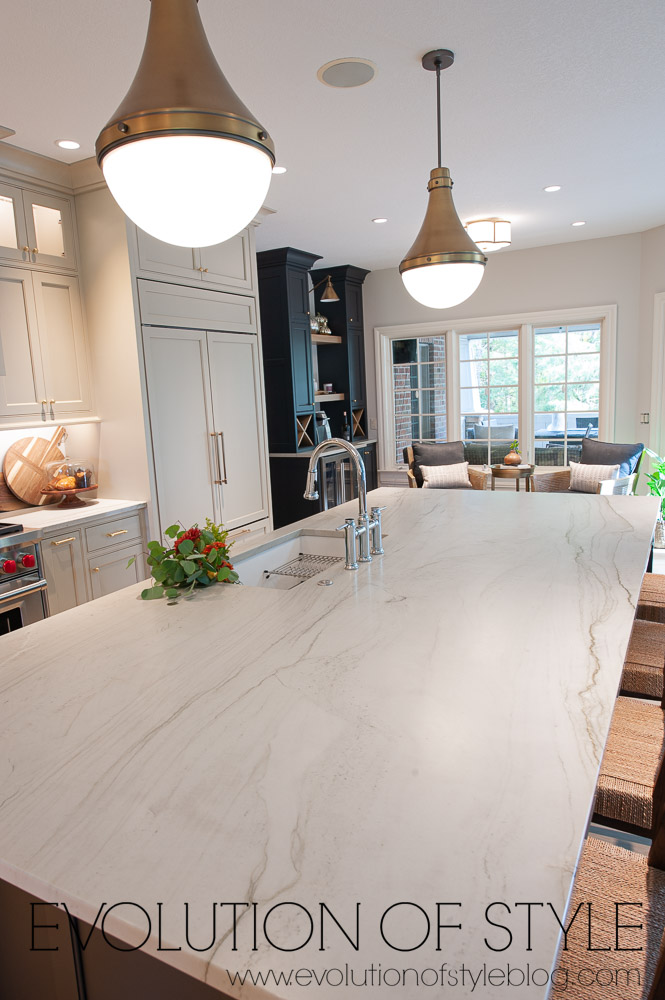
Credit: evolutionofstyleblog.com
Caring For Sealed Quartzite Countertops
Sealing is only the first step. Daily care helps keep your countertops looking new. Here are some tips:
- Wipe spills quickly, especially acidic liquids like wine, vinegar, or citrus juice.
- Use stone-safe cleaners. Avoid bleach, ammonia, or harsh chemicals.
- Do not cut directly on quartzite—use a cutting board to prevent scratches and dullness.
- Avoid heavy impacts. Quartzite is strong but can chip at the edges if hit hard.
- Use trivets or hot pads under hot pots. While quartzite resists heat, extreme temperature changes can cause cracks.
Many owners do not realize that even after sealing, prolonged spills can still cause marks. Always clean up quickly for best results.
Natural Vs. Enhanced Look: Which Sealer To Choose?
Some homeowners love the bright, natural look of quartzite. Others prefer a richer, deeper color that enhancing sealers provide. Your choice depends on your kitchen style and personal taste.
- Natural look sealers: Keep the original color and pattern. Most water-based, penetrating sealers do not change appearance.
- Enhancing sealers: Darken the stone and highlight veins. Perfect for dramatic or bold quartzite patterns.
Here is a quick comparison:
| Sealer Type | Appearance | When to Use |
|---|---|---|
| Natural | No color change, matte finish | Light, subtle stones or when you want the original look |
| Enhancing | Deeper colors, “wet look” | Bold, colorful quartzite or to highlight patterns |

Credit: www.tidbitsandtwine.com
Professional Vs. Diy Sealing
Most quartzite countertops can be sealed by homeowners with simple tools. However, if your countertop has complex edges, seams, or is very large, a professional may do a more thorough job. Pros use specialized equipment and know exactly how much sealer to use.
DIY sealing saves money, but always follow instructions closely. If you see streaks, haze, or uneven spots after sealing, do not panic. Often, a gentle polish with a microfiber cloth can fix the surface.
The Cost Of Sealing Quartzite Countertops
The price to seal quartzite depends on the sealer brand, countertop size, and whether you hire a pro. Here are typical costs:
- DIY: $30-$70 for enough product to seal a standard kitchen
- Professional: $200-$500, depending on region and countertop complexity
Considering quartzite countertops can cost $3,000 to $10,000 or more, sealing is a small investment to protect your stone.
How To Spot When Your Sealer Is Failing
Even the best sealer does not last forever. Watch for these signs that it is time to reseal:
- Water no longer beads on the surface.
- Stains start to appear or are harder to clean.
- The countertop loses its shine or feels rough.
The water drop test is a quick way to check. Place a few drops of water on the countertop. If they soak in within a few minutes, it is time to reseal.
Are Quartzite Countertops High Maintenance?
Quartzite is often called a “low-maintenance” stone, but that does not mean “no maintenance. ” Regular cleaning and sealing make a big difference. Most users find that with the right sealer and routine care, quartzite is easier to manage than marble and as simple as granite.
A non-obvious insight: Some cleaning products marketed for stone can actually break down sealers over time. Always check the label, and stick with pH-neutral, stone-safe cleaners.
Environmental And Health Considerations
Many modern sealers are water-based and low in volatile organic compounds (VOCs). These are safer for indoor air quality and the environment. If you or your family have allergies, choose a sealer with low odor and no harsh chemicals. Always ventilate your kitchen during and after sealing.
Solvent-based sealers often last longer but can have strong fumes. If you use them, open windows and wear gloves.
For more detailed information about quartzite and natural stone maintenance, the Natural Stone Institute is a trusted resource.
Frequently Asked Questions
What Is The Difference Between Sealing And Polishing Quartzite?
Sealing protects the stone from stains and liquid absorption by blocking the pores. Polishing is about making the surface shiny and smooth. Polishing does not protect against stains. For best results, seal first and polish only if you want extra shine.
Can I Use Granite Sealer On Quartzite Countertops?
Many granite sealers also work for quartzite, but always check the label. Quartzite is often less porous than granite, so some sealers may not absorb as well. Choose a product that lists quartzite as a recommended stone.
How Do I Clean Quartzite Countertops After Sealing?
Use a pH-neutral, stone-safe cleaner and a soft cloth or sponge. Do not use bleach, vinegar, or ammonia-based sprays, as these can break down the sealer and dull the stone.
How Can I Tell If My Quartzite Is Sealed Properly?
After sealing and curing, place a few drops of water on the stone. If they bead up and do not soak in after 10-15 minutes, your sealer is working. If the area darkens or absorbs water, another coat may be needed.
Is Sealing Quartzite Countertops A Diy Job Or Should I Hire A Professional?
Most homeowners can seal quartzite themselves with basic tools and careful instructions. For complex layouts, or if you want extra peace of mind, hiring a professional is a good choice. Pros can ensure even coverage and handle tricky edges or seams.
Quartzite countertops add elegance and value to any home. Protecting them with the right sealer ensures they stay beautiful and resist stains for years. With a little care and the right product, your investment will pay off every time you walk into your kitchen.