
Swimming pool water should always look sparkling and clear. But sometimes, even with the best maintenance, your pool water can become cloudy. One chemical often used to tackle this problem is a flocculant. But what if your pool has a cartridge filter? Is it safe, and will it work? This is a common question for pool owners who want the best for their pool but also want to protect their equipment. This article explores everything you need to know about using flocculant with a cartridge filter, including risks, alternatives, practical steps, and expert tips that most beginners miss.
What Is Flocculant And How Does It Work?
A flocculant is a chemical that helps to clear cloudy pool water by causing small particles to clump together into larger groups, called flocs. These clumps are heavy and settle at the bottom of the pool, making it easier to remove them. Flocculants are especially useful when normal filtration cannot clear tiny particles that cause hazy water.
The science is simple: many particles in pool water are too small to be caught by the filter. Flocculant binds these particles together so they can sink and be removed. This process is called flocculation.
When Should You Use A Flocculant?
- After heavy rain when the pool is full of fine dust or debris.
- When algae are dead but cloudiness remains.
- If your pool water stays cloudy even after proper filtration and chemical balancing.
Important: Flocculants are not for everyday use. They are a problem-solver for specific water clarity issues.
Understanding Cartridge Filters
A cartridge filter uses a pleated paper or polyester cartridge to catch dirt as water passes through. These filters are popular because they are easy to use, energy-efficient, and require less water than sand or DE filters.
Key Features Of Cartridge Filters
- Low maintenance: Only need cleaning every few weeks.
- No backwashing: Cleaning is done by removing and hosing off the cartridge.
- Good filtration: Can filter particles as small as 10–15 microns.
- Long lifespan: Cartridges can last 1–3 years if maintained properly.
But cartridge filters have a weakness: They can clog easily if overloaded with debris, especially from chemicals like flocculant.

Credit: hthpools.com
Why People Want To Use Flocculant With Cartridge Filters
Most pool owners want crystal-clear water, and flocculants offer a quick fix for stubborn cloudiness. Since cartridge filters are common in home pools, it’s natural to ask if they work with flocculant. The hope is to combine fast water clearing with a simple filter system.
However, the combination is not as straightforward as it seems. Understanding why is the first step to protecting your pool and investment.
What Happens When You Use Flocculant With A Cartridge Filter
When you add flocculant to your pool, it binds tiny particles into larger clumps. These flocs are supposed to sink to the bottom, where you can vacuum them out. But with a cartridge filter, things can get tricky.
The Problem
Cartridge filters are not designed to handle large amounts of debris at once. When flocs are sucked into the filter, they quickly clog the fine fabric, leading to:
- Reduced water flow
- High filter pressure
- Risk of damaging the cartridge
- Frequent cleaning required
In some cases, the filter can become so blocked that water cannot pass through at all. This forces you to stop the pump and clean the filter multiple times, which is time-consuming and frustrating.
Real-world Example
Imagine you pour flocculant into your pool on a Monday morning. By lunchtime, the water looks better—but your filter pressure gauge is in the red. You open the filter and find the cartridge packed with thick, gray sludge. Not only is this hard to clean, but the filter media may be ruined.
What Manufacturers And Experts Say
Most pool equipment manufacturers and professionals advise against using flocculant with cartridge filters. Many even state this clearly in their product manuals.
Some reasons include:
- The filter fabric is too fine for heavy floc loads.
- The cleaning process puts stress on the cartridge, shortening its life.
- Flocculant can leave sticky residue that is hard to wash out.
Tip: Always check your filter manual before using any chemicals. Using flocculant may void your filter’s warranty.
Comparing Flocculant Use With Different Filter Types
To understand why cartridge filters struggle with flocculant, compare them with other common pool filters. Here is a comparison:
| Filter Type | Works With Flocculant? | Why/Why Not | Maintenance Needed |
|---|---|---|---|
| Sand Filter | Yes | Can backwash out flocs easily | Backwash after treatment |
| DE Filter | Yes, with care | Backwashing removes flocs; grids can be cleaned | Backwash and clean grids |
| Cartridge Filter | Not recommended | Clogs easily, no backwash option | Manual cleaning, possible damage |
Sand and DE filters have a backwash setting, so you can flush out debris easily. Cartridge filters only let you remove and rinse the cartridge by hand.
Risks Of Using Flocculant With A Cartridge Filter
Using flocculant with a cartridge filter can lead to several problems:
1. Filter Damage
Flocculant clogs the filter media quickly. Repeated clogging and high pressure can tear or deform the cartridge, leading to expensive replacements.
2. Reduced Filter Life
Even if the cartridge isn’t destroyed, sticky floc residue can coat the fabric. This makes the filter less effective, reducing its lifespan by up to 50%.
3. Extra Work
You may need to remove and hose down the cartridge multiple times during a single treatment. This is tiring and may not restore the filter to its original state.
4. Poor Water Circulation
A clogged filter means less water movement. If the pool water is not circulating well, it can lead to new water problems, like algae or bacteria growth.
5. Warranty Issues
Many cartridge filter warranties are voided if you use flocculant against recommendations. This leaves you unprotected if the filter fails.
When Is It Ever Safe To Use Flocculant With A Cartridge Filter?
There are rare situations when flocculant might be used with a cartridge filter, but only with special steps.
Using Flocculant With The Filter Turned Off
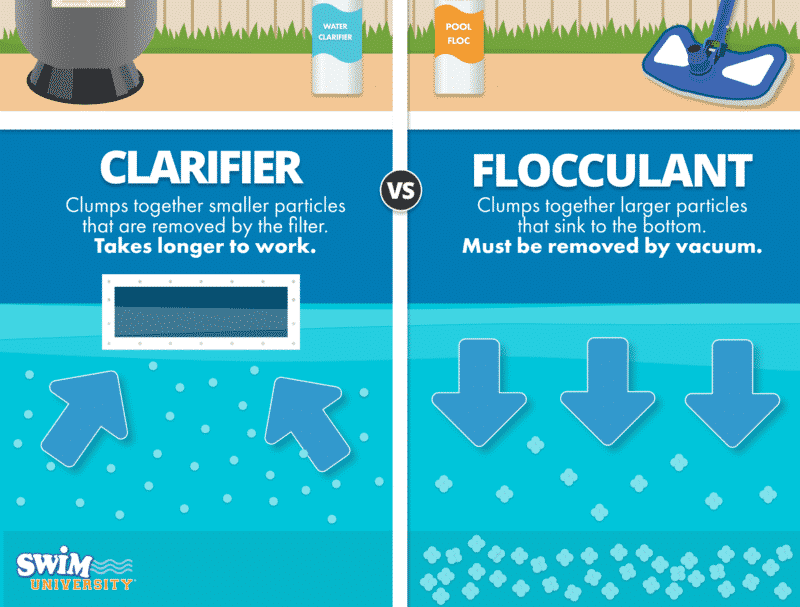
Some pool owners add flocculant, turn off the pump, and let the flocs settle to the bottom. They then vacuum the pool to waste—not through the filter. This method avoids sending floc into the cartridge.
But here’s the problem: Most pools with cartridge filters do not have a “waste” or “drain” setting. They are designed to filter all water returning to the pool. If you vacuum floc to the filter, you risk clogging it.
Pro tip: If your system has a way to bypass the filter (a true waste line), you can vacuum to waste. Otherwise, avoid flocculant.
Credit: www.swimuniversity.com
Safe Alternatives To Flocculant For Cartridge Filters
If your pool has a cartridge filter, you can still clear cloudy water without risking damage. Here are better solutions:
1. Use A Pool Clarifier
A clarifier is a chemical that works more gently than flocculant. It causes small particles to bind into larger ones, but not so large that they settle to the bottom. Instead, these bigger particles are caught slowly by your cartridge filter.
- Safe for all filter types, including cartridges
- No risk of clogging or filter damage
- Works more slowly than flocculant, but is much safer
2. Improve Filtration And Circulation
Check and clean your cartridge filter regularly. Run the pump longer each day, especially after storms or heavy use. Good water movement helps clear up cloudiness over time.
3. Balance Pool Chemistry
Make sure your pH, chlorine, alkalinity, and calcium levels are correct. Imbalanced water often looks cloudy because of scale, algae, or organic matter.
4. Use A Fine Pool Net
If you see debris, use a pool skimmer net to remove as much as possible before it reaches the filter.
5. Deep Clean The Cartridge
If you suspect your filter is clogged with oils or dirt, soak the cartridge in a filter cleaner solution overnight. This restores performance and helps catch more particles.
6. Consider Upgrading Your Filter
If you often have cloudiness or large debris, a sand or DE filter may be a better long-term solution. These handle heavy loads better and can be backwashed.
Step-by-step: Clearing Cloudy Water With A Cartridge Filter (no Flocculant)
Here’s a practical process for clearing your pool without risking your filter:
- Test your water: Check chlorine, pH, and alkalinity with a test kit.
- Adjust chemicals: Bring all levels into the ideal range.
- Shock the pool: Add the correct dose of pool shock to kill algae or bacteria.
- Run the pump: Keep your filter running 24/7 until water is clear.
- Add a clarifier: Follow bottle instructions. Usually, 1–2 ounces per 5,000 gallons.
- Clean the filter: Rinse or deep-clean the cartridge every 1–2 days during the process.
- Manually remove debris: Use a net to skim out any visible particles.
- Repeat as needed: Water should clear up in 2–5 days.
Hidden Insights Most Beginners Miss
Clearing a cloudy pool isn’t just about adding chemicals. Here are two things most new pool owners don’t realize:
- Slow and steady wins: Flocculant gives fast results, but slow clarification and careful filter cleaning often give longer-lasting clarity with less risk.
- Filter cleaning technique matters: Don’t just rinse the cartridge. For best results, soak it in a filter cleaner every month, especially after heavy use or chemical treatments.
Common Mistakes When Using Flocculant (and How To Avoid Them)
Many pool owners, especially beginners, make these errors:
- Adding too much flocculant: More is not better. Overdosing can create more flocs than your filter or pool can handle.
- Not vacuuming to waste: If you vacuum floc through your filter, you risk clogging it instantly.
- Skipping filter cleaning: After any treatment, always clean your cartridge thoroughly.
- Ignoring manufacturer warnings: Always read your filter and chemical instructions. If flocculant is not recommended, trust the manufacturer.
Signs Your Cartridge Filter Is Clogged With Flocculant
If you made the mistake of using flocculant with your cartridge filter, watch for these warning signs:
- Water flow from pool jets is weak.
- Filter pressure gauge is much higher than normal.
- The cartridge looks gray, slimy, or sticky when you inspect it.
- Pool water does not clear up even after running the filter for days.
If this happens, remove the cartridge and soak it in a strong filter cleaning solution. In severe cases, you may need to replace the cartridge.
How To Choose A Clarifier For Cartridge Filters
With so many pool clarifiers available, how do you pick the right one for your cartridge filter? Look for:
- Non-clogging formulas: Some clarifiers are made especially for cartridge filters.
- Easy dosing: Choose a product with clear instructions and measuring cap.
- Good reviews: Check pool forums and retailers for real user feedback.
Example: Polymer-based clarifiers work well for most home pools with cartridge filters.
Data: How Cartridge Filters Handle Debris Compared To Other Filters
To understand why flocculant causes problems, look at how much debris each filter type can handle:
| Filter Type | Micron Size Filtered | Debris Holding Capacity | Cleaning Method |
|---|---|---|---|
| Cartridge | 10–15 microns | Low to medium | Manual removal/rinse |
| Sand | 20–40 microns | High | Backwash |
| DE | 2–5 microns | Medium | Backwash and clean grids |
Cartridge filters catch finer particles than sand filters, but clog much faster when overloaded.
Expert Advice For Crystal-clear Water With Cartridge Filters
Here are four tips from pool professionals:
- Clean more often during heavy use: If you’re using the pool a lot, or after storms, rinse the cartridge every week instead of monthly.
- Use clarifier after shocking: Wait 24 hours after shock treatment, then add clarifier. This clears dead algae without clogging the filter.
- Replace cartridges regularly: Don’t wait for the filter to fail. Replace every 1–3 years, or sooner if you notice poor performance.
- Don’t expect instant clarity: Cartridge filters work best with time and patience. Let the filter do its job, and avoid quick-fix chemicals unless absolutely necessary.
Credit: www.youtube.com
When To Call A Professional
If your pool water remains cloudy after several days of careful treatment, or if your filter pressure remains high after cleaning, it may be time to call a pool professional. Persistent problems can signal hidden issues like broken filter parts, plumbing blockages, or chemical imbalances.
Real-life Stories: What Happens When You Ignore The Warnings
Many pool owners have learned the hard way that flocculant and cartridge filters don’t mix. Here are two quick stories:
- Case 1: Jamie added flocculant to her pool without reading the filter label. The next day, her filter was completely blocked, and she had to buy a new cartridge for $80.
- Case 2: Mark tried to vacuum floc to the filter but ended up with cloudy water and ruined filter media. He spent hours cleaning and still had to call a pro.
Lesson: Always follow expert advice and avoid shortcuts.
Making The Right Choice For Your Pool
If you own a pool with a cartridge filter, the safest path to clear water is:
- Use clarifiers, not flocculants.
- Clean your cartridge often.
- Balance your pool chemistry.
- Be patient with the process.
Quick fixes can cause more harm than good, especially with delicate filter systems.
Where To Learn More
For deeper information about pool chemicals and filtration, visit SwimmingPool.com, a trusted resource for pool care.
Frequently Asked Questions
Can I Use Flocculant If My Pool Only Has A Cartridge Filter?
No, it is not recommended. Flocculant can clog the cartridge, damage the filter, and may void your warranty. Use a clarifier instead for safer results.
What’s The Difference Between Flocculant And Clarifier?
A flocculant causes particles to clump and settle at the bottom for vacuuming, while a clarifier binds small particles together so the filter can catch them. Clarifiers are safer for cartridge filters.
Can I Vacuum Flocculant To Waste With A Cartridge Filter?
Most cartridge filter systems do not have a waste or bypass setting. If you do not have this option, vacuuming flocculant will send it through the filter and likely clog it.
How Often Should I Clean My Cartridge Filter When Clearing Cloudy Water?
During heavy cloudiness or after adding a clarifier, clean your cartridge filter every 1–2 days. For normal use, once every 2–4 weeks is enough.
Will Using Flocculant Once Ruin My Cartridge Filter?
One use may not ruin the filter, but it can reduce its lifespan and make cleaning more difficult. If you have already used flocculant, clean the cartridge thoroughly and monitor filter performance.
Keeping your pool water clear is possible with the right approach. For cartridge filters, patience and proper maintenance win over quick chemical fixes every time.