
Anyone who owns an Intex sand filter for their pool knows the feeling of seeing cloudy water, hearing odd noises, or noticing weak water flow. Often, the reason is simple: air has gotten trapped inside the system. But why does this happen, and more importantly, how do you get the air out for good? This article will walk you through everything you need to know, step by step, to make your Intex sand filter run smooth and quiet again. Whether you are a new pool owner or have struggled with this problem before, you will find answers, tips, and even some tricks that most beginners miss.
Why Air Gets Trapped In Intex Sand Filters
Before you can fix a problem, it’s important to know why it happens. Air can enter the sand filter system for several reasons:
- Loose connections in the hoses or pump.
- Low water level in the pool, so the pump pulls in air.
- Damaged O-rings or seals letting in air.
- Cracks in the pump or filter housing.
- Incorrect filter assembly after cleaning or maintenance.
- Poor priming when starting the system.
- Backwashing errors or not sealing the valve properly.
When air gets into the system, it often collects at high points—usually the top of the filter tank. This air can cause noisy operation, poor filtration, and even damage the pump over time. Removing trapped air is not only about performance; it’s also about protecting your investment.
Signs That Air Is In Your Filter System
You don’t always see air in the system directly, but there are clear signs you can watch for:
- Bubbling water at the pool returns
- Gurgling sounds from the pump or filter
- Visible air pockets in the pump lid or filter
- Weak water flow or pressure drops
- Cloudy pool water after running the filter
If you notice any of these, it’s time to take action. Let’s look at how to get the air out and keep your filter working at its best.
Credit: intexcorp.com
Tools And Supplies You’ll Need
Getting air out of your Intex sand filter does not require special tools, but having the right items ready makes the process smoother:
- Phillips screwdriver or flat-head (for hose clamps)
- Replacement O-rings (in case old ones are damaged)
- Plumber’s tape (for sealing threaded connections)
- Lubricant for O-rings (pool-safe silicone grease)
- Garden hose (for refilling or priming)
- Bucket (for checking leaks)
- Owner’s manual (for reference to your specific model)
Before you start, switch off the power to the pump and filter to prevent accidents.
Step-by-step Guide To Remove Air From Intex Sand Filter
Let’s break down the full process. Even if you have never done this before, follow these steps and you’ll have a bubble-free system.
1. Turn Off And Unplug The System
Safety comes first. Always turn off the pump and unplug it. This prevents water from moving and avoids electrical hazards while you work.
2. Check Water Level In The Pool
Your pool’s water level should be at least halfway up the skimmer opening. If it’s low, the pump will suck in air. Top up the pool if needed before you continue.
3. Inspect All Hoses And Connections
Air often enters through loose or cracked connections. Carefully check:
- Intake and return hoses
- Hose clamps
- Unions and fittings
If you find anything loose, tighten it. If you see cracks, replace the part.
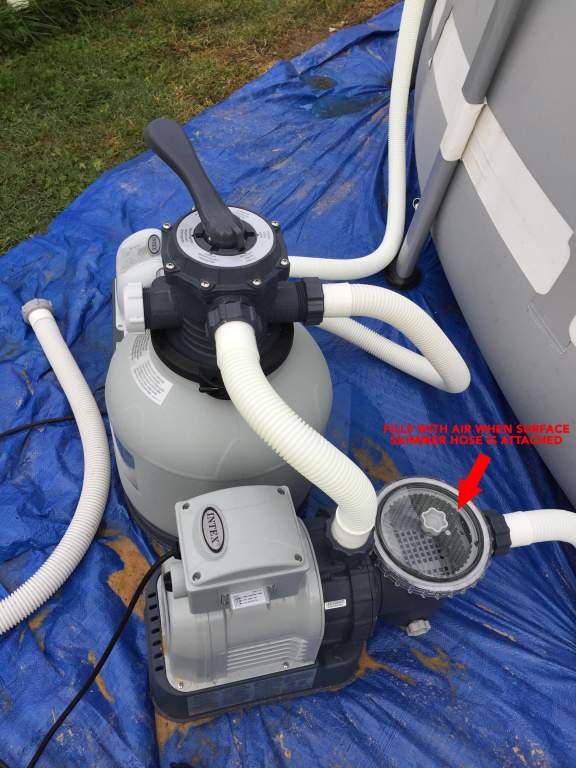
4. Examine The Pump Lid And O-ring
The clear pump lid and the O-ring underneath are common air entry points. Remove the lid, inspect the O-ring for cracks or flat spots, and apply a thin layer of pool-safe lubricant. If the O-ring is damaged, replace it. Put the lid back on and make sure it’s tightly sealed.
5. Prime The Pump (if Needed)
If the pump lost its prime (filled with air instead of water), fill the pump basket with water using a garden hose. This step is easy but often skipped by beginners, leading to stubborn air problems.
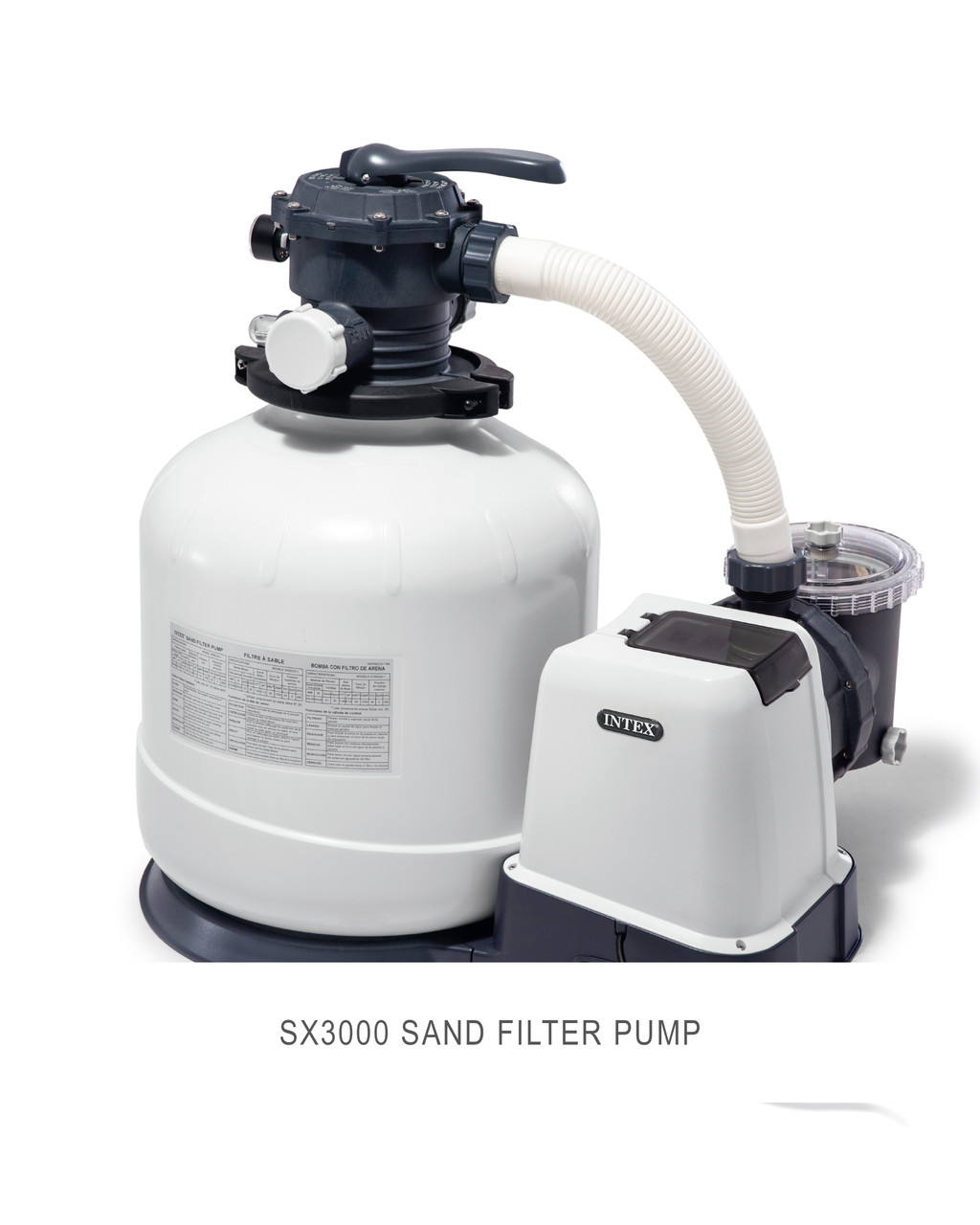
6. Open The Air Relief Valve
Most Intex sand filters have a small air relief valve on the top of the filter tank. This is your main tool for removing trapped air. Here’s how:
- Loosen (do not remove) the valve by turning it counterclockwise.
- You will hear a hissing sound as air escapes.
- When water starts to flow out steadily, close the valve tightly.
If your model does not have an air relief valve, you can slightly loosen the top clamp or cap—just until air escapes, then retighten as soon as water appears.
7. Restart The System And Observe
Plug the pump back in and switch it on. Watch the pump lid and filter tank:
- If you still see air bubbles, repeat the air relief process.
- If the system is quiet and water flow is strong, you’ve succeeded.
8. Inspect For Leaks
Run the system for 5–10 minutes, then check all connections, the pump lid, and the filter base for leaks. Even small leaks can let air back in over time.
9. Repeat If Necessary
Sometimes, especially after major maintenance or a full filter cleaning, you may need to repeat the air removal steps a few times.
Credit: www.miach.co
Common Mistakes To Avoid
Many pool owners make simple errors when trying to remove air from their sand filter. Here are the top mistakes and how to avoid them:
- Skipping the O-ring check. Even a small cut or flattened O-ring can keep letting air in.
- Not tightening hose clamps enough. Hand-tight is often not enough—use a screwdriver.
- Opening the air relief valve too much. This can cause water to spray everywhere; loosen gently.
- Ignoring pool water level. If the pool is too low, you’ll keep fighting air problems.
- Starting the pump without priming. Always fill the pump basket with water after draining.
A good habit is to inspect and lubricate all O-rings every time you open the system.
Intex Sand Filter Models And Air Removal
Different Intex sand filter models have small design differences. Here’s a quick comparison of common models and their air removal features:
| Model | Air Relief Valve | Pump Lid Type | Recommended Priming Method |
|---|---|---|---|
| SF70110-2 | Yes | Clear Screw-On | Fill Pump Basket |
| SF80110-2 | Yes | Clear Clamp-On | Fill Basket + Open Valve |
| SF90220 | No | Opaque Snap Lid | Loosen Lid Slightly |
| SF1500 | Yes | Clear Screw-On | Fill Pump Basket |
If your model does not have an air relief valve, use extra care when loosening the pump lid.
Troubleshooting Persistent Air Problems
If you keep getting air in your filter, even after following the steps above, it’s time to dig deeper. Here are some advanced checks:
Suction Side Leaks
Air is usually sucked in before the pump, not after. Check these areas:
- Skimmer basket and cover: Make sure the lid is tight and gasket is in good shape.
- All hose connections: Replace any hoses that are stiff, cracked, or pinched.
- Pump housing: Look for hairline cracks or worn threads.
Pressure Side Leaks
Leaks after the pump rarely cause air problems, but they can lead to water loss. Fix any water leaks to avoid bigger maintenance issues.
Sand Filter Assembly
If you recently changed the sand or opened the filter, check the standpipe and laterals inside the tank. Make sure everything is seated correctly and there are no gaps.
Pool Water Chemistry
Poor water chemistry can weaken seals and O-rings. Keep your pool’s pH and chlorine levels balanced to protect rubber parts. For the latest safe levels, see this CDC pool water guide.
Preventing Air Problems In The Future
Once you get the air out, you want to keep it out. Here’s how:
Regular Maintenance
- Inspect O-rings and gaskets every month.
- Tighten connections whenever you open the system.
- Clean the pump basket weekly to avoid clogs.
- Lubricate O-rings at least twice per season.
Proper Backwashing
Backwashing the sand filter is essential, but always follow these steps:
- Turn off the pump.
- Set the valve to “Backwash.”
- Turn the pump on and run until water in the sight glass is clear (usually 2–3 minutes).
- Turn off the pump.
- Set to “Rinse” and run for 1 minute.
- Return valve to “Filter.”
Never change the valve position while the pump is running, as this can introduce air.
Winterizing Tips
If you close your pool for winter, always:
- Drain all water from the filter and hoses.
- Store the pump and filter indoors if possible.
- Lubricate all O-rings before storage.
- Cover exposed openings to keep debris and bugs out.

Credit: www.amazon.com
Comparing Intex Sand Filters To Other Brands
You might wonder if this air problem is unique to Intex. Here’s how Intex compares to two other common brands:
| Brand | Typical Air Issues | Ease of Air Removal | Maintenance Frequency |
|---|---|---|---|
| Intex | O-ring leaks, loose hoses | Easy (with valve or lid) | Low |
| Hayward | Valve leaks, complex lid | Moderate (multiport valve) | Medium |
| Bestway | Pump lid leaks, small O-rings | Easy | Low |
Intex filters are generally easy to fix for air, especially if you know where to look.
Advanced Tips And Non-obvious Insights
Most guides stop at the basic steps, but two advanced tips can make a big difference:
Watch The Pressure Gauge
Your filter’s pressure gauge is a silent messenger. If you see:
- High pressure: Possible clog or air pocket after the filter.
- Low pressure: Air leak before the pump, or low water level.
If the gauge needle bounces up and down, that’s almost always trapped air moving through the system.
Use Food Dye To Find Invisible Leaks
If you suspect a tiny air leak but can’t find it, try this:
- With the pump off, drip a little blue food dye around each suspect joint or O-ring.
- Turn on the pump and watch—if the dye is sucked in, you’ve found your leak.
This trick saves hours of guessing and works even on small cracks.
Real-world Example: Fixing A Stubborn Air Pocket
Let’s say you’ve followed every step, but after cleaning the sand and reassembling, you still get bubbles. Here’s what might be happening:
- The standpipe inside the filter is not seated flat, leaving a small gap.
- The multiport valve O-ring is pinched.
In this case, open the filter again, check the standpipe, and carefully reinstall the multiport valve with a fresh, lubricated O-ring. This level of care is what keeps experienced pool owners ahead of air problems.
How Long Should It Take To Remove Air?
For most Intex sand filters, the full process—checking, priming, and bleeding air—should take 10 to 20 minutes. If it takes longer, you may have a leak or a problem with the assembly.
When To Call For Professional Help
If you have tried every step more than twice and still get constant air bubbles or low pressure, it may be time to call a pool technician. Persistent air problems can indicate:
- Cracked pump or filter housing (not just a bad seal)
- Major plumbing leaks underground
- Warped filter tank
Don’t wait too long—running the pump with air inside can cause costly damage.
Checklist For Air-free Operation
Here’s a quick checklist to keep your Intex sand filter running smoothly:
- Pool water level at skimmer height
- All hoses tight and free of cracks
- Pump lid and O-rings clean and lubricated
- Pump basket primed with water before starting
- Air relief valve used until water flows out
- Pressure gauge reads steady
- No bubbles at pool returns
Use this list every time you open or service your filter.
Frequently Asked Questions
Why Does My Intex Sand Filter Keep Getting Air In It?
Air usually enters due to loose hose connections, cracked O-rings, or a low pool water level. Check all intake fittings, keep the pool topped up, and lubricate O-rings regularly. Persistent bubbles often signal a small leak on the suction side of the system.
Can I Run My Intex Sand Filter With Air Inside?
It’s not a good idea. Running with air can cause poor filtration, noisy operation, and even damage the pump by overheating. Always remove air after maintenance, and never ignore bubbling or gurgling noises.
How Do I Know If I Need To Replace My O-ring?
If the O-ring looks cracked, flat, or stretched, or if you keep getting air leaks despite lubricating, it’s time to replace it. A new O-ring is inexpensive and can prevent bigger problems.
What Happens If I Don’t Bleed The Air From The Filter?
Trapped air can cause weak water flow, cloudy pool water, and can make the pump run dry, which may burn out the motor. Over time, air pockets can also put stress on the filter tank and connections.
Is There A Way To Check For Leaks Without Taking Everything Apart?
Yes. Use the food dye test: drip a little dye around suspected leaks and run the pump. If the dye is sucked in, you’ve found a leak. Also, look for water drops or wet spots under the pump and hoses when the system is running.
—
Getting air out of your Intex sand filter is a vital part of pool care. It keeps the system quiet, the water clear, and extends the life of your equipment. With the steps and tips in this guide, you’ll be able to diagnose, fix, and prevent air problems like a pro. A little attention now means more pool time and fewer headaches later. For more pool care tips, check out your owner’s manual or visit trusted resources like the CDC pool safety page mentioned above. Enjoy your crystal-clear pool!